
Mississippi’s rule sounds simple: if a mailed absentee ballot is postmarked by Election Day , it can still be counted even if it arrives afterward, so long as it arrives by the state’s deadline. That kind of rule has become a recurring constitutional flashpoint because it forces two questions that Americans often blend together:
- Who sets the mechanics of elections, like deadlines, postmarks, and verification rules?
- When can federal courts or Congress override those mechanics in the name of federal law, uniformity, anti-fraud policy, or voting access?
Recent litigation has put those questions back in view in two ways: a federal fight over Mississippi’s postmark-and-receipt window for absentee ballots, and separate emergency litigation over Nevada’s late-receipt counting rules. At the same time, there are renewed calls for Congress to pass a proposal commonly branded as the SAVE Act, which would tighten proof-of-citizenship requirements for federal voter registration by demanding specific documentary proof in key parts of the federal registration process.
Join the Discussion
What Mississippi’s rule does
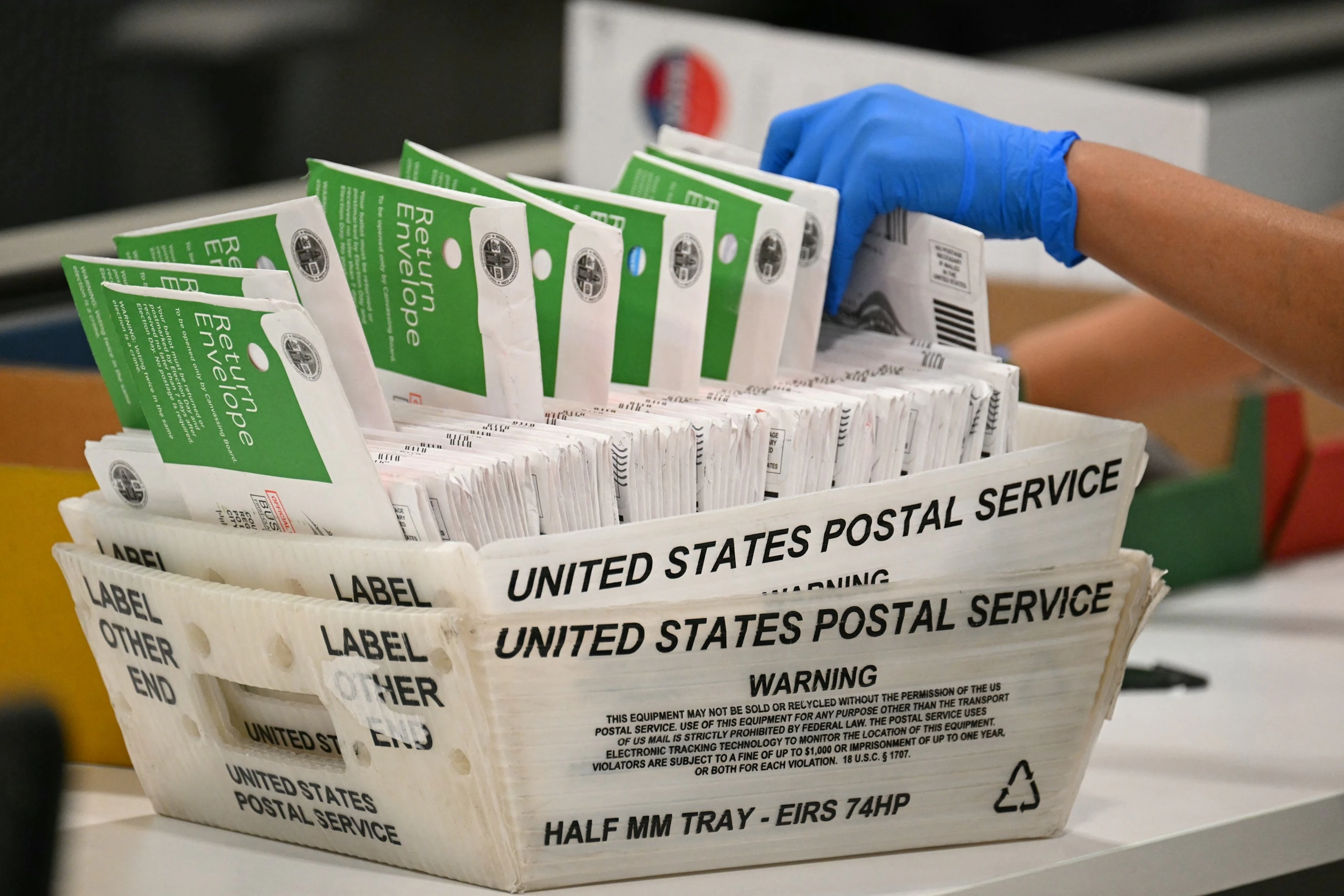
Mississippi does not have a blanket policy that ballots can be mailed after Election Day and still count. The key is the postmark. Under Mississippi law, a domestic absentee ballot returned by mail is treated as timely when two conditions are met:
- Postmarked on or before the date of the election, and
- Received by the registrar within five business days after the election .
The operative provision is in Mississippi’s absentee-ballot statute, Miss. Code Ann. § 23-15-637. In plain terms, the statute ties timeliness to a postmark deadline on Election Day, then adds a short receipt window for delivery and processing.
Who the five-business-day window covers is a detail that matters. The five-business-day postmark-and-receipt rule is a feature of Mississippi’s domestic absentee-by-mail process under § 23-15-637. Military and overseas voters operate under separate federal and state frameworks, including UOCAVA-related provisions that can use different receipt timelines. Mississippi’s five-business-day window is not a universal rule for every type of absentee voter in every setting, and it sits alongside additional acceptance requirements that can still lead to rejection, such as envelope and signature rules, and any witness or notary requirements applicable to the voter’s method of voting.
A concrete example helps: if a voter’s ballot is postmarked on Tuesday (Election Day) but arrives the following Monday, it can still be eligible for counting if Monday falls within five business days after the election. That window can shift in practice if a holiday falls during the week.
This approach is not unique to Mississippi. A number of states use some version of a “postmarked by Election Day, received later” rule for at least some mailed ballots. The constitutional fight is less about whether such a rule is wise and more about who has authority to set it and enforce it, and whether federal law displaces the state’s choice.
What courts have done
Headlines often make it sound like the Supreme Court issued a sweeping opinion endorsing late-arriving mail ballots. More often, what you see is narrower: a trial court issues or refuses an injunction, a circuit court reviews it, or the Supreme Court declines to block a rule on an emergency basis. Those procedural decisions can leave a state’s system in place without resolving the underlying merits.
That distinction matters. A decision to leave a rule standing can happen because of timing and the demanding standard for emergency relief, and because courts are often reluctant to change election rules close to an election, a concern commonly associated with the Purcell principle .
1) Mississippi: RNC v. Wetzel and RNC v. Toler
Mississippi’s five-business-day receipt window for postmarked absentee ballots has been challenged on the theory that federal “Election Day” statutes require a stricter cutoff for federal contests. The key federal case has been brought by the Republican National Committee and aligned plaintiffs against Mississippi election officials. Because officeholders change, the case has appeared under captions including RNC v. Wetzel and RNC v. Toler.
In July 2024, a federal district court in Mississippi ruled on the challenge to Mississippi’s postmark-and-receipt rule for federal elections. The dispute focused on whether federal statutes setting a single Election Day for federal offices require states to stop counting ballots that arrive after Election Day, even when those ballots are postmarked by Election Day under state law.
On October 25, 2024, a Fifth Circuit panel reversed the district court’s ruling. The panel concluded that Mississippi’s practice of counting ballots received after Election Day, even if postmarked by Election Day, conflicted with the federal Election Day requirement for federal offices. The immediate effect was to put Mississippi’s late-receipt counting rule for federal races in constitutional and statutory jeopardy, even while Mississippi continued to defend its statute as treating a ballot as timely when it is effectively cast by the voter on Election Day.
Across the filings, the basic legal clash stayed the same: challengers argued that federal law requires a hard Election Day cutoff for counting in federal elections, while Mississippi argued that it may treat ballots as timely when voters meet an Election Day postmark deadline and the state uses a short receipt window to account for mail delivery.
2) Nevada: RNC v. Aguilar and emergency orders
Nevada’s postmark-based receipt framework has also been targeted. The leading caption commonly referenced in this lane is RNC v. Aguilar, aimed at blocking Nevada from counting certain ballots that are postmarked by Election Day but arrive later under Nevada law.
In July 2024, a federal district court ruled on the RNC’s bid to halt Nevada’s late-receipt counting practices for certain mail ballots. The case moved quickly, with requests for emergency relief designed to affect the rule in an active election calendar.
The case then proceeded through emergency litigation in the Ninth Circuit. The challengers sought to stop Nevada from counting ballots that arrive after Election Day even if postmarked by Election Day, while Nevada defended its rule as an administrable way to ensure voters are not disenfranchised by mail delays when they comply with the Election Day mailing deadline.
The dispute reached the Supreme Court on an emergency application. On November 1, 2024, the Supreme Court denied emergency relief, leaving Nevada’s rule in place for the election at issue. The practical effect of the Court’s emergency action was simple: Nevada continued to count qualifying ballots under its postmark-and-receipt rule while the broader legal questions remained unsettled on the merits.

3) States run elections first, under federal limits
The Constitution sets up a federal system where states handle most election details unless the Constitution or Congress says otherwise. State power is also constrained by other federal constitutional provisions, including equal protection and due process, even absent new congressional legislation. And inside a state, there can be a second question about which state actor has authority to set the rule, such as the legislature versus a court or an election administrator.
- Article I, Section 4 (the Elections Clause) gives state legislatures the power to prescribe the “Times, Places and Manner” of congressional elections, while also giving Congress the power to “make or alter” those rules.
- Article II gives states authority over the manner of appointing presidential electors, constrained by other constitutional rules and federal statutes.
So if a state adopts a postmark-based receipt deadline for mail ballots, the starting point is that states typically can set election mechanics. The harder questions come when challengers argue that federal law sets a different baseline, or that the rule was adopted by the wrong decision-maker under the state’s own law.
The legal hinge
Late-arrival ballot disputes typically revolve around three overlapping legal theories:
- State authority under the Elections Clause to set “manner” rules for federal elections.
- Federal statutory constraints that designate a federal Election Day for federal contests, including 2 U.S.C. § 7 (House elections), 2 U.S.C. § 1 (Senate elections), and 3 U.S.C. § 1 (presidential electors). A recurring argument is what these statutes require: do they demand ballots be received by Election Day, or do they allow states to treat a ballot as timely if it is cast by Election Day (for example, mailed and postmarked) and received shortly after?
- Federal constitutional constraints such as equal protection (treating similarly situated voters differently) and due process (unpredictable or retroactive rule changes), and sometimes Article II concerns in presidential-election disputes.
What makes mail ballot deadlines so contentious is that they sit right at the seam between the voter’s act and the government’s count. Is “voting” completed when the voter mails it, or when the government receives it? States answer that question differently, and the Constitution does not supply a single explicit definition.
What dissenters argue
In these disputes, dissents often make a structurally consistent complaint: that allowing ballots to arrive after Election Day effectively changes the meaning of Election Day from a single deadline into a multi-day window, at least for mail voters. The dissenting concern is usually framed in one of two ways:
- Rule-of-law uniformity: election officials should apply a clear cutoff to reduce inconsistent counting standards and post-election litigation.
- Legislature-first theory: the constitutionally empowered state body, typically the legislature, should control election rules, not courts or administrators, and federal courts should be willing to intervene if they believe the wrong state actor set the rule.
Supporters of postmark-based deadlines answer with a competing reliance and administrability point: if a voter meets the Election Day mailing deadline, the voter should not lose a lawful vote because of predictable mail delays outside the voter’s control.
Whatever your view of the policy tradeoffs, the underlying constitutional anxiety is real: election rules can look like neutral administration until the margin is close. Then every definition, “returned,” “postmarked,” “received,” and “cured” becomes a question about who decides what an election is.
Is it unconstitutional?
Not automatically. Under the Constitution’s structure, states have broad discretion to design election procedures, subject to federal constitutional limits and valid federal statutes. A postmark-and-receipt framework can be defended as an administrative choice: the voter meets the Election Day deadline, and the state gives the postal system a predictable window to deliver.
It becomes legally vulnerable when challengers can credibly show one of these problems:
- A conflict with federal statute governing federal Election Day timing and what it requires for federal contests.
- Unequal treatment where similarly situated voters are treated differently without sufficient justification.
- Late changes that confuse voters or undermine procedural fairness.
That is why these cases keep coming back. The core fight is rarely “mail ballots good” or “mail ballots bad.” It is usually about whether a state’s chosen rule is valid under state authority, and whether federal law displaces the state’s choice.
What the SAVE Act is
The proposed SAVE Act is often described as a voter-ID bill, but its core concept is more specific: it would add a documentary proof-of-citizenship requirement to the federal voter registration process for federal elections.
The bill most often referenced under this label is the Safeguard American Voter Eligibility (SAVE) Act, H.R. 8281 (118th Congress). Its central mechanism is to amend the National Voter Registration Act and the federal registration form system so that an applicant must provide documentary proof of U.S. citizenship rather than relying only on an attestation under penalty of perjury for the covered federal registration pathways.
Concrete examples of documentary proof contemplated by the bill include widely recognized citizenship documents such as a U.S. passport, a birth certificate, and naturalization documentation, along with other specified government records that establish citizenship status under the bill’s definitions. The practical pressure point is implementation: what documents qualify in edge cases, how election offices verify them at scale, what cure process exists for incomplete applications, and what happens to eligible voters who do not have documentation readily available when they attempt to register.
How it affects the federal form and the EAC is part of the point. Under the NVRA framework, the Election Assistance Commission (EAC) maintains the federal mail voter registration form and its state-specific instructions. A core controversy in proof-of-citizenship policy is the degree of EAC discretion to accept or reject state requests to add documentary requirements to the federal form, and how much Congress can hardwire those requirements into federal law rather than leaving them to agency administration and litigation over form content.
How it changes the landscape
Mississippi’s dispute is about ballot receipt deadlines. The SAVE Act is aimed at a different stage of the process: who gets onto the voter rolls and what documentation is required to register through federal channels.
Still, the two issues are connected because they share the same constitutional architecture: state administration first, federal override possible, all within federal constitutional constraints.
1) More rules set by Congress
If enacted, the SAVE Act would put federal weight behind citizenship verification for federal elections. States would still administer elections, but they would be administering a more demanding federal baseline for the registration pathways the act reaches, especially for applicants using the federal form or NVRA-covered registration methods.
2) More burden and access litigation
Any nationwide documentary-proof requirement raises practical questions courts have handled before in other contexts:
- What documents count as adequate proof?
- What happens to voters who are eligible but lack ready documentation?
- Are there workable alternatives and cure paths, and are they applied consistently?
Those questions do not automatically invalidate a proof rule, but they are common pressure points where constitutional claims form.
3) It does not settle late ballots
Even if Congress tightened registration and citizenship verification, states could still face disputes over receipt deadlines, postmarks, and counting procedures. The SAVE Act is not primarily a mail-ballot deadline bill. It is a voter eligibility and registration documentation bill.
What Congress can do
The Constitution gives Congress real power over federal elections, but not unlimited power.
- Congress can regulate the times, places, and manner of congressional elections (Article I, Section 4), which includes many administrative mechanics.
- Congress cannot override explicit constitutional protections, such as rules that would intentionally discriminate on race (Fifteenth Amendment) or sex (Nineteenth Amendment), or impose unconstitutional burdens that violate equal protection or due process as applied.
- States retain significant control over election administration, especially for state and local elections, and even in federal elections where Congress has not occupied the field.
That is why election law keeps producing these seemingly narrow cases. The system is designed to be shared, and shared power creates boundary disputes.
The takeaway
The Constitution does not contain a single sentence that settles whether a mail ballot must be received by Election Day to count. Instead, it builds a framework where:
- States set many election mechanics.
- Congress can impose national rules for federal elections.
- Courts step in when a rule conflicts with federal law or violates constitutional protections.
So when higher courts leave a late-receipt rule in place, it is not necessarily endorsing a political theory of elections. It is often saying something more structural: this is the state’s lane unless federal law clearly says otherwise, and emergencies are not always the posture for rewriting election rules.
The SAVE Act represents a different move: a push for Congress to draw a firmer national line on federal voter registration procedures, particularly around citizenship verification. If that line becomes law, the next wave of litigation will not just be about what states may do, but about how far Congress can go, how much discretion federal election administrators retain, and how election officials must implement federal mandates without creating unconstitutional barriers.
Related questions
Is voter ID required by the Constitution?
No. The Constitution does not explicitly require voter ID. States can require ID under their election authority, and Congress can legislate in areas it is constitutionally allowed to regulate. Whether a specific ID or proof rule is legal depends on the statute and how it is implemented.
Can Congress require proof of citizenship for federal registration?
Congress has significant authority to regulate federal elections, including registration mechanics, but any proof-of-citizenship requirement would be tested in court based on its text, its practical burden, and its interaction with existing federal election law and constitutional protections.
Why do some states count ballots after Election Day?
Because they treat Election Day as the deadline for the voter’s action, and they allow time for delivery and processing, often using a postmark rule. Other states treat Election Day as a receipt deadline. Both approaches exist in the United States.