
For years, some progressives have treated the Supreme Court like a captured institution, a black-robed obstacle that can only be overcome by force of politics. Add seats. Impose term limits. Cut the Court down to size. The underlying argument is simple: if the Court is a partisan weapon, then the rational response is to try to neutralize it.
Justice Elena Kagan just threw a small wrench into that storyline. Not with a big dissent, not with a scorching opinion, but with something rarer in our legal culture: a warning that sounds aimed at her own side.
That is what makes the moment notable. Kagan has sharply dissented from many of the conservative legal movement’s biggest Supreme Court victories in recent years, and she is widely seen as the intellectual leader of the dissenting liberal bloc. Even so, she also appears to be working to distance herself from the Court’s harshest progressive critics.
Join the Discussion
Pressure from both sides
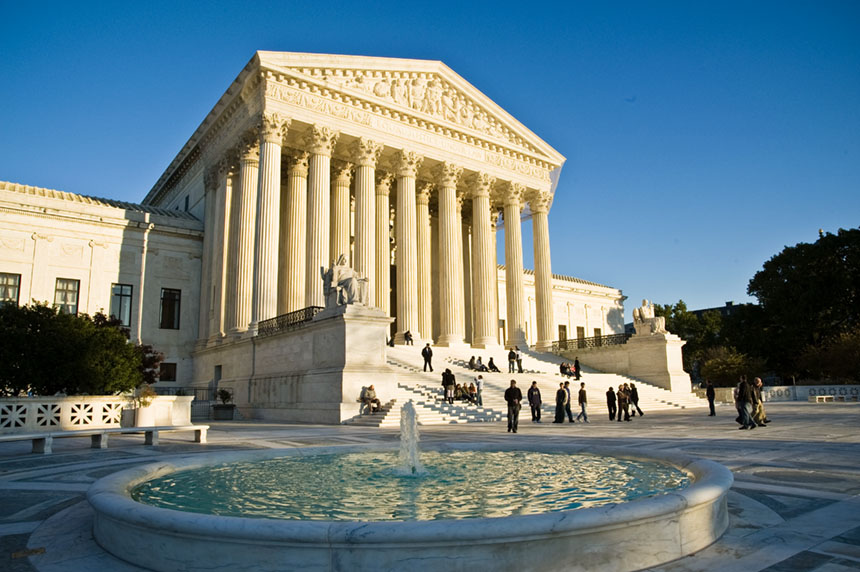
The Supreme Court is under fire right now from every political direction. From the right, President Donald Trump has spent the last year pestering, bullying, and lambasting the Court, including repeated attacks against two of his own judicial appointees for daring to rule against him.
From the left, progressive activists appear to be gearing up for another big push for court packing, judicial term limits, and other measures designed to strip the Court’s conservative justices of the 6–3 majority they now command.
That is the backdrop for Kagan’s intervention. She is not arguing that people must like the Court. Her point is narrower: certain accusations, and the escalations they invite, can come back around.
“Rubber stamp” pushback
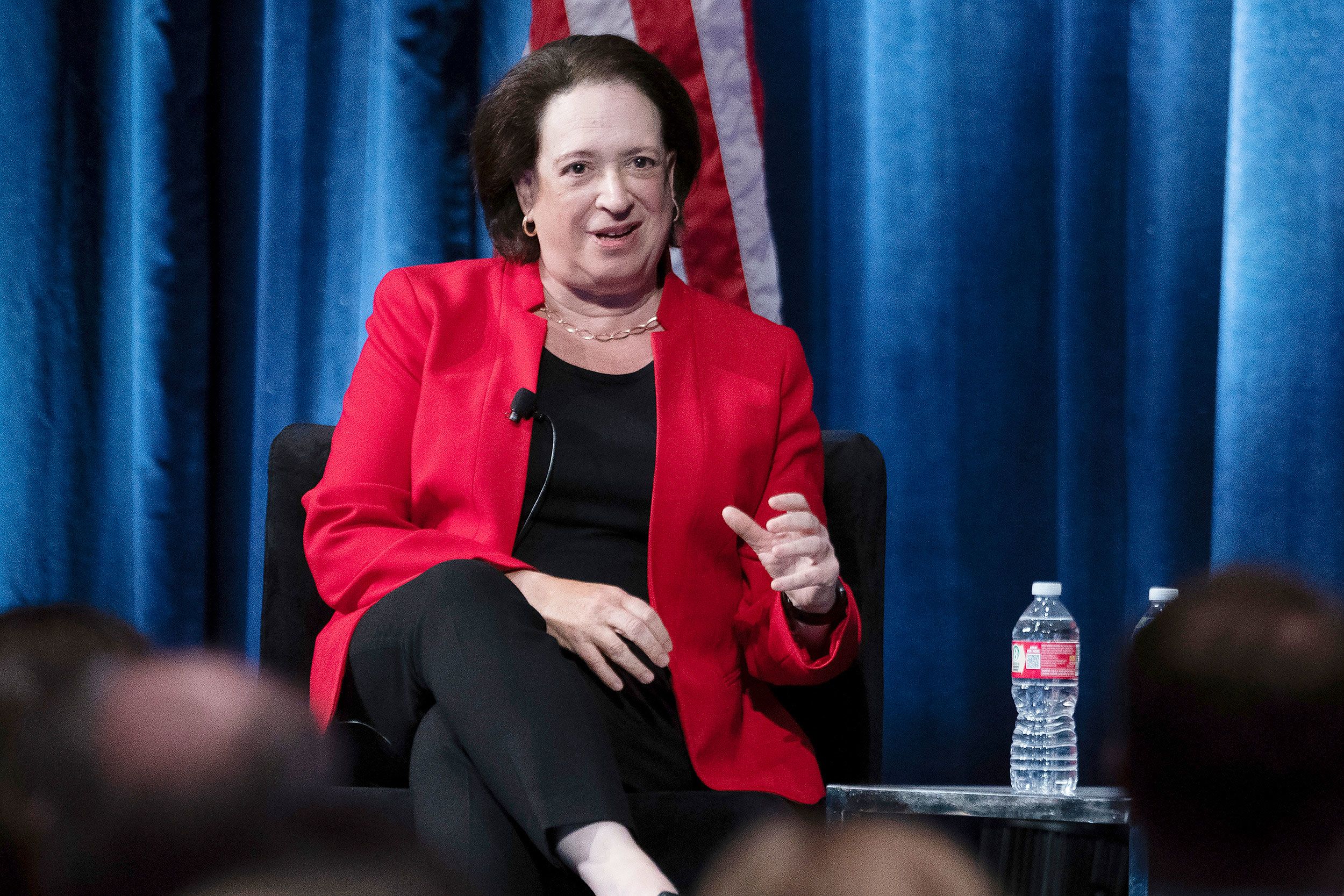
At a late-July appearance at the annual Ninth Circuit Judicial Conference in Washington state, Kagan pushed back on a familiar claim from some progressive critics: that the conservative Court is simply carrying water for President Donald Trump.
“I don't see this as a court that is just like, 'We're just going to rubber stamp what the current administration does.' You know, quite the opposite,” she said. “I think that that is a bad rap.”
Kagan is not pretending the Court is ideologically balanced. She is suggesting that it can be misleading to describe the institution as automatic political obedience, especially when the record is messier than the slogan.
Why the tariffs case mattered
Kagan singled out a decision that stung the White House: Learning Resources v. Trump, the tariffs case the administration lost 6–3. Two Trump appointees, Justices Neil Gorsuch and Amy Coney Barrett, joined the majority against the president. Kagan called it unusually significant because tariffs were central to Trump’s agenda.
“Tariffs is probably the key policy issue for this president. I mean, something he campaigned on, he ran on, he cared an enormous amount about,” Kagan said. “I don't think that there are all that many decisions in the recent times, where a court strikes down such an important policy to a sitting president.”
Of course, the Court also struck down President Joe Biden’s student debt cancellation plan in 2022, though Biden’s loss in Biden v. Nebraska did not seem to aggrieve him to anywhere near the same degree that the loss in Learning Resources v. Trump has maddened Trump. Still, Kagan’s core point holds: “rubber stamp” does not fully capture what the Court has been doing.
What she is warning about
Why make a point of defending conservative colleagues against what she called a “bad rap”? One possible answer is prudential. Kagan may be looking at where the left’s political winds are blowing and worrying about the judiciary’s future independence.
Supporters of court packing and other structural changes often present them as a one-time correction, a reset button. But the risk is that retaliation rarely stays one-time. It can become a template, and the other side eventually inherits the tools.
Reform can boomerang
Kagan’s concern fits a warning Justice Stephen Breyer made for years: court packing is a race to the bottom. The short-term satisfaction is obvious. The long-term cost is that the Supreme Court’s ability to act as a meaningful check against an overreaching president can be wrecked, whether that president is Trump or whoever comes after him.
That is the hard irony. Many progressives want a Court that can restrain executive overreach and defend rights. But a Court that is broadly treated as an extension of party power can become easier to dismiss, pressure, or ignore when it issues an unpopular ruling.
Legitimacy is fragile
When people talk about “legitimacy,” they often mean popularity. But popularity is not the same thing as the habit of acceptance that keeps institutions functioning.
The Court survives because enough Americans, and enough people inside government, accept that it has a special kind of authority. That authority is built from persuasion. Not persuasion in the talk-show sense, but in the institutional sense: the belief that decisions are grounded in law, precedent, procedure, and reasoned argument rather than raw political obedience. If the public comes to see the Court as nothing but partisans in robes, that belief can erode, and the consequences can be hard to control.
Questions for reformers
- What problem are you trying to solve? If the problem is a conservative majority, structural changes may not alter the political conditions that produced it.
- What happens when your opponents inherit your tools? If court expansion becomes normal, it will not stay in progressive hands.
- Do you want a Court that can restrain presidents? A widely delegitimized Court can be easier to sideline precisely when you most need it to stand firm.
Kagan is not asking the left to surrender. She is, at minimum, urging it to think several moves ahead, to treat constitutional structure like infrastructure rather than a scoreboard.
Expect more of this
Read Kagan’s remarks as a signal of how she sees the moment: a Court squeezed from the right by a president who attacks it, and from the left by activists ready to restructure it. In that pinch, her message to the Court’s harshest progressive critics is straightforward. Chill out, or risk breaking the very institution you may want the next time presidential power swells in the wrong hands.