
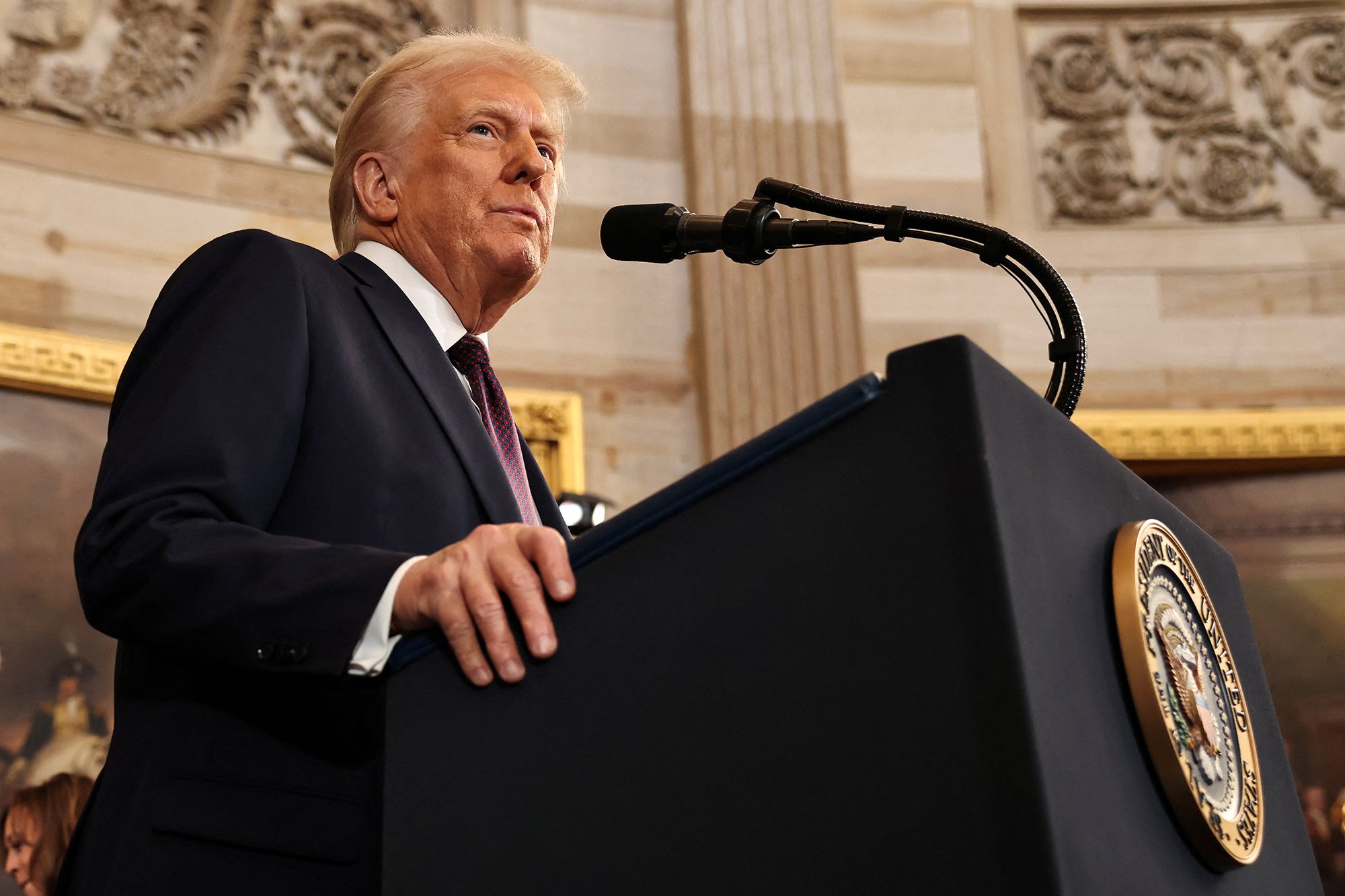
When you hear a sweeping claim like “courts have ruled dozens of times that President Trump stifled free speech,” it is worth slowing down and asking two librarian-style questions: What exactly counts as a ‘case’? and what did the judges actually say the government did wrong?
Here is the concrete number behind the chatter: judges have issued 75 federal-judge rulings finding that actions of the Trump administration infringed the First Amendment, including speech, press, and religion. Those 75 rulings arose within 93 total civil cases in which First Amendment arguments were addressed during his second term so far. Some rulings have been paused or reversed on appeal, and many were issued at an early stage of litigation. But taken together, they paint a fairly consistent picture of where federal courts believe the constitutional boundary sits.
Join the Discussion
What “75” counts
The phrase can sound like 75 full trials with final verdicts. That is not what it means.
- It is a count of cases where a federal judge ruled against the administration on a First Amendment claim. In other words, a judge concluded the government likely violated (or did violate) First Amendment protections in that lawsuit.
- It is a civil-litigation tally. The review focuses on civil lawsuits filed against the Trump administration (not criminal prosecutions), and it excludes cases brought by self-represented litigants.
- It uses a “one lawsuit, one case” counting rule. When similar lawsuits were consolidated by a court, they were counted as one case. And when a judge issued multiple rulings in the same lawsuit, that was still counted as one case.
- Many rulings are preliminary. Courts sometimes act quickly on emergency requests for a temporary restraining order or preliminary injunction. Those decisions can be strong signals, but they are not always the final word.
- Appeals matter. The administration appealed in about two-thirds of these cases, and in 15 of the 75 losses, appellate courts either put a ruling on hold or overturned it.
So yes, 75 is a real number tied to real rulings. But “75” is not the same as “75 final judgments after full trials.”
The administration’s answer
The Trump administration has not treated these losses as normal policy disputes. Officials have repeatedly labeled judges who ruled against them as “activists” who are interfering with the president’s executive authority.
In a statement criticizing the First Amendment rulings, White House spokeswoman Abigail Jackson said: “the federal judiciary has repeatedly endangered and obstructed the election choices of the American people with its unlawful rulings.”
How unusual is this
One way to sanity-check the number is to compare it with the last administration’s litigation footprint on the same constitutional terrain.
- During President Joe Biden’s term, judges addressed First Amendment challenges in 27 lower-court cases, and ruled against his administration in 13 of them.
- Many of the rulings against the Biden administration involved vaccine mandates challenged on religious-freedom grounds.
That does not settle who was “right” in any particular case. It does help show why the volume of First Amendment rulings in Trump’s second term has stood out.
What actions got challenged
Across the decisions, the fact patterns tend to fall into a few repeat categories. Think of these as the common ways a First Amendment problem shows up in court.
1) Retaliation for protected speech
The First Amendment is not only about censorship in the obvious sense (like banning a pamphlet). It also forbids the government from punishing people because of what they said or because of the viewpoint they expressed, especially when the punishment would deter an ordinary person from speaking again.
That is why judges have closely scrutinized actions that look like retribution against critics, including lawsuits alleging retaliation against universities, advocacy groups, and professional organizations when they did not align with the administration’s ideological priorities.
2) Viewpoint discrimination in grants and programs
Government does not have to fund every idea. But when the government creates a grant program or benefit, it generally cannot decide winners and losers based on which side of a public debate an applicant takes, unless the program is designed as government speech or fits a narrow set of exceptions.
One appellate ruling highlighted this issue when the 9th U.S. Circuit Court of Appeals agreed that terminating federal grants to University of California researchers as part of an anti-DEI push amounted to unconstitutional viewpoint discrimination.
3) Press access restrictions
Courts have also dealt with disputes involving media organizations seeking to block restrictions affecting their ability to cover government operations, including the White House or the Pentagon. These cases are less about whether the press can be critical (it can) and more about whether the government is using access rules as a weapon to punish disfavored coverage.
Two prominent examples involved the Associated Press and The New York Times, which won at the lower-court level when they asked judges to halt restrictions on their ability to cover the White House or the Pentagon, though some of the rulings are on hold pending appeal.
4) Protest policing and excessive force claims
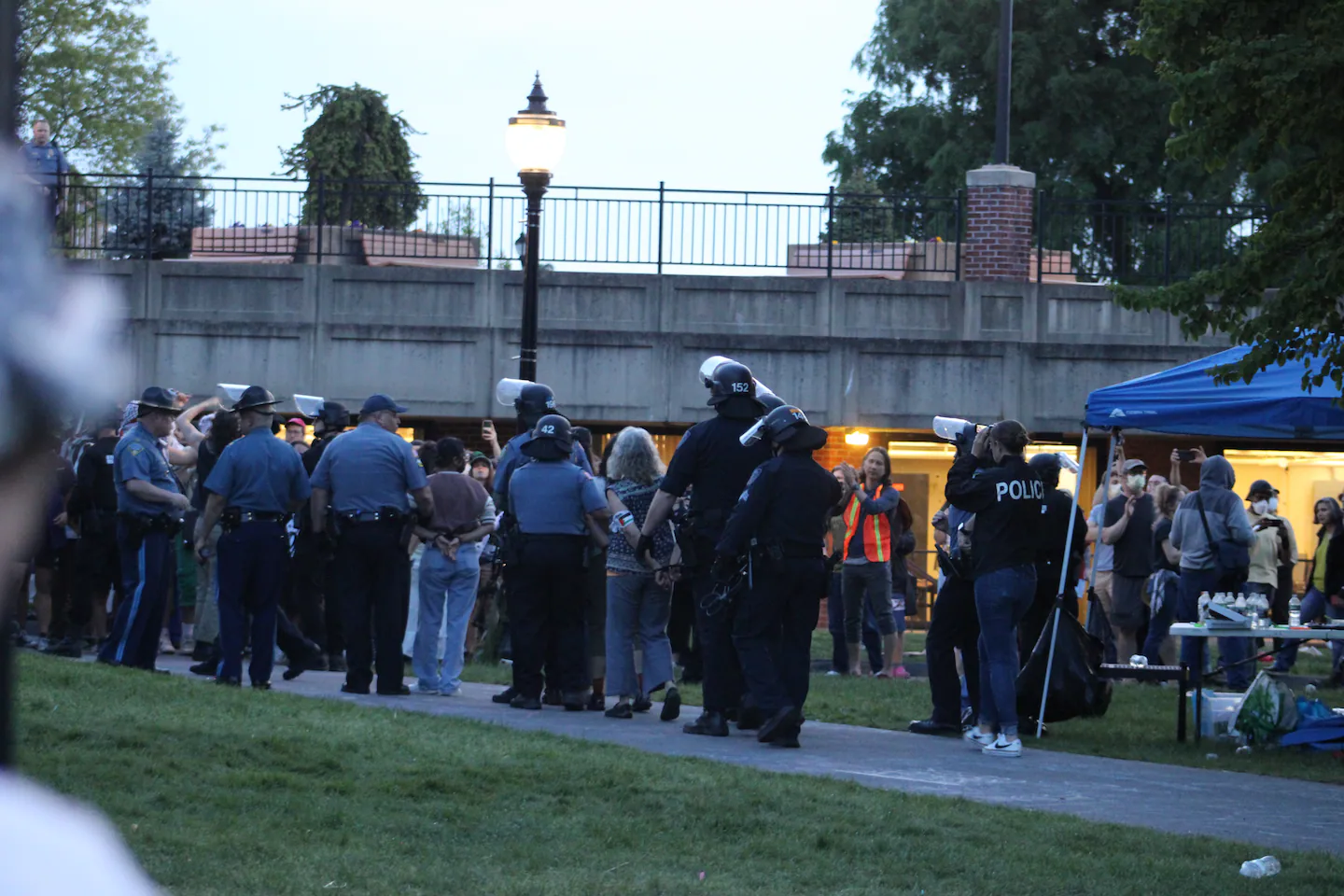
The First Amendment protects peaceful assembly and protest. That does not mean every protest is lawful, or that police may not enforce neutral public-safety rules. But when force or dispersal tactics are used in a way that appears to target a particular message, courts can treat that as a First Amendment problem, often alongside Fourth Amendment claims.
5) Immigration enforcement with a speech motive
Some of the most controversial cases involve foreign students and faculty and allegations that immigration detention, deportation, or visa revocation decisions were motivated by individuals’ advocacy on hot-button political issues, including pro-Palestinian speech.
In one notable opinion, U.S. District Judge William Young wrote: “The President's palpable misunderstanding that the government simply cannot seek retribution for speech he disdains poses a great threat to Americans' freedom of speech.”
At the same time, readers should know that immigration cases can turn on jurisdiction and procedure just as much as constitutional merits. Two appellate decisions involving Mahmoud Khalil and Mohsen Mahdawi overturned lower-court rulings on jurisdictional grounds, without deciding the underlying First Amendment questions. Khalil’s lawyers have said he plans to appeal to the U.S. Supreme Court.
A clear example: law firms
It can feel abstract to talk about “retaliation” and “viewpoint discrimination.” One of the clearest examples courts have grappled with is government targeting of lawyers and law firms based on who they represent or what legal positions they take.
In a May 2025 ruling, U.S. District Judge Beryl Howell criticized an executive order aimed at Perkins Coie that suspended security clearances and restricted access to federal buildings based on the firm’s past work for political opponents. She wrote: “Settling personal vendettas by targeting a disliked business or individual for punitive government action is not a legitimate use of the powers of the U.S. government or an American President.”
That quote gets at a core First Amendment principle: in the United States, it is not supposed to be dangerous to criticize the government, represent unpopular clients, or support a cause the President dislikes.
A Washington federal appeals court appears poised, based on arguments it heard in May, to uphold lower courts’ decisions that the campaign against law firms and lawyers infringed upon free speech.
Where the line is
If you want one practical way to think about it, the First Amendment line in these disputes often comes down to motive and neutrality.
What courts tend to reject
- Punishing speech because of viewpoint. That includes using government power to penalize a critic, a news organization, a university, or a lawyer for taking the “wrong” side.
- Using benefits as leverage for ideological conformity. Grant cuts, access restrictions, and similar tools can become constitutional problems when they track viewpoint rather than a neutral program purpose.
- Retaliation that chills future speech. Courts focus not only on the immediate target, but on the wider deterrent message.
What courts may allow
- Neutral rules applied evenly. Courts often ask whether restrictions are truly evenhanded, or whether they are selectively enforced against disfavored speakers.
- Program decisions tied to a lawful purpose. Not every funding decision is censorship. The question is whether the decision is about the program’s aims, or about a speaker’s viewpoint.
Why early rulings matter
Some readers dismiss early injunctions as “not final,” while others treat them as definitive proof of wrongdoing. The truth is in between.
- Preliminary injunctions require judges to make serious findings. Typically, courts look at likelihood of success on the merits, irreparable harm, the balance of equities, and the public interest.
- But the record is incomplete. The government may later present evidence or legal arguments that change the outcome.
- Appeals can change the frame. In February, the 9th Circuit overturned a decision that had blocked the administration from removing union bargaining rights for hundreds of thousands of federal workers, concluding the action would have happened regardless of any alleged retaliatory intent.
That is why “courts ruled 75 times” is best read as a snapshot of what multiple judges have found so far, not a final scorecard etched in stone.
What to take away
If you are trying to stay grounded amid the noise, here are three steady takeaways.
- Free speech disputes today are often about retaliation, not outright bans. Modern First Amendment cases frequently involve funding, access, visas, clearances, permits, or enforcement decisions that allegedly punish speech.
- Viewpoint discrimination is a red flag. When government action tracks ideological fault lines, judges tend to ask harder questions.
- Procedure is not a technicality. Some of the most dramatic cases can turn on whether a court has the power to hear them, when they can be heard, and what is properly in the record.
In a democracy, “bringing free speech back” is not a slogan. It is a discipline. The First Amendment allows fierce disagreement, harsh criticism, and unpopular advocacy. What it does not allow is the government using its power to make those kinds of speech personally or professionally hazardous.
Quick FAQ
Does “75 rulings” mean Trump personally lost 75 Supreme Court cases?
No. These are federal-judge rulings in civil cases, largely at the district court level, with some appellate decisions affecting outcomes. The Supreme Court is not the tribunal issuing most of these rulings.
Are these all free speech cases?
They are First Amendment cases, which include speech, press, religion, and assembly. Many involve speech directly, but some are framed through religious freedom or press access.
Does “75” mean 75 separate rulings in 75 separate lawsuits?
Not necessarily. Similar lawsuits that were consolidated were counted as one case, and multiple rulings within the same lawsuit were counted as one case for tally purposes.