
When public officials call leaks “treason,” they are usually making a moral accusation, not describing a charge that fits the Constitution’s definition. That distinction matters because the Framers did something rare in constitutional drafting: they fixed the meaning of treason in the text itself.
Recent political statements promising long prison sentences for “treasonous” leaking revive an old confusion. Americans often use treason as shorthand for disloyalty. Federal law uses it as a crime with precise elements, strict proof rules, and a narrow target.
Join the Discussion
The treason clause is narrow
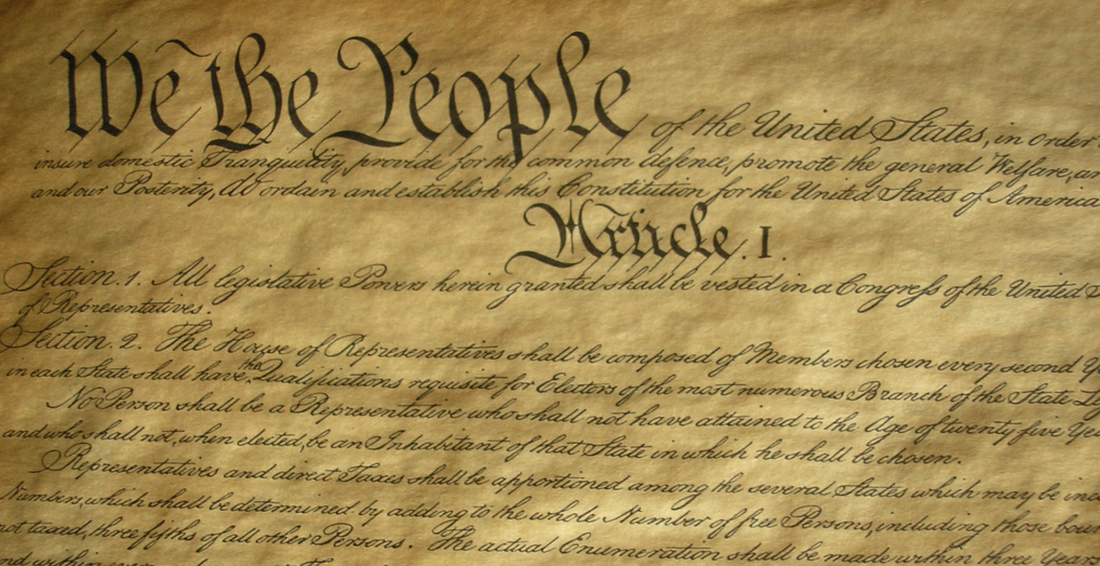
Treason is defined in Article III, Section 3, and it is one of the few crimes the Constitution itself defines:
“Treason against the United States, shall consist only in levying War against them, or in adhering to their Enemies, giving them Aid and Comfort.”
Two features are especially important here.
1) “Only” means only
The word “only” is not decorative. The treason clause was written in reaction to English history, where “treason” could expand to cover political dissent. The American version is narrow by design. If the conduct does not fit levying war or adhering to enemies by giving aid and comfort, it is not treason, no matter how reckless or damaging it looks.
2) The Constitution sets a special proof rule
Article III adds an evidentiary hurdle that is unusually strict for criminal law:
“No Person shall be convicted of Treason unless on the Testimony of two Witnesses to the same overt Act, or on Confession in open Court.”
That “two witnesses to the same overt act” requirement is one reason prosecutors rarely bring treason charges. Another is the substance itself: the clause’s definition is narrow, and many national security cases fit more cleanly under other statutes.
Leaking and treason
Usually, leaking classified information is not treason. Not because leaks are harmless, but because treason is not a general “betrayal of the country” statute.
To reach treason through a disclosure, the government would need to show something like this:
- An “enemy” relationship: the recipient is an enemy of the United States in the constitutional sense. Historically, that has meant an entity in a state of open hostilities or war with the United States, not simply any foreign country. Modern conflicts can make the edges harder to define, especially with non-state actors and undeclared wars, but the concept remains narrower than “foreign adversary.”
- “Adhering” plus “aid and comfort”: not merely a careless or unauthorized disclosure, but conduct that meaningfully helps that enemy and reflects allegiance or adherence.
- An overt act proved by two witnesses to the same act, or an open-court confession.
Most leak scenarios do not satisfy those elements. A person can violate secrecy obligations, damage national security, and commit serious felonies without committing constitutional treason.
If not treason, then what?
Leak prosecutions typically rely on federal statutes, not Article III. A common workhorse is the Espionage Act of 1917, including provisions now codified in 18 U.S.C. § 793 and related sections.
In broad strokes, these laws can criminalize certain kinds of unauthorized handling of national defense information, with the exact elements depending on the subsection and facts, such as willfulness, “reason to believe” harm, and duties to return material. Examples include:
- Unauthorized retention of national defense information in circumstances covered by the statute.
- Unauthorized transmission of national defense information to people not entitled to receive it.
- Disclosure where the government alleges the material could injure the United States or advantage a foreign nation, as the relevant provision requires.
Two points that surprise people:
1) “Espionage” is not limited to classic spy behavior
You do not necessarily have to be working for a foreign government to face an Espionage Act charge. The statute has been used against people who disclose or mishandle “national defense information,” a term that has been litigated for decades.
2) “Classified” and “national defense information” are related, not identical
Classification is an executive-branch system for controlling information. Espionage Act cases often revolve around whether the material qualifies as “national defense information,” whether the defendant had the required mental state under the charged subsection, and whether the disclosure or retention was unauthorized.
Other leak-related statutes can also matter in particular fact patterns, including 18 U.S.C. § 798 (communications intelligence), 18 U.S.C. § 641 (theft or conversion of government property), and narrower laws governing specific categories such as protected identities in certain contexts.

First Amendment limits
“Leaks” usually involve at least two roles: a source (the person with access) and a publisher (a journalist, outlet, or platform that disseminates). The constitutional analysis changes depending on which role you mean.
Employees and contractors
If you hold a clearance or have access through government service, you are usually bound by statutes, regulations, and nondisclosure agreements. Courts have historically given the government substantial room to punish unauthorized disclosures by insiders, even when the insider claims a public-interest motive.
The press
The First Amendment offers the press significant protection against prior restraints and punitive targeting. The classic case is New York Times Co. v. United States (the Pentagon Papers case), where the Supreme Court rejected the government’s attempt to stop publication in advance.
But Pentagon Papers did not create a blanket rule that publication can never be punished after the fact. It was primarily a prior restraint decision. Prosecution of publishers remains rare and constitutionally fraught, and most leak cases focus on the source rather than the outlet. Still, later disputes have raised difficult questions about how broadly written disclosure statutes might apply in edge cases.
So the durable takeaway is this:
- Publishing classified information is often constitutionally protected in many contexts, especially against censorship before publication.
- Leaking classified information by someone with authorized access is far more likely to be prosecuted as a crime.
Who prosecutes leakers?
Presidents and other officials talk about prosecution all the time. Constitutionally, the executive branch enforces federal law, and the president sits atop that branch. But the system is not designed for a president to personally try cases, sign indictments, or declare guilt.
DOJ brings cases under statutes
Federal prosecutions are filed by the Department of Justice through U.S. Attorneys and DOJ components. Charges have to match statutory elements, survive judicial review, and be proved to a jury beyond a reasonable doubt.
Discretion is real
The executive branch can prioritize certain types of cases. It can also decide not to bring charges. But it cannot change the Constitution’s definition of treason, and it cannot convict anyone by declaration.
Courts and juries are the backstop
Even in national security cases, judges decide what evidence comes in, juries decide guilt, and appellate courts review legal errors. The treason clause is a reminder that, in America, even the worst-sounding accusation still has to fit the legal framework it is brought under.
Why treason is hard to prove
There is a temptation in every era to treat damaging speech as existential sabotage. The Framers had seen what happens when governments can stretch “treason” to silence opponents. So they did three things at once:
- They defined treason narrowly (war or aiding enemies).
- They required an overt act, not just bad intent or rhetoric.
- They demanded special proof (two witnesses to the same act, or confession in open court).
Article III also limits treason’s spillover punishment. Even when Congress sets penalties by statute, the Constitution bars “corruption of blood” and limits forfeiture to the life of the person convicted. The design is not a loophole. It is a constitutional decision about how a free state restrains itself when it feels most threatened.
Bottom line
- Treason is a constitutional crime with a narrow definition and a high proof requirement.
- Most leaks are prosecuted, if at all, under statutes like the Espionage Act and other disclosure or theft laws, not Article III.
- The First Amendment strongly protects publishing and limits prior restraints, but it does not provide a universal shield to insiders who disclose classified information.
- A president can demand enforcement, but cannot redefine treason or personally convict anyone.
Quick FAQ
Can leaking information during wartime be treason?
It can be, but only if it fits Article III: levying war against the United States or adhering to enemies by giving them aid and comfort, proved with the clause’s special evidentiary requirements. Wartime alone does not transform every harmful disclosure into treason.
Is “helping a foreign country” automatically treason?
No. Treason requires adherence to the United States’ enemies and aid and comfort, not merely contact with or benefit to a foreign state. Other crimes may apply.
Is calling something “treason” legally meaningful?
Not by itself. It is a public label. Courts apply the constitutional definition and relevant federal statutes, not rhetoric.