
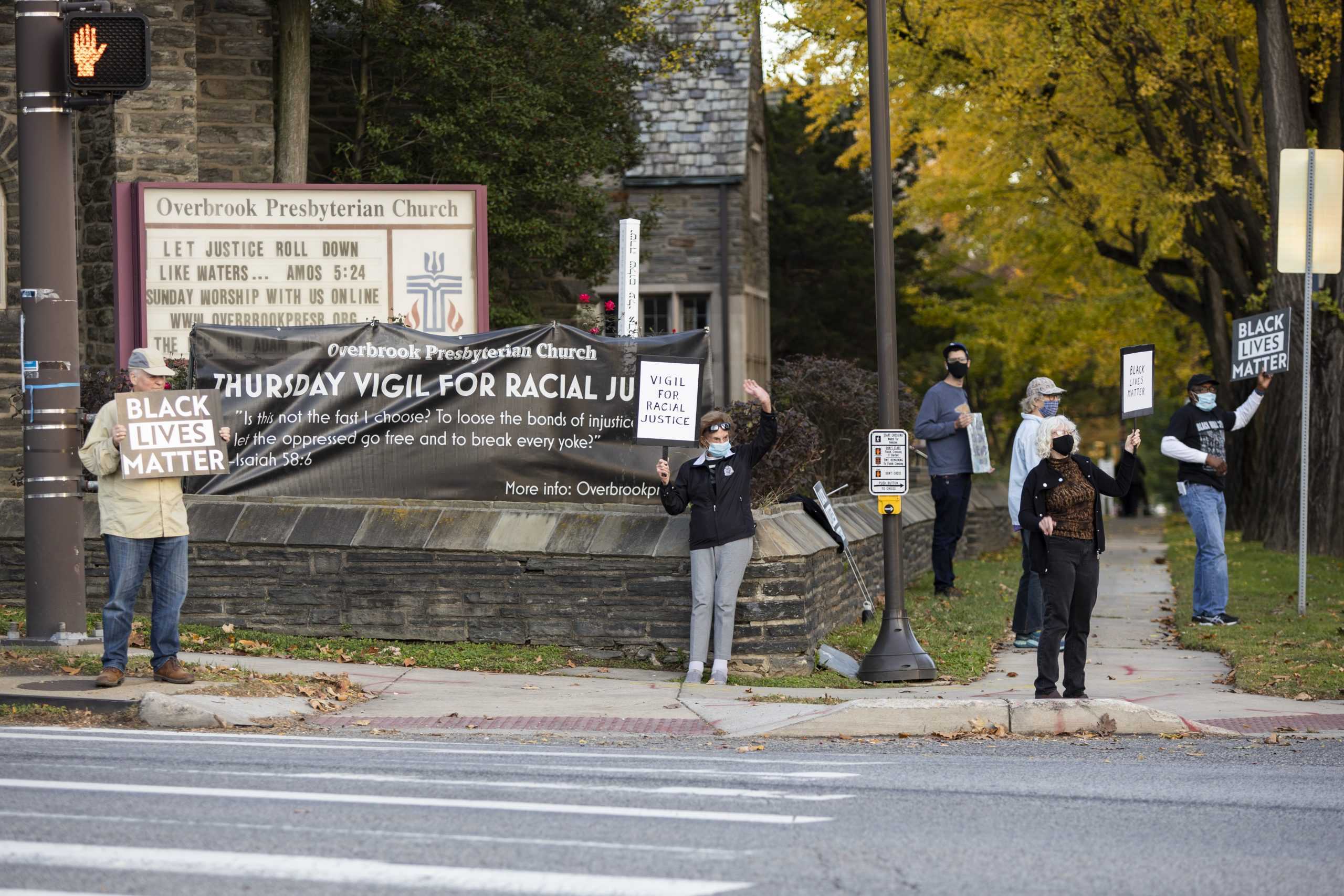
You can protest outside a church. In many situations, it is classic First Amendment activity: speech, assembly, petition, all happening on a public sidewalk where Americans have always argued about public questions.
But you cannot turn “protest” into a veto on worship. The Constitution protects free speech and the free exercise of religion at the same time, which means government can draw lines that keep entrances usable, services audible, and people safe.
That tension is the point of the current debate over a reported bipartisan House proposal that would create civil penalties that some coverage has described as fines up to $10,000 for protests that disrupt worship within 100 feet of a house of worship entrance. If you have not seen a bill number and text, treat those specifics as unconfirmed and subject to change. The core problem is that many public discussions have centered on a concept and a headline number while leaving key legal details unclear, including the operative text, definitions, enforcement mechanism, and whether the rule would apply only during services or around the clock.
In First Amendment law, those details are not technicalities. The difference between “near” and “targeted,” and between “loud” and “disruptive,” is where cases are won or lost.
Join the Discussion
The baseline rule
If you are standing on a traditional public forum like a sidewalk, a park, or (most often) a street right-of-way, your speech gets the strongest First Amendment protection. The government cannot ban a message just because it is offensive to parishioners, politically unpopular, or pointed directly at the church’s beliefs.
That does not mean anything goes. The First Amendment is not a permission slip for conduct that stops other people from using public space, entering buildings, or exercising their own rights. In practice, what is allowed can turn on local ordinances and facts like crowd size, amplified sound, permits, and whether ingress and egress are actually impeded.
Usually protected
- Holding signs on a public sidewalk across the street.
- Chanting at a volume that does not interfere with a service and complies with content-neutral noise rules.
- Leafletting without blocking foot traffic.
- Peaceful picketing that keeps moving and leaves entrances open.
Often punishable
- Blocking doors, steps, or driveways so people cannot enter.
- Harassing, threatening, or physically intimidating individuals attending services.
- Obstructing sidewalks so pedestrians cannot pass.
- Creating noise or disorderly conduct that, under objective standards, materially interferes with the service or access.
Notice the pattern. The government has a far easier time regulating conduct and access than regulating ideas.
Two rights collide
Church protest disputes are not just speech versus government. They are often a collision between speech and assembly and other people’s free exercise of religion, plus the government’s basic responsibility to keep public ways passable and prevent intimidation and violence.
The Free Exercise Clause does not give churches a right to silence critics on public property. But it does reinforce a legitimate government interest: people should be able to enter and participate in worship without obstruction, threats, or disruption. That interest matters when a law is challenged as a reasonable way to protect access and safety rather than as a back door to punish unpopular viewpoints.
What government can do
Most lawful restrictions near houses of worship fall under a familiar First Amendment category: content-neutral time, place, and manner rules.
In general, a regulation is more likely to survive constitutional review if it:
- Is content neutral, meaning it applies regardless of what the protest is saying.
- Is narrowly tailored to serve an important government interest such as public safety, access, or preventing objective disruption.
- Leaves open alternative channels to communicate, such as protesting across the street, at different times, or at a different distance.
This is why you often see permit requirements for large demonstrations, rules against blocking sidewalks, and restrictions on amplified sound near hospitals, schools, courts, and yes, houses of worship. Government is not required to let one group take over the doorway of a building simply because they have a message.
What courts look at
When lawmakers draw fixed lines near sensitive locations, courts tend to ask whether the line is actually doing access and safety work, or whether it is sweeping in peaceful sidewalk speech.
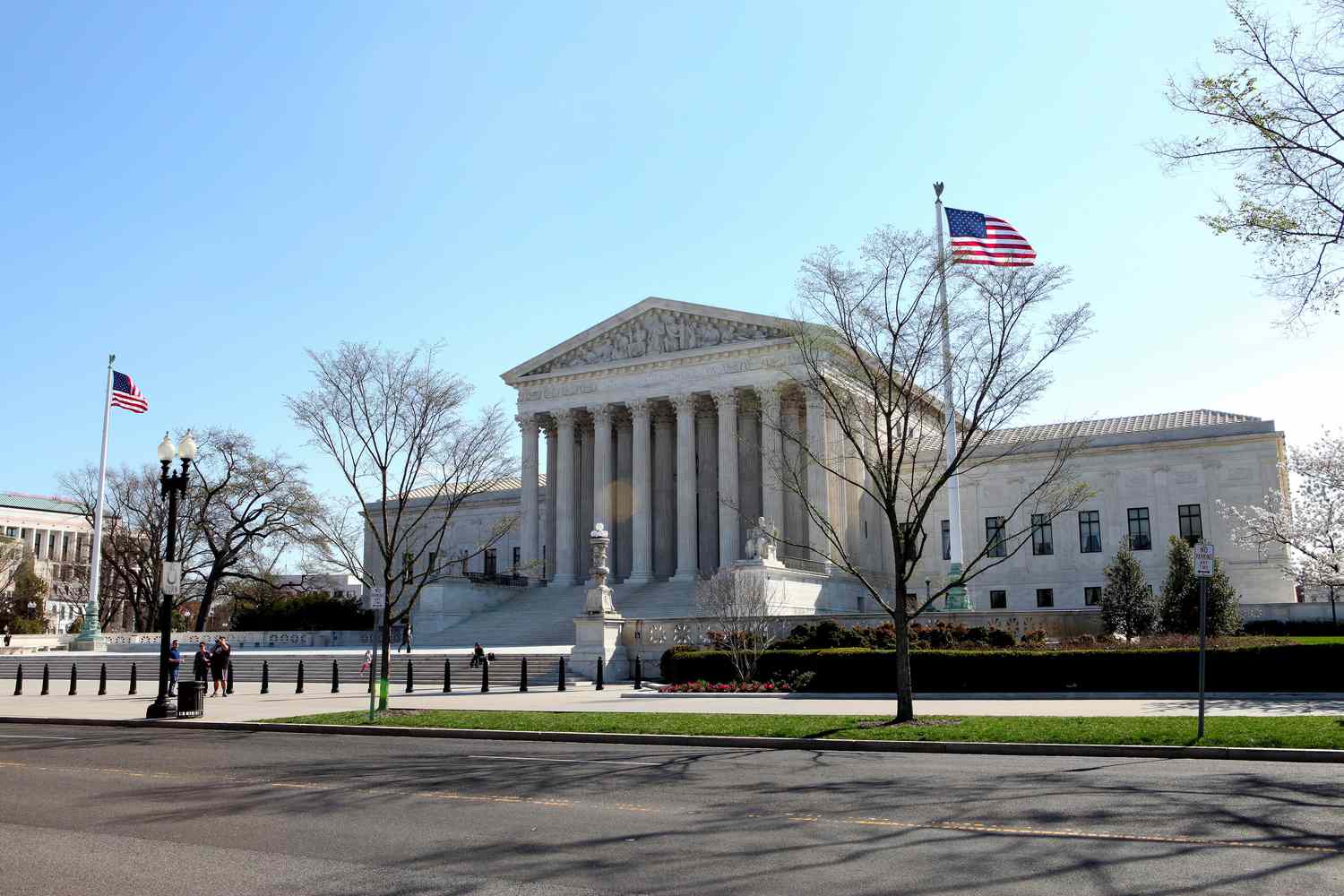
Two Supreme Court reference points help map the terrain, even though they come from the clinic context rather than churches. In Madsen v. Women’s Health Center and Hill v. Colorado, the Court upheld certain location-based limits aimed at access and harassment concerns. Later, in McCullen v. Coakley, the Court struck down a broader buffer zone where the state had not shown it needed such a wide, speech-restricting tool instead of enforcing narrower laws like obstruction and disorderly conduct.
One caution for readers applying those cases today: the Court’s modern First Amendment doctrine, including its emphasis on strict scrutiny for content-based rules after Reed v. Town of Gilbert, has made courts more skeptical of restrictions that are said to be “neutral” but in practice burden one side’s speech. Hill remains on the books, but its reasoning has been criticized in later decisions and litigants frequently ask the Court to revisit it. Outcomes are intensely fact-specific.
The takeaway is not that buffer zones are always illegal or always fine. The takeaway is that breadth, tailoring, and real-world alternatives matter, and courts pay close attention to whether ordinary sidewalk conversation and leafletting is being pushed away along with genuinely obstructive behavior.
So a 100-foot zone
A fixed distance line sounds simple, but constitutionally it is complicated.
A 100-foot limit could function in at least two different ways:
- A total buffer zone: no protest activity within 100 feet, period.
- A disruption-based rule: protest is allowed, but disruptive conduct within 100 feet triggers penalties.
Courts are generally more skeptical of a blanket ban that sweeps in peaceful speech in a traditional public forum. They are typically more receptive to rules that target obstruction, intimidation, excessive noise under objective standards, threats, or physical interference, especially when the law is written and enforced without regard to viewpoint.
That is why the key word in the reported description is not protest. It is disrupt. Everything turns on how that word is defined and how much discretion it gives the people enforcing the rule.
What “disrupt” means
Disruption can mean two very different things.
It can mean objective interference: blocking entrances, preventing people from entering, making it impossible to hear, stopping a service from continuing, or refusing to comply with lawful crowd-control orders.
Or it can drift into subjective offense: congregants feel upset, a message feels hateful, a service is distracted. The First Amendment does not let government punish speech merely because listeners are angry or distressed. Courts sometimes describe the risk as a heckler’s veto, and they are wary of laws that let offended listeners convert their reaction into punishment for a speaker.
A well-drafted law usually ties disruption to measurable conduct: obstruction of ingress and egress, true threats, intimidation, unlawful harassment, violation of content-neutral decibel limits keyed to time and place, or interference that a reasonable observer could identify without reference to the message. Some discussions invoke “fighting words,” but that doctrine is extremely narrow and rarely sustained in modern cases. Most real-world enforcement turns on threats, harassment, obstruction, and objectively unreasonable noise.
Civil fines and crimes
The reported description uses civil fines, up to $10,000, rather than creating new criminal offenses. That choice is not just political. It has constitutional and practical consequences.
Why civil enforcement can change things
- Different procedures: civil enforcement can involve agency-style processes or lawsuits rather than arrest and prosecution.
- Different burdens and timelines: some civil regimes are faster to administer, though due process still applies.
- Different deterrent effect: a large fine can chill speech even without jail time.
Why civil fines still raise First Amendment issues
A civil fine is still government punishment for expressive activity. If the law is vague, overbroad, or selectively enforced based on viewpoint, it can violate the First Amendment just as surely as a misdemeanor would.
In First Amendment litigation, the label “civil” does not automatically save a law. Courts look at what the law does, not just what it is called.
How enforcement design matters
Even if the goal is constitutionally legitimate, enforcement details can decide whether a measure is narrowly tailored or dangerously discretionary.
- Who enforces: a DOJ civil action, an agency process, a federal summons-style ticket, or a private right of action all raise different risks of overreach and different opportunities for fast challenges.
- What process comes first: warning requirements, objective criteria (for example, decibel limits or obstruction standards), and prompt hearings and appeals reduce vagueness and arbitrary enforcement.
- What plaintiffs challenge: broad, unclear laws are more vulnerable to facial challenges; aggressive or one-sided enforcement often becomes an as-applied case paired with a request for a preliminary injunction.
These are not side issues. A vague “disruption” fine with no warning, no clear standard, and no quick neutral review can chill lawful protest even if it is rarely imposed.
Selective enforcement risk
Viewpoint discrimination is one of the quickest ways for a restriction to fail. On paper, a rule can be content neutral. In practice, it can be enforced only against disfavored speakers.
In real cases, plaintiffs often try to prove selective enforcement with patterns: who was cited and who was not under similar conditions, internal enforcement guidance, public statements by officials, or policing that turns on complaints about a message rather than objective conduct. This is another reason precise definitions and constrained discretion matter as much as the distance number.
Can Congress do it
Protest regulation is usually local: city ordinances, state disorderly conduct laws, trespass rules, noise codes, and permit systems.
Congress can legislate in this area, but it still needs both constitutional authority to regulate the conduct and a rule that respects First Amendment limits. Depending on the final text, the most plausible federal hooks tend to be:
- Federal property and federal enclaves, where Congress has clearer authority to set rules for use and access.
- Interstate commerce, which would be a major vulnerability if the law is applied to purely intrastate, noneconomic expressive activity on local sidewalks. A nationwide distance-and-fines rule that reaches ordinary local protest would invite serious constitutional challenge on both federal power and First Amendment grounds.
- Spending conditions, where Congress encourages states to adopt policies in exchange for funds, within constitutional limits.
Section 5 of the Fourteenth Amendment is usually not a straightforward fit here because it is aimed at remedying constitutional violations by state actors, not regulating private protest as such. A bill relying on Section 5 would need a tight theory tied to state action and documented constitutional harms.
What to confirm in the bill
Because the public debate has been driven by reported summaries, a responsible legal analysis has to separate what is known from what still needs verification in the text. Before treating “100 feet” and “$10,000” as settled, readers should look for the bill number, sponsors, committee path, and, most importantly, the definitions and enforcement section.
- Bill identity: bill number, sponsors, and introduced date, plus the operative language (not just a summary).
- Trigger timing: only during scheduled services, or at all times?
- Place definitions: how is “house of worship” defined, and does it cover the whole property year-round?
- Entrance definitions: main doors only, or every door, driveway, and sidewalk approach?
- What counts as disrupt: obstruction and threats, or a looser “disturbs” standard?
- Intent requirement: does it require knowingly or willfully disrupting?
- Enforcement mechanics: who issues the fine, what is the standard of proof, is there a warning requirement, and what is the hearing and appeal process?
- Preemption and scope: does it displace state and local rules, and where does it apply (federal land only or nationwide)?
- Private lawsuits: is there a private right of action, or is enforcement limited to the government?
- Viewpoint safeguards: does the text constrain discretion enough to reduce selective enforcement risk?
If a 100-foot, $10,000 civil fine regime becomes law, its survival in court is likely to turn less on the distance number and more on definitions and enforcement mechanics. The same phrase can be a narrow tool for protecting access or a broad tool that sweeps up peaceful protest.
FAQ
Is it illegal to protest outside a church?
Not inherently. Peaceful protest on public property is usually protected. It can become unlawful when it crosses into obstruction, threats, trespass, or conduct that materially interferes with access or a service under content-neutral rules.
Can a church make you move off the sidewalk?
If you are on a public sidewalk, the church generally cannot order you to leave simply because it dislikes your message. Police can require you to move if you are violating a lawful ordinance, blocking passage, trespassing onto church property, or creating a public safety issue.
Are buffer zones constitutional?
Sometimes. Courts scrutinize fixed distance zones because they can sweep in peaceful speech. A buffer zone tied to access, safety, and objective disruption concerns is on firmer ground than a blanket no-protest perimeter.
Does “civil fine” mean fewer constitutional protections?
No. Civil enforcement can change procedure, but the First Amendment still applies. A vague or overbroad civil fine can be struck down the same way a criminal law can.
The bottom line
The First Amendment protects the right to stand outside a church and criticize what happens inside. It also allows government to keep the doorway open and the service functioning.
A 100-foot rule with steep civil fines will live or die on its precision. If it targets obstruction and genuine disruption in a content-neutral way while leaving real room for speech nearby, it has a plausible constitutional path. If it punishes peaceful sidewalk protest because it is uncomfortable, it runs into one of the First Amendment’s oldest rules: government cannot make public space safe for one side of the argument by fining the other into silence.