
Every election cycle, the same question comes roaring back: if Americans vote on Tuesday, why are officials still counting on Friday, or next week, or sometimes longer?
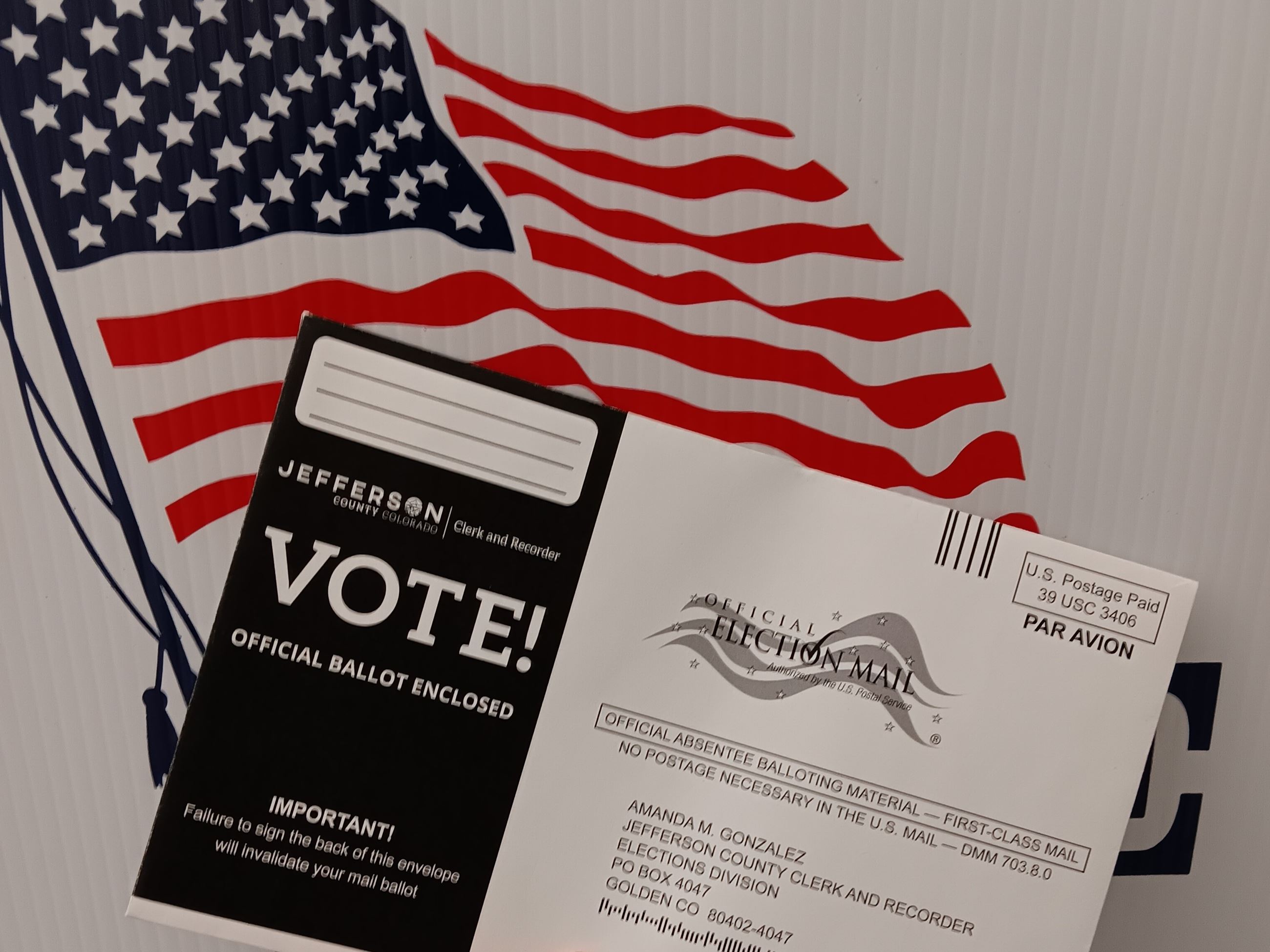
That confusion gets sharper when lawmakers point to a single rule they want nationwide: all mail ballots must be received by the time polls close on Election Day. In recent cycles, proposals along those lines have been associated with Sen. James Lankford and Sen. Mike Lee, typically framed as “receipt by poll close” requirements for federal elections. Because bill language and scope can change from Congress to Congress, readers should check the latest bill text and summary to confirm the current bill number, date, and whether it applies only to federal races or also tries to reach state contests.
But the legal question underneath the headlines is more fundamental than the politics: who has the power to set ballot deadlines, and what does the Constitution actually require?
Join the Discussion
Election Day is a date, not a receipt rule
The Constitution does not say, anywhere, that ballots must be received by Election Day. It also does not say counting must end on Election Day.
What the Constitution does do is divide authority over federal elections among three actors:
- States set most of the day-to-day rules in the first instance.
- Congress can replace or override many of those state rules for federal elections.
- Courts resolve disputes and enforce constitutional and statutory limits, but they do not have a free-floating power to rewrite election calendars.
So when you hear “counting after Election Day,” you should immediately ask: counting which ballots? Ballots mailed and received by Election Day? Ballots mailed by Election Day but received later? Provisional ballots that require verification? Cure ballots where a signature issue must be fixed? Different rules can apply to each bucket, and those rules come from a mix of state law, federal statutes, and constitutional limits.
One practical reason “Tuesday” often turns into “Friday” is simply process. Many states can start verifying and preparing mail ballots before Election Day (for example, checking signatures or confirming the voter is eligible), but may be barred from tabulating or reporting results until polls close. The public sees the reporting lag, even when the back-end work started days earlier.
The Elections Clause
The core constitutional text for House and Senate elections is the Elections Clause in Article I, Section 4:
“The Times, Places and Manner of holding Elections for Senators and Representatives, shall be prescribed in each State by the Legislature thereof; but the Congress may at any time by Law make or alter such Regulations…”
That is the basic power map for congressional elections. States set the rules first, but Congress has a built-in override.
Two practical consequences follow:
- States can choose a receipt deadline or a postmark deadline for mail ballots in their election codes, subject to federal constraints like the Voting Rights Act, constitutional protections (including equal protection), and federal rules for certain voters such as military and overseas voters under UOCAVA.
- Congress can impose a national standard for federal elections, including a rule that ballots must be received by poll closing time, if it can pass a statute through the normal legislative process. The Elections Clause power is broad, but it is not limitless, and any new national deadline would likely be tested in court for conflicts with existing federal statutes (including UOCAVA timing rules) and for undue burdens on the right to vote.
In other words, these proposals fit within Congress’s enumerated Elections Clause authority for House and Senate races, even though the policy tradeoffs and litigation risk are real.
Presidential rules are different
That is the Article I track. Presidential elections run on a different constitutional track, and it matters.
For presidential elections, the Constitution assigns the key authority to states through the Electors Clause (Article II, Section 1), which gives state legislatures the power to direct how electors are appointed. Congress also plays a role by setting the uniform day for choosing electors, currently set by statute at 3 U.S.C. § 1, and by counting electoral votes under the Twelfth Amendment and federal statutes.
But even here, “uniform day” does not automatically answer the mail question. A state can structure its process so that votes cast by that day, including votes cast by mail under state-defined rules, are validated and counted afterward. The contested edge is what counts as the elector “appointment” having occurred on the day Congress set, even if verification, canvassing, and certification continue afterward. Much of the real-world litigation energy shows up in those boundary disputes.
Can states count after Election Day?
In most states, the answer is yes, if state law says those ballots are valid under pre-set rules.
There are two main models for mail ballots:
- Receipt-by-Election-Day: the ballot must arrive by poll close (or sometimes by the end of Election Day).
- Postmarked-by-Election-Day plus a grace period: the voter must mail it by Election Day (proved by a postmark or other evidence), and the ballot can arrive later within a state-set window. The tradeoff is straightforward: voters get protection against mail delays, but results can take longer.
Under either model, officials almost always continue counting after Election Day because election administration includes steps that cannot realistically be completed while polls are open: signature review, envelope processing, scanning, eligibility checks, adjudicating mismatched marks, processing provisional ballots, and running cure periods.
It also helps to separate “counting” from the broader endgame. Much of what the public calls counting is part of the canvass and certification process, where counties reconcile totals, resolve duplicates, confirm provisional ballots, and produce official results on a legally defined timeline.
What is constitutionally sensitive is not “counting after Tuesday.” It is whether the rules defining a valid vote are set in advance and applied evenhandedly.
Courts and late changes
The Supreme Court has repeatedly signaled skepticism of last-minute judicial changes to election rules. This idea is often called the Purcell principle, after Purcell v. Gonzalez (2006), and it shows up in more recent emergency applications where the Court has been wary of lower-court orders that alter procedures close to an election.
The point is not that the Constitution forbids counting after Election Day. The point is structural: election rules are supposed to come from the political branches empowered to set them, and sudden judicial changes can create confusion and unequal treatment.
This is where modern deadline fights often land: not on a single sweeping constitutional command, but on narrower questions like:
- Did a state court interpret state law, or did it effectively rewrite it?
- Did a federal court order a change that conflicts with a state statute?
- Did the change come so late that it risks inconsistent administration across counties or voters?
That posture is also why it is easy to overread Supreme Court emergency orders as “rulings” on the merits of receipt deadlines. Often, the Court is addressing timing, institutional role, and the risk of disruption, not announcing a universal constitutional deadline.
Could Congress require receipt by poll close?
For federal congressional elections, Congress has a strong constitutional argument that it can require ballots to be received by poll closing time under the Elections Clause power to “make or alter” regulations governing the “Times, Places and Manner” of House and Senate elections.
Whether Congress should impose a national receipt deadline is a policy question. Constitutionally, the text gives Congress room to act, but any statute would still need to fit alongside other federal laws, including protections for military and overseas voters, and it would be litigated under constitutional doctrines that evaluate burdens on voting.
For presidential elections, Congress’s authority exists but looks different and can generate different disputes because of Article II’s structure, the Electoral College calendar, and federal statutes governing the post-election timeline.
Why some states take longer
When a state takes longer to finish, it is usually because of volume and verification, not because the state is applying brand-new standards after the fact. The most common reasons include:
- High mail-ballot use, which requires signature checks and envelope processing before tabulation.
- Late-arriving ballots allowed by law (postmarked by Election Day but received later).
- Provisional ballots cast by voters whose eligibility must be confirmed.
- Cure processes that let voters fix a missing signature or other issue within a set time.
None of those practices is inherently unconstitutional. The failure point would be if officials change the legal standard after the election, or apply standards unevenly between similarly situated voters or counties.
What the Constitution does not guarantee
The Constitution does not guarantee a single, national answer to “When is a ballot due?”
It also does not guarantee that election outcomes will be known on election night. What it guarantees, indirectly, is a framework of authority:
- States run elections and set rules first.
- Congress can standardize federal election rules if it chooses.
- Courts police the boundaries and resist disruptive late shifts, especially under the Purcell principle.
In other words, “Election Day” is the day we vote. It is not always the day election administration ends.
Quick answers
Can mail ballots legally be counted after Election Day?
Yes, if state law treats them as valid, such as ballots received after Election Day but postmarked by Election Day, and ballots that require verification, canvassing, or cure processing.
Who sets mail-ballot deadlines under the Constitution?
States set them in the first instance. For House and Senate elections, Congress can override under the Elections Clause, subject to constitutional limits and other federal statutes.
Does the Supreme Court ban counting after Election Day?
No. The Court’s recent posture is more about limiting last-minute judicial changes to election rules (the Purcell principle) than imposing a universal counting deadline.
If Congress passes a federal receipt-by-Election-Day law, would that automatically bind state races too?
No. It would directly govern federal elections. States might still align their state-election deadlines for administrative reasons, but they are not constitutionally required to do so for purely state offices.