
When U.S. troops are attacked overseas, the instinctive question is simple: can the president hit back immediately, or does Congress have to approve it first?
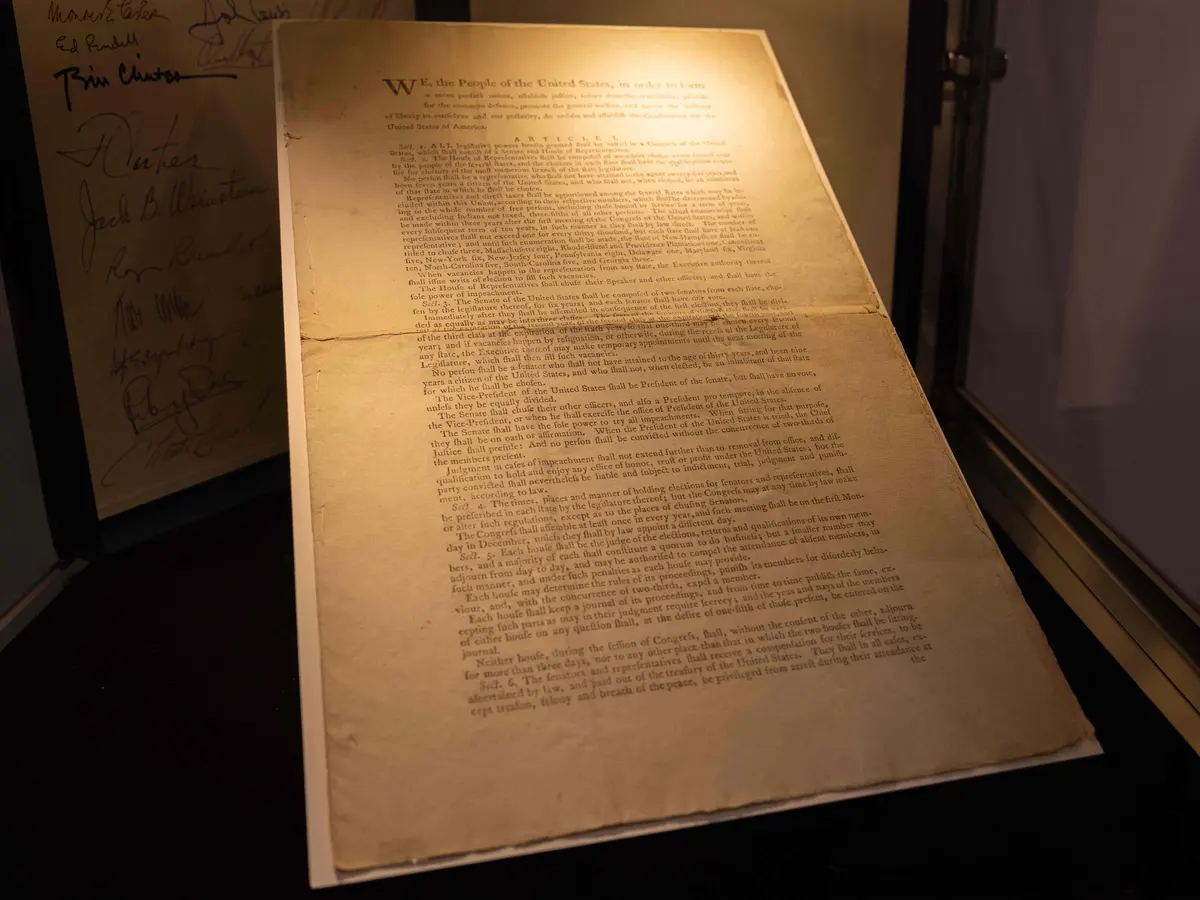
The Constitution gives you two answers at once. Article II makes the president the commander in chief. Article I gives Congress the power to declare war, fund armies, and set rules for the military. The tension is not a bug. It is the design.
That design matters any time political rhetoric turns into operational reality, like the public calls for retaliation after attacks on U.S. forces in Jordan in early 2024. The hard part is not the first strike back. The hard part is what follows.
Join the Discussion
The two war clauses people mix up
Start with the Constitution itself.
- Congress has the power to declare war (Article I, Section 8), to raise and support armies, to provide and maintain a navy, and to make rules governing the armed forces.
- The president is commander in chief of the armed forces (Article II, Section 2).
Those clauses answer different questions. Congress decides whether and how the nation will authorize and sustain major hostilities, and it controls the resources to keep fighting. The president directs the military as an operational matter, including responding to emergencies and protecting U.S. forces.
So yes, the president can usually respond to an attack. But that is not the same thing as having unilateral authority to start, broaden, or prolong a war of choice.
Immediate defense is the president’s strongest case
If U.S. forces are attacked, presidents from both parties have treated retaliation or defensive strikes as part of the commander in chief role: protecting American personnel, preventing follow-on attacks, and restoring deterrence.
Constitutionally, this is the president’s most defensible zone: action that is limited, urgent, and tied to protecting U.S. forces. Think “stop the incoming threat” or “disable the launch capability” rather than “open-ended campaign to remake the region.”
But the Constitution does not hand presidents a magic phrase that makes every escalation “defense.” That is why the next layer, statutory law, matters.
The War Powers Resolution
After Vietnam, Congress tried to impose a framework for modern conflict through the War Powers Resolution of 1973. It does not erase Article II. It tries to force transparency, consultation, and a decision point.
In simplified terms, the War Powers Resolution says:
- The president must submit a report to Congress within 48 hours after introducing U.S. forces into hostilities or into situations where imminent involvement in hostilities is clearly indicated.
- The law also expects the president to consult with Congress “in every possible instance” before introducing forces into hostilities and to keep consulting while forces remain at risk.
- Absent a declaration of war or specific authorization, the president generally must end the involvement within 60 days, with a possible 30-day withdrawal period.
Two realities sit underneath those neat numbers.
- Presidents often argue the Resolution is unconstitutional or interpret it narrowly, especially by disputing whether a particular operation counts as “hostilities.” The Libya debate in 2011 is the modern example people point to when this definitional fight turns into a real policy dispute.
- Congress often avoids a direct up-or-down authorization vote, relying instead on funding fights, oversight, and political pressure.
So the Resolution rarely “stops” a conflict by itself. But it is the statutory measuring stick everyone uses when asking whether a response has turned into something bigger.
What counts as “war” in practice?
One reason this debate never ends is that the Constitution uses the word war like a legal category, while modern presidents use force in ways that look like war without always being called one.
Historically, the United States has fought many significant conflicts without a formal declaration of war. Courts have also tended to avoid refereeing the boundary between Congress and the president, often dismissing war-powers lawsuits on standing or political question grounds rather than reaching the merits.
That leaves a practical rule of thumb that is not perfect, but helps:
- Short, defensive, discrete actions to protect U.S. troops fit most comfortably under Article II.
- Sustained, escalating, or geographically expanding operations start looking like the kind of national decision the declare-war clause was meant to force into Congress’s hands.
This is where “retaliation” can quietly become “war.” Not because a single strike is always unconstitutional, but because the logic of retaliation tends to invite the next step, and the next.
What about AUMFs?
Even when Congress has not passed a fresh authorization for a specific crisis, presidents often point to older statutes, especially the post-9/11 Authorizations for Use of Military Force. The two key ones are the 2001 AUMF (focused on those responsible for 9/11) and the 2002 Iraq AUMF (still on the books, though widely debated).
Whether an older AUMF actually covers a new situation depends on facts: who attacked, what group is involved, whether the target is connected to the entities Congress named, and whether the operation is aimed at that authorized enemy or at a sovereign state as such.
One wrinkle worth saying out loud: the idea of “associated forces” is largely an executive branch interpretation that grew up around the 2001 AUMF, not a phrase Congress used explicitly in that statute. That interpretive gap is where a lot of modern war-powers disputes live.
This is one reason Congress’s war power is not only about dramatic votes. It is also about writing authorizations narrowly, updating them, and refusing to let yesterday’s statutes become a permanent blank check.
Congress’s strongest lever is funding
In theory, Congress can declare war or refuse to. In reality, Congress’s most reliable constitutional tools are:
- Appropriations: no money, no sustained campaign.
- Conditions on funding: money only for defined missions, timelines, or targets.
- Oversight and investigations: forcing facts into the open, including casualty counts, legal rationales, and intelligence claims.
- New authorizations or prohibitions: the cleanest way to clarify what the president may and may not do.
The constitutional point is that the founders did not rely on one switch labeled “war.” They built a whole circuit board: declarations, funding, rules, confirmations, treaties, and elections.
Domestic law vs international law
One more point that often gets lost: a president can have domestic constitutional and statutory authority to use force and still face separate questions under international law. Internationally, the usual legal hooks are self-defense under the U.N. Charter and host-state consent. Those are different questions from who inside the U.S. government must authorize a strike.
A clear answer, with fine print
Yes, a president can usually order a prompt, limited military response to an attack on U.S. troops without waiting for Congress, especially when the goal is immediate defense and preventing additional strikes.
No, that does not mean the president can unilaterally begin an open-ended war. Under the Constitution’s structure and the War Powers Resolution, prolonged or escalating hostilities are supposed to force Congress to either authorize the conflict or shut it down, most realistically through funding and explicit statutory limits.
The friction you are seeing in moments like this is the same friction the framers expected: energy in the executive when seconds matter, and democratic accountability through Congress when the nation is being steered into something lasting.
Quick FAQ
Does the Constitution require Congress to approve every strike?
No. The Constitution does not contain a “Congress must approve each use of force” rule. It splits powers in a way that allows fast defense, while reserving sustained war-making decisions to Congress through declarations and, crucially, funding.
If troops are attacked, is retaliation automatically legal?
Retaliation is not a constitutional word with automatic force. The legal questions are about purpose and scope: is the action necessary to defend U.S. forces and prevent imminent harm, or is it effectively the opening move of a broader conflict?
What happens if the president ignores the War Powers Resolution?
Often, the fight becomes political rather than judicial. Courts commonly avoid deciding these disputes on the merits. Congress can respond through funding restrictions, legislation, hearings, and the electoral consequences that follow.