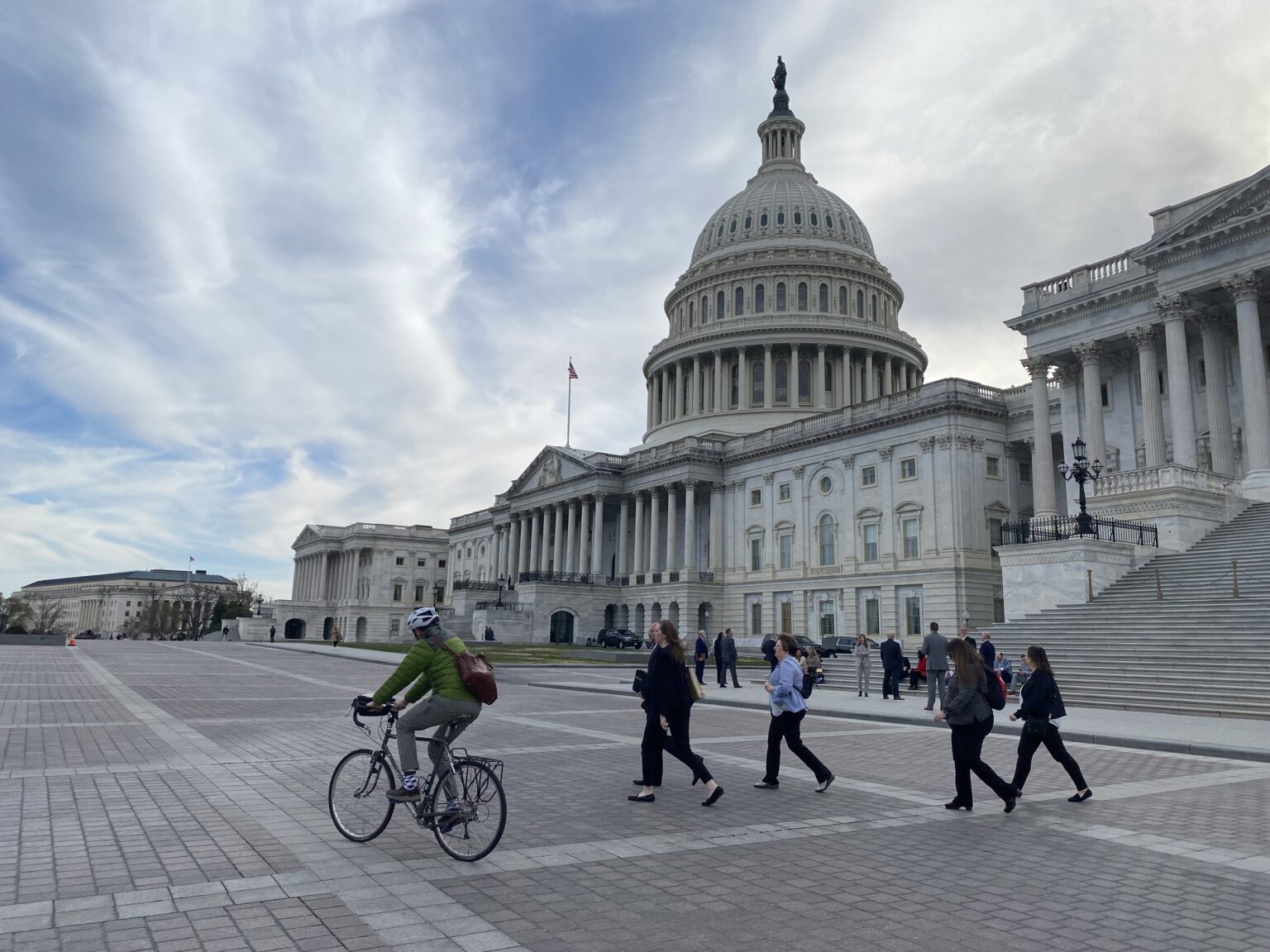
America has a constitutional switch for war. It is supposed to click in Congress.
That is the design. But it has never been a perfect on off system. Presidents have long argued that the Commander in Chief role includes some ability to use force quickly, especially to repel attacks, protect U.S. personnel, or respond to fast-moving threats. Congress, meanwhile, has often tolerated or retroactively supported those actions. That tug of war is part of the story, not a footnote.
Modern conflicts also rarely arrive with a clean label like “war,” a defined enemy, and a victory parade on a set date. So instead of declaring war, Congress often uses a different tool: an Authorization for Use of Military Force, better known as an AUMF.
An AUMF is not a loophole written in invisible ink. It is a statute. A law. Passed by Congress and signed by the President, like any other. Yet it sits right on the fault line between what the Constitution says about war and how the United States actually fights it.

Join the Discussion
What is an AUMF?
An AUMF is a congressional law that authorizes the President to use U.S. military force under specified conditions. It is Congress saying, in legal form, “You may use force, and here is the purpose and scope.”
That scope can be narrow or broad. An AUMF can name:
- An enemy (a country, an organization, or people responsible for an attack)
- A mission (self-defense, counterterrorism, protecting shipping lanes, enforcing a U.N. resolution)
- Geography (within a particular country, region, or globally)
- Time limits (rare, but possible)
- Reporting requirements (often tied to the War Powers Resolution)
Sometimes, though, an AUMF is written like a tightly fenced yard. Other times, it is written like a key that fits doors Congress has not even seen yet.
Where are war powers?
The Constitution splits war-related power on purpose. It is not a bug. It is the point.
Congress: Article I
Article I, Section 8 gives Congress the power to:
- Declare war
- Raise and support armies
- Provide and maintain a navy
- Make rules for the armed forces
- Call forth the militia
- Control the purse through appropriations
In other words, Congress is designed to decide whether the nation will enter sustained, organized conflict, and to supply the legal and financial oxygen for that conflict.
The President: Article II
Article II names the President the Commander in Chief of the armed forces. That matters because it gives the President operational control once force is authorized or once the nation is under attack and immediate action is necessary.
The friction lives in the middle: when Presidents initiate or expand military action first, then point to their commander-in-chief power, national security necessity, or prior statutory authorizations as justification.
Why not declare war?
The United States has declared war 11 times across five wars. The last formal declarations were in 1942 during World War II. Since then, major conflicts have been fought under other legal frameworks.
An AUMF is politically and legally flexible in ways a declaration of war is not:
- It can target non-state actors like terrorist networks, which do not fit the classic “nation vs. nation” model.
- It can be written with broad language that allows operations to evolve without a new vote every time conditions change.
- It lowers the symbolic temperature. “War” is a constitutional category and a political word with weight. Many lawmakers prefer a term that sounds limited even when the consequences are not.
- It can be paired with ongoing appropriations, allowing conflicts to continue through funding even if public attention fades.
None of this changes the constitutional question underneath it: if Congress holds the power to declare war, how much “war-like” authority can it hand over through an AUMF before the label stops mattering?
Major AUMFs
2001 AUMF (post-9/11)
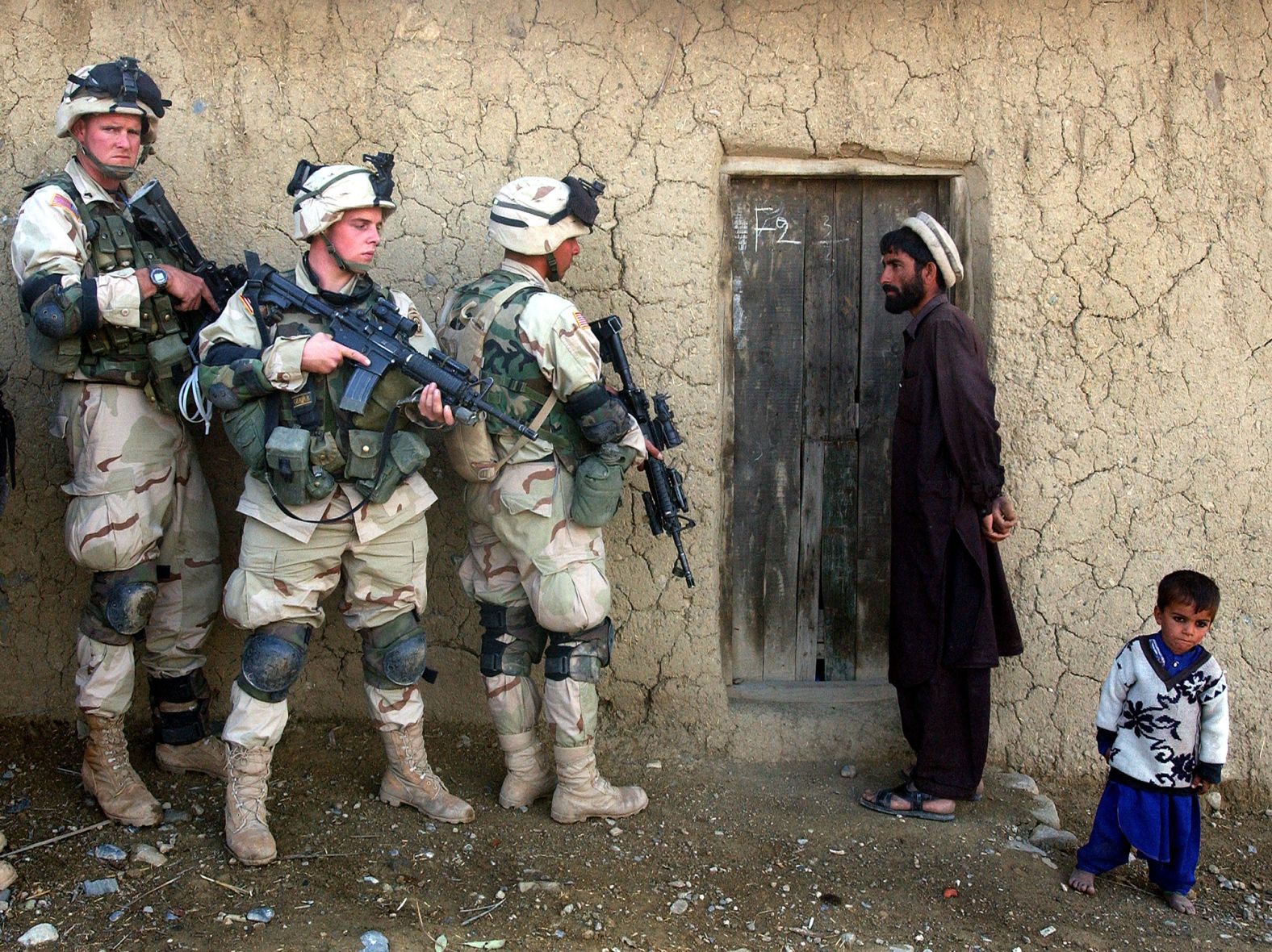
Days after the September 11 attacks, Congress passed the 2001 AUMF authorizing force against those who “planned, authorized, committed, or aided” the attacks, and those who harbored them. The core language empowered the President to use “all necessary and appropriate force” for that purpose.
That “necessary and appropriate” phrase became a workhorse. Over time, the executive branch argued that the authorization also covered certain “associated forces.” Important nuance: “Associated forces” is not in the statute’s text. It is an interpretive concept developed in executive-branch practice and tested in litigation, especially in detention cases.
The ongoing debate is not whether Congress meant to respond to 9/11. It did. The debate is whether a statute passed for one moment in history can be interpreted to cover a shifting network of groups and conflicts decades later. One frequently cited example is the legal and political debate over operations against ISIS, including arguments about whether and how the 2001 AUMF could apply.
2002 AUMF (Iraq)
In 2002, Congress passed an AUMF authorizing force against Iraq. The statute authorized action to defend the national security of the United States against the continuing threat posed by Iraq and to enforce all relevant U.N. Security Council resolutions.
Whatever one thinks of the decision to invade Iraq, this AUMF shows how an authorization can outlive its original rationale. Even after the main phase of that war ended, questions remained about whether the 2002 authorization could be invoked for later operations connected to Iraq or within the region.
In recent years, lawmakers from both parties have periodically pushed to repeal the 2002 AUMF, arguing that keeping it on the books invites mission creep and weakens Congress’s role.
Other examples
Congress has authorized force in other, more specific contexts too. For example:
- 1991: authorization tied to the Persian Gulf conflict after Iraq invaded Kuwait.
- 2002: authorization for Iraq, later invoked in debates about follow-on operations.
And sometimes the point is not that Congress authorized force, but that it did not. The 2011 Libya operation, for instance, became a high-profile argument about what counts as “hostilities” under the War Powers Resolution and how far Article II power can reach without a new AUMF.
AUMFs and War Powers
Think of the War Powers Resolution of 1973 as Congress’s attempt to reclaim a steering wheel after the Vietnam era. It does not eliminate presidential military action. It tries to structure it.
In broad strokes, the War Powers Resolution:
- Requires the President to notify Congress within 48 hours when U.S. forces are introduced into hostilities or situations where hostilities are imminent.
- Creates a clock that generally requires termination within 60 days, with a possible 30-day extension for safe withdrawal, unless Congress authorizes continued involvement.
One practical complication is that “hostilities” is a contested term. Executive branch lawyers and members of Congress have not always agreed on what operations trigger the clock.
Here is where AUMFs become central. An AUMF is one of the primary ways a President can satisfy the War Powers Resolution’s requirement for congressional authorization for longer-term action.
But the War Powers Resolution has its own controversy. Many Presidents have argued it cannot constitutionally limit the commander-in-chief’s authority, or they comply “consistent with” the Resolution without conceding Congress can force withdrawal on the statute’s terms. So the practical influence of the Resolution often depends on politics as much as law.
What are the limits?
On paper, the limit is the text Congress writes. In reality, the limit is a mix of law, interpretation, and leverage.
1) Statutory limits
If an AUMF is narrow, it constrains the executive branch. It can specify who may be targeted, where force may be used, and what goals justify action.
If it is broad, it effectively hands the President a mission license with flexible boundaries.
2) Constitutional and legal limits
Even with an AUMF, the President is still bound by the Constitution. And Congress retains powers that matter in practice, especially:
- Funding (appropriations and conditions on spending)
- Oversight (hearings, reporting mandates, investigations)
- New legislation (repeal, replacement, or narrowing authority)
Courts sometimes get involved, especially in detention and due process cases tied to war powers. Several post-9/11 cases shaped the landscape by testing what the government can do under an AUMF and what protections individuals retain. At the same time, courts often avoid broad showdowns over warmaking itself through doctrines like standing and political question, especially when the elected branches are actively contesting the issue.
3) Political limits
The most reliable limit on an AUMF is often not a court ruling. It is whether Congress is willing to:
- Vote to narrow or repeal it
- Refuse funding for particular operations
- Pay a political cost for saying “no” during a crisis
In that sense, AUMFs expose a civics truth we do not always like to say out loud: the separation of powers works best when both branches actually insist on using their powers.
The debate now
The modern AUMF debate is not simply “war or peace.” It is about how a democracy keeps control over force when conflict becomes permanent background noise.
Too broad, too old, or both?
Critics argue the 2001 AUMF has been stretched beyond its original target. Supporters counter that terrorist networks mutate, and the authorization must be able to adapt to evolving threats.
The constitutional tension is that an authorization meant for one set of perpetrators can become, through interpretation, a standing permission slip for conflicts that Congress never debated in the same way.
Repeal and replace ideas
Many reform proposals share common features:
- Sunset clauses that force Congress to revisit the authorization after a set number of years
- Clearer enemy definitions to limit who counts as an “associated force”
- Geographic boundaries or requirements for Congress to approve expansion to new countries
- Mandatory reporting on civilian harm, legal basis, and mission objectives
Opponents of strict limits warn that warfare does not wait for legislative calendars, and that overly rigid authorizations could hinder legitimate defense and intelligence-driven operations.
The core question
At bottom, the AUMF debate is a question about constitutional design: if Congress can hand over its war decision in broad strokes, and the President can fill in the details for decades, what remains of the declare war power besides a historical artifact?
Plain-English takeaway
An AUMF is Congress’s modern mechanism for authorizing military force without using the formal words “declare war.” It is legal authority, but its real-world meaning depends on how broadly it is written, how expansively it is interpreted, and whether Congress is willing to update it when the mission changes.
Also worth keeping in view: AUMFs are not the only routes presidents use to justify force. Claims of Article II authority, treaty-based arguments, and the steady pressure of appropriations can all shape what military action looks like in practice.
The Constitution splits war powers to prevent unilateral, permanent war making. AUMFs are where that split gets tested. Not in theory, but in real time, under pressure, with lives and national credibility at stake.
If you want a single civics test question to carry with you, make it this: when force is used in America’s name, is Congress actively deciding, or merely ratifying what has already begun?