
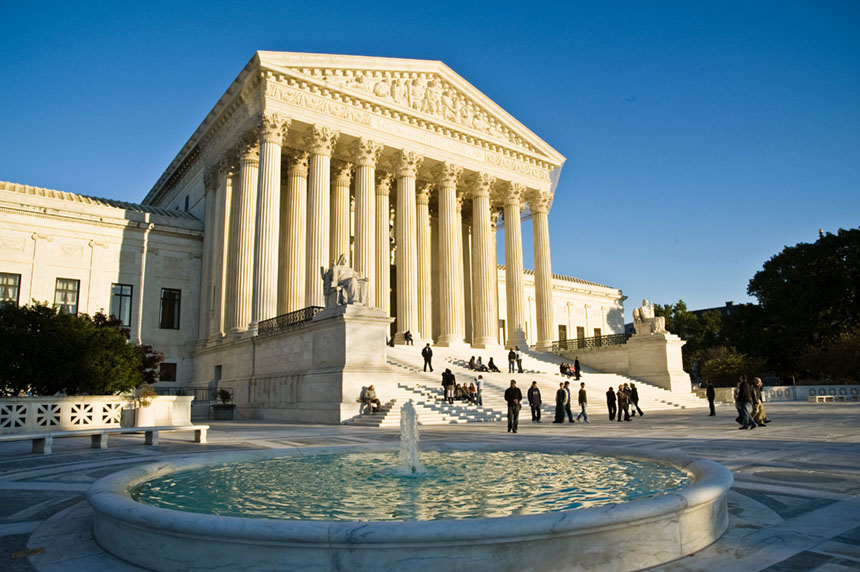
The Supreme Court just did something that sounds sweeping and, in practice, is more like a legal pause button.
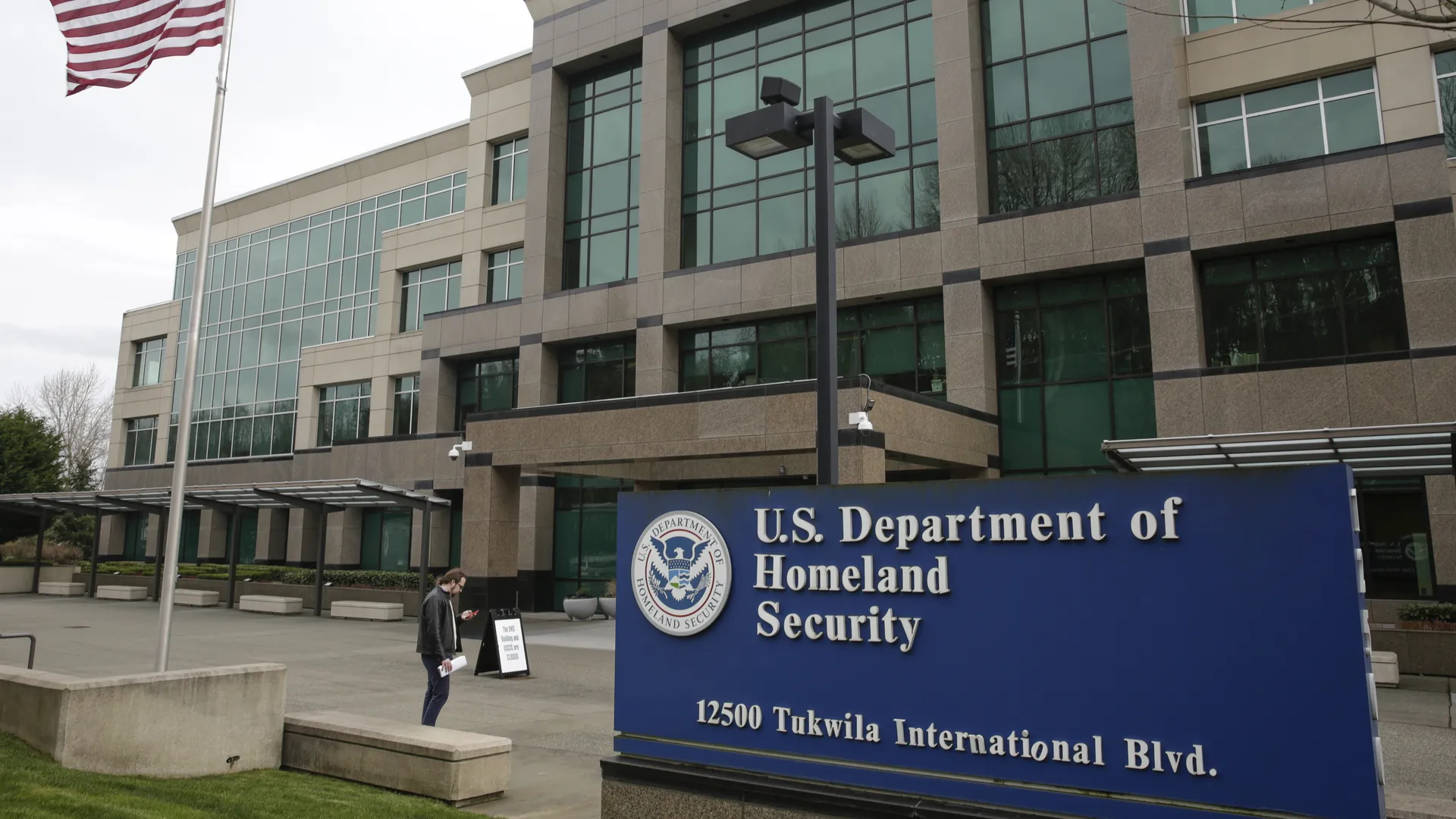
In an emergency order issued Friday, the Court temporarily allowed the Trump administration to move forward with a mass voter verification system that relies on a federal database, while the case continues through the normal appeals process. The program at the center of the dispute is the Department of Homeland Security’s Systematic Alien Verification for Entitlements system, better known as SAVE.
This is not a final ruling on whether the administration’s expansion of SAVE is lawful. It is a temporary stay that changes what can happen right now while the courts decide what the law ultimately allows.
Join the Discussion
What the Court allowed
The order permits states, for the time being, to use SAVE as part of efforts to verify the eligibility of voters on their registration rolls. Participation is voluntary. No state is compelled by the order to run its voter list through the system, and the order does not rewrite state election codes.
The practical effect is that a federal judge’s earlier decision blocking the administration’s revamped version of SAVE is paused while the appeal proceeds.
Why it reached the Court
A U.S. District Court judge, Sparkle L. Sooknanan, blocked the updated SAVE use in June, concluding the administration’s approach was unlawful. In her ruling, she raised two concerns that show up in almost every modern voting administration fight: privacy and error.
Her order reasoned that the system could intrude on Americans’ privacy rights and could lead to eligible voters being wrongly removed from the rolls. When a federal appeals court declined to freeze that order, the administration asked the Supreme Court to step in.
The Court did, but only temporarily, and only while the appeal continues.
The core tension
In civics class, we talk about “the right to vote” like it is a single, simple constitutional guarantee.
In real constitutional law, it is a balancing act built out of multiple moving parts: state control over election administration, federal statutes that set guardrails, and constitutional protections that prevent eligible citizens from being wrongly shut out.
That is what makes voter list verification so combustible. A system designed to catch ineligible registrations can, if poorly designed or poorly implemented, produce exactly the harm courts worry about in election administration: lawful citizens losing access to the ballot.
Jackson’s dissent
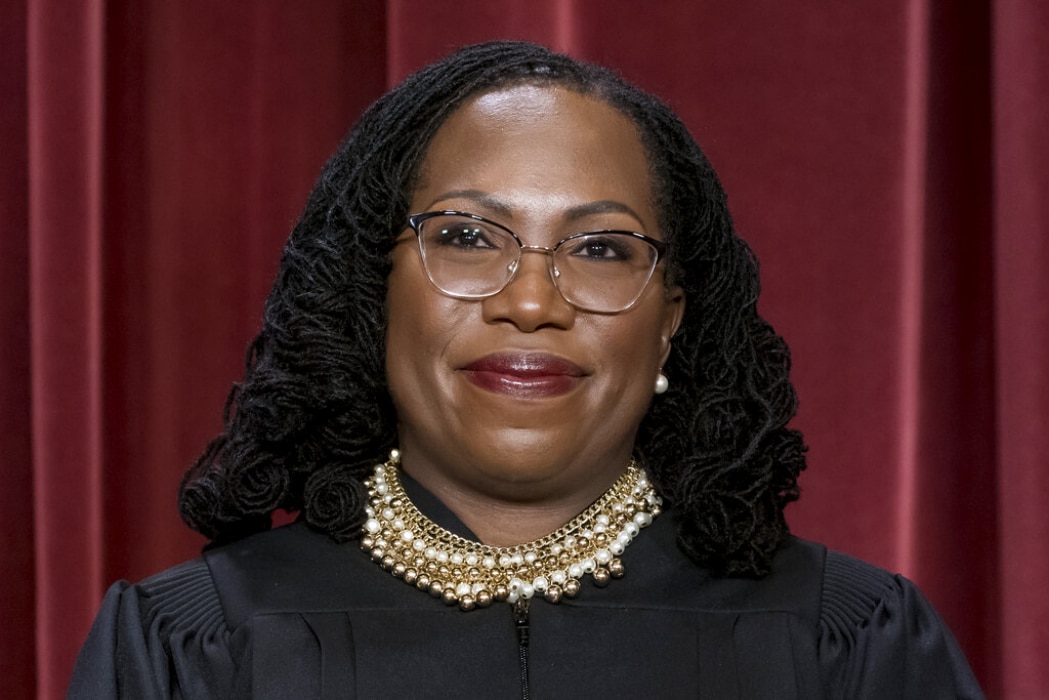
Justice Ketanji Brown Jackson dissented, joined by Justices Elena Kagan and Sonia Sotomayor.
Jackson framed the stakes in human terms, not database terms. “In my view… the harm caused by burdening or disenfranchising even a few lawful voters outweighs the nonexistent harm that the Government experiences when it is prevented from taking an action that it likely lacks the authority to take,” she wrote. “This imbalance, along with the Government’s improbable merits arguments, should have compelled the Court to deny the stay.”
The majority’s reasoning
The majority’s order did not treat SAVE as some new, experimental tool. The Court pointed to SAVE’s history as a system that has long allowed federal, state, and local agencies to verify citizenship and immigration status using records maintained by the Department of Justice, the Department of Homeland Security, and the Department of State.
The majority also pushed back on the fear of instant, silent voter purges. It noted that federal officials must contact people flagged by SAVE to request more information if citizenship cannot be confirmed through the database.
That kind of contact requirement can matter in election administration because it can raise due process questions about notice and the opportunity to respond, especially when verification is done at scale.
Supporters of the stay also argue Congress anticipated this kind of information sharing. Michael Morley, director of the Election Law Center at Florida State University, said the order allows the federal government to share citizenship-status information it already has to help election officials register eligible voters while preventing non-citizens from being added to the rolls. He added that the Court recognized Congress expressly endorsed such information sharing in 1996 amendments to federal immigration law.

Why the 90-day window matters
There is another constraint that keeps this from turning into an overnight nationwide voter roll rewrite: existing federal law generally prevents systematic voter roll removals within 90 days of an election.
That timing rule is one reason the immediate effect on the upcoming midterms is likely limited, even though the Court lifted the lower-court block for now.
Norm Eisen, a senior fellow at Brookings, underscored this point on X: “Don’t overreact to the SCOTUS SAVE database decision. Page 6 of the decision makes clear that we are in the 90-day statutory window when mass changes can’t be made to voter lists!”
What SAVE is
SAVE was created in 1986, under an immigration law directing DHS to help federal, state, and local agencies prevent certain government benefits from going to noncitizens.
That original purpose is important. A benefits-eligibility tool is not automatically a voting-eligibility tool. Voting is governed by a different set of laws, a different set of constitutional sensitivities, and a different margin for error. In the voting context, a false positive is not merely an inconvenience. It can become an unconstitutional burden.
The administration moved to expand SAVE after President Donald Trump signed an executive order directing the creation of a federal voter registration list and adding new restrictions related to eligibility for voting by mail, as part of a broader effort aimed at combating voter fraud.
Since the expansion, at least 67 million registrations have been scanned through the system. Critics worry that a verification system operating at that scale could mistakenly sweep eligible voters into a bureaucratic process they never asked for.
How supporters frame it
To supporters, the stay is less about creating a new federal election system and more about making existing federal data easier for states to use. Jason Snead, executive director of the Honest Elections Project, called the decision “a major win for election integrity,” arguing the SAVE expansion makes it easier for states to get federal citizenship data to help clean up voter rolls.
What happens next
The Supreme Court’s stay is temporary. The U.S. Court of Appeals for the D.C. Circuit will still decide the appeal on the merits, and it can still rule against the administration’s SAVE expansion. If that happens, the dispute can return to the Supreme Court in a more final posture.
So if you are looking for the big rule that now governs voter eligibility databases nationwide, it does not exist yet. What exists is a temporary green light and a continuing argument over who has the authority to build a mass verification pipeline and under what safeguards.
The civics takeaway
This case is a reminder that election law is rarely about one value. It is about two values that collide.
- Integrity: keeping voter rolls accurate and ensuring that only eligible voters are registered.
- Access: protecting eligible voters from being wrongly blocked, burdened, or chilled by administrative systems that make mistakes.
The law does not hand courts a neat formula for resolving that collision. Instead, judges weigh real-world burdens, procedural protections, statutory limits like the 90-day rule, and the government’s legal authority to act in the first place.
The Court’s order is not the end of the story. It is the story entering its most important chapter: the one where a temporary stay turns into an answer about what the law permits and what the Constitution will tolerate.