
The modern argument over war powers usually starts with a simple sentence: the president is commander in chief. Then someone points to a different simple sentence: Congress declares war.
Those two ideas can coexist, but they do not always fit neatly together, especially when a president threatens or orders strikes in response to attacks at sea, rocket fire, or drone incidents. Recent crises in and around the Strait of Hormuz have kept the issue on the front page, but the constitutional question is as old as the Constitution itself.
The Constitution did not create a single on and off switch labeled “war.” It created shared power. That shared power is where the fights happen.
Join the Discussion
What the Constitution Says
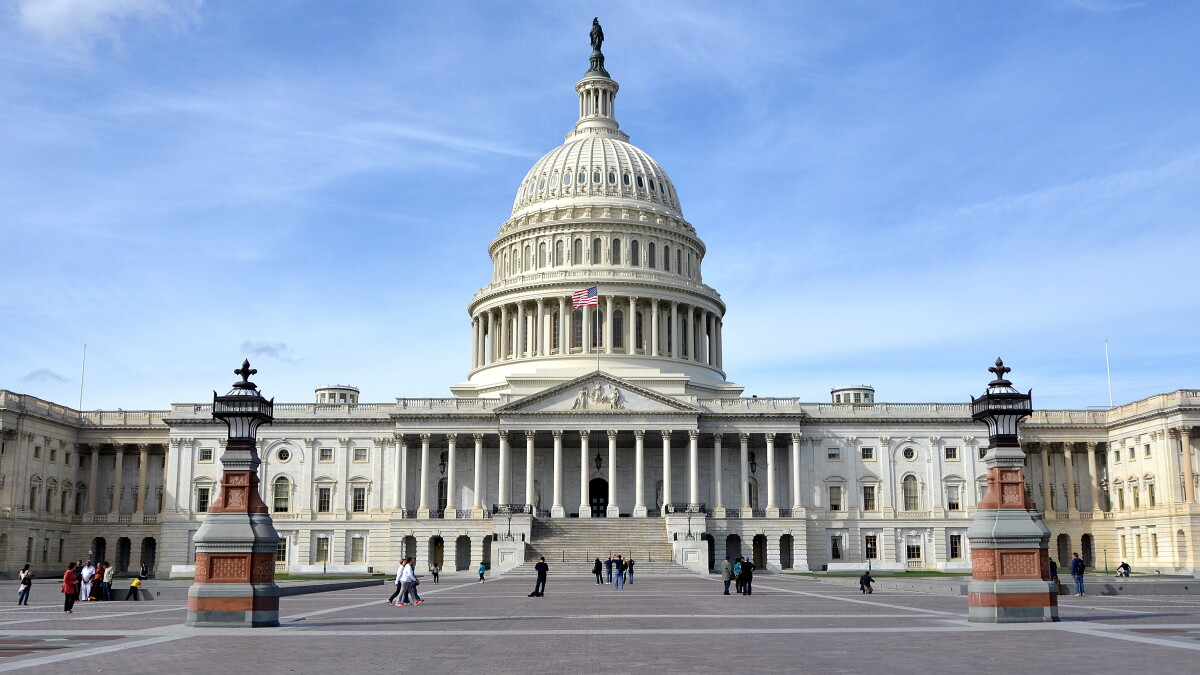
Congress: Article I war powers
Article I, Section 8 gives Congress a menu of military authorities. Two of them matter most in any strike debate:
Declare War. Congress has the power to declare war, which historically meant deciding that the nation is entering a state of war with another country.
Raise and support armies and provide and maintain a navy. That includes funding, rules for the armed forces, and oversight through appropriations.
Congress also has the power to “make Rules for the Government and Regulation of the land and naval Forces,” and to “define and punish Piracies and Felonies committed on the high Seas.” Those clauses matter when the trigger is an attack on shipping lanes.
And “declare war” is not Congress’s only tool. Congress can authorize force through statutes short of a formal declaration, which is how modern Authorizations for Use of Military Force (AUMFs) fit into the system. Historically, Congress also issued narrower authorizations such as letters of marque and reprisal.
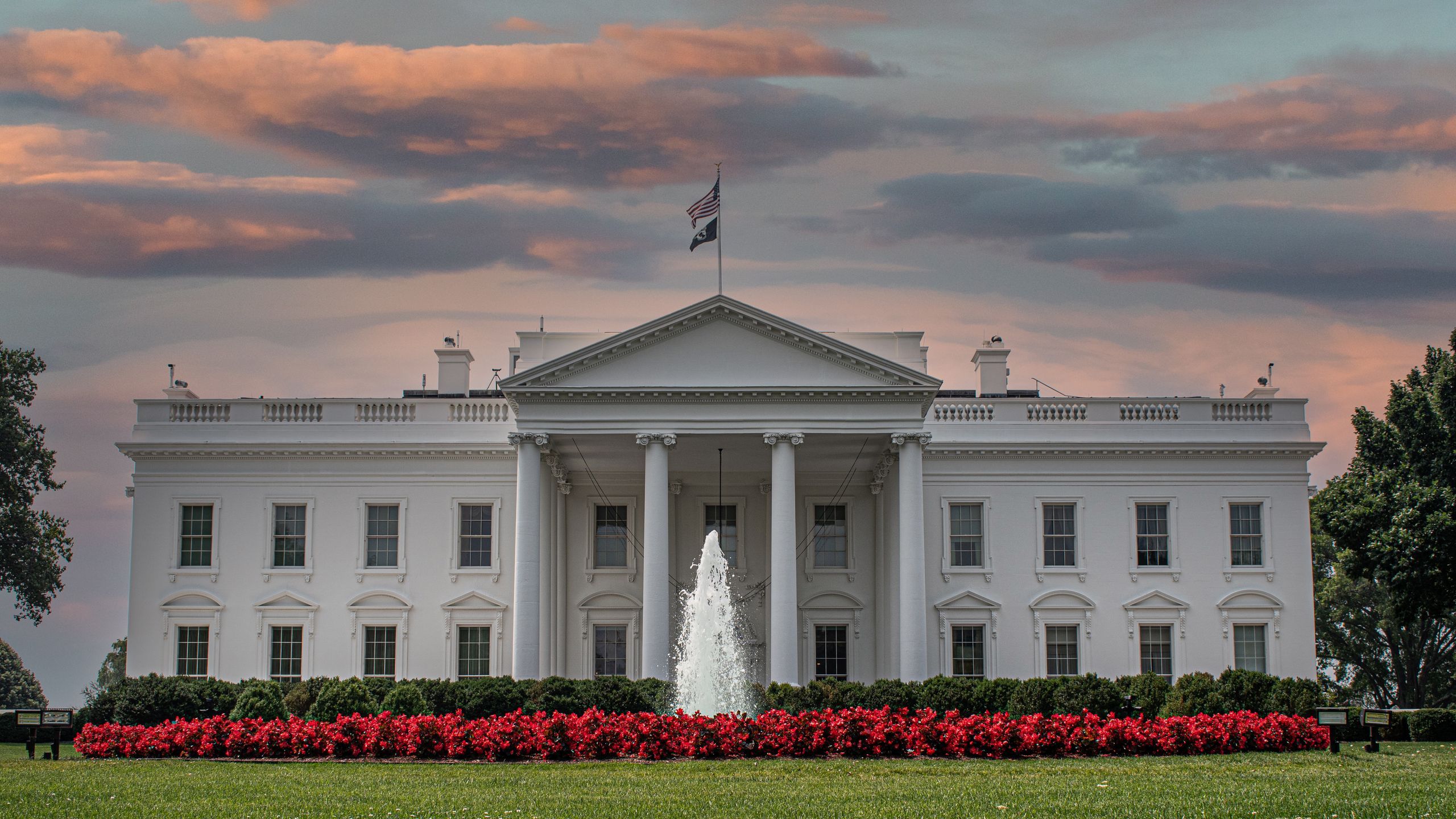
The president: Article II commander in chief
Article II, Section 2 makes the president “Commander in Chief of the Army and Navy of the United States.” That is operational control. It means the president directs military forces and can respond to emergencies, but it does not, by itself, answer the harder question: how much military action can be launched without Congress first authorizing it?
The Constitution does not define “war.” It does not list “air strikes,” “limited engagements,” “kinetic actions,” or “over-the-horizon operations.” Those are modern labels pasted onto an 18th-century framework.
That gap is where the dispute lives. Presidents across eras have asserted some independent Article II authority to use force in limited circumstances. Congress and many constitutional critics respond that sustained or escalatory uses of force require legislative authorization. The text does not hand either side a clean, single-sentence victory.
A Working Rule
Across administrations of both parties, a rough working rule has emerged:
The president can act quickly to defend U.S. forces, U.S. citizens, and sometimes U.S. interests. That includes responding to an imminent attack or stopping an ongoing one.
Congress is supposed to decide on sustained, major hostilities. That is where declarations of war or AUMFs come in.
That sounds clear until you ask the obvious follow-up: what counts as “sustained” or “major”?
A one-time strike can start a wider conflict. And a “limited” strike can be the first chapter of an undeclared war.
The gray area is not theoretical. In 2011, the Obama administration argued that U.S. operations in Libya did not amount to “hostilities” under the War Powers Resolution, and many members of Congress sharply disputed that view. More recently, presidents of both parties have ordered discrete strikes in Syria without a new Syria-specific AUMF, including the 2017 and 2018 strikes linked to chemical weapons incidents, defending them as limited and in the national interest.
War Powers Resolution
After the Vietnam era, Congress tried to put the Constitution’s shared design into a statutory framework. The result was the War Powers Resolution of 1973.
The War Powers Resolution does not eliminate the president’s ability to act. It tries to force accountability afterward.
What it requires
Consultation “in every possible instance” before introducing U.S. forces into hostilities, or into situations where imminent involvement in hostilities is clearly indicated by the circumstances.
A report to Congress within 48 hours after introducing U.S. forces (1) into hostilities or the situations described above, (2) into the territory, airspace, or waters of a foreign nation while equipped for combat, or (3) in numbers that substantially enlarge U.S. forces already located in a foreign nation.
Withdrawal within 60 days (with a possible 30-day extension for safety) unless Congress declares war, authorizes the action, or extends the time period by law.
Why it is controversial
Presidents have often treated the Resolution as constitutionally suspect or at least flexible in practice, while still filing reports “consistent with” it. Congress, for its part, often avoids the clean yes or no vote that would clarify whether a conflict is authorized.
The result is a recurring pattern: military action begins, legal memos justify it, and Congress debates after the fact while the operation becomes a reality on the ground.
Can a President Strike Iran Alone?
It depends on what “strike” means in scope and what triggered it.
In an Iran-related crisis, the trigger is often described as an attack on shipping, U.S. forces, or regional partners, including incidents tied to the Strait of Hormuz. Those are exactly the kinds of fast-moving events that put Article II speed up against Article I permission.
The cleanest way to see the constitutional fault lines is to break the question into common scenarios, ranging from immediate defense to sustained campaigns.
Scenario 1: Immediate self-defense response
If U.S. forces or U.S. vessels are under attack, presidents have traditionally claimed authority to respond without waiting for Congress. The strongest case is when the action is necessary to repel an attack and protect Americans.
But even here, the question is not just whether the president can order a strike. It is whether the strike is limited and defensive or whether it crosses into war-making by initiating a larger conflict.
Scenario 2: Retaliation as deterrence
A pre-announced policy of striking specific infrastructure targets in response to future incidents is closer to a doctrine of deterrence than a split-second defensive reaction.
Deterrence may be strategically argued, but constitutionally it raises the question: is this still “defense,” or is it a standing commitment to use force that Congress has not authorized?
Scenario 3: Sustained campaign
A sustained air campaign, repeated strikes over time, or operations likely to trigger significant escalation are much harder to square with the idea that Congress alone decides whether the nation goes to war.
Even if a president begins such a campaign, the War Powers Resolution is designed to force the issue: either Congress authorizes it, or the operation is supposed to end.
Where the Gray Area Lives
The War Powers Resolution’s real battleground is one word: hostilities.
If an operation counts as “hostilities,” the reporting requirements and the 60-day clock are implicated. And as a practical matter, some administrations have argued that if an operation does not rise to “hostilities,” the clock never starts.
That definitional fight is not hypothetical. It has shaped how presidents describe operations involving air power, drones, naval strikes, and support roles.
Congress can reject a narrow definition by passing an authorization, limiting funding, or legislating clearer definitions. But Congress has often preferred ambiguity, because ambiguity avoids a politically painful vote.
Congress’s Strongest Lever
The Constitution gives Congress multiple levers, and the strongest in practice is money.
The power of the purse
Congress can restrict, condition, or cut off funding for military operations. It can also require reporting, impose geographic limits, or prohibit certain targets.
Beyond appropriations, Congress can use oversight hearings and subpoenas, require notifications or certifications, place conditions on arms transfers, and repeal or sunset older authorizations that have outlived their original purpose.
AUMFs
In the modern era, Congress has frequently used AUMFs instead of formal war declarations. AUMFs can be narrow or broad, time-limited or open-ended.
The controversy is that older AUMFs sometimes get used as legal scaffolding for newer conflicts. The two modern examples that shape today’s debates are the 2001 AUMF (passed after September 11) and the 2002 AUMF (Iraq). When those authorizations are invoked far from their original facts, the constitutional argument shifts from “can the president act alone?” to “is Congress’s prior authorization being stretched past what it actually covered?”
What Courts Do
Many Americans assume the Supreme Court will answer the war powers question cleanly. In reality, courts often avoid deciding these disputes on the merits.
Reasons include standing (who is injured enough to sue), political question concerns, and the practical difficulty of litigating fast-moving military decisions.
When courts do speak about executive power in a way that matters for war powers, they often do it indirectly. Youngstown Sheet & Tube Co. v. Sawyer is the classic example. It is not a case about battlefield operations, but its framework is frequently used in war powers debates. In Justice Robert Jackson’s concurrence, presidential power is at its maximum when acting with Congress, at its lowest when acting against Congress, and is uncertain in between.
That means the most common “enforcer” of war powers limits is not a judge. It is Congress itself, through authorizations, oversight, and funding. And of course, the public, through elections and political pressure.
So Who Is Right?
Both are real. That is the design.
Article II gives the president the ability to act with speed and unity, especially in defense and crisis response.
Article I gives Congress the authority to decide whether the nation should enter war and to control the terms and funding of military action.
The Constitution expects tension. What it does not expect is silence.
“Silence” can look like this: no authorization vote, no clear funding limits, and no serious effort to update or repeal old AUMFs that keep getting reused. In that vacuum, presidents tend to act first and justify later, often relying on internal executive-branch legal interpretations, including Office of Legal Counsel analysis, to define what Article II allows.
When presidents stretch “defense” into open-ended campaigns, Congress is supposed to push back. When Congress wants the benefits of action without the accountability of authorization, presidents fill the vacuum. That is how shared power drifts into one-branch war-making without anyone formally saying that is what happened.
FAQ
Does the president need Congress to order a single strike?
Not always. Presidents have long claimed authority to order limited strikes, especially in defense of U.S. forces or in response to imminent threats. The constitutional dispute is about where “limited” ends and “war” begins.
Can Congress stop a strike?
Congress usually cannot stop an imminent strike in real time, but it can restrict funding, demand withdrawal under the War Powers Resolution framework, or pass legislation limiting future operations.
What is the difference between declaring war and authorizing force?
A declaration of war formally recognizes a state of war. An AUMF authorizes military force without that formal declaration, often with specific terms, targets, or purposes.
What happens if the War Powers Resolution is ignored?
In theory, forces must be withdrawn after the statutory timeline without authorization. In practice, enforcement depends on congressional action, especially funding restrictions and political pressure.
The Civic Bottom Line
The Constitution gives the president a sword and gives Congress the lockbox where the sword is supposed to be stored between uses.
When a president threatens strikes as a standing policy, the question is not only military. It is constitutional: are we seeing a defensive commander in chief responding to danger, or a unilateral decision to place the country on a path toward war?
The document does not answer that with a single clause. It answers it with shared responsibility. And it only works if both branches actually use the powers they were given.