
Every election year brings the same basic question back into the public debate: can non-citizens vote in federal elections?
Sometimes the question is prompted by a specific prosecution. If you are reading this because of a headline about an alleged non-citizen voting and using someone else’s identity, the legal analysis does not hinge on the defendant’s nationality. It hinges on two separate problems in federal election law: non-citizen participation and identity-based fraud. They are prosecuted differently, and they trigger different pieces of the constitutional machinery.
Here is the durable civics answer, stripped of outrage and put back into law.
Join the Discussion
Can non-citizens vote in federal elections?
No. Under federal law, non-citizens are prohibited from voting in elections that include federal offices. That includes elections for President and Vice President, U.S. Senate, and U.S. House. A commonly cited federal criminal statute on this point is 18 U.S.C. § 611.
States run the voter registration and election-day mechanics, but when the ballot includes federal offices, federal rules attach to the process. One of those rules is the citizenship line for participation in federal contests.
It is worth separating two concepts that are often blended together:
- Voting in federal elections: citizenship is required.
- Voting in some local elections: a limited number of jurisdictions have tried allowing certain non-citizens to vote in municipal-only elections. Washington, D.C., and some Maryland towns are often cited examples. These policies vary, are frequently contested, and they do not extend to federal offices.
Who regulates federal elections?
The Constitution splits authority over federal elections between the states and Congress.
Article I: the Elections Clause
For congressional elections, the Elections Clause says that the “Times, Places and Manner” of holding elections for the House and Senate are set by state legislatures, but Congress may at any time make or alter such regulations.
That is the basic constitutional reason Congress can pass national rules about federal election administration, including registration procedures and protections against fraud.
Presidential elections: state control, federal constraints
Presidential elections run through the Electoral College, and states appoint electors. But once a state holds a popular vote for President, the federal government can still criminalize certain conduct connected to that federal contest, such as fraudulent registration, false statements, and double voting.
Enforcement power
Congress not only sets rules. It also has authority to attach criminal penalties to protect federal elections. The DOJ then enforces those penalties through federal prosecutors, subject to the normal constitutional protections for defendants.
What laws DOJ uses
The details of any specific indictment determine the exact statutes, but federal illegal voting prosecutions usually draw from a familiar toolkit. Here are the most common categories and what they require.
1) Voting by a non-citizen in a federal election
Federal law generally makes it a crime for a non-citizen to vote in a federal election, and one statute often cited is 18 U.S.C. § 611. In practice, prosecutors focus on proof of two core elements:
- Status: the person was not a U.S. citizen at the time.
- Act and intent or knowledge: the person voted, attempted to vote, or caused a vote to be cast in an election that included a federal office, and did so in a way that satisfies the statute’s mental state requirement.
That second element is where cases are won or lost. Many federal election crimes are not strict liability. DOJ typically has to show some level of knowing or willful conduct, especially when the allegation involves false certifications.
2) False registration and false statements
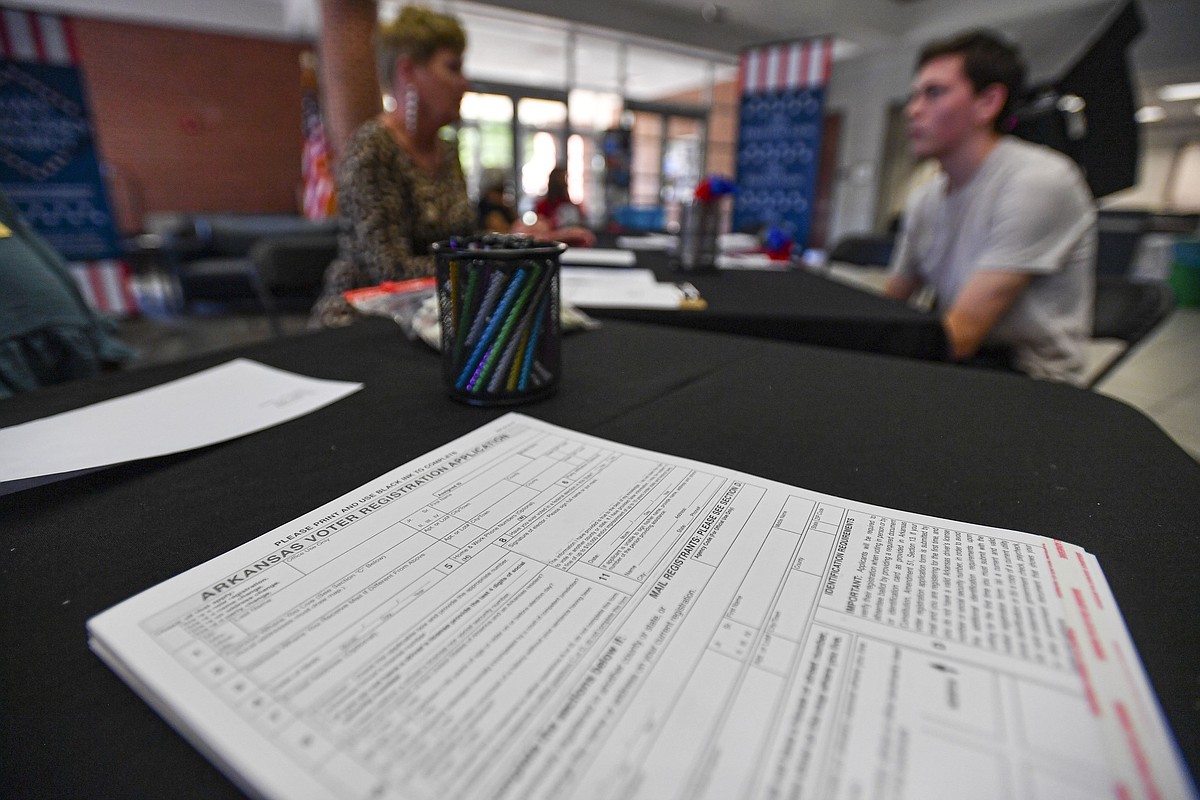
Virtually all voter registration systems require would-be voters to affirm, under penalty of law, that they are U.S. citizens and otherwise eligible. When someone lies on those forms, prosecutors may charge false statements or false registration offenses tied to federal elections.
This is one reason illegal voting cases often look, on paper, like paperwork crimes. Federal elections run through state systems, and the paper trail is the point: it is where eligibility is certified.
3) Voting under another person’s name
Voting under another person’s name adds a separate layer: it is not just ineligibility. It is impersonation or identity fraud in the conduct of a federal election. Depending on the charging decision, this can overlap with statutes covering fraudulent voting, false statements, identity theft concepts, or conspiracy.
4) Conspiracy and procuring unlawful voting
If the allegation involves recruiting, organizing, or instructing someone else to register or vote illegally, prosecutors may use conspiracy statutes or provisions that criminalize procuring unlawful voting. These theories matter when a case involves more than one person, or more than one step in the scheme.
What DOJ must prove
Legally, illegal voting cases are rarely about grand constitutional mysteries. They are about evidence and about distinguishing registering, casting a ballot, and attempting to vote.
In a prosecution alleging non-citizen voting plus identity-based voting, DOJ typically needs to establish:
- Non-citizenship at the time of the election (immigration records, admissions, or other official documentation).
- Registration activity (registration forms, certifications, signature comparisons, and related records).
- Ballot activity (poll book entries, mail ballot records, ballot envelope data, and chain-of-custody documentation where available).
- Connection between the defendant and the act (witnesses, communications, device data, admissions).
- Knowledge and intent, especially where the allegation is that the defendant made a false citizenship certification or used another person’s identity.
The defense in these cases often attacks identification, chain of custody, and intent: was it really this person, was it a mistake, and can the government prove the required mental state beyond a reasonable doubt?
Why citizenship is the line
The Constitution does not contain a single, tidy sentence that says “Only citizens may vote.” Instead, voting eligibility emerges from a mix of state-set qualifications and federal constitutional limits.
Historically, states set many voter qualifications. Over time, the Constitution was amended to block certain exclusions and to standardize parts of the electorate. The Fifteenth Amendment prevents race-based denials. The Nineteenth prevents sex-based denials. The Twenty-Fourth bars poll taxes in federal elections. The Twenty-Sixth protects voters 18 and older.
But when it comes to federal elections, Congress can protect the integrity of those elections through nationwide rules and criminal enforcement. The citizenship requirement is not a cultural preference. It is the legal boundary line Congress has drawn for participation in choosing federal officeholders.
What about local elections?

Even where a city or local jurisdiction has debated non-citizen voting, that policy is about municipal offices only. San Francisco is a commonly cited example in the broader public debate, but whatever a city does for city elections does not authorize participation in federal elections.
Where local non-citizen voting exists, it typically uses separate local rules and, in some places, separate local voter rolls. The important point is the same: if a ballot includes federal offices, or if registration is for a federal election cycle, federal citizenship rules apply.
This is a frequent point of confusion because election administration is local. People see a state form, a local polling place, and local election workers, then assume the rules must be purely local too. They are not, once federal offices are on the line.
Penalties if convicted
Penalties vary by statute and by the facts charged, but illegal voting cases can expose a defendant to:
- Federal prison time and fines for false statements, fraudulent voting, or conspiracy.
- Immigration consequences that may be separate from the criminal sentence. The severity depends on the person’s status and the precise conduct proved. In particular, unlawful voting and false claims of U.S. citizenship can carry uniquely serious consequences under immigration law, including removal proceedings and long-term bars to future benefits.
That last category is not political. It is structural. Immigration law treats voting-related violations and false citizenship claims with special severity.
What these charges are about
The headline temptation in any illegal voting story is to treat it as proof of either a loophole or a conspiracy. Most of the time, the legal center of gravity is simpler: federal elections require citizenship, and the government treats false registration and identity-based voting as criminal acts because they directly corrupt the mechanism that translates eligible voters into legitimate outcomes.
If allegations are proven in any given case, it is not a story about a mysterious loophole that allowed non-citizens to vote. It is a story about the opposite: a system with explicit rules, plus a paper trail, plus criminal enforcement when someone tries to get around both.
Quick FAQ
Is it ever legal for a non-citizen to vote for President or Congress?
No. Federal elections are limited to U.S. citizens.
Is registering different from voting?
Yes. Registration, attempting to vote, and casting a ballot can be charged differently, and cases often turn on which act the government can prove, and what mental state the statute requires.
If someone uses another person’s name, is that a separate crime?
Yes. Impersonation or identity-based voting is typically charged as an additional offense, not merely as evidence of ineligibility.
Can states set their own eligibility rules for federal elections?
States administer elections and historically set many qualifications, but Congress can regulate the times, places, and manner of federal elections, and federal law can impose uniform requirements and criminal penalties tied to federal contests.