
Every election cycle, a familiar claim resurfaces: non-citizens are voting, sometimes because a state “automatically registered” them. A recent guilty plea by a French citizen tied to the 2022 midterms, paired with an allegation that he was registered through a New Jersey motor vehicle transaction, is the kind of story that sends people searching for a simple rule.
There is a simple rule for federal elections. Then there is the complicated machinery that turns that rule into a voter roll.
Join the Discussion
The short answer
Non-citizens may not vote in U.S. federal elections. Federal law makes it a crime for a non-citizen to vote for President, Vice President, U.S. Senator, or U.S. Representative.
There are limited edge-case defenses and safe-harbor scenarios that can turn on knowledge and intent and on the specific facts of a registration or ballot, but as a practical matter, the rule is straightforward: when the ballot includes federal offices, citizenship is the baseline qualification.
Some local jurisdictions have experimented with allowing certain non-citizens to vote in municipal elections. That is a separate question. Those local rules do not authorize voting for federal offices.
What the Constitution does and does not say
The Constitution does not contain a single sentence that says, “Only citizens may vote.” Instead, it sets up a system in which:
- States set voter qualifications through their own laws and constitutions for state and local elections, and they also administer elections.
- The federal Constitution and federal statutes limit what states can do, including amendments that bar discrimination in voting (race, sex, age 18+), and Congress’s power to regulate federal elections.
The key architecture is in Article I, Section 2, which ties the House electorate to “the Electors in each State” who can vote for the “most numerous Branch of the State Legislature.” In plain terms: states largely use the same electorate for their lower house and for the U.S. House, subject to constitutional limits and federal statutes.
For federal elections, Congress can regulate the “Times, Places and Manner” of congressional elections under the Elections Clause (Article I, Section 4), and it has used that power to set rules about registration systems, list maintenance, and eligibility safeguards.
Federal law: the key statutes
Several federal statutes can come into play, depending on what happened and what the person signed.
- 18 U.S.C. § 611 is the direct federal prohibition on voting by aliens in federal elections.
- 18 U.S.C. § 1015(f) is commonly used when someone falsely claims U.S. citizenship in order to register to vote or vote.
- 52 U.S.C. § 20511 (from the National Voter Registration Act) criminalizes certain fraudulent registration and voting conduct in federal elections, including knowing false statements and related schemes.
Two practical takeaways matter more than the numbering:
- Voting while not a U.S. citizen can be a federal crime when federal offices are on the ballot.
- Registering can also create exposure, especially if the person affirms citizenship on a form, even if they never cast a ballot.
Because states often run a single registration system that covers federal, state, and local elections, the federal rule is usually enforced through state paperwork and federal charges after the fact.
Registration vs. voting
Stories like the New Jersey allegation often blur two moments that the law treats differently.
1) Getting on the rolls
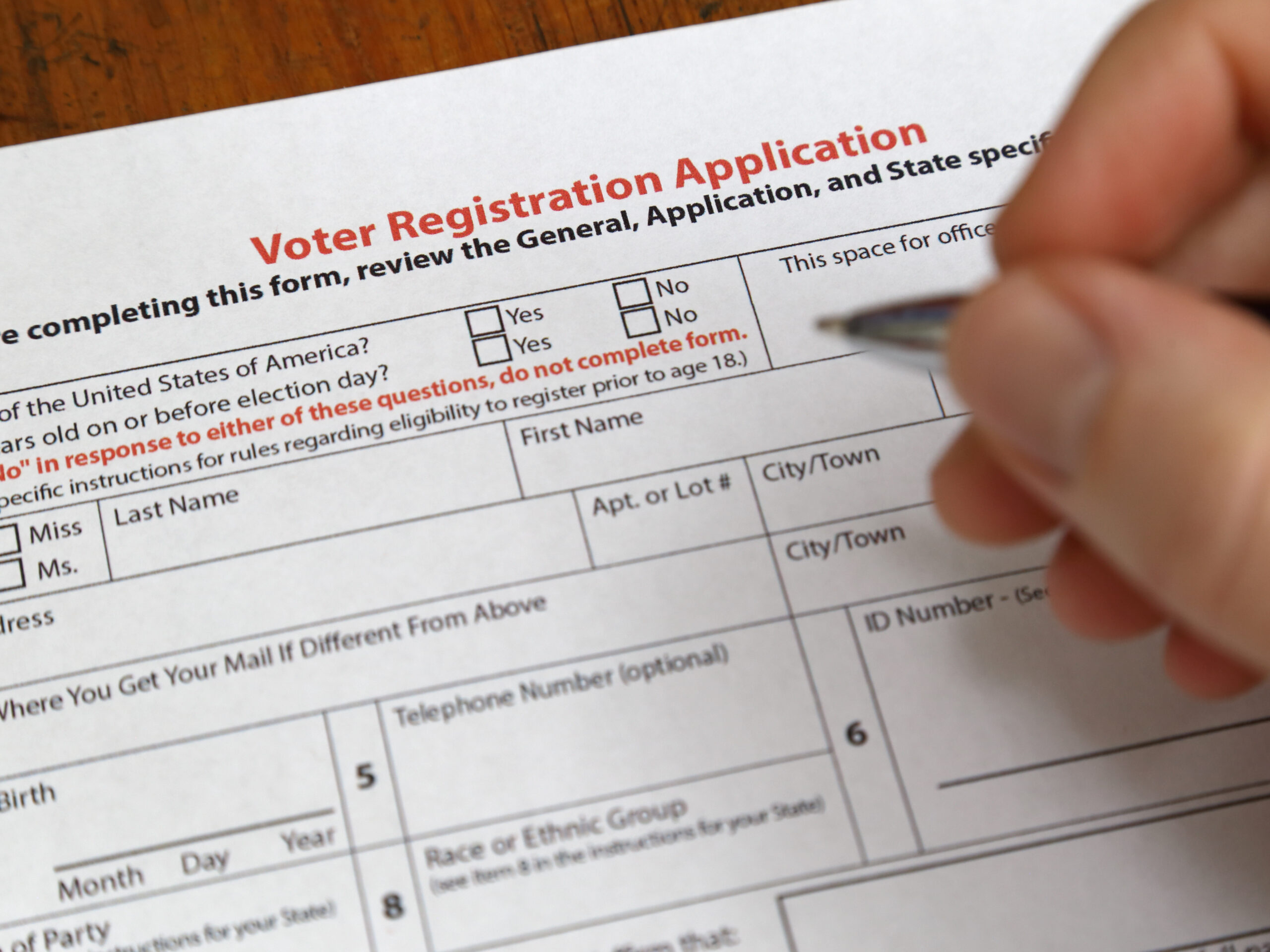
In most states, the registration process requires the applicant to confirm, under penalty of perjury, that they are a U.S. citizen and otherwise eligible. If a non-citizen signs that affirmation, prosecutors may treat it as a false statement even before any ballot is cast.
2) Casting a ballot
Actually voting in a federal election can trigger additional federal charges, and it can carry immigration consequences as well.
This is why “I was registered” and “I voted” are legally different claims. Registration can happen through error, misunderstanding, or bad data. Voting is a separate act that typically requires additional steps, including requesting a ballot, checking in, and completing required attestations.
How agency registration can misfire
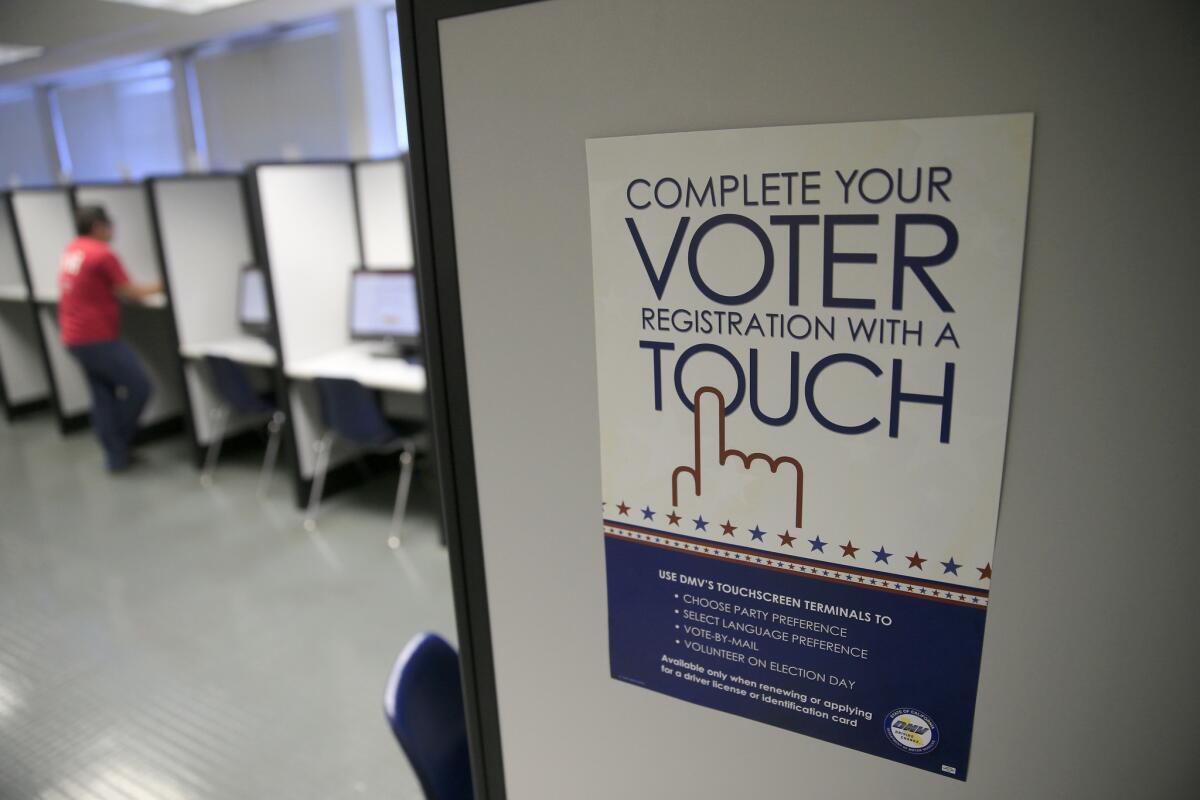
When people say “automatic voter registration,” they are often pointing to a broader reality: voter registration is frequently routed through state agencies, especially motor vehicle offices, under “motor-voter” style workflows. The details vary by state. Some systems are opt-out, some are opt-in, and some are best described as agency-assisted registration or automatic updates for existing voters.
The vulnerability is also simple: these workflows rely on data fields and eligibility flags. If the wrong status is pulled, or if agency records do not cleanly separate “lawfully present” from “citizen,” the pipeline can generate a registration record that should never exist.
Even in states with modernized registration systems, an applicant is typically still required to affirm citizenship at some point. But the human reality is that screens are clicked quickly, forms are confusing, and people do not always understand what they are attesting to, especially non-citizens navigating multiple legal categories.
So when you see a headline claiming a person was “automatically registered,” the legal question is not whether states may run modern registration systems. They can. The legal questions are whether the system has effective eligibility checks, and whether an ineligible registrant then took the additional step of voting in a federal contest.
How states check eligibility in practice
There is no single national “citizenship voter database” that prevents every mistake at the front end. In practice, eligibility screening is a mix of:
- Self-attestation on the registration form, backed by perjury penalties.
- Identity and matching checks required by federal law for certain voters, implemented through state systems.
- State list maintenance and data comparison, which can include information from motor vehicle agencies, state vital records, jury responses, and other lawful sources, depending on the state.
That patchwork is one reason the distinction between registration errors and illegal voting matters. The system can be imperfect at intake while still treating casting a ballot as a separate, enforceable act.
Local non-citizen voting
Sometimes, yes, non-citizens can vote legally, but it is limited and often misunderstood.
- Municipal elections: Some localities allow certain non-citizens to vote in specific city or school-related elections, depending on state law and local ordinances. These policies are uneven and controversial, and they do not authorize voting for federal offices.
- Historic practice: In the 1800s and early 1900s, some states allowed non-citizen residents to vote in certain elections. That practice largely disappeared and does not reflect modern federal statutory rules for federal contests.
The key is the ballot. If it includes federal candidates, non-citizen participation creates federal criminal liability risk, not just a local policy dispute.
Penalties and immigration consequences
Penalties depend on the charge and the facts, but the risk is real. Potential consequences include:
- Federal criminal prosecution for illegal voting or related false statements.
- State charges under state election laws, depending on how the conduct occurred.
- Immigration consequences, which can be severe and fact-specific. The impact can depend on the person’s immigration status and on what the government proves about knowledge and intent, and it may affect admissibility, eligibility for immigration benefits, or removal proceedings.
Even when a person claims they did not understand the rules, prosecutors and immigration authorities may focus on what the person signed and what they did, not what they believed the form meant.
The civics point
Election administration in the United States is intentionally decentralized. That is a constitutional design choice. But decentralization comes with a predictable side effect: registration errors are possible, and they can be politically explosive because they touch the legitimacy of federal power.
If a state’s system mistakenly places a non-citizen on the rolls, it reveals a weakness in administration. If that person then votes in a federal election, it reveals something else too: how much our system relies on attestations, recordkeeping, and after-the-fact enforcement rather than a single national gate that prevents every error upfront.
The Constitution does not promise that administration will be perfect. It does demand, through constitutional structure and federal law, that federal elections have enforceable eligibility rules. Citizenship is one of them.
Common questions
Can non-citizens vote in U.S. elections?
They cannot vote in federal elections. Some localities may allow voting in certain municipal elections, but those rules do not extend to President or Congress, and ballots that combine local and federal races are still federal contests.
What is the penalty for illegal voting in federal elections?
It can include federal prosecution under statutes such as 18 U.S.C. § 611 and related false-statement laws, plus possible state charges. For non-citizens, there may also be serious immigration consequences. The exact exposure depends on the facts, including what the person signed and whether the government alleges knowing conduct.
Does automatic voter registration check citizenship?
Modern systems are designed to register only eligible voters, but they depend on agency records and workflow design, which varies by state. Errors can occur if citizenship status is mis-recorded, not properly flagged, or not clearly confirmed during the transaction.
Who can register to vote in New Jersey?
New Jersey requires registrants to meet eligibility conditions that include U.S. citizenship for federal elections. As in other states, the key legal point is that state registration systems must align with federal eligibility rules when federal offices are on the ballot.
What to watch next
Cases like the New Jersey guilty plea tend to produce two competing reactions: one side treats the story as proof the system is broken, the other treats it as proof the system worked because the conduct was detected and prosecuted.
The constitutional reality is less satisfying and more useful: both can be true. Administration can fail at the registration stage, and enforcement can still punish illegal voting after the fact. The question for voters and lawmakers is where to place the emphasis, and what tradeoffs they are willing to accept between access, accuracy, and oversight.