
Every election cycle, a familiar alarm goes off: foreigners are voting. Sometimes the claim is exaggerated. Sometimes it is a real administrative failure, like a voter-registration system that let non-citizens slip onto the rolls. But the legal question underneath the heat is steady and surprisingly simple:
Who is legally allowed to vote in U.S. elections?
The short answer is that U.S. citizens can vote if they meet their state’s eligibility rules, and non-citizens generally cannot vote in federal elections and nearly all state elections. The longer answer is where the law lives: in a mix of the Constitution, federal statutes, and state election codes, plus the everyday bureaucracy of registration systems that are designed for speed, not philosophical clarity.
Join the Discussion
The Constitution: states run elections with federal guardrails
The Constitution does not begin by announcing a universal list of who gets to vote. Instead, it sets up a structure.
Article I, Section 2 ties voting for the U.S. House to whoever can vote for “the most numerous branch” of a state legislature. That is the Constitution’s original move: states set voter qualifications, and federal elections ride on top of those state systems.
Article I, Section 4 (the Elections Clause) then adds a crucial check: states regulate the “Times, Places and Manner” of federal elections, but Congress may make or alter those regulations. So states run the machinery, but the federal government can set rules for how that machinery operates in federal races.
Over time, amendments and federal statutes laid down major limits. Notably:
- 14th Amendment: equal protection principles that shape modern voting-rights litigation and constrain discriminatory administration.
- 15th Amendment (1870): states cannot deny the right to vote based on “race, color, or previous condition of servitude.”
- 19th Amendment (1920): no denial based on sex.
- 24th Amendment (1964): no poll tax in federal elections.
- 26th Amendment (1971): no denial based on age for citizens 18 and older.
On the statutory side, the major civil-rights framework is the Voting Rights Act of 1965, especially Section 2, which prohibits voting practices that unlawfully discriminate on the basis of race. These rules matter because eligibility checks and list maintenance have to be administered in ways that comply with federal protections.
Notice what many of these amendments do. They mostly prohibit certain kinds of exclusion. They do not create one neat sentence that says “every adult has the right to vote.” The system is still a negotiation between state control and federal constitutional boundaries.
The baseline rule: citizenship is required for federal voting
For federal elections, the rule is not ambiguous: non-citizens cannot legally vote.
Federal law makes it a crime for non-citizens to vote in elections that include federal offices. One key statute is 18 U.S.C. § 611, which prohibits voting by non-citizens in elections “held solely or in part” for federal candidates, with a narrow exception that turns on state or local authorization and the voter’s reasonable belief about eligibility in certain limited circumstances.
States also typically require citizenship to vote in their elections, and most state constitutions and election codes are explicit about it. In other words, in most jurisdictions a non-citizen is barred by state law for that jurisdiction’s elections, and also by federal law if a federal office is on the ballot.
What about local elections?
This is where the internet often confuses people, because there is a narrow, real exception: some local jurisdictions have allowed non-citizens to vote in certain municipal elections, usually limited to city offices or school board races.
Two clarifications keep this grounded:
- Those local rules (where they exist) cannot authorize non-citizens to vote for federal offices.
- Many states forbid localities from extending voting to non-citizens at all, either by statute or state constitutional provision.
Concrete examples help. A number of Maryland municipalities have allowed non-citizen voting in local contests. New York City enacted a local non-citizen voting law, but it was later blocked by the courts. These are exceptions that prove the rule: as a general legal principle in America, citizenship is the price of admission to the ballot box.
Who can vote: the practical checklist
Election eligibility is usually a checklist. The exact items vary by state, but the core categories are consistent.
- Citizenship: you must be a U.S. citizen for federal elections and, in nearly all states, for state elections too.
- Age: you must be at least 18 by Election Day (some states allow 17-year-olds to vote in primaries if they will be 18 in the general election).
- Residency: you must live at an address in the state and usually in the specific precinct or district.
- Registration: in most states, you must be registered by a deadline.
- Disenfranchisement rules: states can restrict voting based on felony convictions, but the rules vary widely by state and restoration can be automatic or require completion of sentence and other conditions. Some states also have limits tied to certain court findings (often framed as incapacity or guardianship), though terminology and standards vary and many states have narrowed or removed such restrictions.
The two categories most relevant to “non-citizens voting” claims are citizenship and registration. That is because most problems happen before anyone ever reaches a polling place. They happen inside the voter-roll system itself.
How DMV registration can add non-citizens to the rolls
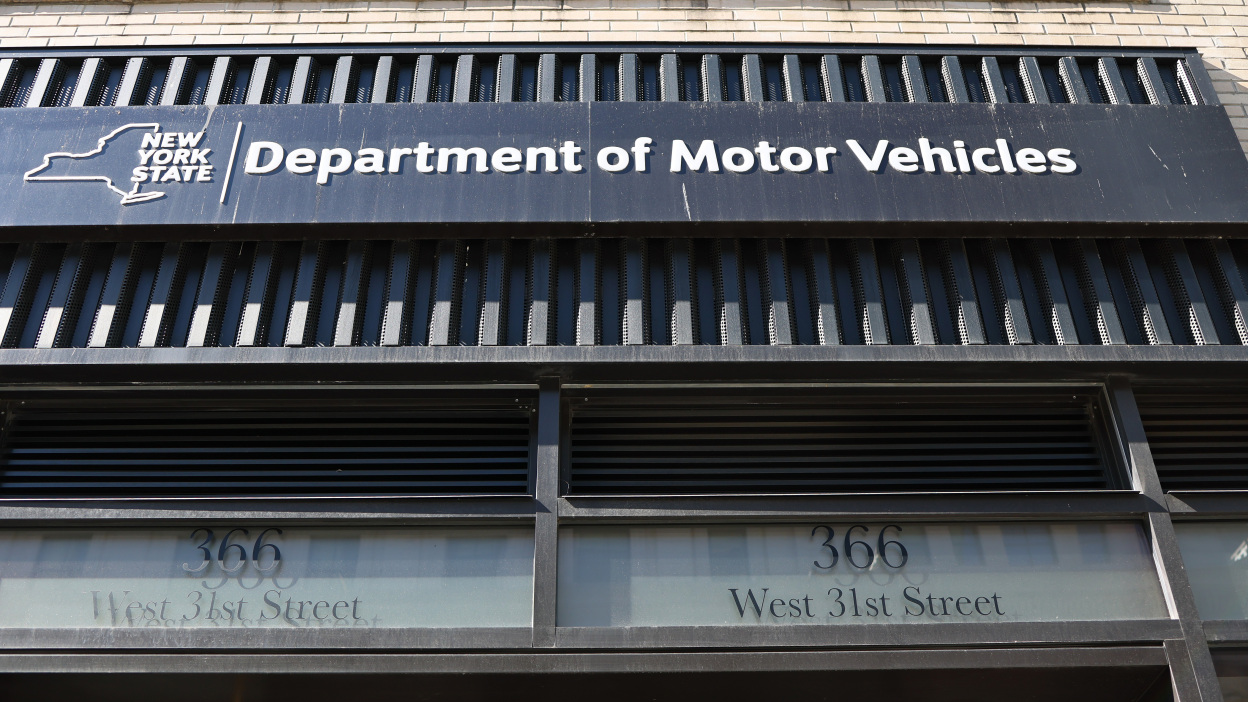
The modern voter-registration pipeline runs through the place Americans go for paperwork: the DMV.
Under the National Voter Registration Act of 1993, often called the “Motor Voter” law, states must offer voter registration opportunities through motor-vehicle agencies. The goal was straightforward: increase registration by attaching it to routine interactions with government.
But the NVRA does not make registration automatic. It requires an offer. Separately, some states have adopted automatic voter registration (AVR) systems, often designed as opt-out workflows tied to DMV transactions. Those modern systems can be efficient, but they also raise the stakes for good eligibility screens.
Common failure points
- Checkbox workflows: a combined license-application screen may present voter registration as a quick “yes/no” step, and an ineligible applicant might click through without understanding the citizenship requirement.
- Default settings: systems that route many DMV applicants into a voter-registration prompt with too little friction to prevent ineligible registration.
- Data mismatch: a DMV database may track immigration or document type, but that field may not transfer cleanly into the voter-registration workflow.
- Human error: a clerk checks the wrong box, a form is processed incorrectly, or a record is coded wrong during a high-volume transaction.
- Language and comprehension gaps: a person may not grasp that registering to vote requires U.S. citizenship, especially if the interaction is quick and paperwork-heavy.
When a report claims that a state discovered non-citizens on voter rolls, the critical follow-up question is not just “How many?” It is this: were they merely registered, or did they actually vote? Those are legally and practically different situations, and the remedies are different too.
Registered vs. voted: the difference matters
Being on the voter rolls is not the same as casting a ballot.
Registration errors can occur through administrative mistakes. States can and do remove ineligible registrants when identified, though the process must comply with federal rules that limit aggressive list maintenance close to elections and require notice and an opportunity to respond in many situations.
Voting while ineligible is a more serious legal act. For non-citizens, voting in an election that includes federal offices can trigger federal criminal liability and also carry severe immigration consequences.
Penalties and consequences
Consequences vary by the specific conduct and jurisdiction, but can include:
- State criminal charges (many states criminalize illegal voting and false registration).
- Federal criminal charges under statutes like 18 U.S.C. § 611 for voting as a non-citizen in federal elections.
- Immigration consequences: unlawful voting can make a non-citizen removable and can also jeopardize future naturalization. Even registering to vote can cause serious problems, depending on the facts and the individual’s status.
This is why election administrators treat citizenship attestation seriously. It is not a symbolic box to check. It is a legal threshold that can change a person’s life.
How states verify eligibility
People often assume there is a single national citizenship list that election officials can query. There is not.
Election offices typically rely on a combination of methods:
- Attestation under penalty of perjury on the registration form that the applicant is a U.S. citizen.
- Driver’s license or state ID matching to confirm identity and residency, depending on state rules.
- Data comparisons where authorized, which can flag potential ineligibility but also create false positives that must be resolved carefully.
There are also partial data sources that exist for other purposes, but none functions as a complete election-admin citizenship registry. Agencies may use tools like Social Security Administration data for identity checks, DHS SAVE for certain lawful-status verifications in authorized contexts, and state vital records for birth information, but coverage, access, and legal authority vary.
That last point matters. Data systems are blunt instruments. They can help find problems, but they can also wrongly tag eligible voters, which is why the law builds in notice, cure processes, and timing protections.
This is also where documentary proof-of-citizenship fights show up. Some states have tried to require documents to register, and the results have been heavily litigated and politically contentious. Arizona, for example, has long had a documentary proof requirement for certain state-level registration contexts, and Kansas’s prior proof-of-citizenship approach led to major legal challenges. The point is not that “proof” is always unlawful, but that it is never as simple as “just check a database.”
Voting rules are a civil-rights battleground
When you hear “voter eligibility,” it is tempting to picture a sterile checklist. The Constitution’s history refuses to let it stay sterile.
The 15th Amendment was written because states used “qualifications” and “procedures” as weapons. Literacy tests, grandfather clauses, intimidation, selective enforcement, and administrative sabotage all hid behind the idea that states get to set the rules.
That is the constitutional tension in one sentence: states run elections, and states have abused that power. The amendments after the Civil War and the civil-rights legislation that followed, including the Voting Rights Act, were responses to that reality.
So when modern states tighten verification systems or clean rolls, the constitutional question is not only whether the state can do it. It is also whether it is being done in a way that respects federal protections against discriminatory denial and respects lawful voters’ access to the ballot.
How to read claims that “foreigners voted”
Here are the grounding points that remain true regardless of which headline is circulating:
- Non-citizen voting in federal elections is illegal. That is a matter of federal statute, and states also generally prohibit it.
- Registration systems can be wrong. DMV-linked workflows can mistakenly place non-citizens on rolls if safeguards fail.
- Being registered is not the same as voting. Each has different legal implications and different evidence.
- Fixes are technical and legal. Better system design, clearer attestation, careful audits, and lawful list maintenance matter more than slogans.
If you want one durable civics lesson here, it is this: the legitimacy of elections is built in the boring parts. Databases. Forms. Deadlines. Verification steps. And the constitutional rules that constrain how those tools can be used.
Quick FAQ
Can a non-citizen legally vote in the United States?
In general, no. Non-citizens cannot legally vote in federal elections, and nearly all state elections also require U.S. citizenship. A small number of local jurisdictions have allowed non-citizen voting for limited municipal races, and those rules cannot extend to federal offices and are often restricted by state law.
Is it illegal for a non-citizen to register to vote?
In most places, yes. At minimum, it creates serious legal risk. Even when the act is a mistake, it can carry significant consequences, especially for immigration status. The legality and penalties depend on the state and the facts.
Why would a DMV register someone who is not a citizen?
Because motor-voter and AVR systems are built for high volume. If software defaults are wrong, data fields do not transfer cleanly, or a person misunderstands what they are signing, ineligible registrations can occur. That is a systems problem, not a constitutional mystery.
Who sets voter eligibility rules?
States set most voter qualifications and run registration, but federal constitutional law and federal statutes prohibit discrimination (including the 14th and 15th Amendments and the Voting Rights Act) and criminalize non-citizen voting in federal elections. Congress also has power to regulate the “manner” of federal elections under Article I.