
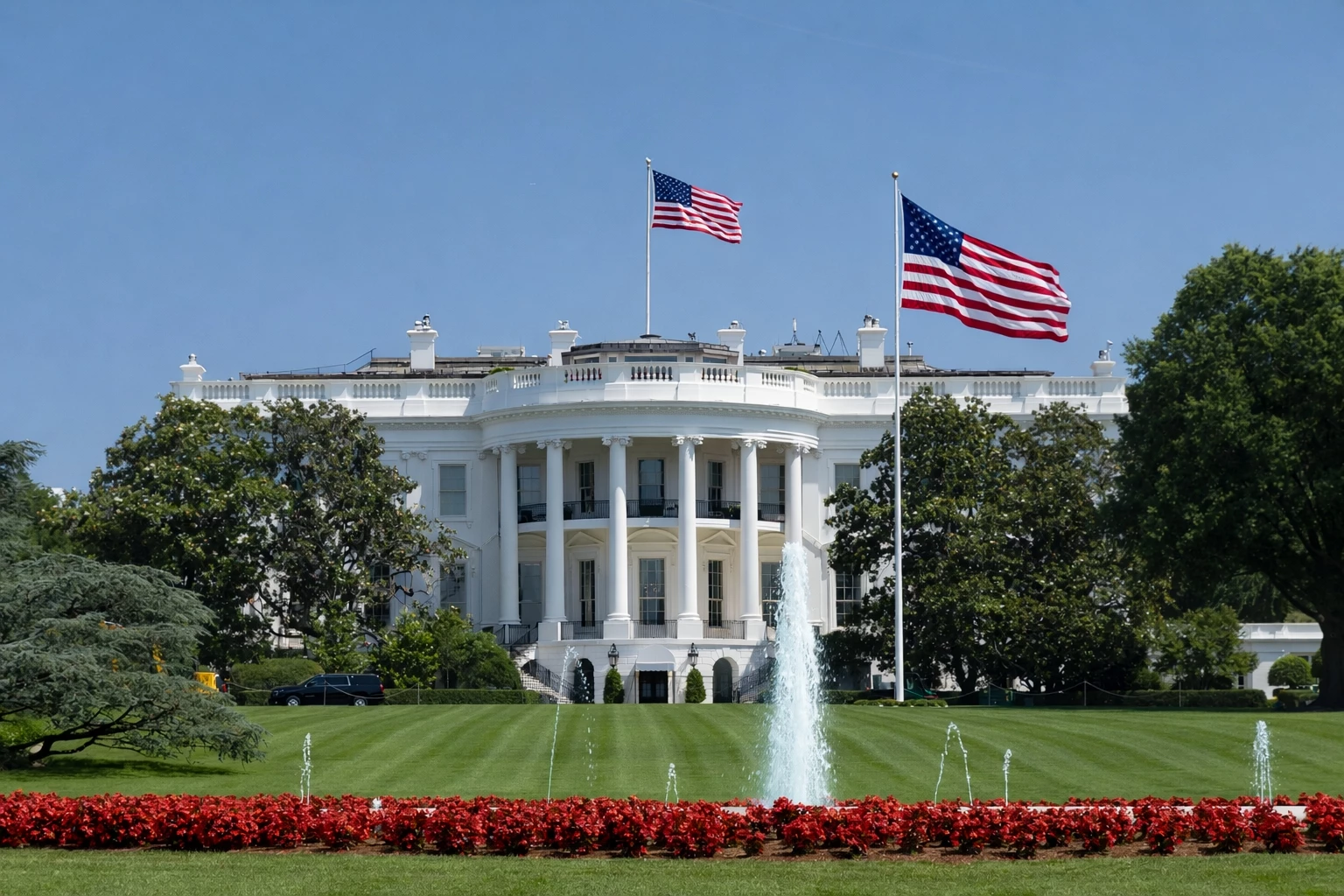
You can feel the constitutional nerve being touched whenever a president says, in effect, This is my house to secure and improve, and critics respond, You are a temporary occupant, and a court could ultimately agree in some form.
To be clear, what follows is not a report about a specific, current lawsuit over a White House ballroom. It is a way to understand a recurring separation of powers problem: what happens if a president proposes a major, permanent change to the White House complex , and opponents argue the plan violates Congress’s spending limits or federal property rules.
So the real question is not whether the President is a “tenant” in some poetic sense. The question is who holds the legal power to spend federal money, alter federal property, and override statutory limits when the White House is the project site.
That is why disputes over major White House renovations routinely become separation of powers disputes. They are never just about architecture. They are about appropriations, property control, and the uncomfortable fact that even “national security” usually operates through laws Congress wrote.
Join the Discussion
Start with the Constitution
The Constitution does not contain a “White House Renovation Clause.” Instead, renovation authority is a byproduct of three bigger constitutional structures.
1) Congress holds the spending power
Article I gives Congress the power of the purse. That includes the Appropriations Clause principle: federal money is spent only when Congress says so , and on the terms Congress sets.
So if a renovation requires new federal funds, or shifts funds from one purpose to another, the constitutional starting point is simple: the Executive cannot unilaterally create a funding stream just because the project is desirable, urgent, or politically popular.
2) Congress has strong constitutional authority over federal property, but the day-to-day rules are mostly statutory
Separate from appropriations, Congress has textual authority to make rules for “Property belonging to the United States” (the Property Clause). And because the White House sits in the District of Columbia, Congress also has unique governance authority there under the District Clause.
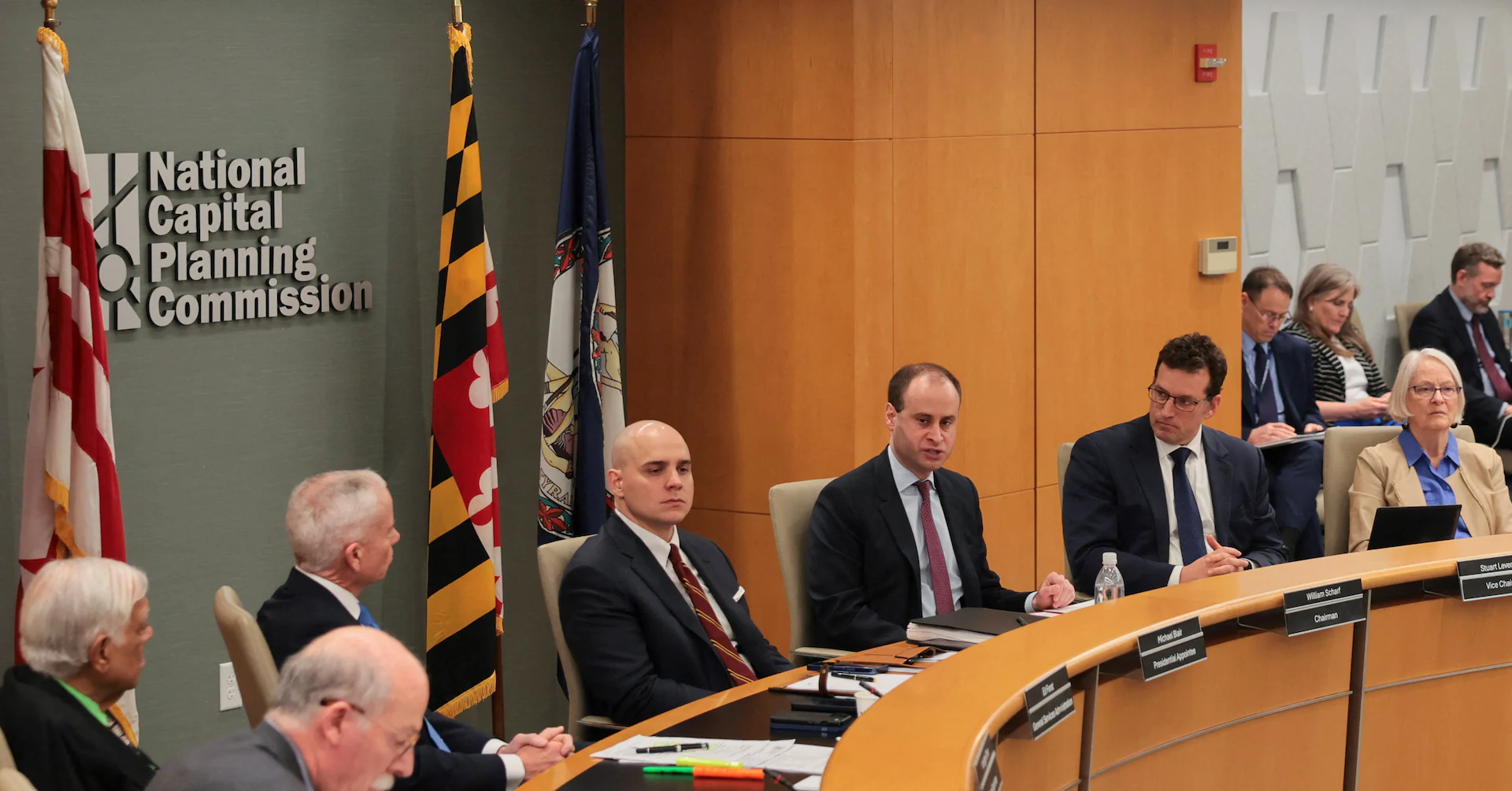
In practice, though, the operational framework for federal buildings is usually created by statutes and delegated agency authority. Congress writes the rules, assigns responsibilities, and attaches conditions, reporting requirements, and review processes. For major changes in the monumental core of Washington, real-world constraints often come through bodies and processes Congress empowered, such as the Commission of Fine Arts and the National Capital Planning Commission, as well as preservation processes like National Historic Preservation Act Section 106 review when applicable.
That matters because even when the President is the nation’s chief executive, the White House complex is still federal property governed by federal law.
3) The President has Article II duties that create real operational authority
The President does have constitutional responsibility to “take Care that the Laws be faithfully executed,” to supervise the Executive Branch, and to protect sensitive operations. That authority is not imaginary. It is why presidents can direct the Secret Service, set security procedures, and control day-to-day use of the residence and West Wing.
But operational control is not the same thing as unlimited construction authority. In American constitutional law, “I need it for security” is a powerful argument, not a magic spell that dissolves statutes.
A quick anchor
Big changes to the White House have happened before, and they typically illustrate the same theme: large, lasting projects are not just “presidential” projects. For example, the Truman-era reconstruction of the Executive Residence was a massive undertaking driven by safety and functionality, carried out through the ordinary machinery of federal funding, contracting, and oversight. Whatever the politics of any era, the legal reality tends to be the same: major work lives inside a statutory and appropriations framework.
How courts see it
If a president proposed something big, like a new permanent event space, a structural addition, or a substantial reconfiguration of the grounds, the legal fight would not turn on taste. It would turn on mechanics: appropriations limits, delegated authority, and whether the Executive Branch can proceed with a project of that scale without Congress clearly funding or authorizing it.
In that posture, a judge might use a phrase like “temporary tenant” as rhetorical shorthand for occupancy versus ownership. But the holding would likely be more ordinary: whether the government identified a lawful source of funding and a lawful grant of authority for the project as designed.
That distinction matters. “Temporary tenant” can become the headline, while the actual decision turns on the less poetic question of whether the Executive is operating inside Congress’s rules.
Who controls changes?
The White House is simultaneously:
- A home (the Executive Residence)
- An office (West Wing functions and related workspaces)
- A historic site with preservation expectations
- A high-security facility managed in part through specialized protective authorities
Because of that mix, large physical changes tend to trigger multiple legal regimes at once. At a minimum, projects can implicate federal procurement rules and historic preservation processes. Depending on location and scope, they may also move through planning and design review processes in the National Capital region, including review by the Commission of Fine Arts and planning oversight by the National Capital Planning Commission, where those bodies have jurisdiction.
In plain English: presidents can and do order updates, repairs, and security improvements. But the bigger and more permanent the change, the more likely it is that Congress’s conditions and agency processes become decisive.
Can the President act alone?
People ask this question as if there are only two options: total presidential control or total congressional control. The real world is messier, and it runs on categories.
Category A: Routine maintenance
Painting, repairing, replacing worn infrastructure, improving existing security hardware, and other routine facility work is typically handled through existing appropriations and delegated authority within the Executive Branch. These are the changes that happen under any administration and do not usually provoke constitutional fireworks.
Category B: Major construction
A major new structure or a capacity-expanding addition tends to require:
- New appropriations or explicit permission to use certain accounts
- Compliance with statutory requirements that attach to federal construction and procurement
- Coordination with agencies and review bodies that have legal authority over federal buildings, planning, security infrastructure, and historic resources, which can include NHPA Section 106 review and National Capital planning or design review where applicable
That is where “Can the President do this alone?” usually becomes “What did Congress fund, authorize, or restrict?”
Category C: Emergency security modifications
Security emergencies can broaden executive flexibility, but rarely in the way rhetoric suggests.
When flexibility exists, it usually comes from statutes: transfer or reprogramming authority, emergency procurement authority, or other congressionally provided tools that let agencies move faster.
Even when courts take national security claims seriously, they generally ask a disciplined set of questions: Is there a statute granting emergency authority? Is the action tied to a funded program? Is the executive bypassing procurement or property rules that Congress intentionally wrote?
In other words, emergencies can change timelines and procedures. They do not usually erase Congress, at least not where Congress has spoken clearly.
Funding is the hinge
For a White House project, the legal fight often collapses into a deceptively simple question: what account is paying for this, and what does Congress allow that account to do?
- Direct appropriations: the cleanest path is Congress appropriating funds for a defined project or for a category of capital improvements with clear limits.
- Transfers and reprogramming: sometimes agencies have limited authority to shift funds within or between accounts, but the scope is statute-dependent and often comes with notice and oversight requirements.
- Private gifts and donations: “A donor will pay for it” does not automatically solve the legal problem. Gift acceptance typically requires specific statutory authority (often agency-specific), can raise augmentation of appropriations concerns if used to evade congressional limits, and still must comply with applicable construction, preservation, and security requirements.
What courts can do
Courts are not building inspectors, and they are not supposed to redesign presidential workspaces. But courts can do something that often feels just as intrusive: they can tell the Executive Branch that a project is unlawful if it violates statutes or exceeds delegated authority, where the case is properly before them.
Courts can block spending
If a renovation is funded in a way that plaintiffs plausibly argue violates appropriations law, a court can sometimes order the government to stop, even midstream. That kind of relief is possible, but not automatic. It often depends on threshold issues like whether the challenged conduct is tied to reviewable agency action, whether sovereign immunity is waived (often via the APA), and whether the suit is properly directed at subordinate officials rather than the President personally.
Still, it is not always easy to get to the merits. Whether a court can act at all may turn on threshold hurdles like standing , the availability of a cause of action (often under the Administrative Procedure Act or an ultra vires theory), and doctrines about reviewability.
Courts can enforce process statutes
When Congress creates procedures for federal construction, procurement, preservation, or environmental review, courts can require the Executive to follow them, at least where the statute supplies manageable standards and the dispute is reviewable.
It is fair to add one qualifier: separation of powers fights can get sharp when a statute is argued to intrude on core Article II functions. Courts sometimes read statutes narrowly or tailor remedies to avoid operational interference, especially in sensitive security contexts. But the President does not have a general, automatic exemption from federal law merely because the building is the White House.
Courts usually avoid security micromanagement
Where national security is credibly implicated, courts often try to craft narrower relief, protect classified information, and avoid orders that require judges to supervise day-to-day protective decisions.
But “we claim security” is not, by itself, a jurisdictional shield. Some disputes can still become practically difficult to litigate because of classified-evidence limits, state-secrets concerns, or arguments that a matter is committed to agency discretion by law. Even so, the judiciary’s constitutional role includes saying what the law is when a claim is justiciable, even when the parties are powerful and the building is famous.
Who can sue and how
These disputes do not arrive in court as abstract constitutional seminars. They arrive as lawsuits filed by plaintiffs who can plausibly claim a legal injury and a vehicle to challenge the action.
Depending on the facts, plaintiffs might include preservation organizations, nearby or affected property holders, contractors, or groups alleging that an agency failed to follow required procedures. The legal theories are often familiar: an APA challenge to final agency action, an ultra vires claim that officials exceeded statutory authority, or an appropriations-based theory that government money is being spent without lawful authorization. Congressional plaintiffs sometimes attempt to sue too, but those cases are often contested on standing and institutional-injury grounds. And for most members of the public, generalized taxpayer standing is usually unavailable, which means many objections never become a case on the merits.
Why “temporary tenant”
When a judge or commentator describes a president as a “temporary tenant,” it is usually rhetorical shorthand, not a deed-record statement. It is doing two kinds of work.
First, it is making a basic civic point: the office is permanent, the individual is not. The White House is not a private asset that transfers with election results.
Second, it signals a legal conclusion: occupancy does not equal ownership. The President’s control over the premises is substantial, but it is exercised as a public officer inside a framework of statutes and appropriations written by Congress.
That framing is not an insult. It is a reminder that the Executive Residence is held in trust for the public, and for the next administration, too.
Work already underway
The hardest cases are the ones that arrive late, after contracts are signed, work is in progress, and money has been spent. That timing raises two practical legal questions.
1) Can a court stop an ongoing project?
Yes, potentially, if the case clears jurisdictional and merits hurdles. Courts can issue injunctions that halt construction or prevent further spending when plaintiffs show a lawful basis for relief and satisfy the usual equitable factors. Whether a judge should do so depends on standard equitable considerations like irreparable harm, likelihood of success, and public interest, plus practical constraints like security and disruption.
2) Does “we already paid for it” make it legal?
No. In constitutional terms, an unlawful expenditure does not become lawful because it happened quickly. If anything, the speed becomes part of the story: it can raise questions about whether the Executive attempted to outrun oversight that Congress and the courts are entitled to provide.
Security is real
Presidents are correct to treat the White House as a security-critical site. The Secret Service and related agencies make constant upgrades for threats that did not exist a decade ago.
But constitutionally, the United States has made a long-term choice: security is governed through law. Congress funds it. Congress structures agencies. Congress authorizes construction accounts and sets guardrails. And courts adjudicate whether those guardrails were followed when a dispute becomes a case.
The separation of powers is not a peacetime luxury. It is the architecture that keeps “urgent” from becoming “unreviewable.”
What it means
Even without anchoring the discussion to a single headline-grabbing dispute, the underlying lesson is durable.
- A president can direct the use of the White House and can request security improvements.
- A president cannot, by personal will alone, convert federal property and federal dollars into a private construction project.
- Courts can intervene when spending or construction appears to violate statutes or exceed delegated authority, assuming the case clears standing and reviewability hurdles.
- Congress is usually decisive for large, permanent renovations because Congress controls appropriations and can impose conditions on federal building projects.
If the political branches want fewer court fights here, the cleanest solution is not rhetorical. It is legislative: clearer appropriations language, clearer agency authority, and clearer processes for rapid security upgrades.
That is the constitutional bargain in miniature: presidents act, Congress funds and constrains, courts referee when the rules are contested.
Quick FAQ
Can the President build a major new structure at the White House without Congress?
Not as a general matter. A major construction project typically requires congressional appropriations and must comply with federal property, procurement, planning, and related statutes. The President can propose and advocate, but Congress’s funding and conditions usually control.
Can a President use “national security” to bypass Congress?
Only if a valid statute grants emergency authority or flexible spending, and even then courts can review whether the Executive stayed within legal limits when a claim is justiciable.
Why do courts get to weigh in at all?
Because when plaintiffs bring a justiciable claim that the Executive violated federal law, the judiciary’s constitutional role is to interpret that law and provide remedies, including injunctions in appropriate cases.