
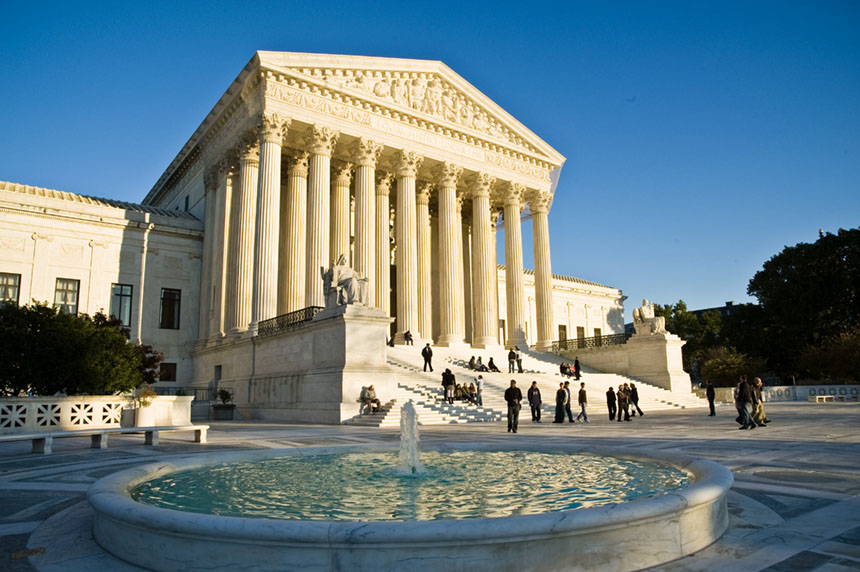
When the Supreme Court decided Students for Fair Admissions v. Harvard and Students for Fair Admissions v. University of North Carolina in 2023, it did not say colleges must ignore a student’s life story. It held that the specific race-conscious admissions programs before it violated the Equal Protection Clause and Title VI, and rejected using race as a factor in the way those programs did.
That distinction is why new allegations that a law school is still running race-based admissions trigger an immediate question from applicants and parents: what is actually banned now, and what kinds of “diversity” considerations remain lawful?
Join the Discussion
The legal foundation: Equal Protection and Title VI
Two overlapping rules govern most college and law school admissions:
- The Equal Protection Clause (Fourteenth Amendment) binds public universities because they are state actors. If a state school classifies applicants by race, it triggers the most demanding level of constitutional review: strict scrutiny.
- Title VI of the Civil Rights Act of 1964 binds any college or university receiving federal funds, including most private schools. Title VI prohibits race discrimination in federally funded programs.
In this context, the Court has generally treated Title VI’s standard as coextensive with Equal Protection for race discrimination by federally funded schools. That is why the 2023 decisions reached both Harvard (private, but federally funded) and UNC (public).
What the Court ruled in SFFA
The Court rejected the admissions systems at issue because they used race in a way the majority concluded could not satisfy strict scrutiny. The problems the Court emphasized included:
- No workable endpoint. The programs did not have a clear stopping point for when racial preferences would end.
- Vague goals. Goals like “training future leaders” or achieving the “educational benefits of diversity” were treated as too open-ended to serve as a measurable constitutional target.
- Race operating as a negative or a stereotype. The Court criticized systems where race could function like a penalty for some applicants or where admissions logic risked assuming individuals think or contribute a certain way because of race.
But the Court also drew a line that matters for compliance discussions: it distinguished between using race as a category and evaluating an applicant’s individual experiences.
The key carve-out is narrow but real: an applicant may describe how race affected their life, and a school may consider what that reveals about the applicant’s character or contributions, such as courage, leadership, or resilience. What the school may not do is convert that discussion into a race-based benefit.
What schools cannot do now
Because the decision is often summarized as “affirmative action is illegal,” it helps to be more specific. After SFFA, schools face serious legal risk if they do any of the following:
1) Award points, tips, or plus factors for race
A formal or informal practice of boosting applicants because they fall into a favored racial category is the core conduct the decision targets.
2) Use race as a selection criterion, even if it is “holistic”
Calling a process holistic does not change the constitutional math if race still moves an applicant up or down.
3) Maintain racial balancing, targets, or quotas
Quotas have been unconstitutional for decades. What SFFA adds is sharper skepticism toward systems that appear to be pursuing a particular racial composition without a clear end point.
4) Use proxies as stand-ins for race
There is no compliant workaround where a school replaces the word “race” with something else, keeps the same objective, and assumes courts will not notice.
At the same time, correlation alone is not enough to make a factor unlawful. Challenges typically focus on evidence that a policy was designed or used to function as race by another name, including documents, training, reader notes, and how the policy operates in practice.
What schools can still consider
The Court did not require admissions offices to ignore context. It required them to stop sorting people by race. That leaves several categories of information still on the table.
1) Socioeconomic disadvantage and family background
Schools can consider income, wealth, neighborhood resources, first-generation status, foster care history, and other indicators of opportunity or the lack of it. These factors are not race classifications, even though they may correlate with race in the real world.
2) Geography and local context
Geographic diversity has long been a recognized admissions interest. A school can prefer applicants from rural areas, underrepresented counties, or regions where it historically draws few students. Done carefully, geography can diversify a class without sorting by race.
3) Overcoming adversity, including discrimination, if tied to the individual
This is the most misunderstood part of SFFA. The Court signaled that an applicant may discuss how race affected their life, for example through discrimination, isolation, or community responsibility. A school may consider that story as an individual experience, not as a reason to prefer “members of race X.”
Think of the line this way: experience is admissible; classification is legally perilous. An essay about being the only student in a program, translating for parents, or confronting bias can be considered because it describes lived reality. It becomes risky if the school treats that essay as a substitute checkbox for race itself.
4) Military service, public service, and work experience
Law schools and colleges can evaluate maturity, leadership, and service through documented commitments: the armed forces, AmeriCorps, long-term caregiving, full-time employment during school, or sustained community work.
5) Speech and association, with context
Applicants can write about causes and communities that matter to them. Schools can consider intellectual interests and civic engagement. Public institutions, and sometimes private institutions depending on policies and commitments, should be careful about viewpoint discrimination and about equating certain identities or organizations with a racial category.
6) Race-neutral pipeline and recruitment programs
Outreach to schools, mentorship, application fee support, and academic preparation programs can be lawful if they are open on race-neutral terms. Programs restricted by race risk Title VI challenges.
How this applies to law schools
Law schools sit at an awkward intersection of two realities: they are bound by the same constitutional and Title VI limits, but they also evaluate applicants with tools that often track unequal access, such as standardized test preparation resources, professional networks, and certain prestige signals.
After SFFA, law schools can still build classes with a wide range of perspectives by emphasizing factors such as:
- Work history (including long-term employment while in school)
- Public interest commitment and service
- Language skills and cross-cultural competence tied to actual experience
- Geographic diversity, including underrepresented regions
- Socioeconomic background and first-generation status
What they cannot do is treat an applicant’s race as a credential in itself, even if the stated goal is classroom diversity.
One additional note: the SFFA opinion flagged military academies in a way that has prompted debate about whether different considerations could apply in that setting. That question is fact-specific and has been the subject of ongoing legal attention.
Compliance takes proof
One reason accusations of post-SFFA noncompliance keep surfacing is that admissions decisions happen behind closed doors. That secrecy can make any pattern look like a hidden formula.
For schools trying to comply, the practical lesson is simple: if you cannot explain your criteria without referencing race as a category, you are probably not compliant.
Common compliance steps institutions adopt include:
- Written guidance for admissions readers that prohibits using race as a factor
- Reader training on how to evaluate adversity narratives without turning them into racial stand-ins
- Audit trails documenting how decisions were made and what factors were permitted
- Periodic statistical reviews used for internal risk assessment and documentation, not for outcome targeting or racial balancing
None of these measures guarantee immunity from lawsuits. They do, however, reflect the post-2023 reality: compliance is now something schools must be able to demonstrate, not just declare.
Note: This article is general information, not legal advice. Institutions should consult counsel about their specific policies and documentation.
If a school is accused
Allegations that a school is defying SFFA typically lead down one of three tracks:
- Internal investigation and policy revisions
- Federal administrative pressure, including Title VI complaints and agency inquiries (often through the U.S. Department of Education’s Office for Civil Rights, and sometimes the Department of Justice)
- Civil litigation, where plaintiffs seek discovery to uncover whether race is being used as a factor, including training materials, reader notes, and communications
The key legal question is not whether a school values diversity. The question is whether race is being used as a decision tool in a way the Constitution and Title VI forbid.
Quick answers
Is affirmative action “illegal” now?
After SFFA, the race-conscious admissions preferences used by Harvard and UNC were held unlawful under Equal Protection and Title VI. Schools can still consider race-related experiences in individualized ways, but they cannot give a category-based race preference.
Can an applicant still write about race in an essay?
Yes. The Court explicitly left room for applicants to discuss how race affected their life. The legal risk is on the school’s side: using that discussion as a disguised racial preference is what invites challenge.
Can schools use socioeconomic status instead?
Yes. Socioeconomic disadvantage is race-neutral and widely viewed as permissible to consider. It can also change the composition of a class in meaningful ways without resorting to racial classifications.
Do these rules apply to private universities?
If they receive federal funds, Title VI applies. That covers most private universities and law schools.
The deeper point
SFFA is not just a fight about admissions. It is a reminder that the Equal Protection Clause is not a general instruction to pursue fairness however we define it. It is a constraint on how government and federally funded institutions may classify people.
In the Court’s view, the Constitution tolerates many forms of line-drawing in admissions. What it does not tolerate easily is the line that sorts applicants by race, even for ends that many people consider admirable.
The question colleges and law schools have to answer now is not “do we care about diversity?” Most do. The question is: can we pursue it without making race do the work?