
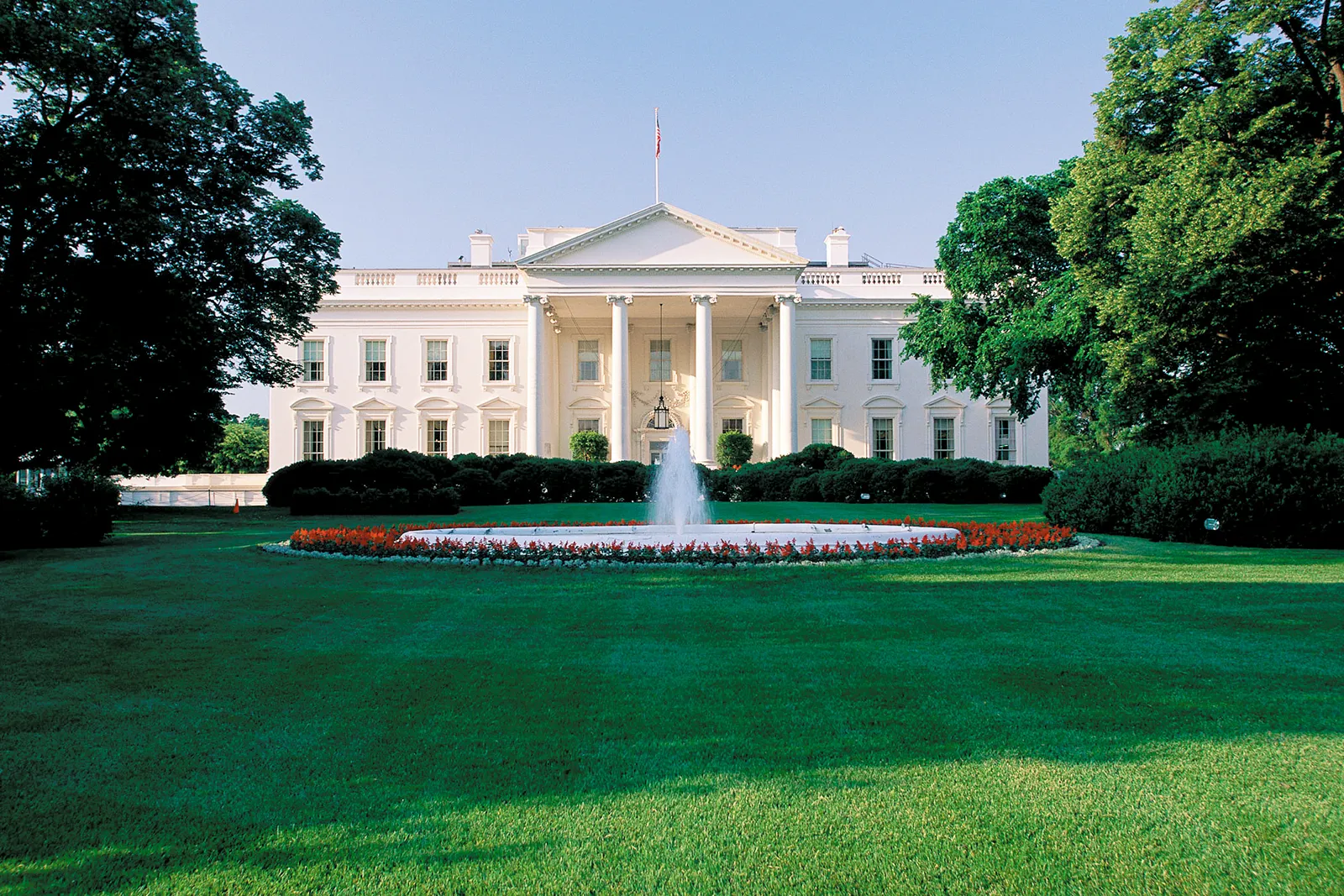
The White House is one of the few places in America that is simultaneously a private residence, a high-security workplace, a museum, a ceremonial stage, and a federal asset maintained through formal government channels. That mix is why today’s viral claims about “fixing” or “restoring” the White House so often trigger the same public question: who pays and who gets to decide?
Recent posts showcasing wear, repairs, and proposed upgrades frame the issue as pride, neglect, or legacy. The deeper reality is more bureaucratic and more constitutional: the White House is federal property, and federal property is governed by Congress’s power of the purse and by a network of preservation, ethics, and procurement rules that do not disappear just because the President lives there.
Join the Discussion
The first rule: federal property
Presidents live in the White House, but they do not own it. The White House is federally owned property, managed as part of the executive branch’s physical plant and stewarded for the public.
The constitutional hook is straightforward: Congress funds the executive branch. Article I gives Congress the appropriations power, and Article II creates the presidency but does not give the President unilateral spending authority for buildings, renovations, or “restorations.”
So even when changes are framed as personal taste, “bringing it back,” or “making it better,” the legal system treats most work at the White House as work on federal property, paid for with public money, under public rules.
Who maintains what?
Think of White House upkeep as a relay race among specialized entities, with responsibilities that can overlap depending on the exact area and the security footprint:
- Executive Residence staff and White House Operations handle daily operations and facilities coordination for the residence portion of the complex. This is the work that keeps the building functioning as both a home and a venue for official events.
- The National Park Service maintains President’s Park and many exterior grounds areas surrounding the White House as part of its park system, often coordinating with other federal partners.
- The Secret Service has authority over protective operations and security-driven alterations, including access controls, barriers, and hardening measures. Security requirements can shape what is possible on or near the grounds, even when another entity has day-to-day stewardship.
- Other federal offices and contractors may be involved depending on the project, including engineers, preservation specialists, and construction teams operating under federal contracting rules.
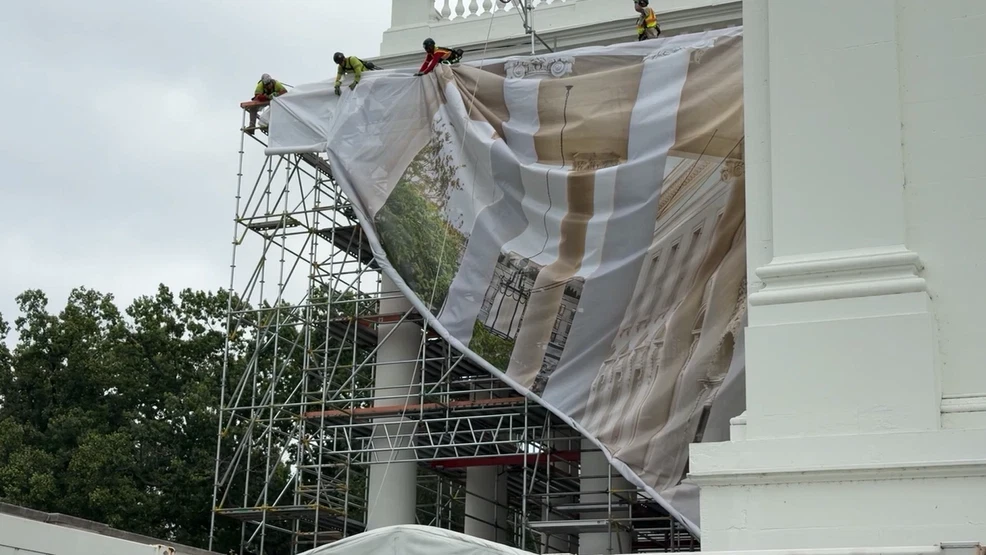
That division is why a single “White House renovation” headline can describe very different work: repainting rooms, stabilizing stonework, replacing aging mechanical systems, upgrading security infrastructure, or restoring historic features. Each category can carry different approvals, budgets, and documentation.
So who pays?
Most structural repairs, building systems replacements, life-safety work, and major restoration projects are funded through congressional appropriations. In practice, that typically means work is planned and executed through executive branch facilities and maintenance budgets within the Executive Office of the President and related federal support offices, with Congress controlling how much money is available and what it can be used for.
That also means:
- Money must be made available through the federal budget process.
- Spending must fit within the legal purpose of the appropriation.
- Agencies must follow federal procurement and contracting standards.
When people ask “Can the President just renovate the White House?” a more precise answer is: the President can request and prioritize changes, but major work generally must run through appropriated funds and the government’s contracting and oversight process.
One reason this is not theoretical is that the building has required major, publicly documented interventions before. The clearest example is the Truman-era reconstruction, when the interior structure of the Executive Residence was essentially rebuilt while preserving the historic exterior, a reminder that even iconic spaces sometimes need deep systems and structural work, not just surface-level updates.
There are, however, two important nuances that often get lost.
1) Private support exists, but federal rules still apply
There are long-running philanthropic efforts connected to White House preservation. One of the best-known is the White House Historical Association, which supports the broader mission of preserving White House history and can help support curatorial and educational efforts. In practical terms, private support is most relevant to the furnishings, conservation, art, and interpretation side of the residence, for example, helping fund conservation of historic objects, acquisition or care of period furnishings, or public-facing educational materials.
Even there, acceptance and use are constrained by federal ethics and gift rules and by curatorial governance inside the White House. Private support does not convert the building into a privately directed project.
2) Personal spending does not eliminate oversight
A President could choose to pay for certain personal or decorative items. But when changes touch historic fabric, building systems, or security-driven modifications, the work generally remains part of a government-managed process. Offers of private funding can also raise legitimate questions about gifts, influence, contracting, and whether private money is being used to steer federal decision-making.
Maintenance vs renovation
The word renovation is doing a lot of work in public arguments. In practice, projects fall on a spectrum:
- Routine maintenance: patching, repainting, small repairs, replacing worn components with like materials.
- Capital repairs: major work on roofs, stone, windows, structural elements, HVAC, plumbing, electrical systems, and accessibility upgrades.
- Restoration and preservation: returning spaces or features to a historically documented condition, often requiring specialized materials and review.
- Alteration and modernization: redesigning layouts, adding new features, or changing historic elements, typically the most controversial category.
- Security-driven reconstruction: projects whose primary justification is protective capacity, sometimes undisclosed in detail for obvious reasons.
These distinctions matter because they affect who signs off, how visible the project is, and how the work is justified to Congress and the public.
The guardrails
The Constitution’s most practical check on White House building ambitions is the everyday discipline of appropriations law: agencies cannot spend money Congress has not provided, and they cannot spend it for a purpose Congress has not authorized.
That reality produces a few recurring constraints:
- Purpose limits: Funds appropriated for operations are not automatically available for major construction, and vice versa.
- Oversight in practice: Congress can shape projects through appropriations levels, committee report language, required justifications, and reprogramming or notification thresholds that can trigger briefings to committees.
- Contracting rules: Competitive bidding and procurement standards often apply, limiting ad hoc arrangements.
- Preservation obligations: Because the White House is historically significant, changes are commonly reviewed through White House-specific stewardship practices, including the Committee for the Preservation of the White House. This governance is somewhat bespoke compared with the more familiar, public-facing consultation pathways used for many other federal historic sites, and it is not typically a public-comment process. But the underlying preservation discipline and documentation expectations are still real constraints.
In other words, the presidency is powerful, but it operates inside a financial and legal architecture designed to prevent any one officeholder from treating federal property as a personal estate.
What about monuments and DC landmarks?
Posts about the White House often broaden into promises to “restore Washington” generally. That raises a related, but distinct, question: who pays to repair federal monuments and iconic buildings across the District?
Much of that work runs through federal land and building managers, especially the National Park Service for many memorials and monuments, and other federal agencies for specific buildings and sites. The same basic rules apply:
- Congress appropriates money.
- Agencies execute projects under procurement and preservation requirements.
- Big projects compete with other national priorities because budgets are finite.
The DC location can be misleading. Many of these assets are not “DC’s responsibility” in the way a city would maintain a local park. They are national sites funded and managed as part of the federal government’s stewardship of its own property.
Can a President order changes anyway?
A President can direct priorities within the executive branch, and the White House has operational discretion on many choices, especially inside the residence. But discretion is not the same as unilateral authority over funding, contracting, or preservation.
For major exterior work, structural changes, or projects that would meaningfully alter a historic feature, the President still runs into:
- the money question (is there an appropriation for this purpose?)
- the process question (does the project comply with contracting, engineering, and preservation standards?)
- the accountability question (who will certify the work, document it, and defend its cost?)
This is why “before and after” claims can be politically potent but civically incomplete. The real story is rarely whether a leader wants beauty. It is whether the federal government can justify, fund, and execute the work legally, safely, and with appropriate oversight.
The bigger point
Americans argue about the White House the way families argue about a shared heirloom. Should we preserve it exactly? Should we update it? Who gets to decide what “restoration” means?
The Constitution does not settle aesthetic disputes. What it does settle is control and accountability:
- Federal property is managed under federal law.
- Federal money is spent only as Congress permits.
- The President is a temporary occupant of an enduring institution.
That design is not an accident. It is the same logic that keeps military bases, courthouses, and national parks from becoming personal projects of whoever holds office. The White House is symbolic, but it is also administrative. And the administrative rules help protect the symbol from being treated like a personal possession.
Quick answers
Who pays for White House renovations?
Usually the federal government, using money appropriated by Congress through executive branch facilities and maintenance budgets. Some furnishings, conservation, and curatorial elements may be supported by private donations or affiliated nonprofit support, but major repairs and building work are typically funded and managed through federal channels.
Who maintains the White House?
Maintenance is shared across entities, including Executive Residence staff and White House Operations for residence operations, the National Park Service for President’s Park and many surrounding grounds responsibilities, and the Secret Service for security-related infrastructure and modifications. Responsibilities can overlap depending on the specific zone and security requirements.
Can the President renovate the White House?
The President can set priorities and request changes, but major projects still depend on appropriations, procurement rules, security requirements, and preservation practices, including review through the Committee for the Preservation of the White House. The building is not the President’s personal property.
Is the White House a national monument?
It is a nationally significant historic site and federal property with extensive preservation concerns. Whether labeled a “monument” in everyday speech or not, it is treated as a high-value federal historic asset subject to stewardship norms.