
When a president says a statue of Christopher Columbus “stands at the entrance” to the Eisenhower Executive Office Building, right next to the White House complex, the obvious question is simple: can a president do that?
The constitutional answer is less cinematic than people expect. The President does not personally own federal buildings or their front lawns. The real power lives in a triangle of (1) Congress, which writes the rules and controls the money, (2) agencies that manage federal property day to day under those rules, and (3) specialized review bodies that provide layered review and help prevent hasty or inconsistent changes in the most symbolically sensitive places in Washington.
Join the Discussion
Congress and the Constitution
If you want the clean constitutional hook, it is not Article II alone. It is Article IV.
The Constitution’s Property Clause gives Congress power to “dispose of and make all needful Rules and Regulations respecting the Territory or other Property belonging to the United States.” In plain English: federal land and federal buildings are ultimately Congress’s domain. Congress can pass laws about how federal property is used, what can be built on it, and who gets to make those calls.
Article II still matters in practice because Congress routinely delegates a lot of operational authority to the executive branch. Presidents can direct agencies, set priorities, and manage the administration of federal property. But the President’s day-to-day control usually runs through statutes, appropriations, and the agencies Congress empowered, not through a personal ownership power.
Who runs the space there
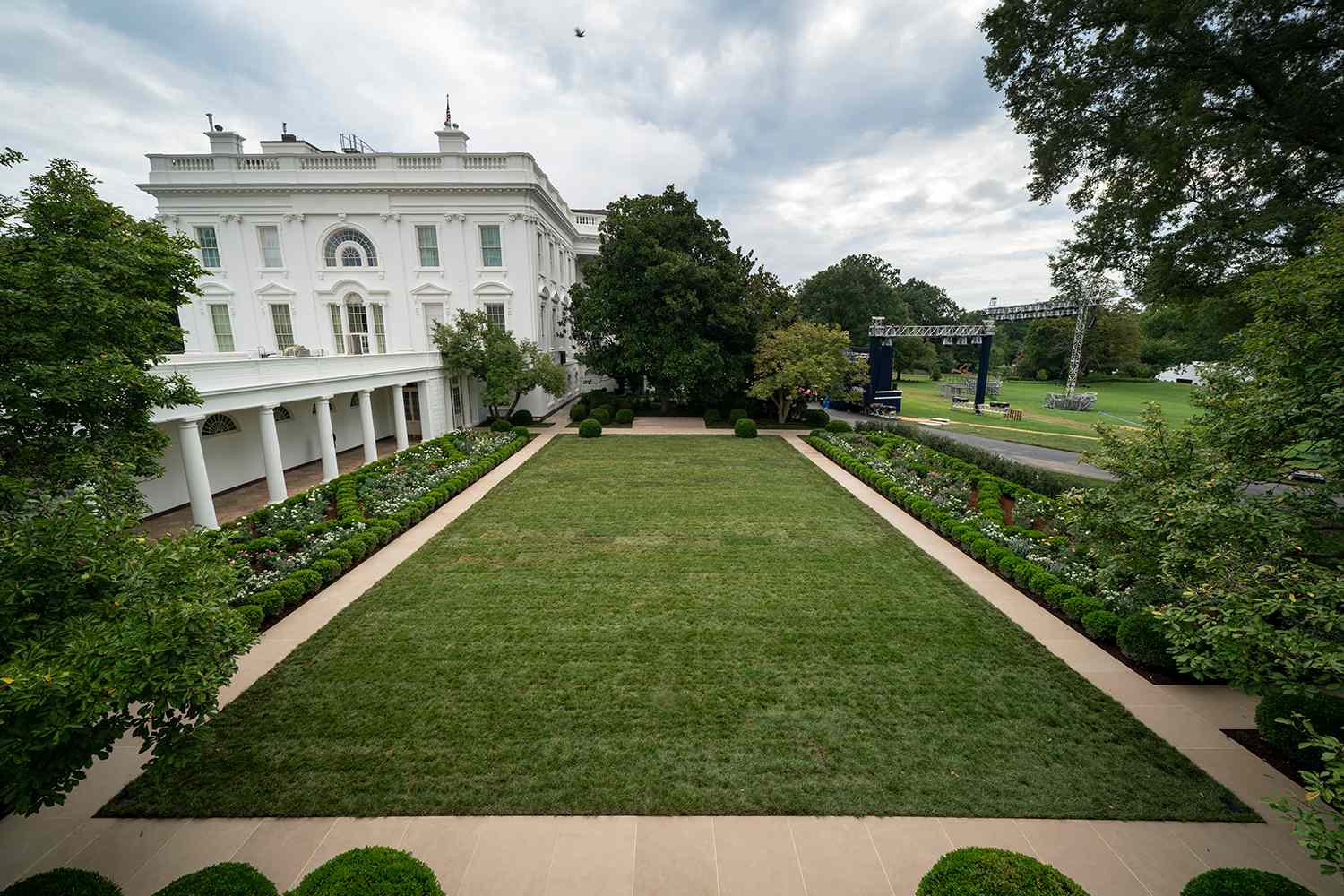
The White House “complex” is not a single legal bucket. The White House and adjacent executive buildings sit in a dense patchwork of jurisdictions and caretakers. Depending on the exact piece of ground, authority can involve the Executive Office of the President (including the Office of Administration), the National Park Service (including areas of President’s Park), the General Services Administration (GSA), and design and planning commissions like the U.S. Commission of Fine Arts (CFA) and the National Capital Planning Commission (NCPC).
The Eisenhower Executive Office Building (the EEOB) is part of the Executive Office campus, but federal property management in Washington often runs through GSA as the federal government’s landlord for many facilities. Around the White House, that general rule can have important exceptions and overlaps. The practical takeaway is that jurisdiction is parcel-specific, and any serious monument plan has to start by identifying the land manager and the applicable approval path for that location.
What a president can do
A president has real authority over the executive branch. That includes directing agencies under presidential supervision to evaluate proposals, coordinate with stakeholders, and begin the formal processes that may be required for an installation.
But “direct authority” has limits that show up fast with monuments:
- Appropriations: If Congress has not provided money for a statue, a pedestal, installation, landscaping, lighting, and maintenance, the executive branch often cannot just spend funds anyway. The Appropriations Clause and federal spending law push presidents toward what has been funded or what can be paid for through lawful, pre-existing accounts.
- Statutory procedures: For prominent federal sites, Congress has created processes that require review, consultation, and compliance. A presidential preference is not the same thing as a legally final decision.
- Permanent vs. temporary: Temporary displays, loans, or relocations can sometimes be easier than installing a permanent monument. “Permanent” tends to trigger a larger universe of property management and preservation rules.
- Security control: Around the White House, the Secret Service’s protective mission can sharply constrain what is permissible. Even where another agency manages the land, security assessments and protective requirements can effectively determine what can be placed where, even if that influence is not framed as a formal “veto.”
In other words, presidents can push. They cannot always place.
Why it moves slowly
Americans often imagine monuments as pure symbolism. Washington treats them as infrastructure with long-term consequences. Once you place a large sculpture in a high-traffic, high-security area, you have created maintenance obligations, barriers, sightlines, crowd flow issues, and an enduring governmental endorsement.
That is why federal law has long leaned on structured review for commemorative works in the nation’s capital. The best-known framework is the Commemorative Works Act, which governs many commemorative works on certain federal lands in the District of Columbia and its environs and is meant to prevent the monumental core from becoming a free-for-all of permanent tributes. Whether it applies depends on the site and the land-managing agency, but the policy instinct is the same: the closer you get to iconic civic space, the more likely you are to encounter layers of review.
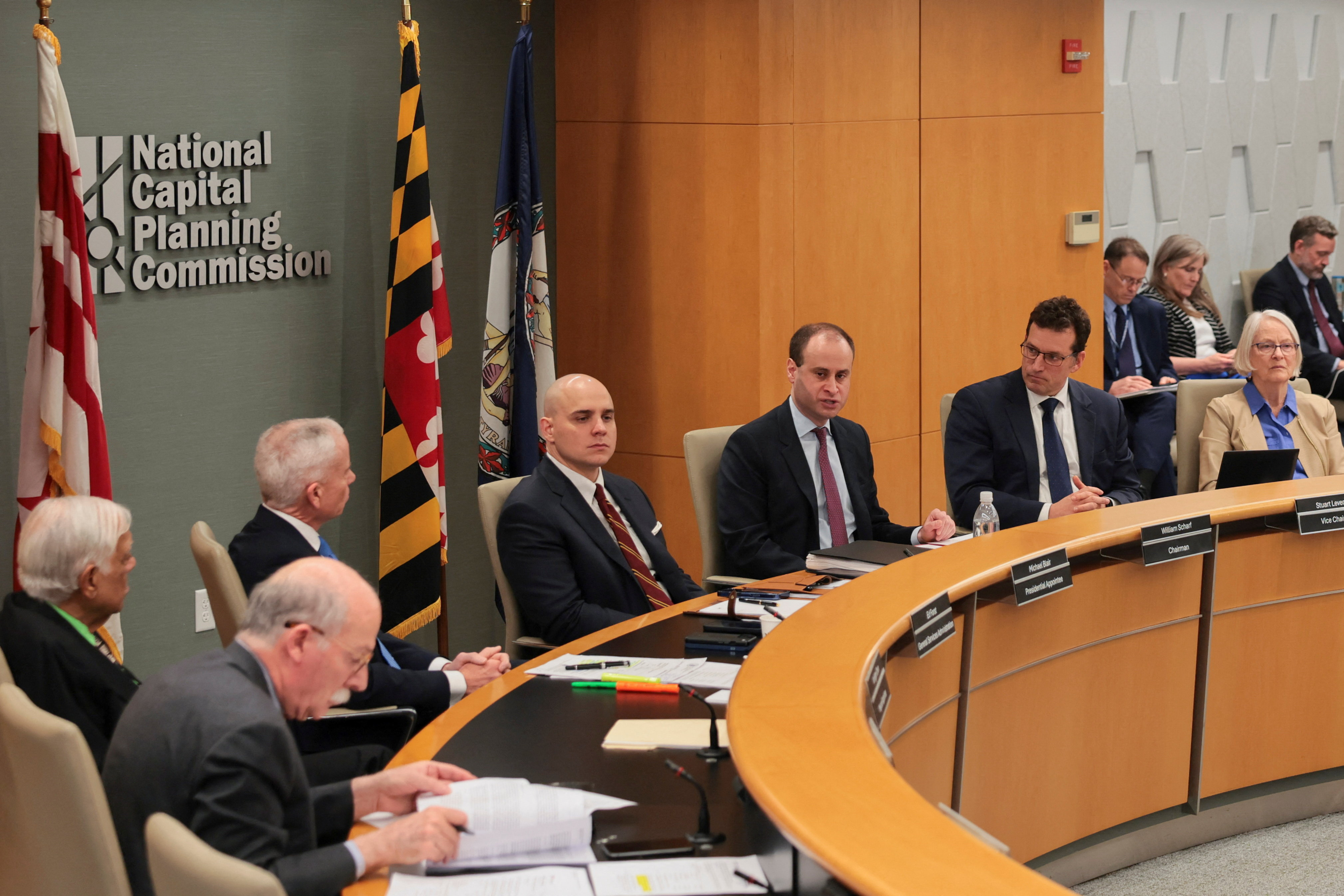
In practice, those layers often include the National Capital Memorial Advisory Commission (NCMAC), the Commission of Fine Arts (CFA), and the National Capital Planning Commission (NCPC). They do not exist to referee every culture fight. They exist to provide continuity, expertise, and public accountability in places where the physical landscape functions as a national text.
It is law, not instinct
Even when the public debate is about Columbus, the operational question for the government is more mundane: What is the legal basis for placing that object on that parcel?
To install a statue on federal property, the government typically needs answers to questions like these:
- Who is the sponsoring entity? Is it a federal agency project, a private donation accepted by the government, a loan, or a transfer from another governmental body?
- Who will maintain it? “Maintenance” is not trivia. It determines funding streams and long-term control.
- What approvals are required? Prominent sites often require design, planning, and historic preservation review, including consultations required by the National Historic Preservation Act.
- Is the location historically protected? Historic buildings and landscapes can trigger procedural requirements, including Section 106 review, that can constrain changes or require mitigation.
- Is it consistent with the property’s authorized use? Federal property is managed for public purposes defined by law, not simply for presidential preference.
That is why the most accurate answer to “can the president do it?” is often “not alone, and not instantly.”
Placing vs. moving vs. accepting
“Put a statue there” can mean a few different things, and the legal path depends on which one you mean.
- Installing a new permanent statue: This is usually the hardest route. It raises funding, siting, design review, security, and long-term maintenance questions all at once.
- Relocating an existing federal statue: This can be simpler than commissioning a new work, but it still triggers authority questions (who controls the current site and the new site), plus planning, preservation, and security constraints.
- Accepting a donated statue: A “gift” can add complexity, not remove it. The government needs lawful authority to accept it, and the terms of the donation may create restrictions or future disputes about removal, placement, or maintenance.
Removing a statue
People ask about placement, but removal is where the law becomes emotionally visible. If a statue is already on federal land, removing it can implicate:
- Property authority: The managing agency’s rules and the terms under which the statue was accepted or installed.
- Congressional restrictions: Congress can prohibit removal, require notice, or condition funding. Congress can also specifically direct removal by statute.
- Historic preservation obligations: If the site or the monument is treated as historically significant, the government may have procedural steps to follow, including Section 106 consultation.
- Litigation risk: Donors, organizations, or affected parties may sue based on contracts, statutory compliance, or administrative procedure.
That last point is where civic accountability shows up. Monument decisions feel like moral judgments, but in court they often look like administrative law: who had authority, what procedures were followed, and whether the government gave a lawful explanation for its action.
Does the First Amendment decide it
Not in the way many people assume.
A statue placed and maintained by the government on government land is usually treated as government speech. The Supreme Court has repeatedly used that framework to explain why the government can select which monuments to display without being required to display all messages (for example, Pleasant Grove City v. Summum, and in a related context, Walker v. Texas Division, Sons of Confederate Veterans).
That does not make monument decisions immune from criticism. It just places them in the democratic lane rather than the free-speech lane. If you dislike the message, your remedy is typically political pressure and civic process, not a guaranteed constitutional right to equal monument access.
Why Columbus hits a nerve
Columbus monuments carry two competing civic narratives that often talk past each other.
One is a story of immigrant identity, particularly for Italian Americans who see Columbus as a symbol of belonging in a country that historically treated them as outsiders. The other is a story about conquest, Indigenous dispossession, and what it means for the government to honor a figure tied to the earliest chapters of European colonization.
The law does not resolve that moral dispute. What law does is decide who gets to decide, through what process, with what constraints, and with what forms of accountability. Near the White House, the answer tends to be: not one person, not one agency, and not one election cycle.
Bottom line
A president can publicly advocate for a Columbus statue near the White House and can direct executive branch staff to pursue a lawful path to place, reinstall, relocate, or highlight it. But the President’s authority runs through federal property law, agency management, appropriations, Secret Service protective requirements, and the planning, design, and preservation reviews built to make permanent civic symbols difficult to change on a whim.
That friction is not a bug. It is a constitutional design choice expressed through statutes: federal property belongs to the nation, not to any one administration. If we want monuments to reflect something durable, the process has to be durable too.
Quick FAQs
Can the President just order a statue installed at the White House?
The President can direct the executive branch to pursue it, but a permanent installation typically requires lawful funding, approvals by the relevant property manager, and compliance with planning, preservation, and security requirements.
Who “owns” the grounds around the White House?
They are federal property, but management authority varies by parcel. Different pieces can be administered by different federal entities, and Secret Service protective requirements heavily influence what is permitted.
If the statue is a gift, does that make it easy?
Not necessarily. Gifts can create their own legal conditions, including acceptance authority, maintenance obligations, and restrictions in the terms of donation.
Is this a First Amendment issue?
Usually it is a government speech issue. The government can choose which monuments it displays, but it remains accountable to the public through democratic and administrative processes.