
It feels like a simple question: if the FBI is an executive branch agency, why can a federal judge block where it puts its headquarters?
Because in Washington, “where an agency sits” is rarely just an internal office decision. Federal buildings are not personal property of a president or an agency. They are public assets governed by statutes, appropriations limits, and a management structure Congress built on purpose. The FBI may be the tenant in many cases, even when it has strong operational preferences, and another part of the government is often the landlord on paper.
Join the Discussion
The basic civics: the FBI is usually not its own landlord
The FBI is housed, funded, and supervised within the executive branch, but the real estate it occupies is often managed through a different executive branch entity: the General Services Administration (GSA).
GSA functions as the federal government’s landlord and property manager for much of the office space used by civilian agencies. That does not mean every FBI facility is handled the same way. Some agencies have independent real property authority, and DOJ and the FBI can directly control certain specialized or security-driven facilities under specific authorities. But for major, headquarters-style office space and big relocations, GSA is frequently a central player.
That division matters. If a move requires transferring space, ending a lease, entering a new lease, repurposing a building, or spending money Congress has not authorized for that purpose, the decision stops being a purely internal FBI call. It becomes an action governed by federal law.
Who controls federal buildings, legally speaking
If you want the constitutional version of this story, it starts with a separation-of-powers reality that is easy to forget: Congress writes the rules for federal property and controls the federal purse.
1) Congress sets the framework
Under Article I, Congress controls appropriations. Even when the executive branch has broad discretion to manage agencies, it cannot obligate or spend funds beyond what Congress has provided.
Congress has also enacted a web of statutes governing federal property management. Those laws do not just describe how to buy a building. They can set conditions on how space is acquired, how buildings are altered, and how large projects are approved.
2) GSA is often the manager, under specific rules
GSA’s authority is delegated by statute. In practice, that means DOJ and the FBI can have operational preferences, but GSA often has the legal responsibility to carry out the real estate mechanics: soliciting and negotiating leases, managing federally owned space, running procurements, and ensuring the plan fits statutory and budgetary limits.
That does not make GSA a free-standing policy veto. The roles and choke points can depend on the particulars: the statutory delegation for the property, whether the project crosses prospectus thresholds, what appropriations are available, and how responsibilities are allocated in interagency agreements.
3) Agencies occupy space as tenants, subject to authority and funding
Even when an agency has strong reasons to relocate, its ability to do so depends on whether it has legal authority, legal funding, and the required process for that specific move.
So why can a judge halt a headquarters move?
Federal courts do not supervise the executive branch just because a decision is controversial. They intervene when a lawsuit plausibly alleges that the government is acting unlawfully, the plaintiff has standing, and there is a valid cause of action with a waiver of sovereign immunity. In many public-law cases, the Administrative Procedure Act (APA) is the vehicle, but it is not the only one.
In relocation fights, the legal dispute often turns less on the Constitution’s text and more on administrative and statutory compliance: whether the executive branch followed the statutes, appropriations limits, and required procedures that govern federal property decisions.
Judicial review is not “running the FBI”
When a judge blocks a move, the court is not typically choosing the FBI’s address. The court is doing something narrower: pausing the government from implementing a contested step while the court decides whether the government complied with governing law.
That pause can come in familiar forms, depending on the posture of the case: a temporary restraining order (TRO) or a preliminary injunction early in the case, and possibly a permanent injunction after a final decision. The standard is not “do we like this policy.” It is whether the plaintiff has shown (among other factors) a likelihood of success on the merits, irreparable harm, and that the balance of equities and the public interest support a pause.
The legal hooks that drive these fights
Public debate often sounds like “the president wants X” versus “the agency wants Y.” But in court, the case tends to turn on concrete legal levers. Depending on the project, the dispute may involve one or more of these familiar mechanisms:
- Appropriations and Anti-Deficiency Act constraints: whether the government is obligating or spending funds without an appropriation, or in excess of what is available for that purpose, as opposed to simply waiting on a political promise of funding.
- GSA prospectus approvals and congressional notifications: large construction, major alterations, or large leases above statutory thresholds can trigger prospectus and approval or notification processes before GSA can proceed.
- APA review (when applicable): if the challenged step is “final agency action” and not otherwise committed to agency discretion by law, a court may review whether the agency exceeded its authority, failed to follow required procedures, or acted arbitrarily and capriciously.
- Procurement and leasing rules: when the move depends on competitive leasing or contracting decisions, disputes can arise from how the government structured or awarded them. In some contexts, challenges may also arise through bid protest channels rather than (or in addition to) an APA-style suit.
- NEPA and related reviews: some major federal actions can require environmental review and documentation before proceeding.
Not every relocation triggers all of these. The point is that “move the headquarters” is often a bundle of legally distinct actions, and one weak link can bring the whole chain into court.
The questions courts usually ask
Once a case is in front of a judge, the checklist is usually less dramatic than the headlines.
1) Is there authority for the specific step being challenged?
A judge may look at whether the relocation relies on a lawful mechanism: an authorized transfer of space, a lawful lease, an authorized renovation plan, or a lawful disposal or repurposing of property.
2) Is there an appropriations problem?
Many relocation decisions become legal fights because money is the choke point. A move can require build-outs, security upgrades, long-term leases, or construction changes. If the executive branch tries to proceed in a way that obligates or spends money without the required appropriation, or beyond what is available for that purpose, that can trigger litigation.
3) Were required procedures followed?
Some projects require specific documentation or steps, such as prospectus approvals for large GSA projects, NEPA review where applicable, and procurement procedures for leases and build-outs. Even when the executive has discretion, courts often ask whether the government followed the process the law requires for that kind of action.
4) Does the plaintiff have standing and a cause of action?
Courts cannot decide abstract political disagreements. A plaintiff generally must show a concrete injury traceable to the challenged action and likely to be redressed by a court order. And there must be a legal pathway to sue the United States, often via the APA or a more specific statute that authorizes review. In practice, that might be a competitor challenging a lease procurement, or a locality or stakeholder alleging a concrete, legally cognizable injury tied to the siting decision.
Where separation of powers shows up
“Separation of powers” sounds lofty until you see how often it turns into a dispute about mundane mechanics.
- Congress guards the purse and writes the property rules.
- The executive branch runs agencies and executes those rules, often through GSA as the government’s property manager.
- The judiciary decides whether the executive stayed within the legal boundaries Congress set, when a proper case is brought.
If you are looking for the constitutional principle underneath the headlines, it is this: in a system built on separated powers, executive “control” is rarely absolute. It is bounded by law, and courts exist to enforce those bounds when the legal prerequisites for judicial review are met.

Can the FBI ignore the White House?
“Independence” is one of the most misunderstood words in modern government.
The FBI sits within the Department of Justice. The President is the head of the executive branch and has broad supervisory authority over executive agencies. That is real.
But “the President leads the executive branch” is not the same thing as “the President can do anything by directive, instantly.” Operational control is filtered through:
- statutory limits,
- appropriations constraints,
- procurement and property rules,
- and the reality that some decisions are executed through components like GSA under delegated legal authority.
So yes, the FBI is not an independent agency in the way some structurally independent regulators are. But no, that does not mean an address change is legally frictionless.
What happens after a judge blocks a move
An injunction is often a pause button, not a final verdict.
- The government can appeal, narrow the plan, cure procedural defects, or build a stronger administrative record for whatever step is being challenged.
- The court will eventually decide whether the challenged action is lawful, and if not, what remedy fits the violation.
- Congress can change the underlying rules or funding, which sometimes resolves a dispute more cleanly than litigation.
In other words, the judiciary can halt an unlawful or inadequately supported step, but it cannot conjure a lawful path out of thin air. If the legal problem is lack of authority or lack of available funding for the way the government structured the move, only the political branches can truly fix that.
Quick answers
Can a president move the FBI headquarters?
A president can direct priorities within the executive branch, but a headquarters move still has to comply with federal property statutes, appropriations limits, and the mechanisms GSA and DOJ must use to execute the change.
Who decides where federal agencies are located?
Day-to-day space planning is executive work, but major relocations often involve GSA authority, statutory conditions, and congressional funding decisions.
Why does a judge get a say?
Judges do not “approve” relocations as a policy matter. They decide whether the government action is lawful when a proper plaintiff brings a case with a valid cause of action and asks for relief.
Is blocking a move “political interference”?
Courts can be accused of politics by both sides, but the legal question is narrower: did the government follow the law that governs federal property and agency action. If not, pausing the action can be a standard judicial remedy.
The deeper point
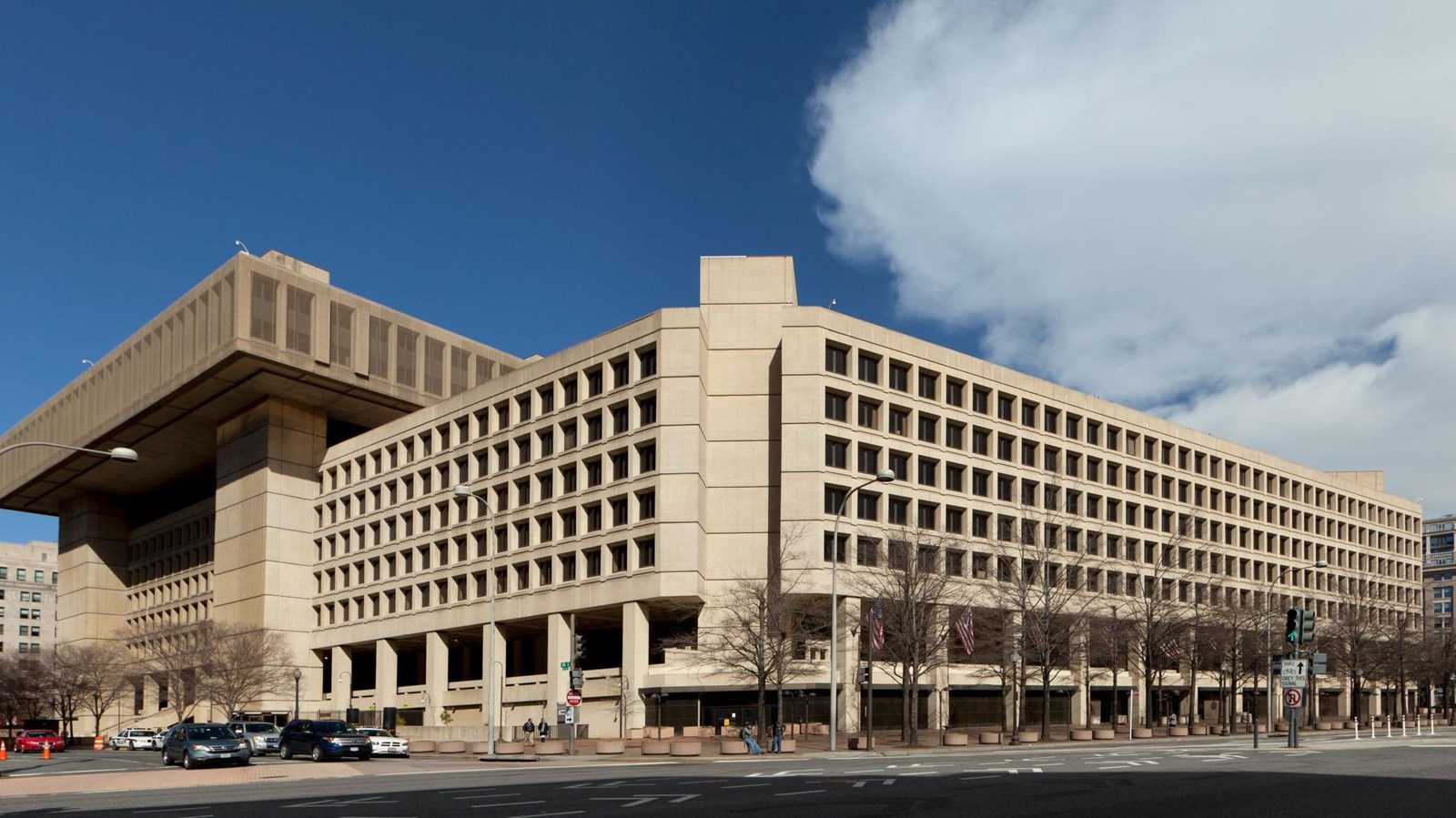
The Constitution does not mention the Hoover Building, the Reagan Building, or the GSA. But it does establish a government where power is divided, money is controlled by Congress, and executive action can be reviewed in court under the rules Congress has provided.
So when a judge blocks an FBI headquarters move, the headline is about a building. The civics lesson is about structure. Who controls federal buildings is really a question of who controls federal authority, and under what rules.