
Most Supreme Court cases are remembered for a rule. Cooper v. Aaron is remembered for a warning.
In 1958, Arkansas officials tried to slow-walk, outmaneuver, and ultimately evade school desegregation after Brown v. Board of Education. The Supreme Court responded with a rare, unanimous opinion. Each Justice added their name to it, not just “the Court.” The message was blunt: state officials do not get to pick which constitutional rulings they will obey.
Join the Discussion
The crisis behind the case
Brown v. Board of Education (1954) held that racial segregation in public schools violates the Equal Protection Clause of the Fourteenth Amendment. In 1955, Brown II instructed federal courts to supervise desegregation with “all deliberate speed,” language that gave resistant officials room to stall.
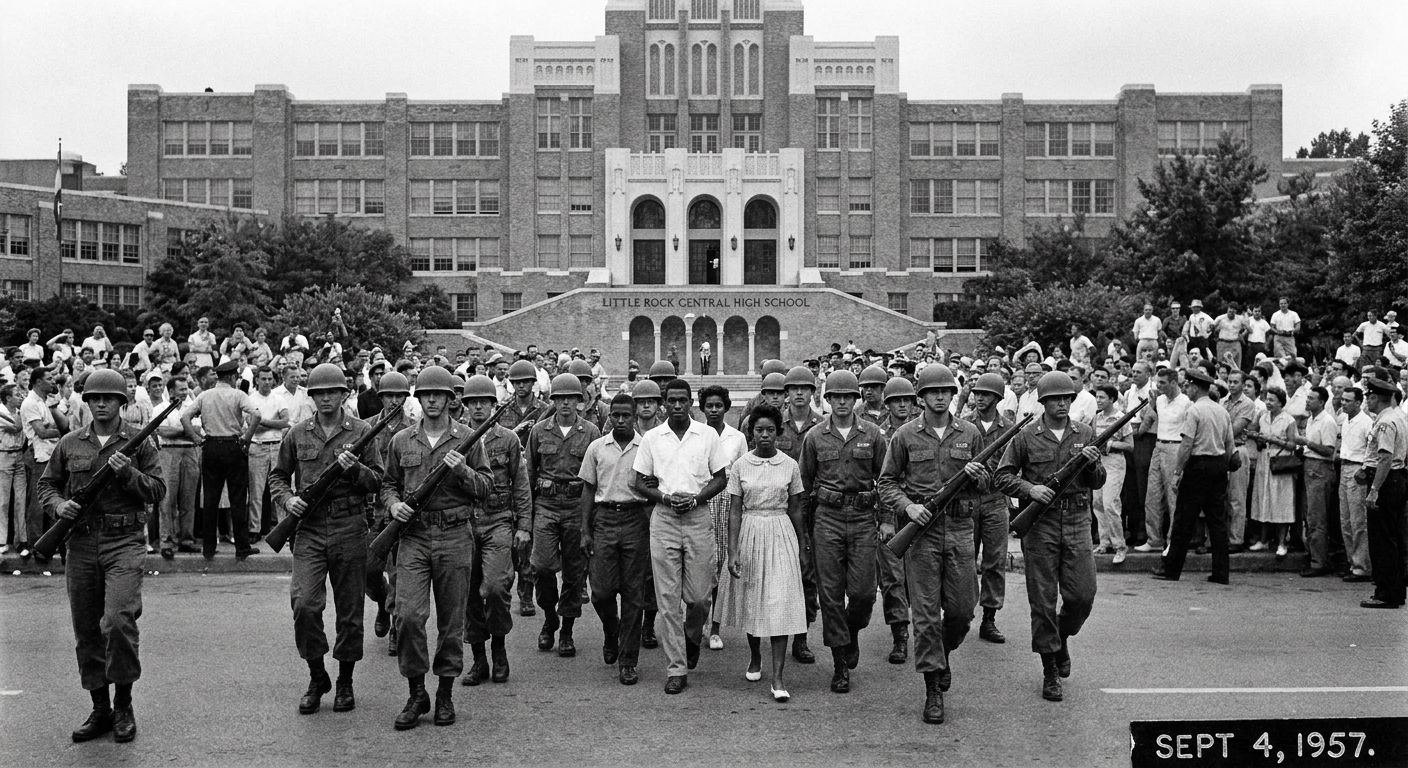
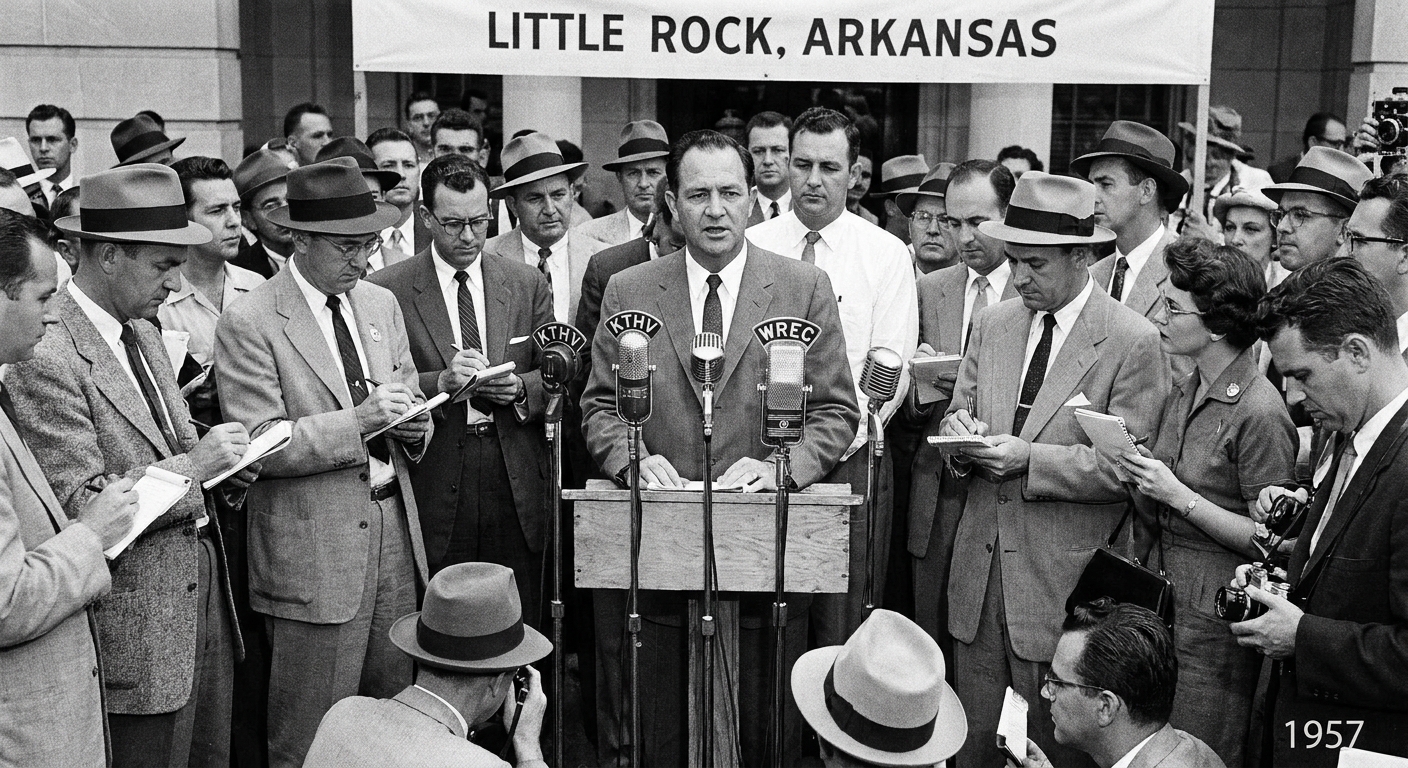
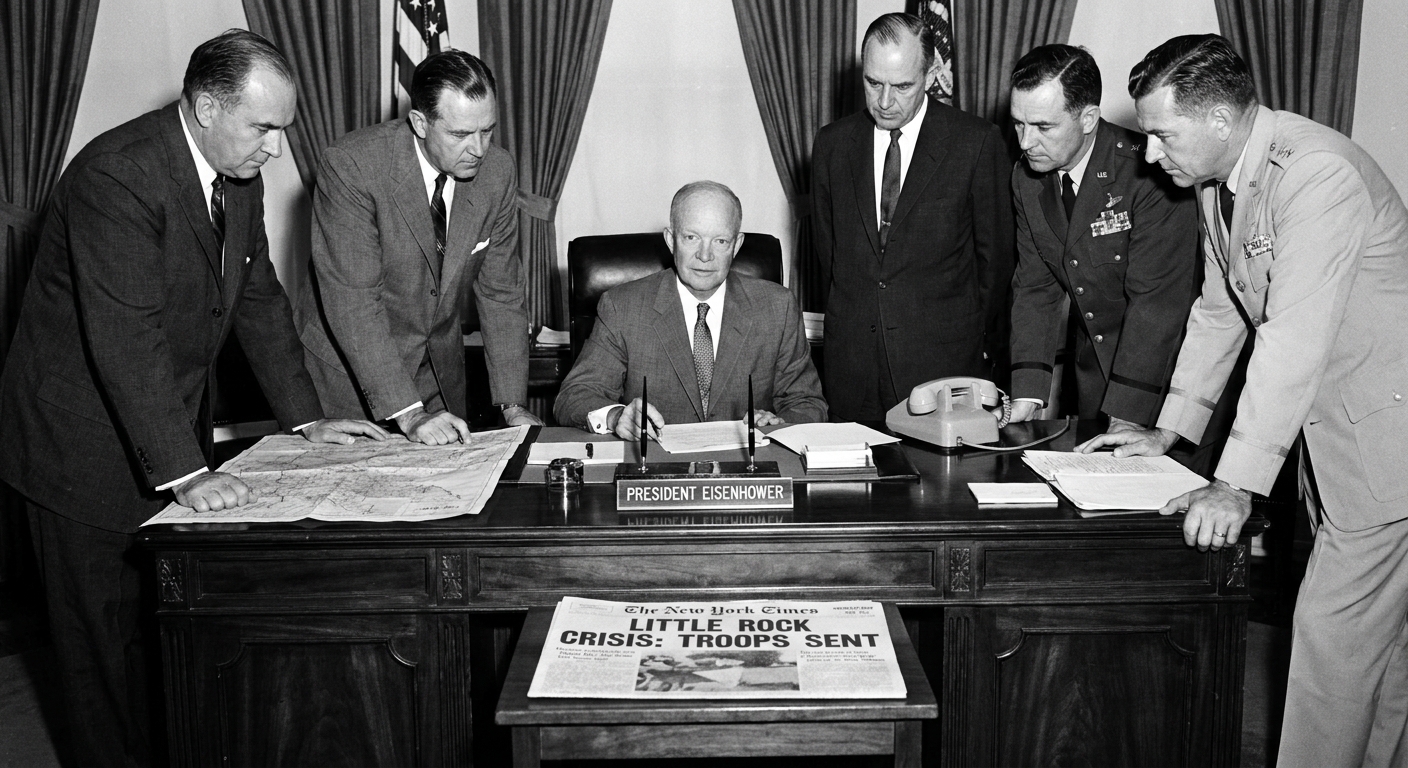
Little Rock, Arkansas became a national flashpoint in 1957 when nine Black students, later known as the Little Rock Nine, attempted to attend Central High School under a court-approved desegregation plan. Arkansas Governor Orval Faubus used the Arkansas National Guard to block their entry. Federal courts ordered the plan enforced. President Dwight D. Eisenhower eventually sent federal troops and federalized the Guard to enforce the court orders and protect the students.
Even after that confrontation, resistance did not disappear. The Little Rock School Board went back to federal court and asked to postpone desegregation, arguing that hostility, threats, and public disorder made compliance too difficult.
How it reached the Court
The procedural path matters because it shows what Arkansas officials were asking for: a court-approved pause.
- Federal district court: granted the School Board relief and allowed a delay.
- Eighth Circuit: reversed, rejecting the delay.
- Supreme Court: took the case quickly and unanimously reversed the district court, requiring desegregation to proceed.
So Cooper was not a fresh debate about Brown. It was a fight over whether resistance could be turned into a lawful excuse.
The question
The legal question was not whether Brown was correct. That fight had already been decided. The question was whether Arkansas officials could delay compliance with federal desegregation orders because of public opposition and the turmoil that opposition produced.
In other words: if enforcing a constitutional right triggers backlash, does the backlash become a legal defense?
The Supreme Court’s answer was no. Unanimously. And unmistakably.
The holding
In Cooper v. Aaron, 358 U.S. 1 (1958), the Court held that Arkansas officials were bound to comply with Brown and with federal court desegregation orders enforcing it. The Court rejected the requested delay and required officials to proceed with desegregation.
The opinion centers on two connected ideas:
- The Constitution is the supreme law of the land.
- State officials must follow binding federal constitutional rulings in their official conduct.
The Court treated resistance not as a policy disagreement, but as defiance of law.
The key line
Cooper is often summarized, but it is worth seeing the Court’s own words. The opinion states:
“the interpretation of the Fourteenth Amendment enunciated by this Court in the Brown case is the supreme law of the land.”
This is the “warning” people remember. It was aimed at state officials who were trying to outlast, outmaneuver, or openly resist federal constitutional law as applied by the federal courts.
Supremacy, Marbury, and a debated claim
Americans often quote the Supremacy Clause from Article VI, which says the Constitution and federal laws made under it are the “supreme Law of the Land,” binding on state judges notwithstanding state law to the contrary.
Cooper went further, and it did so deliberately. It linked three ideas: the Supremacy Clause, the Article VI oath taken by state officials, and Marbury v. Madison. The Court wrote that Marbury “declared the basic principle that the federal judiciary is supreme in the exposition of the law of the Constitution,” and then used that principle to reject nullification and interposition in practice.
That move is also the most contested part in constitutional theory. Cooper asserts, as a matter of constitutional structure, that state officials are bound to follow the Supreme Court’s constitutional holdings. Scholars debate the scope of that assertion (often framed as judicial supremacy versus departmentalism). What is not in doubt is the case’s bottom-line rule for the officials in front of the Court: they had to comply with Brown and with the desegregation orders enforcing it.
What it required from state officials
Cooper is a civics case about official duty, not personal agreement.
1) Compliance is mandatory
If the Supreme Court holds that a state policy violates the Constitution, state executive and legislative officials cannot keep enforcing that policy on the theory that they interpret the Constitution differently.
2) Disagreement is not a defense
Arkansas officials argued, in effect, that the state was not bound by Brown because it was wrong, or because local conditions made compliance impractical. The Court rejected that logic. Disagreement does not dissolve duty.
3) Backlash does not justify delay
Cooper also rejected the idea that community hostility can lawfully postpone constitutional compliance. If opposition could suspend rights, then rights would depend on the willingness of the loudest opponents to obey the law.
4) It targets official action, not private belief
Cooper does not claim that citizens must personally accept every Supreme Court opinion as morally correct. It addresses what government officials can do in their official capacity. They take an oath to support the Constitution, and under Cooper, that oath requires fidelity to binding federal constitutional rulings while they remain in force.
Why every Justice signed it
The opinion in Cooper is unusually direct, and the Court took an unusual step: each Justice signed the opinion. The text itself notes that the opinion is “unanimous,” and the separate signatures underscored that unanimity.
That was not necessary as a matter of law. It was a message about institutional unity at a moment when the Court’s authority, and the safety of children attending school, were both on the line.
The Court was telling the country that this was not a narrow, technical decision. It was a unanimous constitutional line in the sand.
Limits and what it did not do
Cooper did not magically solve implementation. Desegregation still unfolded through lower-court supervision, remedial orders, and on-the-ground enforcement. Courts can require compliance, but they still operate through remedies, timelines, and factual realities.
What Cooper did do was close off one proposed escape hatch: a state could not cite its own turmoil, or its own resistance, as a legal reason to stop obeying federal constitutional rulings.
Common misunderstandings
“Cooper says the Supreme Court is always right.”
No. It says Supreme Court constitutional rulings are binding on state officials as a matter of law while those rulings stand. The legal system allows the Court to be criticized, later cases to narrow past rulings, and constitutional amendments to change the underlying law. But states do not get to unilaterally opt out in the meantime.
“Cooper invented judicial supremacy.”
Cooper did not create judicial review, and it did not write the Supremacy Clause. What it did was apply those principles to a real standoff: a state attempting to resist a constitutional ruling through delay and defiance, in the broader era of Massive Resistance.
“This was only about schools in Arkansas.”
The facts were local, but the doctrine is nationwide. Cooper is frequently invoked whenever a state suggests it can disregard Supreme Court constitutional decisions, whether the issue is civil rights, elections, criminal procedure, or federal authority.
Why it still matters
Brown is the case people cite for what equality requires. Cooper answers a different question: what happens when a state refuses to accept the answer?
The Constitution is not self-enforcing. It relies on officials who treat court orders as law, not as commentary. When that willingness breaks down, the system does not just face a policy dispute. It faces a legitimacy crisis.
Cooper v. Aaron is a reminder that constitutional rights do not survive on paper alone. They survive when officials, even unwilling ones, are compelled to treat Supreme Court rulings and the judgments that implement them as binding law until they are changed through lawful processes.