

Most election fights sound like they are about politics. This one is about plumbing.
Not the dramatic question of who wins, but the quiet machinery underneath: who is allowed onto the voter rolls in the first place, who can be taken off, and when a state is permitted to fix its own list.
This December, the Supreme Court will hear RNC v. Mi Familia Vote, a dispute over two Arizona voting laws. The justices will decide whether those laws violate the National Voter Registration Act (NVRA), a federal statute that standardizes parts of voter registration and limits certain roll-maintenance actions close to Election Day.
The case pulls on an old constitutional tension the parties and outside groups are fighting over: states set voter qualifications, while Congress can regulate the “Times, Places and Manner” of federal elections. When those powers collide, which one yields?
Join the Discussion
What Arizona changed
Arizona’s laws do two things that sound straightforward until you place them next to federal statute.
- Proof of citizenship at registration: Arizona requires voters to provide documentary proof of U.S. citizenship when registering to vote.
- Removal of noncitizens within 90 days of an election: Arizona authorizes election officials to cancel registrations of noncitizens discovered on the rolls even during the 90-day “quiet period” before a federal election.
Opponents say those rules conflict with the NVRA’s structure and timing limits. Supporters say they are the state enforcing voter qualifications in a practical way.
The NVRA’s 90-day rule
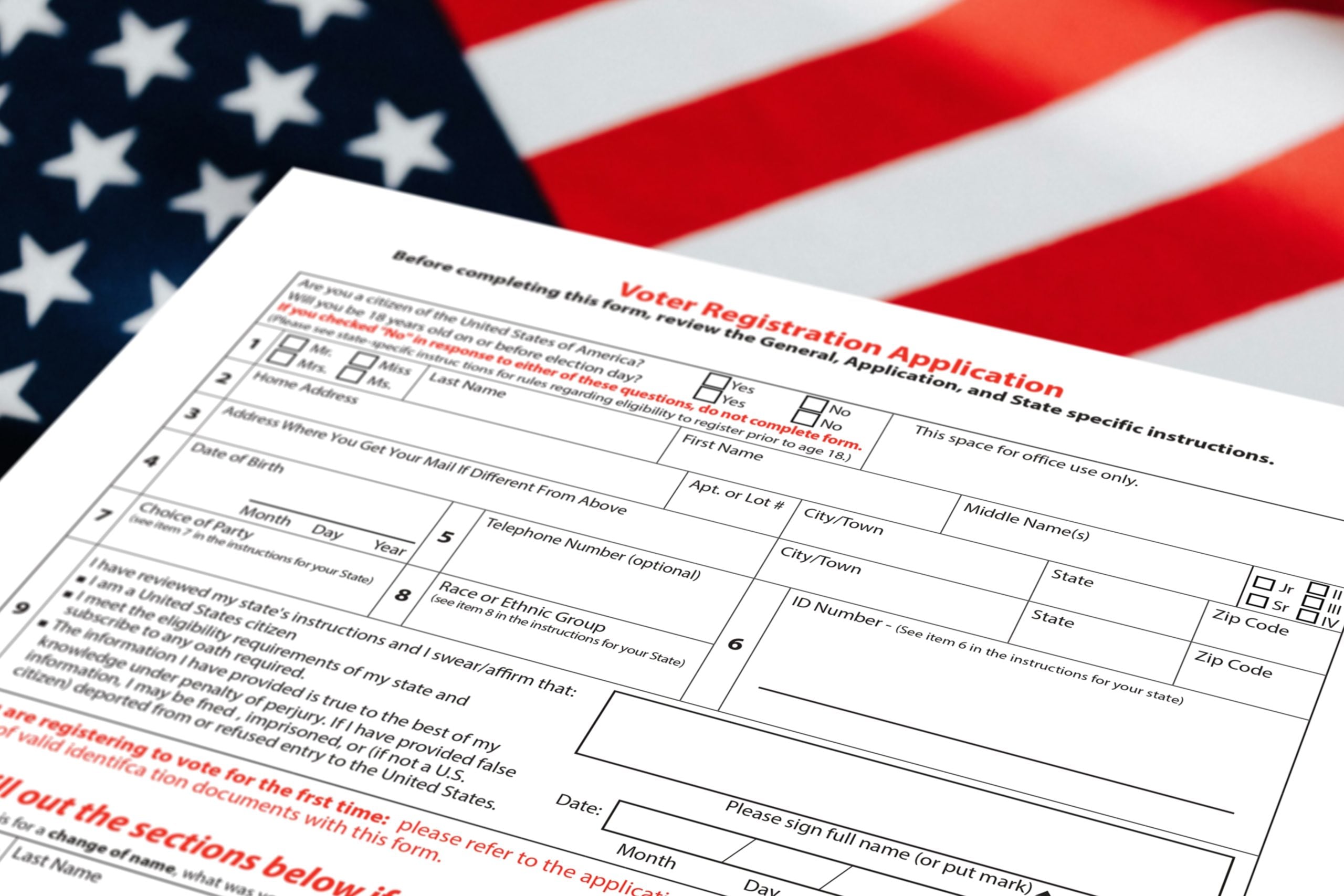
The NVRA is famous for its basic mission: make registration easier and more uniform. But it also includes a timing rule that functions like a speed limit on last-minute voter purges. Generally, states must finish systematic programs to remove voters from the rolls at least 90 days before a federal election.
There are recognized exceptions, including removals tied to a voter’s own request, death, criminal conviction, or mental incapacity.
The legal question in this case is how that 90-day limit applies when a state says it is enforcing a qualification like citizenship. Put differently, is the NVRA acting as a procedural rule about timing, or as a barrier that can prevent certain eligibility corrections from happening when they matter most?
What the Ninth Circuit did

The case arrives at the Supreme Court after the Ninth U.S. Circuit Court of Appeals ruled against Arizona.
In a recently filed amicus brief, attorneys from the Center for Election Confidence, Inc., Restoring Integrity and Trust in Elections, Inc., and Honest Elections Project argued that the Ninth Circuit’s description of the Arizona laws as “voter suppression” is “absurd” and raises serious threats to state rights.
The brief’s bottom line is a federalism argument: Congress may regulate the mechanics of federal elections, but states have constitutional authority to set and enforce voter qualifications. That authority, the amici argue, becomes hollow if states cannot obtain documentation needed to verify citizenship or remove people who were never eligible to register.
“Since the power to establish voting requirements is of little value without the power to enforce those requirements, it would raise serious constitutional doubts if a federal statute precluded a State from obtaining the information necessary to enforce its voter qualifications,” the brief stated.
The “absurd consequence” argument
The amici also press a practical warning about how the Ninth Circuit read the NVRA’s 90-day window. The Ninth Circuit concluded Arizona cannot conduct a systematic program to remove noncitizens from voter rolls during that pre-election period.
In the amici’s view, that reading does not just stop late, error-prone sweeps. It can freeze improper registrations in place.
They argue that non-citizenship is not among the NVRA’s listed grounds for removals during the 90-day window because it concerns someone who was never eligible to register in the first place. The 90-day restriction, they say, is meant to protect eligible voters from erroneous last-minute removals, not to shield people who were never eligible to register.
“If the Ninth Circuit is right that the 90-day limitation on programs prohibits removal on these bases — because the statute has listed exceptions — States could never remove improperly registered individuals who fall within these categories, no matter when the removal happens or whether it is after a systematic inquiry,” the brief said.
“Not just that, but these States could never remove these noncitizens who were never eligible to vote,” the brief continued.
This is the case’s pressure point: elections are not like a ledger you can retroactively correct. An unlawful ballot cannot be “un-cast” once counted. So the fight becomes about when prevention is legally allowed.
Qualifications vs. procedure
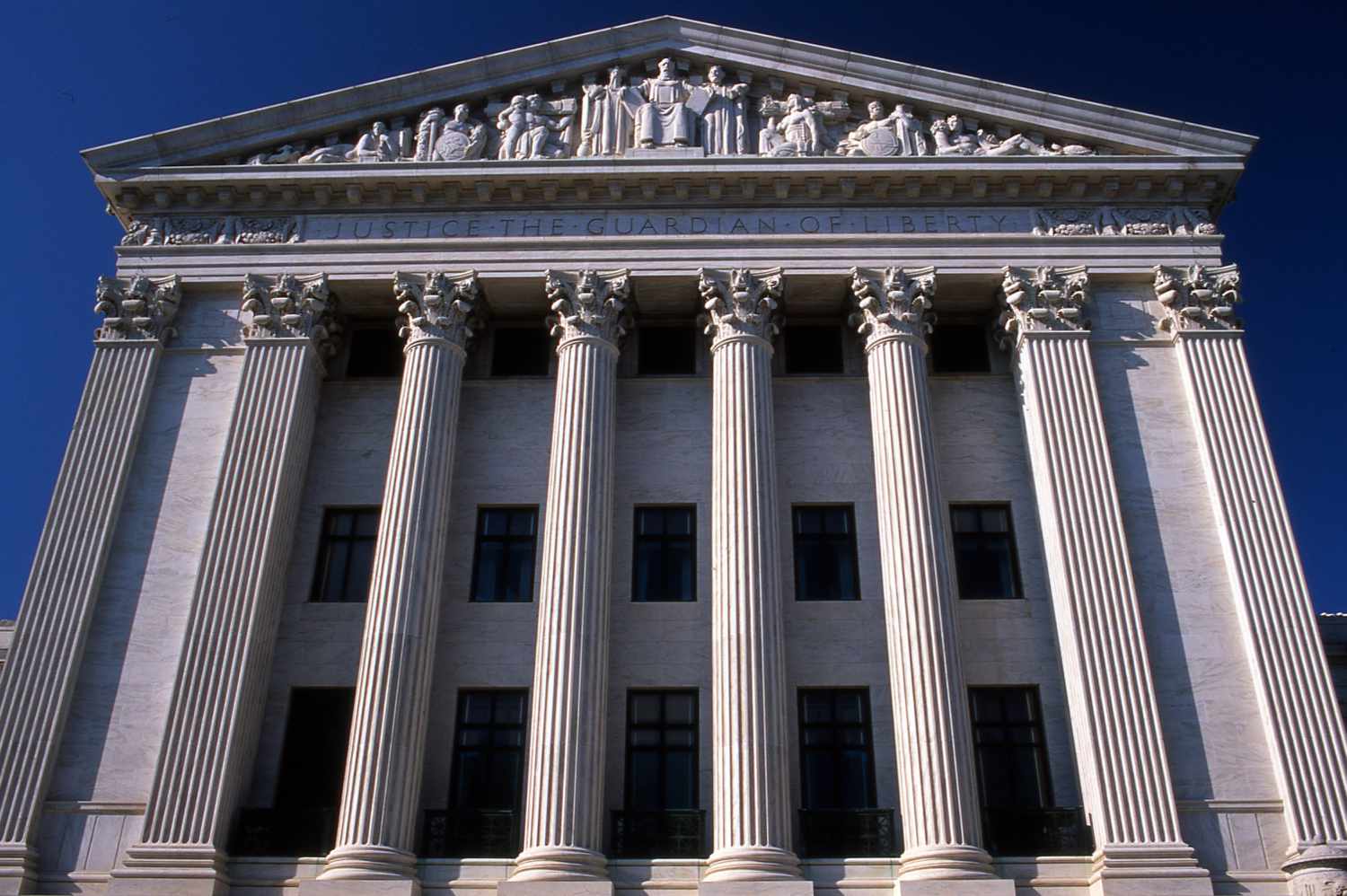
If you want to understand why this case is at the Supreme Court, start with a basic structural reality: the Constitution splits responsibilities.
States generally set voter qualifications. That baseline is the premise the amici emphasize when they argue states must have usable tools to enforce qualifications like citizenship.
Congress, meanwhile, has its own election power. The Elections Clause lets Congress regulate the “Times, Places and Manner” of holding elections for federal office. That is where statutes like the NVRA live.
So the Court is left with a design problem: when Congress writes procedures that make enforcement of qualifications difficult in practice, is it regulating “manner,” or effectively narrowing what the qualification can mean on the ground?
Proof and “equivalent” forms
The case is also about paperwork, but in a way that matters. One dispute is whether a voter’s signed statement attesting to citizenship is enough, or whether a state can demand documents.
The groups backing Arizona argue that citizenship is a qualification and that “Citizenship is a qualification for voting. If states are going to enforce that requirement, they have to be able to verify it,” as Justin Riemer, president and CEO of Restoring Integrity and Trust in Elections, put it. In the same statement, he added, “And when officials find noncitizens on the voter rolls, they should be able to act before an election, not after. We are confident the Supreme Court will agree and reverse the Ninth Circuit's misguided ruling.”
The amici also argue the Ninth Circuit wrongly concluded a voter’s citizenship attestation on a registration form is sufficient proof of eligibility.
There is another statutory interpretation issue over registration forms: when federal law speaks about a state form being “equivalent” to the federal form, does “equivalent” mean virtually identical, or does it allow meaningful additions like documentary proof requirements? The amici argue the Ninth Circuit improperly interpreted an “equivalent” state form to mean one that is virtually identical to the federal form.
Why it matters
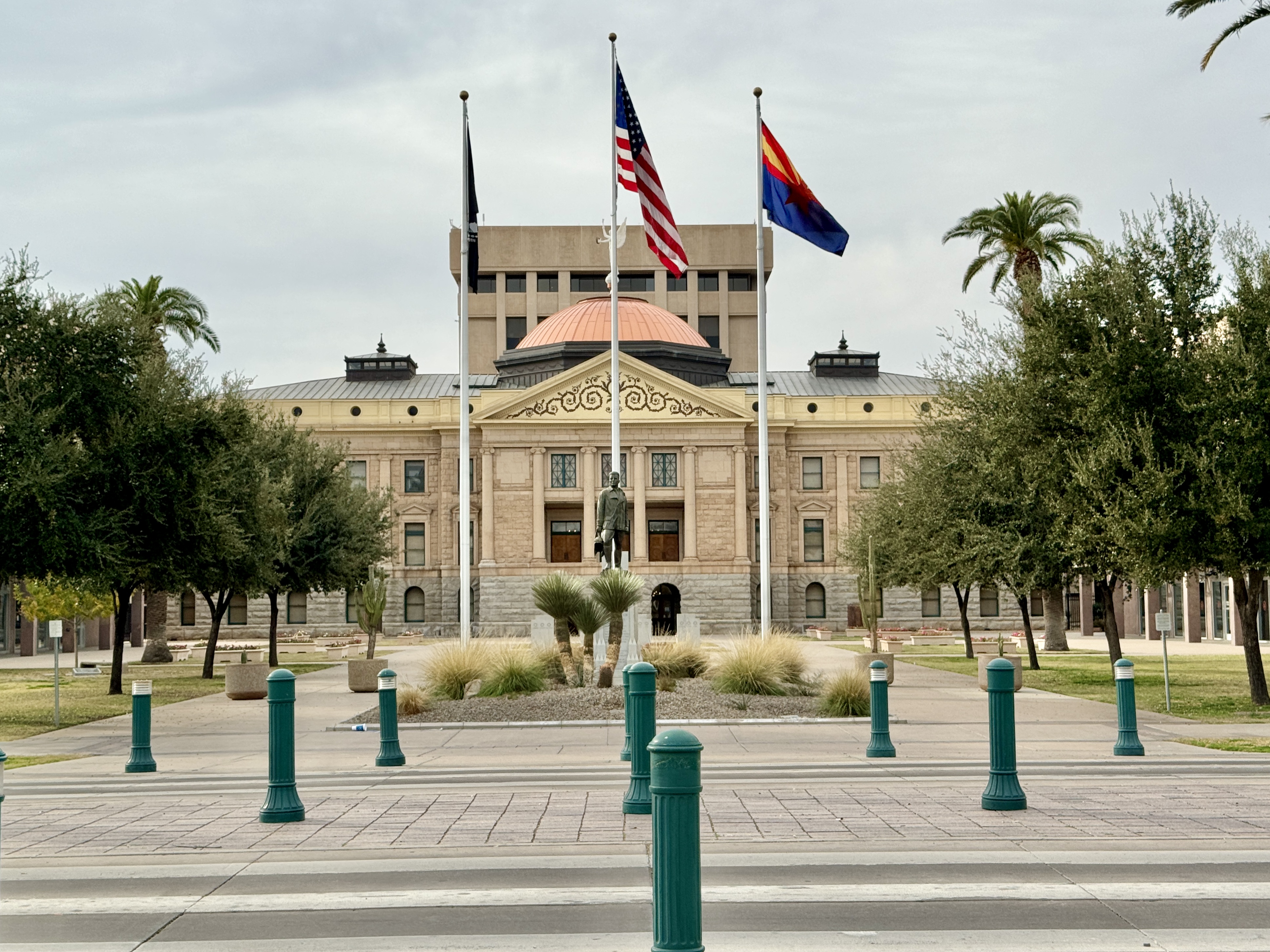
This is not just an Arizona story. It is a structural story about federalism, and it will echo in any state that tries to tighten list maintenance or add citizenship verification to registration.
The brief points to reported registration errors in New Jersey, Illinois and Oregon as examples of why states need a mechanism to correct allegedly improper registrations, and it argues that an unlawful ballot cannot be undone once cast and counted.
Lisa Dixon, executive director of the Center for Election Confidence, framed the principle in plain terms: “American elections are for American citizens only. Period. We should all support Arizona ensuring non-citizens can’t register to vote and removing any non-citizens who end up on the voter lists.”
The deeper point, as the amici cast it, is constitutional: if states cannot enforce voter qualifications in a realistic timeframe, the power to set those qualifications becomes harder to exercise in practice.
What to watch
When the justices hear argument in December, expect the questions to circle a few themes:
- Definition of “systematic” removals: What counts as a prohibited “program” versus a case-by-case eligibility correction?
- Scope of the 90-day rule: Is the NVRA a timing rule, or is it an implicit immunity for certain categories of improper registration?
- Verification versus burden: How does the Court weigh a state’s interest in verifying citizenship against the risk that documentation requirements can block eligible voters who lack easy access to papers?
- Federalism baseline: Does a narrow reading of state authority raise constitutional doubts under the Elections Clause framework?
However the Court rules, it will be answering a question at the heart of American election design: are voter qualifications enforceable rules, or stated requirements that can be sidelined by federal procedure when the calendar gets tight?
Small rules, big stakes
We tend to talk about voting in soaring language: democracy, legitimacy, consent of the governed.
But legitimacy is built on mundane constraints. A registration form. A checkbox. A database entry. A removal deadline. And, ultimately, the constitutional division of labor that decides who controls those details.
RNC v. Mi Familia Vote is the Supreme Court being asked to decide whether Arizona can treat citizenship as an enforceable qualification, or only a stated requirement that must sometimes wait until after the ballots are already in the box.
That is not just election law. It is constitutional architecture.