
You can feel the tension in this case without knowing a single statute number: states administer elections, but federal law keeps showing up with a clipboard.
What case are we talking about? This explainer is about Mi Familia Vota v. Fontes, a challenge to parts of Arizona’s election system that has moved through the U.S. District Court in Arizona and the Ninth Circuit, and that has also produced Supreme Court emergency orders tied to upcoming elections.
The central legal question stays the same across all of its procedural twists: how far Arizona can go in tying proof of citizenship and related procedures to registration rules, ballot access, and voter-roll maintenance without running into federal election statutes like the National Voter Registration Act (NVRA) and the Help America Vote Act (HAVA).
Arizona says it needs strong tools to keep noncitizens from registering and to keep voter rolls accurate over time. Challengers say federal voting statutes set limits on what states can demand for federal registration and how they can remove registrations, especially when the tools are broad, database-driven, or close to an election. Both sides describe a real risk, just in different directions: one fears ineligible registrations that are hard to fix; the other fears eligible voters caught in paperwork requirements or wrongful removals.
That is the practical legal question in plain English: when Congress has set a federal registration and list-maintenance framework, what evidence and procedures can a state still require to police citizenship eligibility?
Join the Discussion
Case card
Case: Mi Familia Vota v. Fontes
Courts: U.S. District Court (District of Arizona) and U.S. Court of Appeals for the Ninth Circuit, plus Supreme Court emergency applications related to election administration.
Arizona laws at issue: Arizona election-law amendments and administrative mechanisms that expand documentary proof of citizenship rules and create new ways to investigate and cancel registrations based on citizenship-related information. Because Arizona’s citizenship-proof disputes have come in multiple waves, this explainer focuses on the challenged provisions as described in the district court injunction and the Ninth Circuit appeal, rather than treating any single bill number as the whole story.
Supreme Court filing you will see referenced: the emergency stay application captioned Republican National Committee v. Mi Familia Vota (No. 24A164) and related filings arising from the same Arizona litigation. These emergency applications matter because they determined what rules applied for imminent elections while the merits litigation continued.
What is being challenged (high level): Arizona rules that, in one way or another, connect citizenship verification to (1) the registration process, (2) whether a voter is limited to a federal-only ballot, and (3) voter-roll maintenance and cancellations.
Scope note: This case is about the specific provisions actually addressed by the district court injunction and what the Ninth Circuit review covers in this litigation, not every election rule Arizona has debated in recent years.
The starting point
The Constitution does not contain one clean sentence that says, “Here is how voter registration must work.” Instead, election authority is split, and most modern fights are about where one power ends and the other begins.
Elections Clause
For congressional elections, the Elections Clause says the “Times, Places and Manner” are primarily set by state legislatures, but Congress may at any time make or alter those regulations. That is the core reason federal statutes like the NVRA can limit what states do in registration systems and list maintenance for federal races.
Small but important nuance: the Elections Clause text is about congressional elections. Presidential elections run through Article II and other federal powers. In practice, the same federal statutes and litigation often shape the administration of combined ballots, but the constitutional hook is not always identical across every office on the ballot.
Qualifications and eligibility
States generally define voter qualifications for their own elections, and those qualifications supply the baseline for federal elections in that state, as later modified by constitutional voting-rights amendments. Federal law also directly matters: federal statutes criminalize certain noncitizen voting in federal elections (for example, 18 U.S.C. § 611, which targets specified conduct and has defined elements and exceptions), and states typically limit voting to citizens through their own election codes.
Federal preemption
When a federal election law is valid, it generally preempts contrary state rules. Many cases in this area are not about whether a state may care about citizenship. They are about whether a particular method conflicts with federal requirements Congress enacted under its Article I powers and related authority. In other words, this is often more statutory than it is a free-floating constitutional showdown.
What Arizona changed
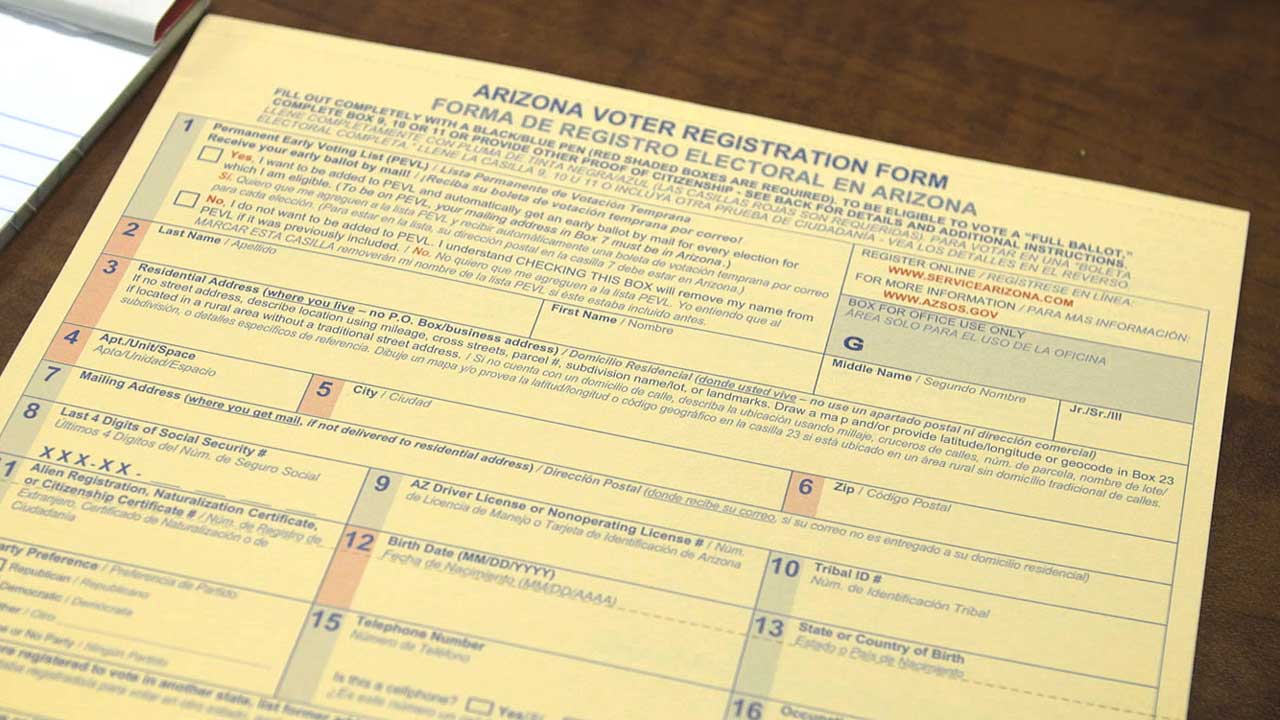
Arizona’s modern approach revolves around a straightforward idea: if you must be a citizen to vote, the state should be allowed to ask for proof of citizenship at registration, and the state should be allowed to keep its voter rolls from accumulating ineligible registrations over time.
It also helps to know the players and the machinery, because this case is as much about administration as it is about theory.
Who are the parties? Mi Familia Vota and aligned plaintiffs are voter-registration and voting-rights groups challenging Arizona provisions they say conflict with federal law and risk blocking eligible voters. Adrian Fontes, the Arizona Secretary of State, is a central defendant because the Secretary’s office is a key statewide election administrator, even though many day-to-day registration decisions are implemented by county officials under state rules.
The challenged provisions are best understood operationally, because courts often analyze them as three separate administrative moves:
- Registration intake: how Arizona treats voters who register using the standardized federal registration form, including whether the state can demand documentary proof of citizenship beyond the federal form’s attestation and what the state may do if documents are not provided.
- Ballot scope: whether Arizona can limit some registrants to a federal-only ballot when the state says its citizenship-proof requirement has not been satisfied.
- Voter-roll maintenance: what information and processes Arizona may use to investigate and cancel registrations believed to be ineligible, including alleged noncitizens, while complying with federal notice, timing, and anti-purge protections.
Two concrete examples, at a high level: Arizona has relied on database-driven flags and cross-checking against government records to identify registrations it believes raise citizenship questions, and it has used ballot-category rules to decide whether a voter may receive a full ballot or a federal-only ballot when documentation has not been accepted. The legality question is not whether Arizona can investigate, but what federal law allows the state to require and when.
The statutes behind the case
The Supreme Court is not just reading the Constitution here. It is also reading Congress’s election statutes, because those statutes are how Congress uses its power to structure federal election administration. The arguments are largely about preemption and about what the text of those statutes actually allows.
NVRA
The NVRA is the major federal framework for voter registration and voter list maintenance for federal elections. The parts that matter most in disputes like Arizona’s are (1) how Congress designed a uniform registration pathway for federal elections and (2) how Congress regulated list maintenance to prevent wrongful removals.
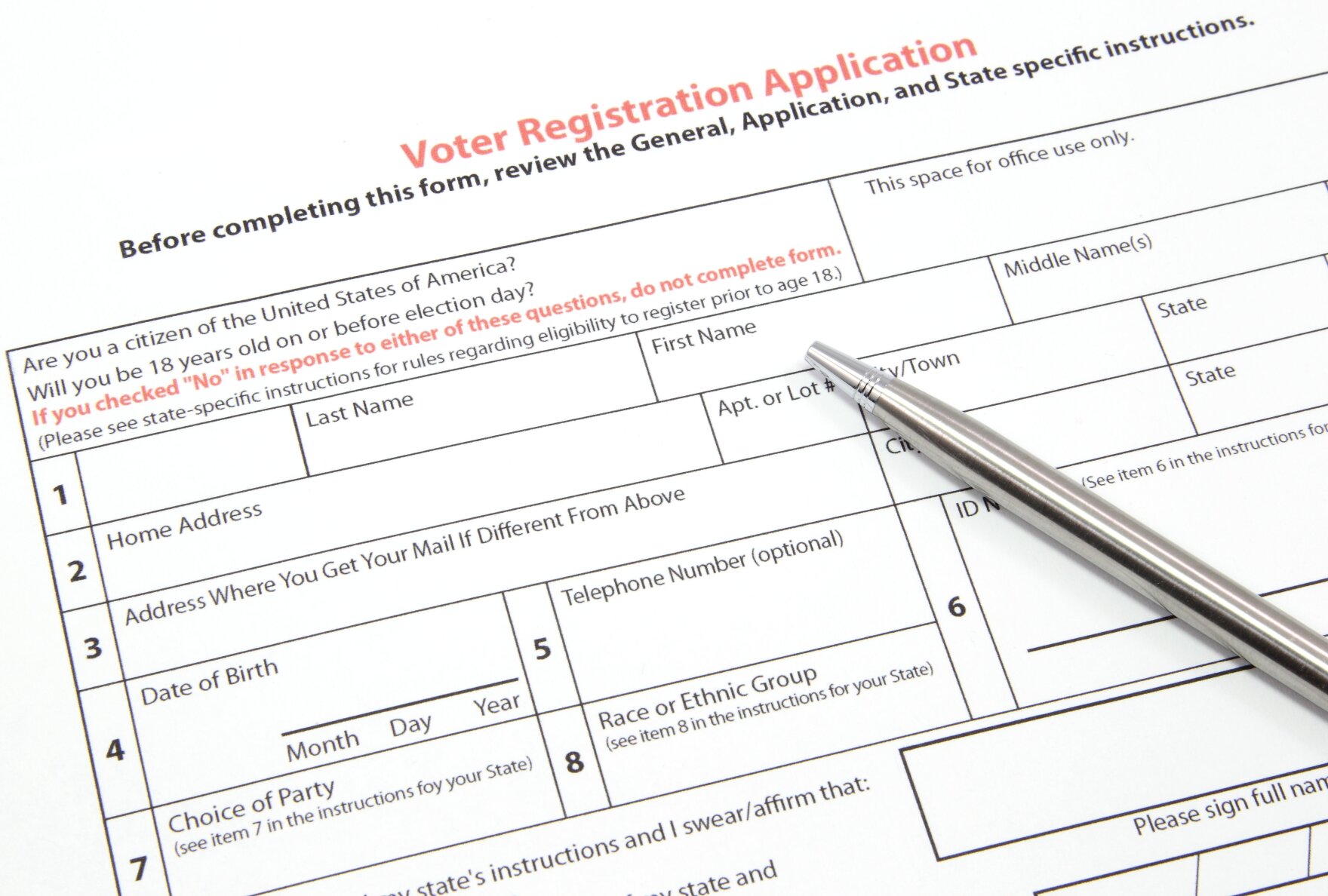
- Federal form: Congress created a standardized federal registration form, often referred to as the Federal Voter Registration Form or the National Mail Voter Registration Form, meant to be usable nationwide. A recurring preemption question is whether a state rule functions as an additional condition that effectively blocks or alters that federal mechanism.
- List maintenance guardrails: The NVRA encourages accurate rolls but regulates how removals happen. It includes notice procedures and waiting periods for certain categories of removals, and it limits systematic list-maintenance programs within 90 days of a federal election. States can still make individualized, permitted corrections and remove voters for reasons like death, but broad programs close to an election draw the most scrutiny.
HAVA
HAVA matters, but in a narrower way than it is sometimes described. It pushed states toward statewide voter registration databases and set baseline requirements for coordinating and maintaining those databases. HAVA is part of the administrative architecture Arizona relies on, even if it does not itself create a standalone power to impose new citizenship-document rules on the NVRA federal-form pathway.
Proof of citizenship
Start with a basic principle: states can require voters in federal elections to be eligible. The fight is over what states may require at the registration stage, particularly when a person uses a federal registration form that Congress created to be a uniform, nationwide mechanism.
There are two competing instincts in election law that courts have to hold at the same time:
- Integrity: the state has a legitimate interest in ensuring only eligible voters are registered and voting.
- Access and uniformity: Congress can require a uniform federal registration mechanism that states cannot effectively nullify by adding extra state paperwork beyond what federal law contemplates.
The key precedent is Arizona v. Inter Tribal Council of Arizona, Inc. In that case, the Court held that Arizona could not require documentary proof of citizenship as an additional condition for registrants using the federal form for federal elections, because the NVRA’s federal-form scheme preempted the state requirement. The Court also signaled that states are not powerless and may have other routes for enforcing qualifications, but those routes must fit within the federal statutory framework.
One practical implication that often gets lost in the briefs: after Inter Tribal Council, states generally have to choose tools that do not turn federal-form registration into a document submission contest. Common examples include pursuing changes through the federal process for the form’s instructions, using permitted database verification, and enforcing eligibility through narrower, individualized procedures that comply with the NVRA’s rules.
Voter-roll maintenance
“Voter roll maintenance” sounds like filing cabinets. In reality, it is where constitutional values collide: accurate lists, eligible voters protected, and ineligible registrations removed without turning legitimate voters into collateral damage.
Why the NVRA is strict
Congress wrote the NVRA in part to stop sloppy or politically timed purges. So the statute builds in guardrails, including notice procedures for certain categories of removal, waiting periods tied to address-confirmation processes, and the rule limiting systematic removals close to a federal election. At the same time, the NVRA is not a blanket ban on removals. It distinguishes between broad programs and individualized corrections.
What the fight is really about
Arizona and aligned officials argue that some readings of the NVRA can become a one-way ratchet: registering is easy, but correcting an ineligible registration becomes slow or difficult if the state cannot use the evidence it thinks is most reliable, or if the federal form framework blocks up-front documentation demands.
Challengers respond that states already have tools that are narrower and less error-prone than large cancellation programs, such as individualized challenges, targeted investigations, and verification using documented sources with clear matching standards. In this case, courts focus less on the label Arizona uses and more on the mechanism: is the state running a broad, systematic process that triggers NVRA limits, or an individualized process that fits inside the statute’s guardrails?
What the Ninth Circuit did
The Ninth Circuit’s job was not to write election policy. It was to interpret federal law and decide whether the challenged Arizona provisions conflict with it.
Because the litigation has multiple moving parts, the most accurate way to describe the Ninth Circuit phase is also the most procedural: the Ninth Circuit reviewed the district court’s preliminary injunction and the specific Arizona provisions that injunction covered, then applied the NVRA and related federal statutes to decide what Arizona may and may not do in the federal-election context.
At a high level, the Ninth Circuit treated the dispute as a collision between Arizona’s citizenship-proof machinery and the NVRA’s federal-form and list-maintenance rules. The court’s analysis tracked the same administrative buckets election officials live with, with one key reminder: the federal-law limits discussed here target administration of federal registration and federal-election rules, even when Arizona runs a single combined registration system in practice.
- Federal-form registration and documentary proof: the Ninth Circuit applied the logic of Inter Tribal Council to the contested Arizona requirements and treated documentary proof demands as unlawful to the extent they operated as a condition on NVRA federal-form registration for federal elections.
- Ballot limitations tied to missing documents: the Ninth Circuit evaluated whether Arizona’s ballot-category consequences for missing state-preferred documentation functioned as an end-run around the NVRA’s federal-form pathway. The key compliance question is not the label of the ballot category, but whether the rule effectively penalizes or nullifies NVRA federal-form registration for federal contests.
- List maintenance and cancellations: the court analyzed citizenship-related cancellation mechanisms under the NVRA’s procedural constraints, including the distinction between systematic programs and individualized actions, and the timing restrictions close to federal elections.
- Remedy: the result was injunctive relief as to the specific challenged requirements the district court identified, as applied in the federal-election context, while leaving Arizona able to enforce citizenship qualifications through lawful channels that do not conflict with federal law.
What the Supreme Court did
This dispute reached the Supreme Court on an emergency basis, in the posture that now dominates modern election law: an application asking the Court to change what rules apply right now, because an election is close.
The headline reference point is the emergency stay application Republican National Committee v. Mi Familia Vota (No. 24A164), decided in August 2024. Because it was an emergency order, the Court did not issue a full merits opinion. It decided, temporarily, which parts of the lower court’s injunction would remain in effect while appeals continued.
Accuracy note: emergency orders can turn on the precise wording of the district court injunction. The summary below is intended to track the Supreme Court’s stay order and the injunction’s paragraph structure, but readers should treat the district court injunction text and the Supreme Court order as the controlling sources for the exact operational details.
What the order did, in broad strokes: the Court stayed parts of the district court’s injunction and otherwise denied a stay. In practical terms, that meant Arizona could enforce some documentary-proof requirements through some state processes for that election window, but the order did not give Arizona a blank check to impose documentary-proof penalties on NVRA federal-form registration for federal elections.
- Stayed (part of the injunction): The stay allowed Arizona, during the covered period, to enforce documentary proof-of-citizenship requirements in certain state-law registration contexts, as described in the stayed portions of the injunction.
- Not stayed (the rest remained in place): Other injunction provisions remained effective, continuing to restrict Arizona from using documentary-proof machinery in ways the lower courts treated as conflicting with the NVRA federal-form pathway and NVRA list-maintenance limits.
That is the substantive takeaway readers actually need: the Supreme Court’s emergency order did not finally resolve whether Arizona’s system is lawful on the merits. It set interim ground rules while the case continues, and the exact boundaries depend on the specific paragraphs stayed and not stayed.
Key papers
If you want to sanity-check any summary of this case, use the same anchor documents election lawyers use:
- District court: the order granting preliminary injunctive relief and the text of the injunction itself (the paragraph numbering matters, including the paragraphs the Supreme Court later stayed).
- Ninth Circuit: the opinion reviewing that injunctive relief and defining what was affirmed, reversed, or otherwise modified.
- Supreme Court: the August 2024 emergency order in 24A164, which stayed specified portions of the injunction and otherwise denied a stay.
This explainer is written to match those documents, but it does not reproduce them.
Where things stand
Procedurally, the key point is this: the Supreme Court’s August 2024 action in 24A164 was an interim emergency ruling about what rules applied for an approaching election while the case continued. It did not finally resolve the merits.
Current posture: the merits dispute has continued in the Ninth Circuit beyond the preliminary-injunction phase. The timing of briefing, argument, and decision in appellate courts can shift and can become outdated quickly. If you are reading this long after publication, check the Ninth Circuit docket for the most current status.
Practical translation: unless and until the courts issue a final merits judgment (or a new stay), Arizona’s immediate enforcement options still depend on which registration path is being used and which part of the lower court injunction is operative at that time.
What it means for voters
The doctrine can get abstract fast. Here are concrete examples of how the categories in this case show up in real life, without trying to turn an explainer into legal advice.
Quick reminder: this litigation focuses on the rules for federal elections and federal registration mechanisms, even though Arizona voters often experience those rules through a single, combined state registration system and a single ballot.
- If you register using the federal form: the core dispute is whether Arizona must accept the federal form’s citizenship attestation for federal registration, or whether the state can insist on documentary proof before it will treat you as registered for federal contests.
- If you register using an Arizona state form or state process: Arizona has argued it can require documentary proof of citizenship under state law, at least for state-election purposes. The scope and timing of what Arizona may enforce has depended on the injunction and the Supreme Court’s interim stay.
- If the state says your documentation is missing: one possible consequence in Arizona’s system is being steered into a ballot category that covers federal offices only. A practical follow-up question is what happens if you later provide documents. In many systems, providing the required documents can move you into the full ballot category for future elections, but the timing and mechanism depend on the specific Arizona rules and what the courts have allowed.
- If there is a last-minute dispute at the polls: voters sometimes end up voting a provisional ballot when eligibility or registration status is in question, with the ballot counted only if the voter satisfies the state’s follow-up rules. Whether documentary proof is required in that follow-up, and for which contests the ballot may be counted, is one of the real-world stakes in the litigation.
What the Court may decide
The Court is not being asked whether citizenship should matter. It already does, through state eligibility rules and federal laws. The Court is being asked to choose between competing legal interpretations of who holds the controlling power in specific registration and roll-maintenance scenarios.
If the Supreme Court eventually takes the case on the merits, expect the decision to revolve around questions like these:
- Preemption: Do Arizona’s proof rules or ballot limitations conflict with the NVRA’s federal registration mechanisms for federal elections, so that federal law overrides them?
- Statutory interpretation: What exactly do the NVRA and HAVA permit or forbid when a state believes a registrant is not a citizen, and what procedures must the state follow?
- Administration: Do federal constraints still leave states workable, lawful ways to investigate and remove ineligible registrations without unlawful purges or paperwork traps?
- Federalism: How far can Congress go when structuring federal election administration before state control over election operations becomes mostly nominal?
Sometimes the most consequential part of a Supreme Court election case is not the headline holding, but the instructions it gives election officials. What counts as reliable evidence? What procedures satisfy NVRA notice requirements? What timing rules apply near elections? Those details can determine whether a rule is enforceable or mostly symbolic.
Common questions
Can a state require proof of citizenship to vote?
States can require voters to be eligible, and in practice that means citizenship for federal elections. The harder question is what proof a state may demand at registration when federal law provides a standardized method for registering for federal elections. If a state’s proof requirement effectively blocks the federally prescribed method, courts may treat it as preempted for federal registration.
Can noncitizens be removed from voter rolls?
Yes, but removals must follow federal and state rules. The NVRA encourages accurate lists while restricting certain practices to reduce wrongful purges, especially systematic programs close to federal elections. The current dispute is about what evidence a state can use, what procedures must come first, and whether particular Arizona mechanisms fit within the NVRA’s framework.
Does the Constitution itself settle this?
The Constitution protects voting through multiple amendments and through equal protection and due process doctrines, but it does not provide a single universal administration manual. Most of the action here comes from the Elections Clause framework for congressional elections and from federal statutes Congress passed to regulate federal election administration. The constitutional question is about the division of authority and the force of federal preemption.
Why it matters
Every state has the same basic job: register eligible voters, keep the rolls current, and run elections that the public trusts. Arizona’s case is a test of how much room states have to tailor that job to their own verification preferences when Congress has already written national rules for federal elections.
If the Court narrows state power too far, supporters of stricter verification will argue that states are stuck managing eligibility with dulled tools. If the Court expands state power too far, voting-rights critics will argue that a “uniform federal form” stops being uniform in practice, and access becomes dependent on state-by-state paperwork demands and removal systems that can misfire.
Either way, the durable lesson is constitutional: elections are one of the clearest places where state sovereignty and federal supremacy have to share the same desk. The Court is being asked to decide how big each side’s stack of papers can be.