
When a congressional map is challenged close to an election, the dispute can look like pure politics. But the legal question underneath it is older than any modern redistricting cycle: who, exactly, is allowed to draw the lines that decide who votes for which member of Congress?
That question is not theoretical. It is why redistricting fights from states like North Carolina and Alabama have repeatedly reached the U.S. Supreme Court in recent years, sometimes through emergency requests that ask the justices to freeze or unblock a map on a tight calendar.
The Constitution gives a clear starting point, then leaves the messy part to statutes, courts, and timing.
Join the Discussion
The starting point: Article I
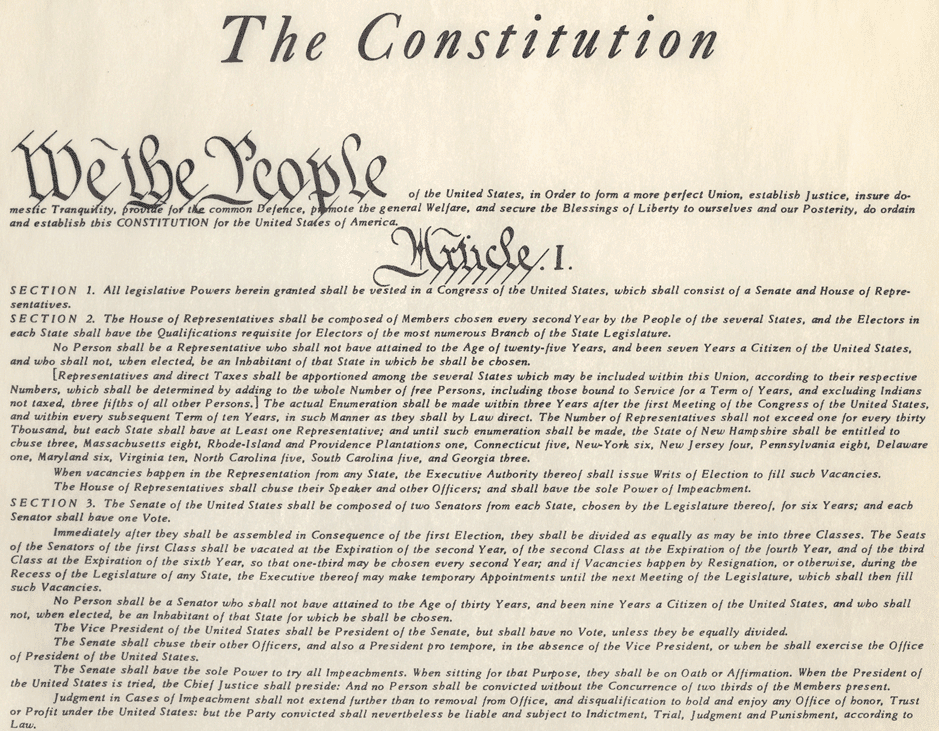
Congressional districts are not drawn directly by the U.S. Constitution’s text in the way state boundaries are. The Constitution sets the basic structure of the House, then hands the mechanics of congressional elections to the states, with an override switch in Congress.
The key provision is the Elections Clause in Article I, Section 4:
“The Times, Places and Manner of holding Elections for Senators and Representatives, shall be prescribed in each State by the Legislature thereof; but the Congress may at any time by Law make or alter such Regulations…”
That sentence does three important things:
- It assigns the first move to the state, using the word “Legislature” as the responsible institution.
- It makes congressional elections a shared jurisdiction, not purely a state matter, because Congress can “make or alter” the rules.
- It treats districting as part of “manner” for House elections, which is why map fights can land in federal court when federal rights are claimed to be violated.
The Constitution’s other anchor is Article I, Section 2, which requires House members to be chosen “by the People” and ties apportionment to population. Congress has filled in that framework with modern statutes like the requirement of single-member districts for states with more than one House seat (2 U.S.C. § 2c), plus civil rights laws that police discriminatory maps.
Who is “the Legislature”?
This is where redistricting becomes constitutional doctrine instead of civics-class simplicity. The Elections Clause names “the Legislature,” but legislatures do not act in a vacuum. They act through a state’s lawmaking system, including:
- gubernatorial vetoes and the normal process of enacting bills
- state constitutional limits (such as procedural requirements, anti-gerrymandering rules, or redistricting commissions)
- state courts interpreting and enforcing those state constitutional limits
The Supreme Court has held in key cases such as Smiley v. Holm (1932) and Arizona State Legislature v. Arizona Independent Redistricting Commission (2015) that when the Constitution assigns a task to a state “Legislature,” that typically means the state’s lawmaking process as the state has structured it, not a free-standing power that overrides the state constitution.
The modern flashpoint was Moore v. Harper (2023), a North Carolina case about congressional redistricting and the role of state courts. North Carolina’s state courts blocked the legislature’s congressional map under the state constitution, and a remedial map was used for the 2022 elections through the state-court remedial process and subsequent state-level steps to implement it on the election calendar. Legislative leaders asked the U.S. Supreme Court to adopt a strong version of what is often called the independent state legislature theory.
The Supreme Court rejected the strongest version of that theory in Moore. The Court’s bottom line was that state courts can enforce state constitutional limits on congressional mapmaking, but there are still outer bounds. Federal courts can review a state-court decision in rare circumstances where it is argued that the state court so far departed from ordinary judicial review that it effectively changed federal election rules in a way Article I does not permit.
That is the fault line many map appeals press: not just “this map is unfair,” but “the state court exceeded its proper role under Article I.”
How map cases reach federal court
Most map cases reach federal court through one of a few common legal routes:
- Federal statutory claims, especially under the Voting Rights Act (Section 2), arguing that district lines dilute minority voting power.
- Federal constitutional claims under the Fourteenth Amendment (equal protection) or, less often, the First Amendment (claims about burdens on association or political participation).
- Procedure and authority claims, arguing the wrong state actor drew the map or a court changed the rules too close to an election.
One quick clarification: a Voting Rights Act Section 2 case is a statutory “vote dilution” claim about whether minority voters have an equal opportunity to elect their preferred candidates. A racial-gerrymandering case is typically a constitutional claim (often under the Fourteenth Amendment) arguing race was used as the predominant factor without sufficient justification. They can overlap in facts, but they are not the same legal theory.
One crucial modern limit is that the Supreme Court has held that purely partisan gerrymandering claims are generally not justiciable in federal court as a standalone constitutional claim (see Rucho v. Common Cause, 2019). That does not shut down federal cases involving racial gerrymandering, one-person-one-vote, or Voting Rights Act theories. But it does push many partisan-skew challenges into state constitutions and state courts.
That shift matters because it increases the likelihood that state courts become the main venue for partisan-gerrymander challenges. And when a state court invalidates a congressional map, the losing side often tries to reframe the dispute as a federal “who decides” question under Article I.
Why emergency orders happen

The Supreme Court’s emergency docket is where election-map fights go when time is the main constraint. Ballots have to be printed. Candidates need to know which district they live in. Voters need to know which race they are voting in.
An emergency application typically asks the Court for a fast, temporary order while the normal appeals process continues. The most common requests are:
- a stay, which pauses a lower court ruling (for example, pausing an order that blocked a map)
- an injunction pending appeal, which effectively requires or forbids using a particular map while the case is litigated
These are not final decisions on the merits. This is triage. The Court looks at factors like likelihood of success, irreparable harm, the balance of equities, and the public interest. In election cases, those factors often converge into a practical question: which option creates less disruption right now?
To make the timing pressure feel real: if a state is days away from a candidate filing deadline or a county is already preparing to finalize ballots, even a legally sound change can be treated as too destabilizing to order overnight.
The late-change rule: Purcell
You will often hear lawyers and judges invoke a principle associated with Purcell v. Gonzalez (2006): courts should be cautious about changing election rules close to an election, because late changes can confuse voters and administrators.
This “Purcell principle” is not a single deadline written into the Constitution. It is a judicial caution sign. In practice, it can matter as much as the underlying map’s legality, because a court may think a map is unlawful but still conclude that the calendar makes a fix unrealistic for the upcoming election.
Purcell also cuts more than one way in real litigation. It is often cited to block late changes ordered by lower courts. It can also be invoked to keep the status quo in place while a challenge is pending, even when there are serious legal questions.
What “revive the map” means
When an official asks the Supreme Court to revive a map, they are usually asking for one of two results:
- Use the challenged map for the next election, even if litigation continues, because the alternative would force rushed re-lines or court-drawn districts.
- Restore a map that a lower court blocked, arguing that the court lacked authority, applied the wrong legal standard, or intervened too close to the election.
For voters, “revive the map” means something concrete. It decides which candidates appear on your ballot, which incumbent you are voting for or against, and what communities are grouped together for representation. A single neighborhood can go from being a swing district to a safe district based on where a line is drawn along a highway or a river.
For the House of Representatives, revived maps can change the partisan balance at the margins, but the constitutional point is bigger than party: district lines decide who counts as “the People” for a specific election.
A real example: Alabama and Section 2
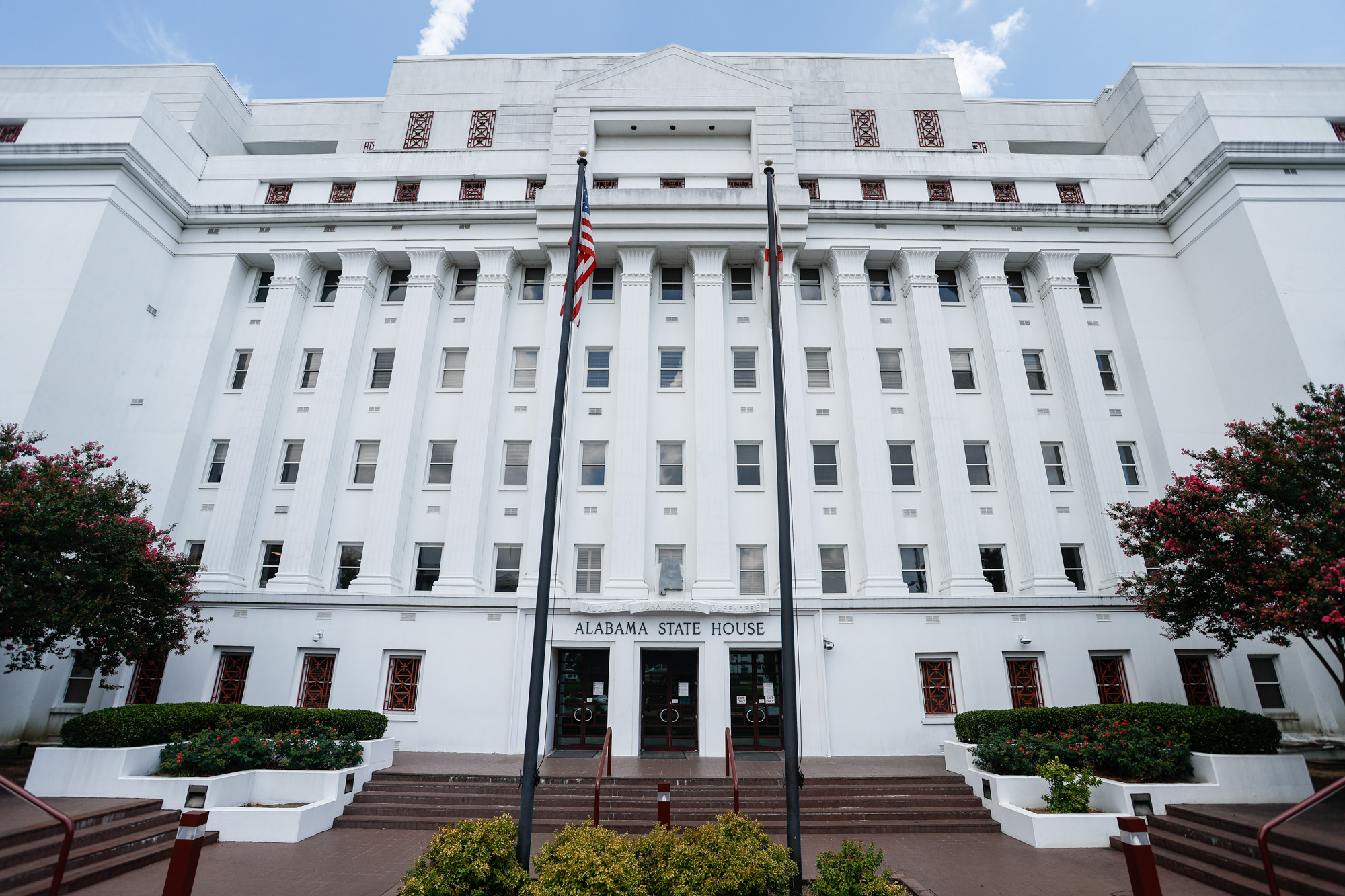
If you want a verified example of how these cases actually move through the courts, Alabama’s post-2020 redistricting litigation is a clean one to watch.
In Allen v. Milligan (2023), voters challenged Alabama’s congressional map under Section 2 of the Voting Rights Act, arguing that the map unlawfully diluted Black voting power by failing to include a second district in which Black voters could elect their preferred candidate.
Case posture: the case reached the Supreme Court through the normal merits process after a three-judge federal district court blocked Alabama’s map and ordered the state to draw a replacement. (Some redistricting cases are assigned to three-judge district courts, which can speed the path to Supreme Court review.)
Legal defect claimed: a federal statutory violation of Section 2, applying the Supreme Court’s established framework for vote-dilution claims.
Remedy requested: Alabama asked the Supreme Court to reverse the lower court and allow the original map to stand. The challengers asked the Court to affirm the order requiring a lawful remedial map.
The Supreme Court affirmed the lower court’s Section 2 analysis. After that merits ruling, the fight moved into the familiar remedy and compliance phase, where courts sometimes have to decide what happens if a legislature does not produce a map that satisfies federal law on the court’s timetable.
When lawmakers do not fix it
One practical wrinkle shows up again and again: a court invalidates a map, the legislature is told to try again, and time runs out or the political branches deadlock.
When that happens, courts can order a remedial map for the next election, often with help from a neutral expert or special master. If the violation is of federal law, a federal court may oversee the remedy. If the violation is purely of state law, state courts are often the ones supervising the fix. Either way, the remedy phase is where timing pressure is at its highest, and where emergency Supreme Court applications become most likely.
Congressional vs state maps
Readers often lump all redistricting together, but congressional maps and state-legislative maps are not identical legally. State-legislative districts raise their own state constitutional issues, and they are not governed by the Elections Clause in the same way.
Congressional maps, by contrast, sit directly inside Article I’s federal allocation of authority, which is why the Supreme Court is more likely to treat a congressional map dispute as a federal institutional fight, not just a state-law controversy.
Why courts collide
State courts are often the main referees of redistricting because many enforceable rules are found in state constitutions. After Rucho limited federal partisan-gerrymandering claims, state constitutional litigation became even more important.
But the U.S. Supreme Court becomes interested when one side claims a state court did something that conflicts with the federal Constitution’s allocation of power. In Moore v. Harper, for example, North Carolina’s congressional map dispute turned into an argument about how far a state court can go when enforcing state constitutional limits on a legislature’s Article I responsibilities.
These cases usually revolve around one of three arguments:
- Authority: Did the state court effectively take over a role the Elections Clause assigns to the legislature?
- Federal rights: Did the map or its replacement violate the U.S. Constitution or federal statutes like the Voting Rights Act?
- Timing: Did a court order come so late that it risks destabilizing an election?
The Supreme Court is not supposed to be a national map-drawing commission. Its role is to police the boundaries of constitutional authority and federal law. The problem is that in the heat of an election calendar, those boundaries can look sharp on paper and blurry in practice.
What to watch next
If you are reading about a new emergency request involving a congressional map, the coverage should never treat it as a purely impressionistic “Court steps in” story. It should answer four concrete questions up front.
- What is the posture? Is this an emergency application for a stay or an injunction pending appeal, or a full petition on the merits? Is the order coming from a federal district court, a federal court of appeals, or a state supreme court?
- What is the claimed defect? Is the claim a Voting Rights Act issue like Allen v. Milligan, an equal-population claim, a racial-gerrymandering claim, or an Article I “who decides” argument like the one framed in Moore v. Harper?
- What is the remedy being requested? “Stop using the new map and go back to the old one” is a different request than “force a new map now.” The difference is what voters actually see on the next ballot.
- What is the calendar? Candidate filing deadlines, ballot-printing timelines, and election-administration lead times often drive the emergency result as much as doctrine does, because Purcell is always lurking in the background.
In other words: the Supreme Court’s emergency moves can be about law, but they are also about logistics. You can usually tell which one is doing most of the work by reading the requested remedy and the dates.
Bottom line
Article I’s Elections Clause is not a districting manual. It is a power allocation. It says states prescribe the time, place, and manner of congressional elections, and Congress can override them. It does not tell a state where to draw a line, but it does tell everyone which institutions get to argue about that line and which court has the final word on federal questions.
That is why these fights keep reaching the U.S. Supreme Court. A congressional map is never just geography. It is a claim about who has authority to translate “We the People” into seats in the House.
Quick FAQ
Who draws U.S. House districts?
Usually the state legislature, using the state’s normal lawmaking process. Some states use commissions created by state law or state constitutions, and courts can order changes when a map violates state or federal law.
Can the U.S. Supreme Court order a state to use a particular map?
It can temporarily order a map to be used or blocked through emergency stays or injunctions while litigation continues, especially when federal law or Article I authority is disputed.
Does the Constitution ban gerrymandering?
The Constitution does not use the word. Federal courts can address some gerrymanders through the Voting Rights Act, racial-gerrymandering doctrine, and equal-population rules, but the Supreme Court has said purely partisan gerrymandering claims usually cannot be resolved by federal courts under the federal Constitution alone.