
You can feel the moral impulse immediately: if an image depicts the sexual abuse of a child, it should be illegal to make, to possess, to share. Full stop.
But American constitutional law does not run on moral certainty. It runs on categories, definitions, and lines that courts draw so the government cannot simply ban what disgusts it.
In an Aug. 25, 2026 decision, Judge John Z. Lee of the U.S. Court of Appeals for the Seventh Circuit confronted a new problem with an old toolkit: generative AI can now produce images of “virtual children” that look real. Yet Supreme Court precedent has treated certain “virtual” child sexual abuse material differently from material involving real children, and that difference is now colliding with modern AI.
Join the Discussion
The case
The ruling arose from the prosecution of Steven Anderegg, who was arrested in 2024 and charged with fabricating, possessing, and distributing AI-generated images of minors engaged in sexually explicit conduct. Prosecutors also alleged he sent some of the material to a minor.
Anderegg asked a federal district court in Wisconsin to dismiss the production and possession charges. The court granted that request on the ground that those counts, as applied in this case, ran against decided Supreme Court caselaw when the government could not show the images depicted real children. Prosecutors appealed, and Lee agreed that controlling precedent required dismissal of those counts.
Lee did not present the outcome as good policy. He framed it as the consequence of binding Supreme Court precedent that a lower federal court is not free to rewrite.
The First Amendment issue
To understand why this decision happened at all, you have to separate three ideas that often get merged in everyday conversation.
- Obscenity: sexually explicit material that meets the Supreme Court’s definition of obscenity can be banned in many contexts. But the Constitution has also recognized a narrow privacy protection for possessing obscene material at home.
- Child sexual abuse material involving real children: this sits in a distinct constitutional category. The government can prohibit it because it is inseparable from the underlying abuse and exploitation of an actual child.
- “Virtual” material: images that do not involve a real child, including computer-generated depictions. This category is where the constitutional footing becomes unstable, because the harm rationale is harder to prove in the same way.
Lee’s analysis turned on two Supreme Court decisions, one from 1969 and one from 2002, that shape how courts treat private possession of obscenity and “virtual” depictions that do not involve real children. He also referenced Osborne as part of the broader doctrinal landscape, because his discussion of the modern line runs through all three cases, even though the two key holdings driving the virtual-image analysis come from Stanley and Free Speech Coalition.
Stanley (1969)
In Stanley v. Georgia (1969), the Supreme Court held that the state cannot criminalize the private possession of obscene material in a person’s home. The idea is not that obscenity is noble speech. It is that the First Amendment and the Constitution’s protection for private life put limits on what the government may police behind your front door.
As summarized in the case materials: “The First Amendment does not allow a state to criminalize the private possession of obscene matter.”
That principle has never meant “anything goes.” It does not protect distribution. And it has been limited in other contexts. But it remains a key part of the constitutional architecture when a statute tries to punish mere possession inside the home.
Ashcroft (2002)
In 1996, Congress passed the Child Pornography Prevention Act. Among other things, it attempted to criminalize images that were not made using real children, including computer-generated depictions and images of adults who appear youthful.
In Ashcroft v. Free Speech Coalition (2002), the Supreme Court rejected that broad sweep. The Court concluded that when no real child is used, the government cannot simply label the resulting speech “child pornography” and ban it as a category. The decision explicitly addressed digital images, and it treated “virtual” depictions as protected by the First Amendment in circumstances where the state cannot tie the speech to the exploitation of an actual minor.
This is the decision people keep reacting to in shorthand: material that looks like child sexual abuse but depicts no real child is not automatically outside the First Amendment.
That does not make it socially acceptable. It makes it constitutionally complicated.
What the court said
Lee’s core point was narrower than the rumors made it sound. Existing Supreme Court doctrine can constrain certain charges when the government cannot prove a real child was depicted.
In this case, the district court dismissed both the production and possession counts under existing precedent, and Lee agreed that precedent controlled the outcome. The decision does not read as a blank check to create or spread this material. It reads like a court warning that old categories are being stress-tested by new technology.
Lee emphasized that he was not announcing a new constitutional right. He was applying Supreme Court lines that a lower federal court cannot redraw just because technology makes the consequences harder to stomach.
He put the problem bluntly in his opinion:
“We now live in an age where GenAI [generative AI] models can render images depicting the abuse of virtual children that are virtually indistinguishable from those depicting the abuse of actual children. This case illuminates how this evolving technology complicates the lines drawn by the Supreme Court in Stanley, Osborne, and Free Speech Coalition… Given the relentless advancement in artificial intelligence models, we have some concerns about the lines these cases draw, but we are not free to redraw them ourselves.”
That is not a celebration. It is a warning.
Why AI changes the stakes
The constitutional boundary that matters most is the difference between:
- Material tied to the abuse of an actual child (which the law may prohibit broadly), and
- Material that is purely simulated (which may still be protected speech in some circumstances, unless the Supreme Court or Congress narrows the category in a constitutionally valid way).
For decades, that distinction was not just philosophical. It was practical. “Virtual” images often looked artificial. Investigators could usually tell what they were looking at. Juries could too.
Generative AI breaks that assumption. The enforcement system depends on sorting “real child” from “no real child.” When images become “virtually indistinguishable,” the legal test becomes harder to administer, and the constitutional lines become easier to exploit.
Law enforcement burden
Lee noted a real-world cost of the virtual-versus-real distinction: the more AI-generated material floods reporting systems, the harder it becomes to find the cases involving actual children who are being abused and recorded.
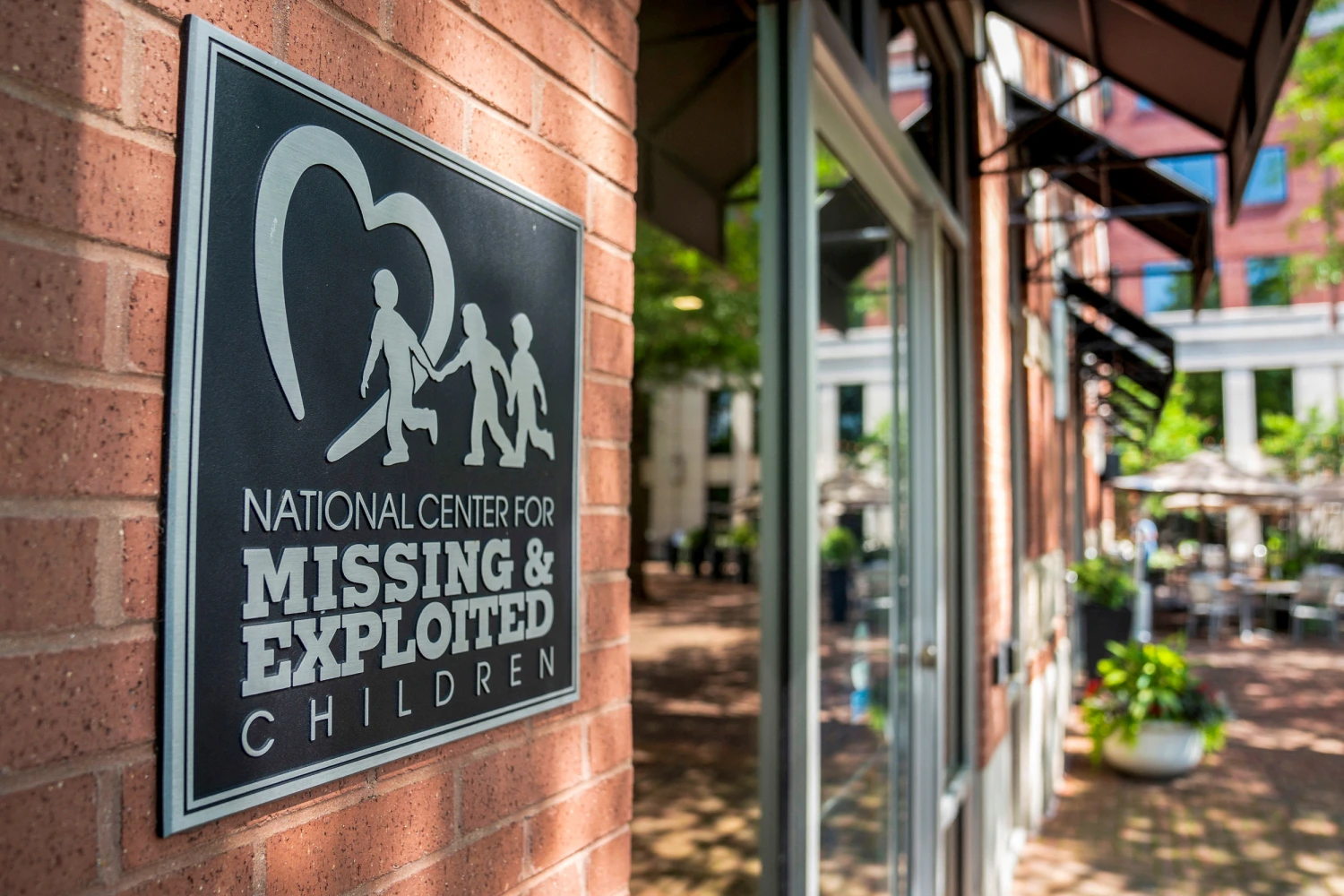
His opinion cited “recent data” suggesting that the influx of AI-generated images reported to the National Center for Missing and Exploited Children (NCMEC) CyberTipline imposes increasing burdens on law enforcement.
What it does not mean
It is easy for this kind of decision to get flattened into a headline-sized misunderstanding. The opinion does not establish that “AI-generated child sexual abuse material is legal” in general.
Instead, the ruling illustrates something narrower and more unsettling: existing Supreme Court doctrine can constrain prosecutions where the government cannot prove a real child was depicted. Separate from that, Stanley explains why the Constitution places limits on criminalizing private possession of obscenity in the home, a concept that often gets pulled into public retellings of cases like this.
Distribution, solicitation, extortion, enticement, and offenses involving real children are separate questions and can trigger different statutes and different constitutional analyses.
Who can change it
Lee’s closing posture is the most important civics takeaway. Federal appellate judges are not constitutional free agents. When the Supreme Court draws a boundary, lower courts apply it even when new technology makes the boundary look outdated or dangerous.
There are only a few ways the current line changes:
- The Supreme Court revisits its virtual-image doctrine and narrows First Amendment protection in this space.
- Congress writes a new statute targeted enough to survive First Amendment review, potentially focusing on conduct linked to exploitation, coercion, grooming, or identifiable victims rather than banning a broad category of “speech.”
- States experiment, and the resulting circuit splits force the Supreme Court to clarify what, exactly, the First Amendment tolerates in the age of AI.
The U.S. Department of Justice declined to comment on whether it intends to seek Supreme Court review in this case.
The tension
The First Amendment is often described as the amendment that protects the admirable: dissent, journalism, religion, art.
In reality, it also protects a lot of the grotesque, because the alternative is giving the government a roving power to punish speech based on disgust. The Constitution is built to mistrust that kind of authority, even when the target is socially indefensible.
But child sexual abuse material is different, because real-child CSAM is not merely “expression.” It is evidence of a crime against a child. That is why the “no real child” line matters so much, and why the line is now under pressure from AI.
This is the uncomfortable question courts are circling: If technology makes virtual abuse imagery indistinguishable from real abuse imagery, can the law treat the two differently without collapsing enforcement, or will the Supreme Court feel compelled to redraw the category?
What to watch
- Whether prosecutors can prove “real child” involvement through metadata, source images, communications, or identifiable victims.
- Whether legislatures craft narrower laws aimed at harmful conduct around creation, enticement, sharing, or using AI tools to target minors.
- Whether courts begin treating indistinguishability as a constitutional fact that changes the analysis, not just the policy debate.
The constitutional load-bearing walls in this area were built for an era when “virtual” rarely looked real. AI is turning that assumption into a legal and practical problem that courts cannot ignore, even when they cannot fix it on their own.