
Join the Discussion
What is happening in Missouri
When people say Missouri’s redistricting fight is “back in court,” they usually mean one practical question: which set of district lines will be used for the next congressional election.
Important note: This explainer is a general guide to how congressional map disputes move through federal courts, using Missouri as the example. If you are looking for a specific case name, docket number, or the exact map currently being challenged, those details depend on the particular lawsuit and the latest orders. The core mechanics, however, tend to look the same from case to case.
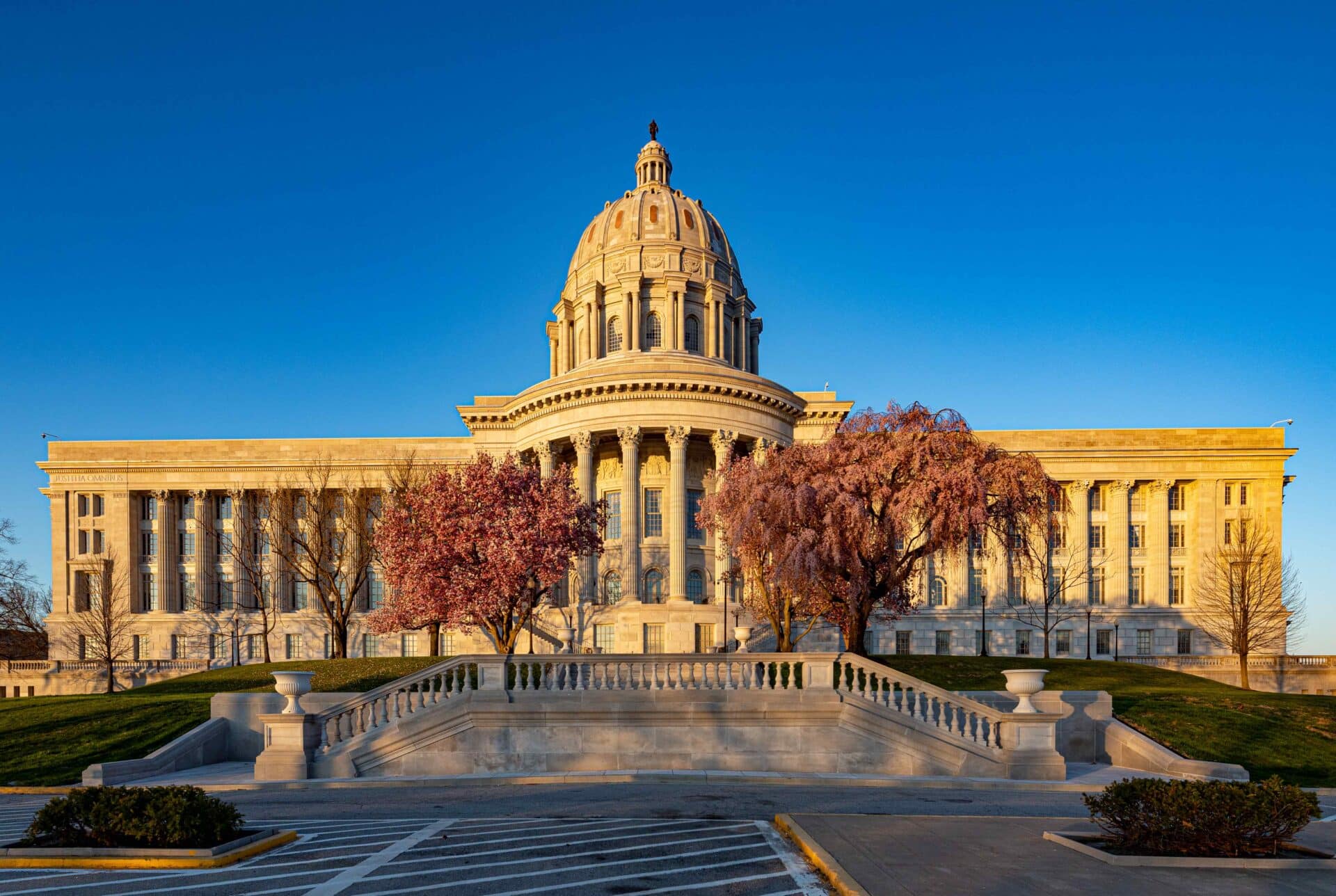
The fight runs through Missouri’s state government, including the Missouri General Assembly, which meets in Jefferson City at the Missouri State Capitol. But the immediate pressure point is often federal court, where judges can decide whether a challenged map stays in place, gets replaced, or gets paused while appeals continue.
Either way, the calendar does what it always does in election litigation. Deadlines for candidate filing, ballot certification and printing, and mailing ballots to military and overseas voters under UOCAVA arrive whether the judges are finished or not. In practice, the hardest cliff is often the point when officials must transmit UOCAVA ballots and lock ballot formats, because that work cannot be restarted casually.
That is why the U.S. Supreme Court can enter the story late and still matter. Even without deciding the case on the merits, the Court can temporarily pause a lower court’s order or allow it to stand, and that choice can effectively decide the map for this election.
Why federal courts get involved
Redistricting is mostly a state job, but it is not only a state job. Congressional districts exist because the U.S. Constitution creates the U.S. House of Representatives, and because federal law sets ground rules for elections for federal office.
A significant share of congressional redistricting lawsuits end up in federal court for one of three reasons:
- Federal constitutional claims, often brought under the Fourteenth Amendment’s Equal Protection Clause or the one-person, one-vote rule.
- Federal statutory claims, especially under the Voting Rights Act.
- Election administration conflicts, where the timing and mechanics of running a federal election collide with a late-breaking change in maps and the responsibilities of state and local election officials, including the secretary of state and county election authorities.
Missouri is a useful example of the last problem because the stakes are high and the timeline is tight. Even if you assume everyone involved is acting in good faith, you still have the same hard reality: there is a point where switching maps becomes less like “fixing a legal problem” and more like “changing the rules mid-flight.”
The Elections Clause
The key text for understanding congressional map fights is in Article I, Section 4, often called the Elections Clause:
“The Times, Places and Manner of holding Elections for Senators and Representatives, shall be prescribed in each State by the Legislature thereof; but the Congress may at any time by Law make or alter such Regulations …”
That sentence does two things at once.
- First, it gives states the front-line responsibility to set the rules for congressional elections, including the framework in which district lines are drawn.
- Second, it gives Congress a backstop power to override state choices by federal law.
One important nuance: when the Constitution refers to a state’s “Legislature,” states generally act through their ordinary lawmaking processes. That can include steps like a gubernatorial veto where state law provides, and in some states, voter-enacted rules adopted through ballot measures. Put differently, the Elections Clause does not place state election law outside the rest of a state’s constitutional structure.
The power to draw districts is also shaped by federal statutes. For example, Congress requires House elections to use single-member districts under 2 U.S.C. § 2c.
So where do courts come in? Courts do not step in to write maps just because they feel like it. Courts get involved when someone plausibly alleges that a map or the process behind it violates the U.S. Constitution, federal statutes, or both. While courts generally prefer the political branches to do the mapmaking, remedial court involvement is a last resort that is still common in practice: judges may order a legislature to fix a violation by a deadline, and if that fails, a court can approve an interim plan, adopt a remedial plan, or use a special master to help produce one.
What the Supreme Court can do
When a deadline is days away, the Supreme Court often acts through its emergency procedures. That does not necessarily mean a full opinion after oral argument. More often, it looks like an order that grants or denies temporary relief.
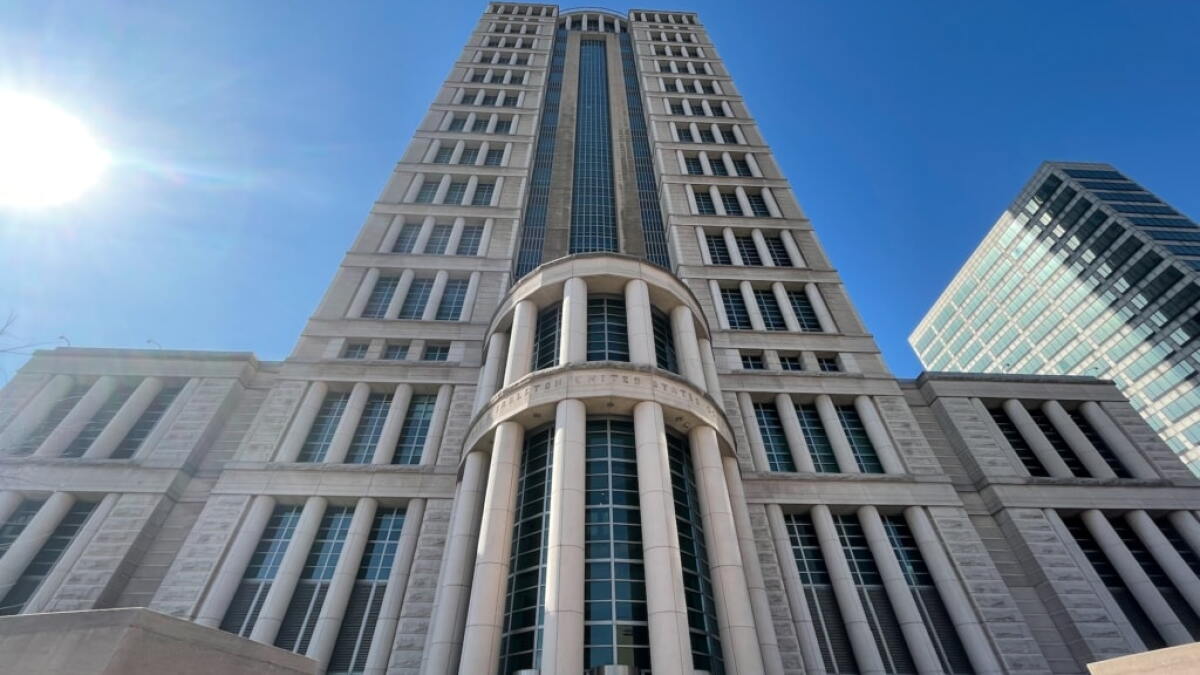
In a congressional map dispute like Missouri’s, the Court’s menu is limited but powerful. The Court may be responding to a lower-court order from a federal district court or a federal court of appeals, including the U.S. Court of Appeals for the Eighth Circuit, which sits in St. Louis at the Thomas F. Eagleton U.S. Courthouse, and deciding whether that order should take effect immediately:
- Leave the lower-court ruling in place, which can lock in the map choice for this election.
- Issue a stay, which pauses the lower court’s order and can allow a different map to be used while litigation continues.
- Expedite the case, which means faster briefing and potentially faster merits review, though election timing often makes that unrealistic before ballots go out.
Here is the part that frustrates voters: even when the Court says it is not deciding the final legal question, an emergency order can still decide the real-world outcome for an entire election cycle.
Why late changes are hard
Modern election law has a strong gravitational pull toward stability close to Election Day. Lawyers often call this the Purcell principle, after a Supreme Court case that cautioned federal courts against late-in-the-day changes to election rules. The basic idea is simple: voter confusion and administrative chaos can become their own form of disenfranchisement.
Purcell is not a hard, automatic rule. It is a caution that often shows up in emergency litigation, especially when election officials have already begun implementing the rules that a court is being asked to change.
That is why timing matters so much in redistricting litigation. The legal merits and the practical remedy become inseparable once the election machinery is already moving.
How disputes affect voters
Redistricting fights often sound abstract because they are argued in the language of lines, blocks, and census data. But maps decide representation in three concrete ways.
1) Who is grouped together
If your neighborhood is moved into a different district, you have not lost the right to vote. But you have lost the right to vote for the representative who would have covered you under the old lines, and you may have gained a representative whose priorities, fundraising networks, and political base are rooted somewhere else.
2) Who can realistically win
District lines can create safe seats, competitive seats, or seats that look competitive on paper but are structurally tilted. Courts do not police ordinary partisan advantage in the way many people expect, especially after the Supreme Court’s holding in Rucho v. Common Cause (2019) that claims of partisan gerrymandering present political questions beyond the reach of federal courts.
3) Whether minority voting strength is diluted
Even after Rucho, federal courts can still review maps for racial gerrymandering and for violations of the Voting Rights Act. Those claims are fact-intensive and often turn on whether minority voters have an equal opportunity to elect candidates of choice, commonly litigated through the Gingles preconditions and a broader totality-of-circumstances analysis.
Why it returns to court
The object everyone is fighting over is the Missouri congressional district map, and the reason these disputes keep returning to court is that redistricting cases combine three unstable ingredients:
- High stakes, since a map can shape the House delegation for a decade.
- Complex remedies, because fixing one legal problem can create another.
- Unforgiving deadlines, because election officials have to start long before Election Day.
This is also why so many map disputes end up in emergency posture. One late order can turn into a functional decision about the map for the upcoming election, even if the broader litigation continues afterward.
Where to look for specifics
If you are trying to pin down exactly what “back in court” means in a given Missouri news cycle, the most reliable checklist is straightforward:
- Which court is handling the case right now (state court, federal district court, or the Eighth Circuit).
- Which map is being challenged (the plan and the year it was enacted).
- What legal theory is being asserted (Voting Rights Act Section 2, racial gerrymandering, one-person, one-vote, or procedural challenges).
- What the latest order did (blocked the map, required a fix, approved an interim map, or set a schedule).
- What happens next (appeal, stay request, or a Supreme Court emergency application).
Those details let readers verify what is actually pending without guessing at a specific docket.
FAQ
Why is Missouri’s congressional map in court?
Because parties can contest which map is legally valid for the upcoming election and whether federal law requires Missouri to use different district lines. When the dispute is framed as a federal constitutional or federal statutory issue, it can land in federal court.
What is a stay, in plain English?
A stay is a court-ordered pause button. It temporarily stops an order from taking effect while a higher court decides what to do next.
Can the Supreme Court stop a state election map?
Yes. The Supreme Court can block a map, or block an order requiring a map, by granting a stay or other emergency relief. It can also let a lower court ruling stand, which can be just as decisive.
What happens if Missouri must use a different map?
Administratively, election officials proceed under that set of district lines for ballots, precinct assignments, and candidate filings. Legally, the underlying case can still continue, but the map-for-this-election question is effectively settled once ballots are finalized and sent.
Does Article I mean state legislatures can do whatever they want?
No. Article I gives states the first move on the times, places, and manner of congressional elections, but those rules still must comply with the U.S. Constitution and valid federal statutes like the Voting Rights Act. Courts exist to enforce those limits.
The takeaway
Redistricting litigation is where American self-government shows its seams.
Article I assumes states will run congressional elections. Federal law assumes Congress can override them. The judiciary assumes that when rights are plausibly violated, someone has to say what the law is, even if the calendar is inconvenient.
Missouri’s fight returns to court because those assumptions collide in one place: the moment when the law has not finished speaking, but the election has to start anyway.