
Two constitutional provisions have done an outsized amount of work in modern election litigation. They both say that state election rules for federal contests are set by each state’s “Legislature.”
That single word powered one of the most ambitious constitutional arguments in decades, the independent state legislature theory, or ISL. In its strongest form, ISL claimed that when a state makes rules for federal elections, the state legislature gets to act largely on its own, insulated from state courts, state constitutions, and sometimes even governors.
Moore v. Harper (2023) was the Supreme Court’s chance to decide how far that insulation goes. The Court rejected the maximal version of ISL, but it did not erase the dispute. It drew a boundary line, then made clear that some state court decisions can still go too far.
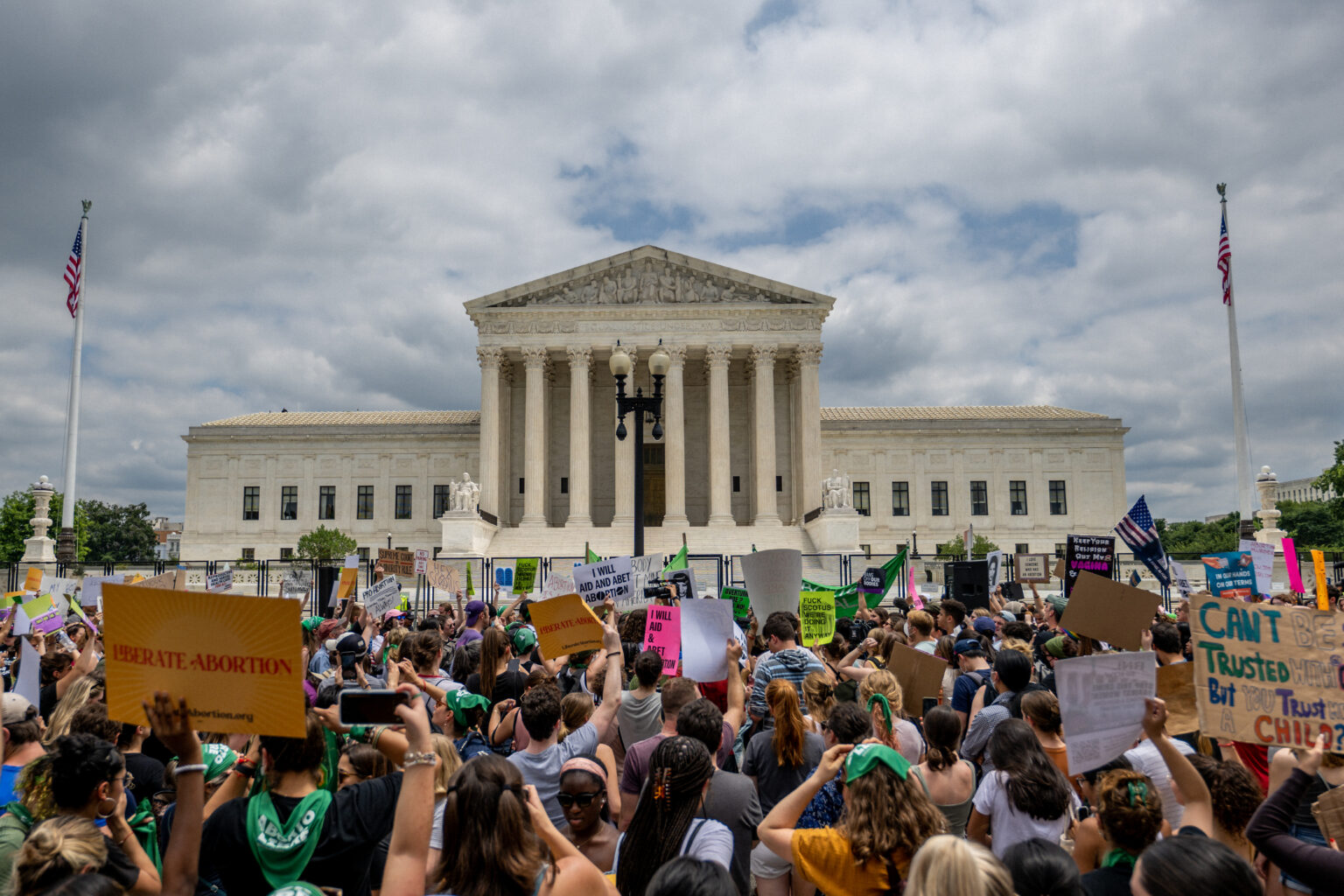
Join the Discussion
What ISL claims
The independent state legislature theory starts with two constitutional provisions:
The Elections Clause (Article I, Section 4): the “Times, Places and Manner” of congressional elections “shall be prescribed in each State by the Legislature thereof,” with Congress able to “make or alter” those rules.
The Presidential Electors Clause (Article II, Section 1): each state appoints presidential electors “in such Manner as the Legislature thereof may direct.”
ISL asks you to read “Legislature” in a very specific way: not as shorthand for the state’s normal lawmaking system, but as a distinct constitutional actor that can operate with fewer state-level constraints when dealing with federal elections.
One key distinction in the case law is between the legislature as a building full of legislators and the legislature as a lawmaking process defined by the state constitution. In many states, that process includes a governor’s veto, judicial review, and sometimes voter-created institutions like independent redistricting commissions.
Three versions
Not everyone who invokes ISL means the same thing. These are not official doctrinal categories, but they are a useful way commentators describe the spectrum.
Modest version: State courts can review election laws, but they cannot “rewrite” them under vague state constitutional language. State courts must interpret election statutes like ordinary courts, using ordinary methods.
Strong version: State courts have a much smaller role. A legislature’s choices for federal elections cannot be displaced by a state constitution as interpreted by state judges.
Maximal version: The legislature is nearly untouchable in this area, possibly even able to bypass governors (vetoes), independent commissions, or other features of state lawmaking that the state constitution requires.
Moore v. Harper rejected the maximal version. But it left room for the modest version to keep showing up, case by case, as a limit on aggressive state-court interventions.
Why Moore happened
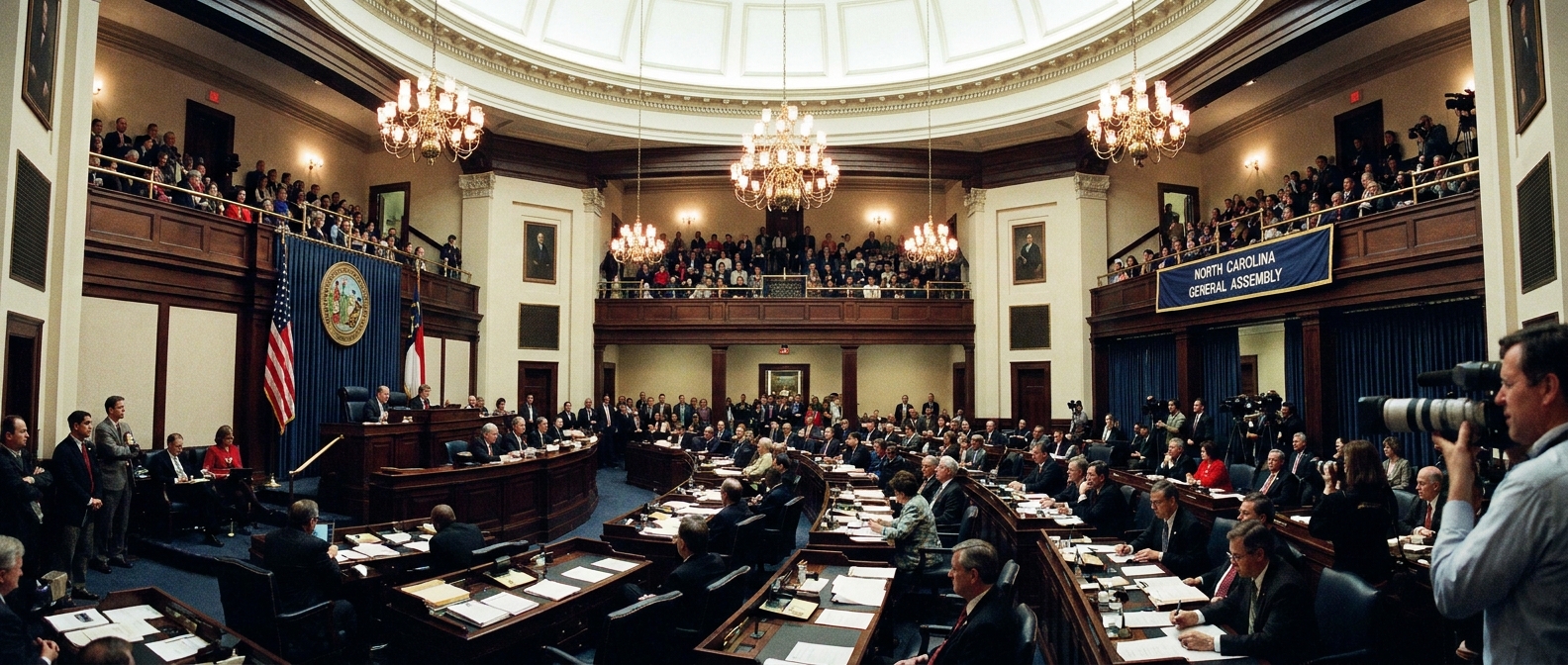
North Carolina’s legislature drew a congressional map after the 2020 census. North Carolina voters sued in state court, arguing the map violated the state constitution. The North Carolina Supreme Court agreed and blocked the map, concluding it was an unconstitutional partisan gerrymander under the state constitution’s guarantees of free elections and equal protection. (That state-court decision is commonly referred to as Harper v. Hall.)
Legislative leaders then asked the U.S. Supreme Court to step in. Their argument was essentially: for federal elections, the U.S. Constitution assigns power to the “Legislature,” and a state court cannot use the state constitution to override the legislature’s choices about congressional maps.
That is ISL in a sentence.
One procedural note helps avoid confusion: after the U.S. Supreme Court granted review, North Carolina’s state judiciary changed composition and later revisited related questions in state proceedings. Moore, however, was ultimately decided on the merits by the U.S. Supreme Court.
What the Court held
The Court, in a 6 to 3 decision (Chief Justice Roberts writing for the majority), held that state legislatures are not independent of state constitutions when they regulate federal elections.
In other words, the “Legislature” does not float above the rest of the state’s legal system. It operates inside it.
What that means
State constitutions still bind state legislatures. If a state constitution sets rules about how laws are made, or protects voting rights more broadly than the federal Constitution does, those rules still matter.
State courts can still enforce those limits. Judicial review at the state level remains part of the system, including in redistricting disputes and election administration fights.
Normal lawmaking procedures still apply. The decision reinforces the idea that “Legislature” refers to the lawmaking function as defined by the state, not a single institution unmoored from vetoes, commissions, or other state constitutional structures.
The Court framed this as consistent with history and precedent. The majority relied on earlier decisions reading “Legislature” to mean the state’s lawmaking system, including Smiley v. Holm (1932) and Arizona State Legislature v. Arizona Independent Redistricting Commission (2015). The debate also has a well-known touchpoint in Chief Justice Rehnquist’s concurrence in Bush v. Gore (2000), which suggested federal courts may sometimes review whether a state court has departed from the legislature’s election rules.
The limits Moore left
Moore did not say state courts have unlimited freedom to do whatever they want in election cases. It drew another line: federal courts can review whether a state court has gone beyond ordinary interpretation and effectively seized the legislature’s federal constitutional role.
That is the part that keeps ISL alive in a narrower form.
The ordinary review boundary
The majority emphasized that state courts may apply state constitutions, but federal courts can intervene if a state court decision amounts to an impermissible departure from typical judicial reasoning. The Court said state courts must not “transgress the ordinary bounds of judicial review.”
That phrase matters because it invites a familiar next fight: what counts as “ordinary”?
If a state court reads an election statute using familiar tools of interpretation and applies a clear constitutional rule in the way it applies that rule elsewhere, federal courts usually will not interfere.
If a state court uses open-ended state constitutional language to impose a detailed election rule that the legislature never adopted, and does so in a way that looks untethered from normal interpretive methods, the legislature can argue the court crossed Moore’s boundary.
A simple illustration: imagine a statute sets a ballot receipt deadline and a state court, citing a broad “free elections” clause, extends that deadline by weeks without relying on ordinary interpretive sources or a settled state-law doctrine. That kind of move is more likely to be argued as beyond ordinary judicial review than a decision that resolves an ambiguity in the statutory text or applies an established state constitutional test.
Moore, in short, rejected the idea that state courts are irrelevant. But it also rejected the idea that state courts are always the final word on the scope of their own power in federal-election disputes. The exact scope of federal review here is standard-like and fact dependent, and future cases will supply the contours.
Why federal courts still review rules
Even without ISL, federal courts have always had a role in election disputes. Moore reinforces that role in two distinct ways.
1) Federal rights still apply
State election rules must comply with the U.S. Constitution, including:
Equal Protection (Fourteenth Amendment), often invoked in vote-counting rules and ballot-access disputes.
Due Process (Fourteenth Amendment), sometimes raised when election procedures change suddenly or are applied inconsistently.
First Amendment, in cases about political association and certain ballot regulations.
Those claims are federal questions, and federal courts are built to answer them.
2) The Elections Clause can create a federal question
Moore confirms that the Elections Clause is not a one-way ratchet for legislatures. But it also confirms that when state courts interpret state law in ways that reshape federal-election rules, a federal question can arise: did the state court exceed permissible judicial review and effectively take over the legislature’s constitutionally assigned role?
That is why federal courts remain in the picture. Not because state courts vanish, but because the Constitution sets a federal floor for who does what.
Redistricting impact
Moore is easiest to understand in the context that produced it: congressional maps.
Congressional redistricting is state-run, but it is federal in consequence. Your U.S. House districts determine representation in Congress, and those lines can lock in political power for a decade.
After Moore:
State courts can still strike down congressional maps under state constitutions, including for partisan gerrymandering, if the state constitution is read to prohibit it.
Legislatures can still appeal to federal courts if they believe a state court’s decision or remedy is untethered from the text of the state constitution or ordinary interpretive methods.
This creates a kind of double layer of review: state constitutional litigation is still the front line, but federal courts can patrol the boundary of state judicial power when federal congressional elections are at stake.
What it means for presidents
The case itself focused on the Elections Clause and congressional maps. But ISL arguments also lean heavily on the Presidential Electors Clause, because that clause uses similar “Legislature thereof” language.
Moore does not rewrite how the Electoral College works. What it does is clarify a key premise that shows up in presidential election disputes:
State legislatures are not free agents in presidential election administration. They are still bound by their state constitutions.
State courts are not automatically sidelined in disputes about how a state runs a presidential election.
Federal courts remain available when the dispute turns on federal constitutional claims or on whether a state court crossed the Moore boundary in interpreting state election law for a federal contest.
That matters because presidential elections combine state-level machinery with national stakes. Close elections generate pressure on every link in the chain: ballot rules, certification, recounts, and deadlines. Moore keeps the chain anchored to ordinary state constitutional governance, while leaving federal courts as a backstop for federal questions.
Congress still matters
ISL debates often ignore the second half of the Elections Clause: Congress may “make or alter” state regulations for congressional elections.
Moore did not expand Congress’s power, and it did not reduce it. It reaffirmed the constitutional layout:
States set default rules for federal congressional elections.
Those state rules must be made through state constitutional processes.
Congress can step in and override state rules for congressional elections if it chooses.
That last point is not theoretical. Congress has used this authority in concrete ways, including by setting a uniform federal election day for Congress and by enacting nationwide election statutes such as the National Voter Registration Act and the Help America Vote Act.
What Moore did not settle
If you want to predict the next chapter, this is the hinge.
Moore’s majority tried to avoid two extremes: a world where state legislatures can ignore state constitutions, and a world where state courts can effectively legislate election rules by creative constitutional interpretation.
The uneasy middle is where future cases live. Expect litigation that asks:
When does state constitutional language become too open-ended to support a court-imposed election rule?
When is a judicial remedy so aggressive that it looks like policy choice, not legal interpretation?
How deferential should federal courts be to a state court’s explanation of its own state law?
Moore answers the headline question. It does not end the argument about the boundary.
Why it matters
Moore v. Harper is not just a technical fight about redistricting. It is a case about where democratic rules come from, and who gets to interpret them when elections turn close and power is on the line.
The Court rejected a sweeping theory that could have made state legislatures uniquely powerful in federal election disputes. But it also left a federal constitutional limit for state courts: interpret state law in a way that looks like lawmaking, and federal courts may step in under the Elections Clause framework.
If you want a single takeaway, it is this: the Constitution does not give any one institution the final word over federal election rules inside a state. Legislatures write laws, state constitutions constrain them, state courts enforce those constraints, and federal courts remain available when federal constitutional boundaries are in play.