

Florida Democrats just delivered one of the most jarring results of the 2026 primary season: Rep. Angie Nixon defeated Alexander Vindman in the Democratic primary for U.S. Senate, roughly 55% to 43% with most votes counted, even though Vindman’s campaign spent an estimated $16.3 million to Nixon’s roughly $975,000.
By sunrise, the result had already been turned into a morality play. Trump allies cast it as a delayed verdict on impeachment. Progressives framed it as a grassroots rebuke of money and establishment branding. Both stories are emotionally satisfying, and both are incomplete.
The more durable lesson is constitutional in its own way: impeachment is a procedure, not an identity. It produces evidence, testimony, and history. It does not automatically produce a winning coalition two election cycles later.
Join the Discussion
What actually happened in Florida
Vindman entered the race with name recognition few first-time candidates can buy. He was an Army lieutenant colonel whose 2019 testimony made him a central figure in the first impeachment of President Donald Trump. That biography gave him instant national fundraising potential and a ready-made media narrative: public service, personal risk, and accountability.
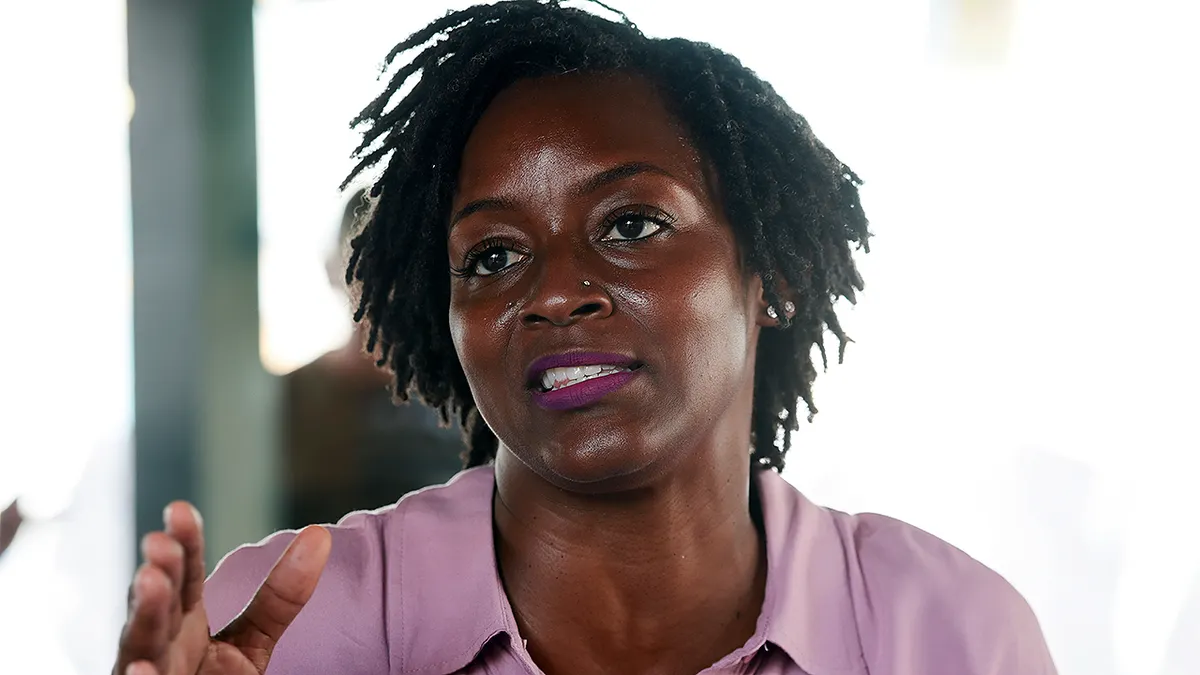
Nixon entered with something different: a political home base. She has built her career inside Florida’s Democratic coalition, aligned with organized progressive politics and the kind of face-to-face political networks that do not show up on a quarterly FEC spreadsheet until it is too late.
The final margin mattered as much as the result. This was not a squeaker. In a state where Democrats are routinely fighting uphill, primary voters chose the candidate who looked most like their internal argument about what the party should be.
The impeachment trap: when a constitutional moment becomes a campaign brand
Impeachment is one of the Constitution’s most dramatic tools. It is built for rare emergencies: “high Crimes and Misdemeanors,” congressional investigation, public testimony, and the attempt to protect the republic from abuses of executive power.
But the country does something else with impeachment. We turn it into a personality test.
Vindman’s political identity was inseparable from his impeachment role, not because he lacked other issues, but because the public already knew him through that lens. That can be an asset in a general election where persuasion hinges on broad themes like integrity and accountability. In a partisan primary, it can be a liability because primary voters are not selecting a witness. They are selecting a champion.
A witness’s credibility is measured by consistency and restraint. A champion’s credibility is measured by affiliation and fight.
Florida’s result suggests that a significant portion of Democratic primary voters wanted a fighter whose political biography was forged in Florida’s day-to-day policy conflicts, not a national figure whose origin story was Washington’s constitutional crisis.
Money is not the same thing as persuasion
The raw spending ratio became the headline for a reason. Even using the more conservative framing, Vindman spent about 13 to 1 over Nixon. Using the higher estimate circulated on election night, it was closer to 16 to 1.
And yet, the result tracks a familiar rule of democratic politics: money amplifies what voters already feel, but it struggles to manufacture what they do not.
- Advertising can raise familiarity, but it cannot easily create a sense of shared community.
- Spending can professionalize a campaign, but it can also signal distance, especially in a primary where voters want proof of local roots.
- National attention can be oxygen, but it can also read like interference when a party’s base is in a combative mood.
Vindman’s cash advantage likely bought saturation. Nixon’s win suggests that saturation did not translate into trust or identification.
Why the “punishment for impeachment” narrative doesn’t fit the electorate that voted
Trump-aligned influencers and even Trump himself framed Vindman’s defeat as payback for the impeachment era. One post attributed to Trump celebrated the loss: “SleazeBag Vindman loses tonight to a Radical Left Lunatic. How cool is that??? President DJT”.
But primary electorates are not general electorates. The people who chose Nixon were Democratic primary voters. They were not casting a ballot to vindicate Trump’s view of 2019. They were choosing the person they wanted to represent their party against the Republican nominee in November.
So if impeachment politics mattered here, it likely mattered indirectly. Not as “punishment,” but as a sorting mechanism:
- Was Vindman an outsider celebrity asking for a promotion?
- Or was he a public servant whose constitutional moment earned him political trust?
Nixon’s margin suggests many voters answered that question the first way, regardless of how they feel about impeachment itself.
What Nixon’s win says about today’s Democratic coalition
Nixon’s victory is being described, accurately, as a progressive upset. But the deeper takeaway is how progressives win when they win.
They do not always win by moderating their message for a broader electorate. Often, they win by clarifying what the primary is about: power inside the party, whose priorities lead, and which communities are treated as the party’s center rather than its “base.”
That kind of campaign does not require more money than the opponent. It requires more agreement among the people who reliably show up.
In other words, Nixon’s win is not only about ideology. It is about organizational legitimacy. If voters already recognize a candidate as “one of us,” the opponent has to do more than spend. The opponent has to belong.
The constitutional irony: impeachment is meant to be institutional, but we experience it as personal
The Constitution designed impeachment to protect the system, not to elevate individuals. The House impeaches. The Senate tries. The Chief Justice presides when the president is tried. The process is deliberately legislative, deliberately political, and intentionally separated from criminal prosecution.
But in modern America, impeachment is remembered through faces: the president, the witnesses, the members of Congress who performed for cameras, and the few people whose testimony became cultural shorthand.
That is why Vindman’s loss is such a powerful Rorschach test. People are projecting onto it whatever they want to be true about accountability.
If you are a Trump supporter, the temptation is to see a cosmic verdict: the “impeachment guy” finally gets rejected. If you are a progressive Democrat, the temptation is to see a democratic verdict: money cannot buy a nomination.
The Constitution offers a colder reading. Impeachment does not resolve political conflict. It relocates it. The conflict returns later, in primaries, in general elections, and in the slow reorganization of parties around loyalty and identity.
Why a famous biography can lose to a local one
Vindman’s story is nationally legible. Nixon’s story is locally legible. And in a primary, local legibility is often more valuable than fame.
Voters ask questions that consultants rarely want to put on a polling memo:
- Who has shown up when no one was watching?
- Who feels accountable to people like me, not just to donors who like my side?
- Who will still be here after the election?
Vindman may have offered a compelling theory of public duty. Nixon offered something more familiar in intraparty politics: a relationship to the party’s organized left, and a record that signals where she will stand when leadership pressures her to soften.
What this means going forward: impeachment politics is now a credential with an expiration date
There was a window after the first Trump impeachment when being associated with it could function as a kind of moral credential inside Democratic politics. That window is not closed everywhere. But Florida’s result is a reminder that the credential is not permanent.
As time passes, the impeachment era becomes a chapter in a longer story, and voters begin to prioritize different tests:
- Material priorities (cost of living, wages, insurance, housing)
- Movement priorities (labor power, criminal justice, climate policy)
- Trust priorities (authenticity, roots, perceived independence)
Vindman’s loss suggests that constitutional hero narratives do not automatically outrank those priorities, especially in a state where Democrats are anxious about relevance and hungry for candidates who feel unmistakably grounded.
FAQ
Did Alexander Vindman really spend about $16.3 million?
That is the estimate widely circulated after the primary, alongside Nixon’s roughly $975,000. Even using a lower framing, the spending gap was enormous, roughly 13 to 1 or more.
Was the margin really that large?
With most votes counted, Nixon led about 55% to 43%, a double-digit advantage.
Does this mean Democratic voters “rejected impeachment”?
Not cleanly. Primary voters were not asked whether impeachment was justified. They were asked which Democrat they wanted as their nominee. The result says more about coalition-building inside the party than about relitigating 2019.
What is the constitutional takeaway?
Impeachment is a constitutional safeguard, not a political ladder. It can shape reputations, but it does not guarantee electoral reward. The electorate that watches a constitutional drama is not the same electorate that shows up to nominate a candidate years later.