
Join the Discussion
A referral is not a charge
When a federal judge “refers” someone to the U.S. Department of Justice for possible criminal investigation, it can sound like a legal thunderclap. In practice, it is closer to a formal, documented nudge: the court is telling federal prosecutors, in writing, that something in the record may warrant a closer look for crimes like perjury or false statements.
This explainer uses a widely discussed scenario involving U.S. District Judge Paul S. Diamond and Philadelphia District Attorney Larry Krasner as the news peg. But one point comes first: a referral is not an indictment, not a conviction, and not proof a crime occurred. It is a process step that hands a question to DOJ, which then decides what, if anything, to do next.
What a referral signals
A judicial referral is the court’s way of preserving a concern in the public record and transmitting it to the branch that can investigate crimes. The referral language may appear in an order, in a written opinion, or in a directive instructing the clerk to forward certain materials.
What it does not do is settle disputed facts on its own. Even if a judge uses strong language, a referral is still only the start of a separate process. DOJ must decide whether the conduct is actually provable as a federal offense and whether it merits a criminal investigation.
What a judge can do
Federal courts are not prosecutors. A judge cannot file criminal charges simply because the judge believes someone lied. What a judge can do is identify conduct that appears unlawful and transmit relevant materials to the executive branch, which is where federal prosecution power lives.
In practice, a referral can include transcripts, filings, exhibits, and the judge’s explanation of what appeared inconsistent or potentially false. Sometimes it is styled as an order directing the clerk to send the record to DOJ. Other times it appears as a letter or a section within a broader ruling.
Constitutionally, separation of powers is doing the work. Article III courts adjudicate cases. Article II prosecutors enforce federal criminal law. A referral respects that line: the court flags a concern, but DOJ decides whether to investigate and whether to charge.
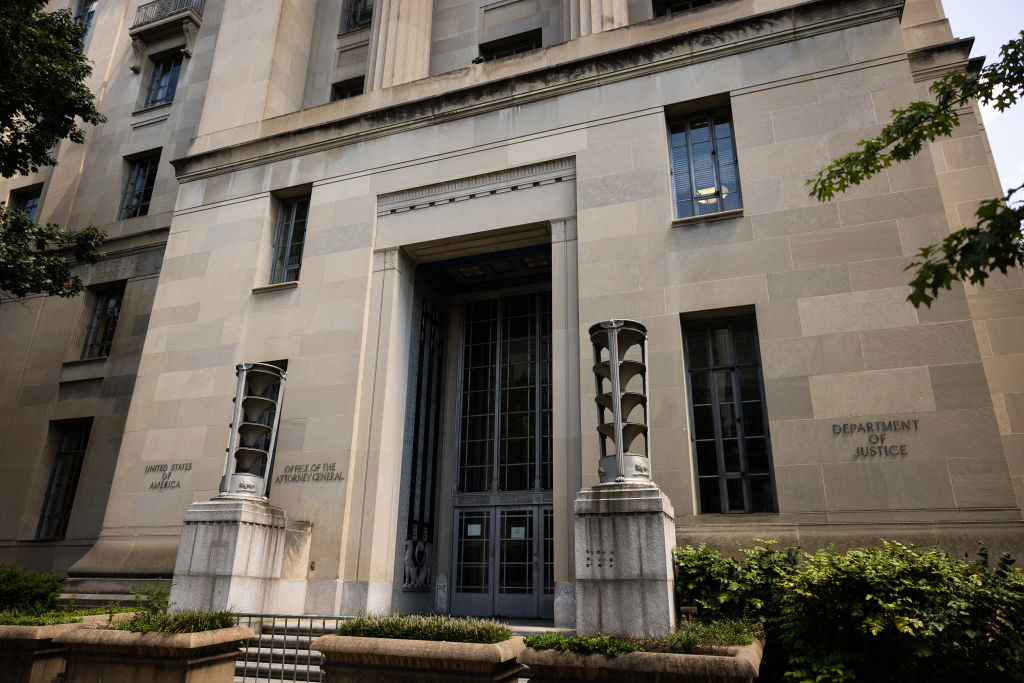
Can DOJ investigate a local DA?
Yes, if the suspected offense is a federal crime. A district attorney is a state or local official, but that does not create immunity from federal law.
That said, federal authority is not simply about geography. In many statutes, the key question is whether the alleged conduct falls within federal jurisdiction, affects a federal proceeding, involves federal funds, or otherwise triggers a federal hook Congress has enacted.
Two common pathways bring the Department of Justice into the picture:
- Conduct in federal court or tied to a federal proceeding. If statements were made under oath in a federal case, or submissions were made in a way covered by federal perjury or false-declaration statutes, federal criminal law may apply.
- Conduct in matters within the federal government’s jurisdiction. This includes false statements to federal investigators, interference with federal investigations, misuse of federal funds, civil rights violations, and other offenses Congress has made federal crimes.
Federalism limits federal power to defined areas. When a valid federal statute applies, state and local officials are not exempt from it.
Perjury vs. false statements
“Perjury” is a familiar word, but it is narrower than many people assume. Federal perjury laws generally require a statement made under oath, that is material, and that the speaker made willfully knowing it was false.
Two perjury-related statutes often discussed in federal-court contexts are 18 U.S.C. § 1621 (the general perjury statute) and 18 U.S.C. § 1623 (false declarations in proceedings before, or ancillary to, a federal court or grand jury). Which one fits depends on the setting and the proof.
“False statements” laws can be broader. The most cited federal statute is 18 U.S.C. § 1001, which criminalizes knowingly and willfully making materially false statements in matters within the jurisdiction of the federal government. It frequently arises with statements to federal agents and in executive-branch matters. Its application to some court-related filings and litigation contexts can be complex and is sometimes litigated, so it is best understood as a powerful tool with real boundaries rather than a universal catchall.
Materiality is a key limiter in both categories. A statement is “material” if it could influence a decision maker, such as a claim that could affect how a judge rules on a motion or how an agency proceeds, even if it did not ultimately change the outcome.
A concrete example
Here is the basic difference in plain terms:
- Sworn, written court evidence: A materially false declaration in a sworn affidavit filed in federal court can raise perjury or false-declaration issues under statutes such as § 1621 or § 1623, depending on the circumstances.
- Unsworn interaction with federal investigators: A materially false statement made during an interview with FBI agents about a matter they are investigating can raise § 1001 issues.
In both situations, the hard part is often intent. Contradictions happen. Proving a criminal lie usually requires showing the speaker knew the truth and chose to say otherwise in a way that mattered.
What happens next
A judicial referral triggers options, not obligations. DOJ can do nothing, quietly review the record, request more information, or open an investigation. If DOJ proceeds, the steps typically look like this:
- Initial review. Prosecutors assess whether the alleged falsehood is clearly provable and material, and whether it fits a federal statute.
- Investigation. Agents may interview witnesses, collect documents, and compare statements across transcripts, filings, and communications. Targets may be contacted, but often are not at the earliest stages.
- Charging decision. DOJ may seek an indictment from a grand jury, file a criminal information in limited circumstances, or decline prosecution.
A referral by itself does not remove anyone from office. Separate state or local mechanisms may still exist, including internal discipline, reassignment, ethics inquiries, or political consequences, and those can occur even without federal charges.
Why it can go quiet
Even when a referral is public, what DOJ does with it often is not. DOJ typically does not confirm or deny investigations, and grand jury matters are protected by strict secrecy rules. The result is a familiar disconnect: the public hears about the referral, then sees little or no official follow-up for a long time, even if work is happening behind the scenes.
Due process still applies
There is a temptation to treat a judge’s referral as a quasi-verdict. That is not how criminal liability works in the United States.
Due process, rooted in the Fifth Amendment (federal) and Fourteenth Amendment (state), is not only about trials. It is also about the basic architecture of fairness: notice of allegations, an impartial adjudicator, the presumption of innocence, and the government’s burden to prove each element beyond a reasonable doubt.
A judge’s referral is based on what the judge saw in the case record, but the record is not a conviction. If DOJ proceeds, it still has to prove intent and materiality under the relevant statute.
Accountability and immunity
Prosecutors have broad discretion, and in civil lawsuits they often have significant immunity for actions closely tied to their role in the judicial process. That civil immunity is one reason the public sometimes feels there is no accountability valve when things go wrong.
But civil immunity is not a blanket shield against criminal prosecution. If a prosecutor commits a federal crime, DOJ can pursue it like any other case. The real constraint is often prudence: federal prosecutors tend to be cautious about charging public officials based on ambiguous statements because the line between a criminal lie and a contested interpretation can be thin.
Depending on who is involved and what the alleged conduct is, there can also be non-criminal accountability tracks, including referrals to attorney disciplinary authorities or internal oversight offices within DOJ for federal personnel. Which route fits depends on the person’s role and the forum where the conduct occurred.
Possible outcomes
Many referrals do not end in criminal charges, particularly when intent is hard to prove or the disputed statement is not material.
When referrals do move forward, the outcomes can include:
- No action or decline to prosecute. DOJ concludes the evidence is insufficient or prosecution is not warranted.
- Case-related remedies. Separate from DOJ, a judge can impose sanctions in the civil case context, refer attorneys to bar discipline, or issue adverse findings in the underlying litigation where appropriate.
- Criminal charges. If DOJ believes the elements are met, potential charges can include perjury or false declarations (for sworn statements covered by the relevant statute) or false statements (for materially false representations in matters within federal jurisdiction). Conviction requires proof beyond a reasonable doubt.
Even dramatic outcomes tend to move slowly. Federal investigations are document-heavy. Public officials typically retain counsel quickly. And if charges occur, pretrial litigation over materiality, intent, and admissibility often follows.
Bottom line
A judicial referral to DOJ sits at the intersection of checks and balances. It is the court saying truthfulness in federal proceedings matters. It is also the system insisting that accusations, even serious ones, are not the same as proved crimes.