
When a headline claims DHS has achieved “zero releases at the border,” most people hear one of two things: either no one is crossing anymore, or everyone who is caught is being detained until deported. Neither interpretation is reliably true.
“Zero releases” is not a single term defined in the Constitution or one immigration statute. It is political shorthand, and even within DHS it can be used to mean different things depending on the office and the metric. Sometimes the claim is limited to a particular sector or time window. Sometimes it means “zero releases from CBP custody,” even though people may be transferred to ICE custody, placed in expedited removal, or enrolled in monitoring after processing.
In practice, the claim usually means something narrower: DHS is not releasing certain categories of migrants into the United States after a border encounter while their cases continue. Instead, the government is detaining them, quickly removing them, or returning them to another country under an available legal mechanism.

Join the Discussion
What “release” means in practice
At the border, DHS can respond to an encounter in several ways. The public tends to lump outcomes into “release” versus “deport,” but the government’s menu is more complicated, and agencies track outcomes differently.
It also helps to keep basic terms straight. CBP reports encounters, which can include apprehensions between ports of entry and inadmissible findings at ports of entry. Processing can look different depending on whether someone is encountered between ports or presents at a port of entry.
Common outcomes after an encounter
- Detention in DHS custody (usually CBP for initial processing, then ICE): the person is held while removal is pursued or while an asylum screening happens.
- Expedited removal: a fast-track removal process authorized by statute for certain inadmissible or recent arrivals, with limited procedural steps compared to full immigration court proceedings. DHS can also designate how broadly it applies in time and geography within statutory bounds.
- Notice to Appear (NTA) and release: the person is placed into regular removal proceedings before an immigration judge and released into the U.S. pending future hearings, sometimes with conditions.
- Release on recognizance (OR), bond, or supervision: depending on the person’s posture and custody authority, release may occur with a promise to appear, a bond set (where available), or reporting requirements.
- Alternatives to Detention (ATD): release paired with monitoring or check-ins, such as telephonic reporting, in-person check-ins, or GPS-related tools, administered by ICE in many cases.
- Parole: discretionary permission to enter or remain temporarily for urgent humanitarian reasons or significant public benefit, even if the person is otherwise inadmissible.
- Return to a contiguous territory: in some circumstances the U.S. can return certain individuals to Mexico while proceedings continue under INA § 235(b)(2)(C) and related policy structures such as MPP (often called “Remain in Mexico”). In practice, this depends heavily on diplomacy and Mexico’s willingness to accept returns, and it has been the subject of litigation and policy churn.
When officials tout “zero releases,” they are usually talking about reducing or eliminating releases into the interior for the covered population, including fewer NTA releases, fewer OR or ATD releases, and a narrower use of parole. But what counts as a “release” for the claim can turn on the agency’s counting rules, such as whether the metric is “released from Border Patrol custody” versus “released into the U.S. pending proceedings.”
Detention is also a capacity problem
Even if an administration wants to detain everyone it encounters, the federal government runs into physical and legal constraints: bed space, staffing, transport capacity, medical screening, and facility standards. CBP facilities were built for short-term processing. ICE facilities can detain longer, but they are also limited.
That is why “release” often becomes a pressure valve. When encounters rise faster than detention capacity, DHS has historically used a mix of alternatives: release with court dates, release with monitoring, or parole. When encounters drop, the same detention capacity can cover a larger share of cases, and releases can fall sharply without any single new statute being passed.

The legal levers: removal, asylum, parole
To understand what DHS is doing when it reduces releases, you have to separate three legal tracks that get blurred in public conversation: (1) how the government removes people, (2) how it processes asylum claims, and (3) when it can let someone in temporarily anyway.
1) Expedited removal and credible fear
Under federal immigration law, many inadmissible or recent arrivals can be placed in expedited removal. But asylum law adds a major fork in the road: if a person expresses fear of returning, the law generally requires a screening for “credible fear.” If they pass that screening, their case can move into fuller proceedings.
The key point: a successful credible-fear screening does not automatically guarantee release. It may qualify the person for further process, but whether they are detained or released while that process plays out depends on detention authority, parole decisions, and operational realities.
2) Parole is broad, but not unlimited
Immigration parole is one of the most misunderstood tools in federal power. Parole is not a visa. It is not citizenship. It is not even “admission” in the full legal sense. It is temporary permission granted by the executive branch under statutory authority.
Congress authorized parole in INA § 212(d)(5)(A) for urgent humanitarian reasons or significant public benefit, and it includes a case-by-case requirement. That language is flexible, and administrations have used it differently. It is also litigated, including in challenges to large-scale parole programs and policies that critics label “mass parole.”

Can DHS have “zero releases” forever?
DHS can aim for very low releases, and under some conditions it can approach “zero” for certain categories. But as a permanent, across-the-board rule, “zero releases” runs into structural limits.
1) The Constitution requires process
The Constitution does not contain an immigration code. It does not spell out asylum procedures or detention timelines. But it does impose due process constraints. The Supreme Court has long recognized that the political branches have broad power over immigration, yet that power still operates within constitutional boundaries when the government restrains people or conducts adjudications.
In practical terms, the executive branch has room to tighten enforcement, but it cannot make statutory protections disappear by adopting a new slogan. If a statute requires a screening or a hearing in a given context, the executive must follow it, even if it detains the person throughout.
2) Congress built parole into the system
Parole exists because Congress put it there. An administration can narrow its use, raise the threshold internally, and reduce categories eligible for parole. But eliminating parole as a tool would require legislative change, not just an enforcement memo.
3) Detention has legal and practical ceilings
Even when detention is authorized, the rules for how long someone can be held, and what review is required, have been the subject of significant litigation. Outcomes vary by statute and context, and the law is not one-size-fits-all. Separate from the courtroom, detention still depends on facilities and funding. The executive can prioritize detention, but it cannot conjure capacity out of thin air.
Why encounters can drop without one policy
Headlines often treat falling apprehension numbers as proof of one decisive change. In reality, the border is a feedback system. Migrants and smugglers adjust to incentives and risks, and those adjustments can be swift.
Encounters can fall when:
- Consequences become faster and more certain (for example, quicker removals or fewer releases into the interior).
- Crossing routes shift due to enforcement patterns, cartel control, or dangers along specific corridors.
- Diplomacy changes cooperation with Mexico or other countries that affect returns and transit.
- Seasonal and economic factors change travel feasibility and motivation.
- Capacity constraints reverse, meaning DHS has enough officers, detention space, and transport to avoid the release pressure valve.
One more piece of context matters because it shaped public expectations. During the COVID era, Title 42 was used to rapidly expel many border crossers under a public-health authority. That tool is no longer the baseline framework, but it still colors how people interpret claims of “quick returns” and “zero releases” today.
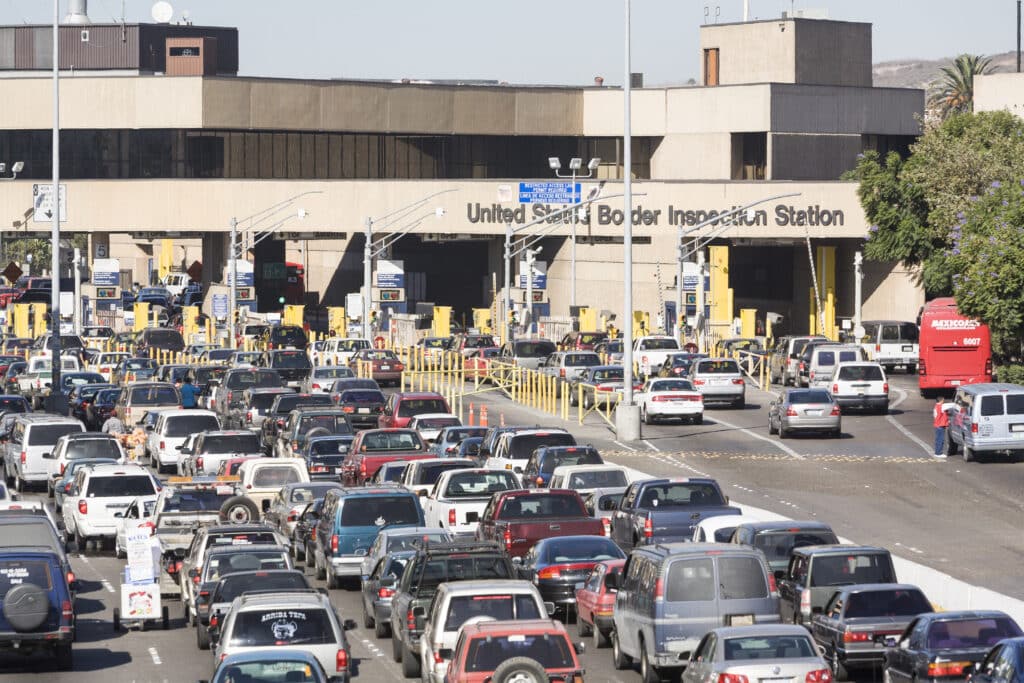
Who controls the border
Immigration enforcement sits at a crossroads of constitutional structure.
- Congress writes the rules of admission, removal, and asylum in statutes.
- The executive branch (DHS, CBP, ICE, and DOJ for immigration courts) enforces those statutes, decides enforcement priorities, and uses delegated discretion like parole.
- The judiciary reviews the legality of executive action, often with deference in immigration and sovereignty contexts, especially where Congress has clearly spoken.
The enduring constitutional point is not that the president can do anything at the border. It is that the federal government as a whole has primary authority over immigration, and day-to-day reality turns on how much discretion Congress has delegated, how aggressively the executive uses it, and what resources Congress funds.
Quick answers
Does “zero releases” mean nobody can seek asylum?
No. Asylum claims are part of federal law. The government can change processing and detention policies, but statutory asylum procedures still exist unless Congress changes them or courts reinterpret them.
Does “zero releases” mean everyone is detained until their case ends?
Not necessarily. It can mean many people are removed quickly, returned to another country, or otherwise not released into the U.S. interior. It can also mean the claim is limited to a specific group, sector, or counting method, not every encounter nationwide.
Is parole “amnesty”?
No. Parole is temporary permission under statutory authority. It can be granted with conditions and can be terminated. It does not erase unlawful entry or guarantee a permanent status.
Can states run their own border policy?
States can cooperate with federal enforcement and fund state law enforcement activity, but the power to set immigration rules and admit or remove noncitizens is primarily federal. State actions that function like independent immigration policy often end up in federal court.