

President Donald Trump has signaled he is comfortable with a rapidly expanding form of public surveillance: automated license plate readers, often called ALPRs. Asked about the cameras made popular by companies like Flock Safety, Trump told reporters, “I sort of like them because of that, because of law enforcement, but some people don’t. They think it’s an infringement. I like them.”
That split is the story. ALPR networks sit at the intersection of an old constitutional idea and a new technical reality. The old idea is that what you do in public is generally observable. The new reality is that “observable” now means automatically recorded, time stamped, stored, searched, and shared.
Join the Discussion
What ALPRs collect
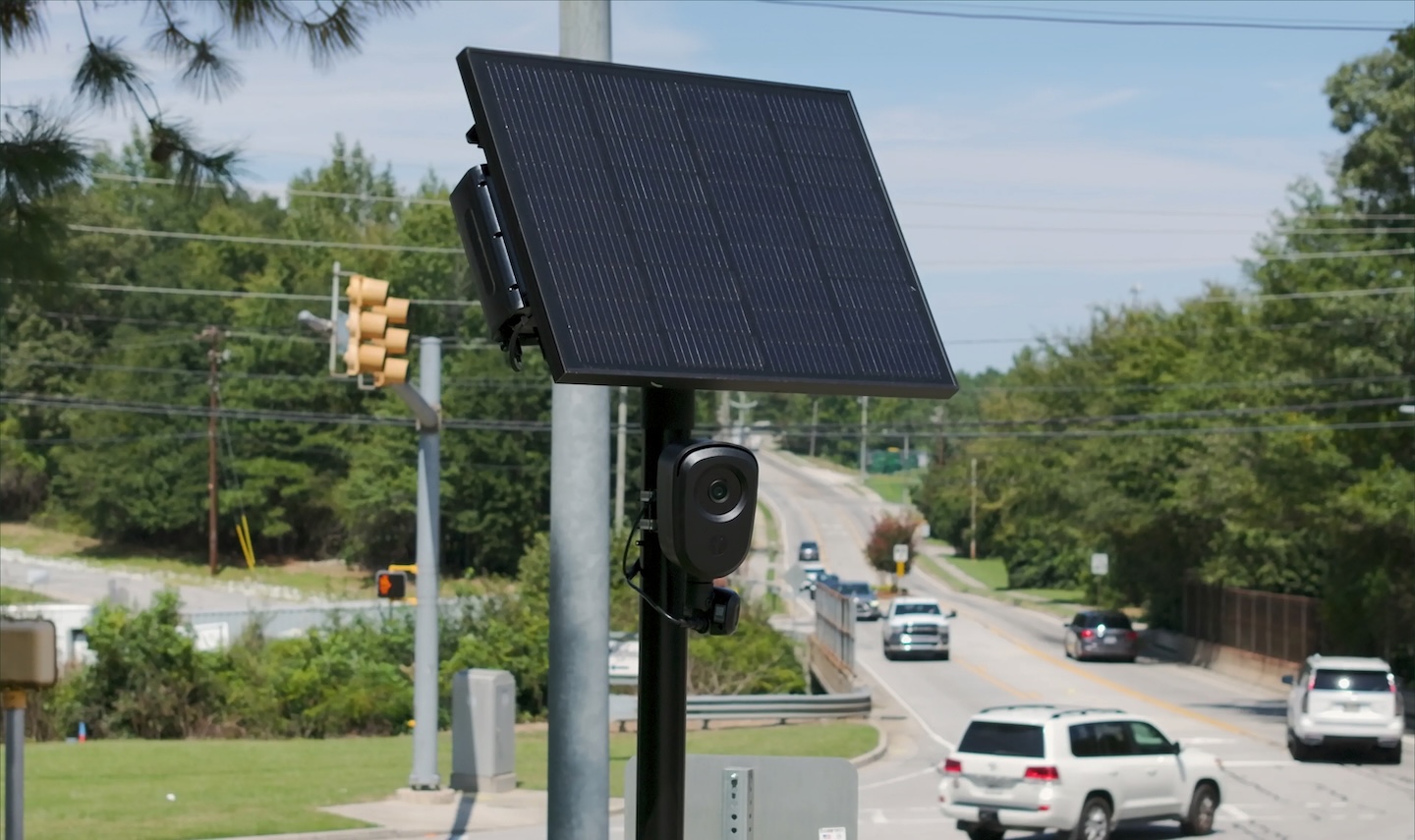
Companies like Flock Safety and Axon sell automated license plate reader systems to law enforcement. The systems scan license plates as vehicles pass, collecting vehicle information along with the time and location they were spotted. Police can then search that data during investigations.
Used narrowly, that is a modern version of the witness who remembers seeing a getaway car. Used broadly, it becomes something else: a distributed log of millions of ordinary movements, collected regardless of suspicion.
The privacy argument
Privacy advocates warn that the cameras collect location data on millions of people who are not suspected of crimes, often without a warrant, probable cause, or reasonable suspicion. That critique is not really about whether a license plate can be seen in public. It is about what happens when the government can cheaply assemble a searchable history of where vehicles have been.
The Fourth Amendment bars “unreasonable searches and seizures,” and courts have often treated single observations in public as fair game. The pressure point is scale and persistence. A person seeing your car once is not the same thing as a permanent database that can answer questions like: Who visited a therapist’s office every Tuesday? Who attended a political meeting downtown? Who was near a particular house overnight?
Retention and sharing

One reason local fights over ALPRs get so heated is that the most important rule is often not a statute. It is a retention setting.
If a department keeps plate hits for a short window, the system behaves more like an investigative tool for recent crimes. If it keeps data for months or years, the tool starts to resemble a location-history archive of the entire community.
Sharing rules matter just as much. “Law enforcement” is not one actor. It is thousands of agencies with thousands of access decisions, plus vendors that may host or maintain the system. Once data exists and is easily queryable, every additional partner connection can increase the risk of mission creep, sloppy access controls, or quiet expansion of who can look and why.
Law enforcement agencies around the country, including the Los Angeles Police Department, have ended or suspended their Flock contracts. The politics of ALPRs is not just left versus right. It is local, granular, and often driven by what residents learn after cameras appear.
Mistakes and misuse
The more powerful the search tool, the more tempting it is to use it for reasons that have nothing to do with public safety. There have been reports of the systems leading to mistakes and rampant misuse by law enforcement.
Those episodes are not just scandal. They are constitutional stress tests. The Bill of Rights was built for a simple premise: government power is most dangerous when it is discretionary, invisible, and difficult to challenge. Surveillance systems that collect on everyone, while being searched by a few, recreate that exact imbalance.
A divided public
Americans are not uniformly buying the sales pitch. In an August YouGov survey, 46% of respondents opposed law enforcement using the technology in their communities, while 38% supported it. That gap is not massive, but it is politically meaningful because ALPR adoption happens locally, city by city, contract by contract.
It is also happening with the midterm elections less than two months away, which helps explain why the technology is turning into a sharper, more divisive local issue.
And those local decisions are where constitutional culture is often made. The Constitution sets floors and boundaries, but daily liberty is shaped by municipal purchasing and administrative rules that most people never see until the cameras go up.
Guardrails that matter
If ALPRs are going to exist, the civic question is not whether technology should be allowed to help solve crimes. It is whether we want a searchable record of ordinary movement to be the default condition of public life.
Real guardrails look less like slogans and more like enforceable constraints:
- Short retention periods as the norm, with extensions only for specific, documented investigations.
- Warrant requirements or warrant-like standards for certain kinds of queries, especially those that reveal patterns over time.
- Strict auditing and penalties for misuse, including meaningful discipline when officers run personal searches.
- Transparency through public reporting on how often the system is searched, for what categories of crimes, and how frequently searches produce useful leads.
- Limits on sharing so not every agency inherits the ability to query a city’s movement archive.
Notice what is missing: the comforting claim that “if you did nothing wrong, you have nothing to fear.” The Fourth Amendment was not written for the innocent who feel safe. It was written for the citizen who understands that innocence can be misread, and that power is rarely used only in its advertised form.
The same instinct on AI

Trump’s comment about ALPR cameras fits a broader pattern in his second term: a preference for speed, capacity, and perceived advantage, paired with impatience toward warnings about long-term risk. The administration has signed numerous executive orders aimed at speeding up the construction of AI infrastructure and data centers in the name of national and economic security, even as proposed projects have faced local opposition over electricity costs, pollution, water use, and noise.
Over the same weekend he praised license plate surveillance, Trump also pushed back on calls from prominent AI figures to slow development. “Well, I’ll say this: we’re leading China in AI. We’re the most sophisticated country in the world, and frankly, I want to keep it that way because whoever wins AI wins,” he said when asked about slowing AI development or increasing regulation during a golf tournament in Ireland.
He added, “And we can put guardrails, we can do this and that, but I think you have a lot of negative forces that are bringing it up that shouldn’t be bringing it up, and they’re bringing up things that won’t happen.” Those comments came after Anthropic CEO Dario Amodei called for the industry to slow the pace at which it develops more capable frontier models, a proposal that was publicly backed by OpenAI CEO Sam Altman and xAI CEO Elon Musk.
A wave of warnings from researchers inside leading AI labs has argued that increasingly capable systems could pose serious risks if development continues faster than companies can understand or control them, including human extinction. Asked last Thursday whether he shared those concerns, Trump said, “No, I don’t have any.” He added that his concern was that if the United States does not win AI, it would be “put in a very bad position,” and said the country is leading China “by a pretty good period,” which he estimated at about a year.
The question underneath
In both debates, the argument is easy to state. Cameras help catch criminals. AI helps win geopolitical competitions. The constitutional difficulty is that tools built for best-case scenarios do not stay in best-case scenarios. They become ordinary infrastructure, and then they become hard to unwind.
So here is the question to ask your city council, your sheriff, and your state lawmakers before another pole goes up: Are we buying a camera, or are we building a database?
Because the database is the thing that lasts. And in a constitutional republic, durable systems of observation always end up raising the same ancient problem: who watches the watchers?