
When the Supreme Court narrows what lower courts can do, you might expect the next chapter to be fairly straightforward: district judges follow the new boundaries, and any remaining disputes move through the normal appeals process.
Immigration law rarely cooperates with that tidy picture.
On Friday, U.S. District Judge Brian Murphy of the District of Massachusetts issued an administrative stay that temporarily preserves Temporary Protected Status (TPS) protections for Ethiopian nationals. The order, issued in African Communities Together v. Mullin, keeps the status quo in place while the court considers whether the plaintiffs may pursue constitutional claims in light of a Supreme Court decision from June that significantly narrowed lower-court authority in TPS disputes.
Murphy is the second judge in Massachusetts to block the administration’s effort to end TPS for migrant groups, adding to a widening fight over how far lower courts can go after the Supreme Court’s ruling.
Join the Discussion
What the judge did
Judge Murphy’s order is what courts often call an administrative stay. In plain terms, it is a short-term pause meant to keep the situation from changing while the court sorts out threshold questions, like what claims are still legally available and what rules now apply.
That distinction matters because the Supreme Court’s June decision, Mullin v. Doe (6 to 3), significantly narrowed how far district courts can go when they try to block the Department of Homeland Security (DHS) from designating or terminating TPS. The decision limits lower-court intervention in TPS decisions, while still leaving room for certain constitutional claims to be litigated.
The constitutional lane
Even after Mullin v. Doe, one lane remains at least potentially open: lawsuits that raise constitutional claims rather than simply challenging the policy merits of ending TPS.
Judge Murphy’s Friday order preserves TPS protections for Ethiopian nationals while the court considers whether the plaintiffs can pursue that kind of constitutional theory under the Supreme Court’s revised framework. At this stage, the stay functions as a procedural hold, not a final ruling on the merits of the TPS termination itself.
This is one of those moments where constitutional law can feel abstract, but it has immediate real-world consequences. If the plaintiffs can properly plead a constitutional claim and the court finds it plausible enough to proceed, the government’s timeline can be slowed while those threshold issues are litigated.
How the case got here
The dispute has been building for months. In December 2025, then-DHS Secretary Kristi Noem determined that conditions in Ethiopia no longer warranted TPS and announced that the designation would be terminated.
TPS is a humanitarian tool. It allows people from certain countries already in the United States to remain and work temporarily when returning home is considered unsafe because of extraordinary conditions. But it is also, by design, a status that the executive branch can revisit.
That combination, humanitarian stakes plus executive discretion, is why TPS often produces hard litigation. People rely on the protections to build lives. Administrations, meanwhile, argue they must be able to adjust designations as conditions change.
DHS responds
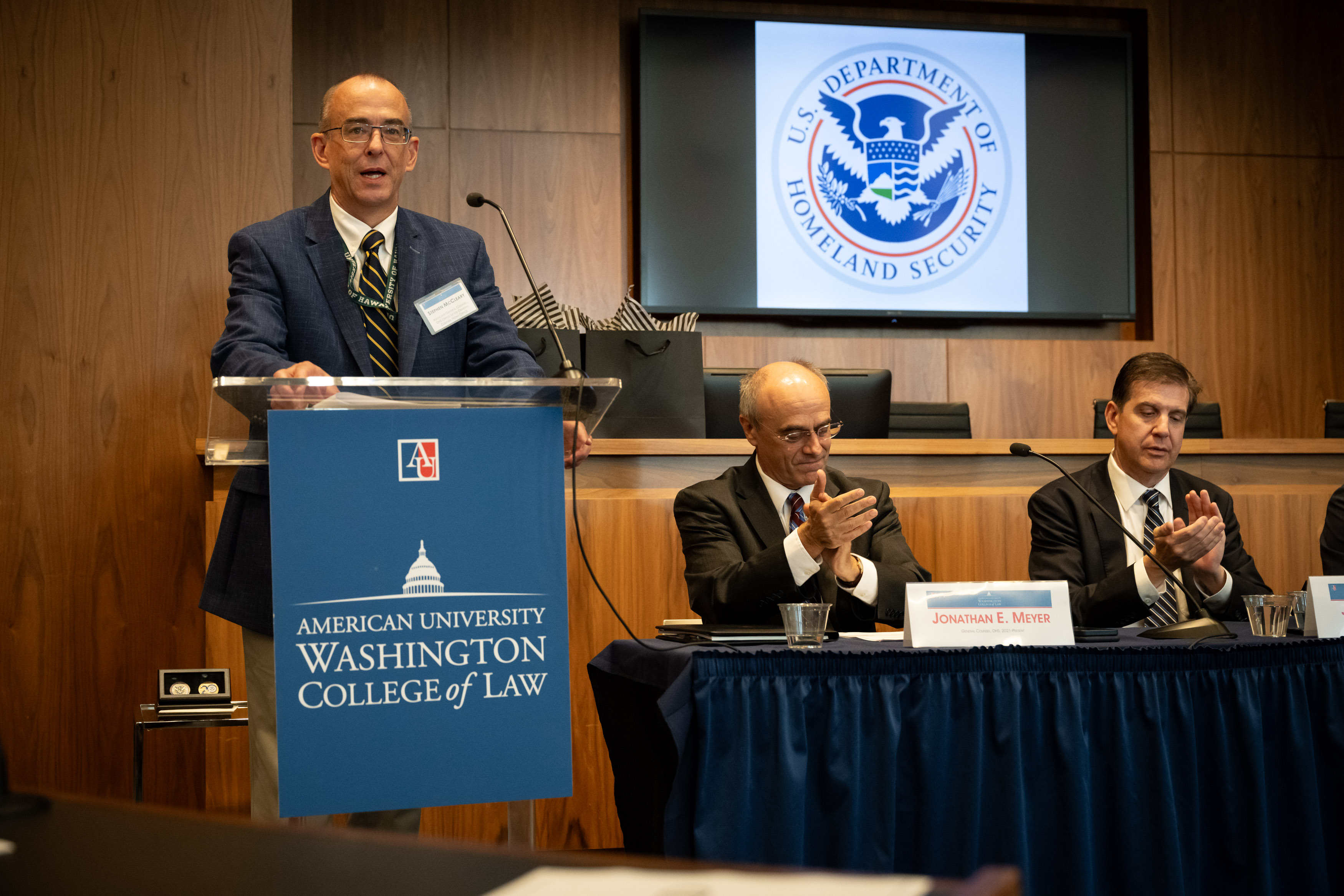
The order drew an immediate and pointed rebuke from DHS General Counsel James Percival, who accused Judge Murphy of "mutiny" against the Supreme Court and tied the TPS fight to an earlier clash involving immigration enforcement.
“Remember when that district judge rerouted a plane with child rapists headed for South Sudan? The judge made ICE land in Djibouti to face Malaria and terrorist rocket attacks from Yemen,” Percival wrote on X. “Fun fact: it was the very same Judge Brian Murphy who entered a lawless TPS order today!”
It is not common for an agency’s top lawyer to accuse a federal judge of something as stark as “mutiny.” Percival’s response underscores the administration’s view that the Supreme Court has already tightened the rules, and that lower courts should not use interim orders to extend or replicate broader TPS blocks under a different name.
The Djibouti dispute
Percival’s post revived an earlier controversy involving Judge Murphy and an immigration enforcement operation. DHS has blamed Murphy for complications tied to a May 2025 order halting a deportation flight to South Sudan.
In DHS’s telling, the result was that ICE personnel were left at a U.S. military base in Djibouti, where officials said officers faced malaria exposure and the threat of rocket attacks from terrorist groups in neighboring Yemen.
That earlier episode is now part of the political and legal backdrop for the TPS fight, because it feeds a broader argument the administration is making: that emergency court intervention in immigration enforcement can create operational and safety consequences that are difficult to unwind.
Why it matters
If you are reading this as a constitutional question, here is the heart of it: Who gets the final word on the scope of judicial power when a lower court believes constitutional rights are at stake?
The Supreme Court can tighten the rules, but litigants can still try to fit their cases into the lanes that remain open. And district courts, which are designed to be first responders in the federal judiciary, will sometimes issue short-term orders to prevent what they view as irreversible harm while they decide whether a case can go forward at all.
That is why these fights keep returning to the same pressure point. The executive branch wants room to administer immigration law without broad judicial blocks. Plaintiffs want a court forum when they believe the government’s actions cross constitutional lines. And the Supreme Court is trying to keep both principles in view while limiting what it sees as overbroad lower-court intervention.
What to watch
- Whether the plaintiffs can plead a viable constitutional claim under the Supreme Court’s June ruling.
- Whether DHS seeks emergency relief from a higher court to narrow or dissolve the administrative stay.
- How the First Circuit responds if the dispute moves quickly onto an appellate track.
- Whether the Supreme Court revisits the issue if lower courts interpret Mullin v. Doe differently in future TPS cases.
For readers who want the civics takeaway: this is what separation of powers looks like in real time. It is not always elegant. But it is the system working through a genuine disagreement about the boundaries of lawful authority, one emergency motion at a time.