
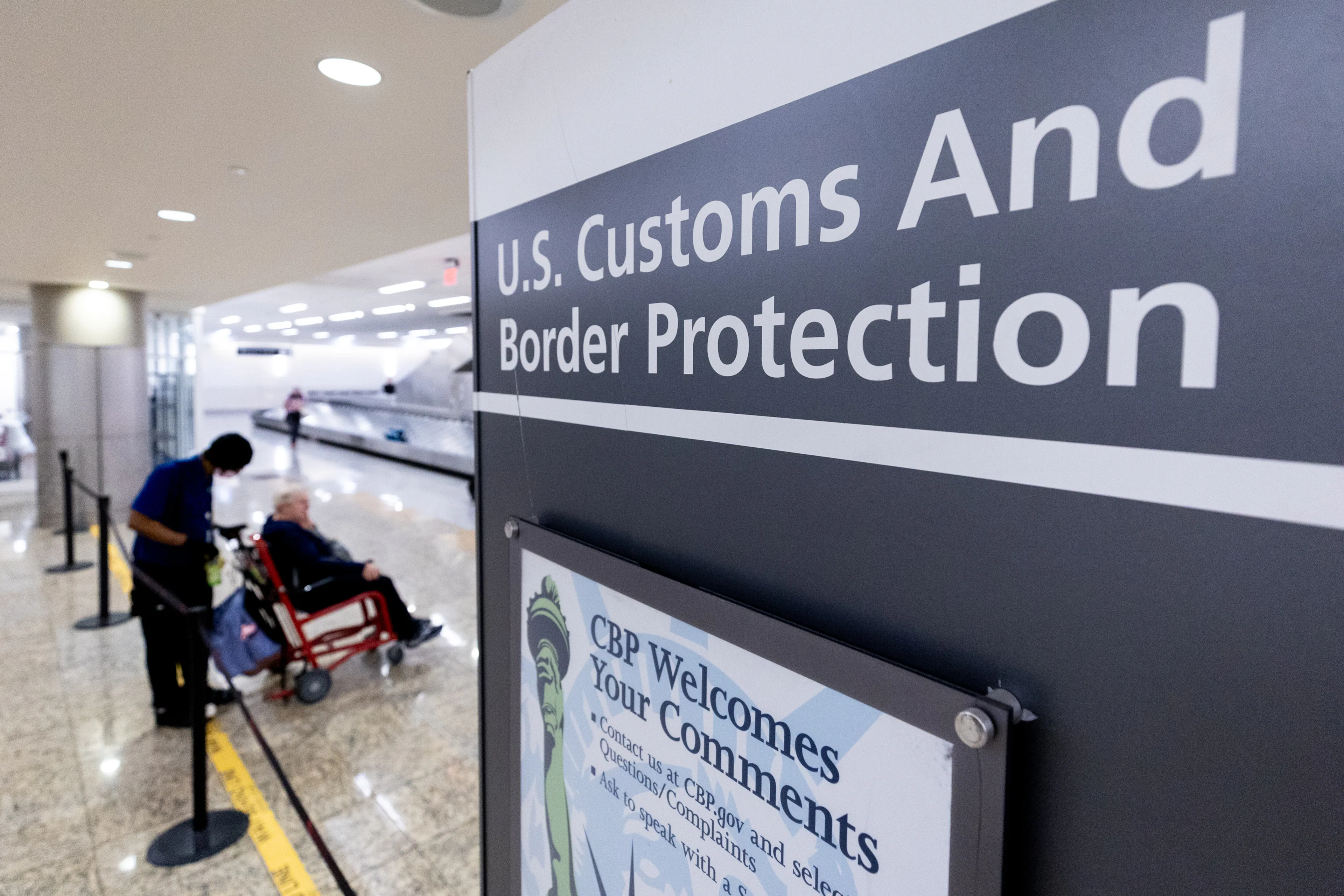
It is hard to overstate how strange the modern border has become.
In the founding era, the government searched trunks. Today, it searches lives. Your phone is not a suitcase. It is a diary, a filing cabinet, a photo album, a newsroom, a bank branch, a doctor’s waiting room, and a map of your relationships. And at a port of entry, that entire universe can be treated like something an officer may ask to inspect on the spot.
That legal tension is no longer abstract. Federal prosecutors are pursuing charges against an American citizen, Sam Tunick, after agents say his phone wiped itself during an airport border search. The allegation is that he provided a “duress password” that triggered a wipe feature, rather than the passcode that would unlock the device. The incident is tied to a detention at Atlanta’s Hartsfield-Jackson airport on January 24, 2025.
The case matters for one reason beyond its facts: it is a stress test for what the government thinks it can demand from your devices, and what it can punish you for not providing.
Join the Discussion
A privacy feature, a charge
The government’s theory is blunt. If agents are trying to seize a device and someone intentionally makes that device unusable, prosecutors can try to treat it like destroying or damaging property to prevent seizure. In Tunick’s case, prosecutors allege the wipe was triggered using a feature in the privacy-focused GrapheneOS by providing a duress password instead of the real passcode.
Tunick’s lawyers have argued that the detention and seizure were unlawful and have asked a court to suppress evidence. In a motion, they argue the agents’ questioning about child exploitation images was “a pretext for a fishing expedition into Mr Tunick’s connections” to Atlanta’s Stop Cop City movement.
They also allege agents refused Tunick access to a lawyer, did not provide a warrant, and did not inform him of his legal rights.
The government has countered that agents were not required to produce a warrant because, at that point, Tunick had not yet been granted permission to enter the United States.
That last position is where people get confused fast. How can a citizen be “not yet granted permission” to enter his own country? The dispute matters because it shows how border power is often argued as its own category, with its own rules and its own logic. And it underscores that this is a contested framing in the case, not a settled civic intuition.
The border exception
The Fourth Amendment is supposed to be the place where searches go to get permission slips. Probable cause. Warrants. Particularity. A neutral judge. The whole architecture is built to prevent the government from rummaging first and justifying later.
At the border, the government often argues for broader authority. In U.S. law, a “border search” doctrine has been recognized that can allow many routine searches at ports of entry without a warrant and without probable cause, grounded in the sovereign’s interest in regulating what and who enters.
But it is also true that a phone is not just another container. It can hold years of communications, political organizing, intimate photographs, work product, and medical details. That is why device searches have produced sustained legal fights, and why the rules people assume apply inland can feel different at the line.
What officers may ask
For travelers, the dynamic is not a tidy checklist. It is leverage. At ports of entry, authorities can detain people, ask questions, and scrutinize what they bring. In practice, that can include requests to look through devices, requests to unlock devices, and questions about what a device contains or connects to, including social media accounts.
Under the Trump administration, entering the United States has become a more fraught process, even for citizens who can face hours-long detention and scrutiny of social media accounts.
None of that settles what is constitutional in every scenario, or what a court will ultimately approve in a specific case. It does explain why the experience can feel like a demand rather than a request.
Can they make you unlock?
This is the question people ask as if there is a single clean answer. There is not.
Passwords collide with multiple constitutional ideas at once, including the Fourth Amendment’s limits on unreasonable searches and the Fifth Amendment’s protection against compelled self-incrimination. How those protections apply to unlocking a device can depend on facts, jurisdiction, and how a request is framed.
More broadly, courts and litigants have wrestled with whether compelling a person to reveal a memorized passcode is meaningfully different from compelling a person to use a fingerprint or face unlock. You will see the issue described as the difference between forcing someone to disclose knowledge versus forcing someone to provide a physical act. Those distinctions can matter, but they are not uniformly resolved across all contexts.
And even when the law is unsettled, the pressure at the border can be very settled: comply, or be delayed and separated from your device.
What if you refuse?
If you are a noncitizen, refusal can end your trip. Admissibility is discretionary for many categories of travelers, and refusal to cooperate can be treated as a reason to deny entry.
If you are a U.S. citizen, you cannot be refused entry. But you can be delayed, questioned, separated from your device, and subjected to additional scrutiny. This is part of what makes border power feel so expansive in real life, even when constitutional limits still exist on paper.
And the Tunick prosecution adds a sharper edge to the usual stakes. If prosecutors characterize a privacy-protective step as intentional damage or destruction to prevent seizure, they may try to make the protective step itself the crime.
The problem with pretext
Tunick’s lawyers say the child exploitation questioning was pretextual and that the real aim was to explore political associations tied to Stop Cop City. If that framing holds, it points to a broader constitutional anxiety that extends beyond the Fourth Amendment.
The First Amendment protects speech and association. But device searches offer a way to inspect speech indirectly by searching the places speech now lives: messages, group chats, contact lists, calendars, donation records, and photos.
That is the modern loophole. The government does not have to ask, “What do you believe?” It can ask for your phone, then try to infer what you believe from everyone you know and everything you read.
The argument underneath
Marlon Kautz, a member of the Atlanta Solidarity Fund, put the principle plainly: “we all have a right to secure our private data against unconstitutional searches. And we should — especially in a time of rising authoritarianism.”
The Tunick case forces the next question: if a traveler uses a security feature to keep data private, is that protected self-help, or punishable obstruction? That is not only a tech question. It is a constitutional one, because it goes to whether the government can convert a right to resist unreasonable searches into a duty to make searches easy.
Before you travel
This is not legal advice. It is civic hygiene.
- Assume your device could be searched. Not because it should be, but because it can be requested and pressured for at the border.
- Minimize what you carry. If sensitive data is not on the device in your hand, it cannot be exposed by a quick inspection.
- Separate essential travel access from personal archives. A seizure is more disabling when your phone is your identity, your authenticator, and your entire history at once.
- Know the stakes of an unlock request. Unlocking is not just convenience. It can open communications, associations, and private records that have nothing to do with customs.
If you are thinking, “This feels like the Constitution was designed for paper, not phones,” you are right. But constitutional law has always been a translation project. The question is whether we translate the Fourth and Fifth Amendments into the digital age as genuine limits, or as antique phrases that cannot survive contact with a screen.
The border’s question
The border is where the government’s authority can look most like raw power: comply, or pay in time and fear.
Sam Tunick’s case is one story. The larger story is what it suggests about the direction of travel: whether the modern border will become a place where the government can demand the contents of your life, and punish you for trying to keep it private.