
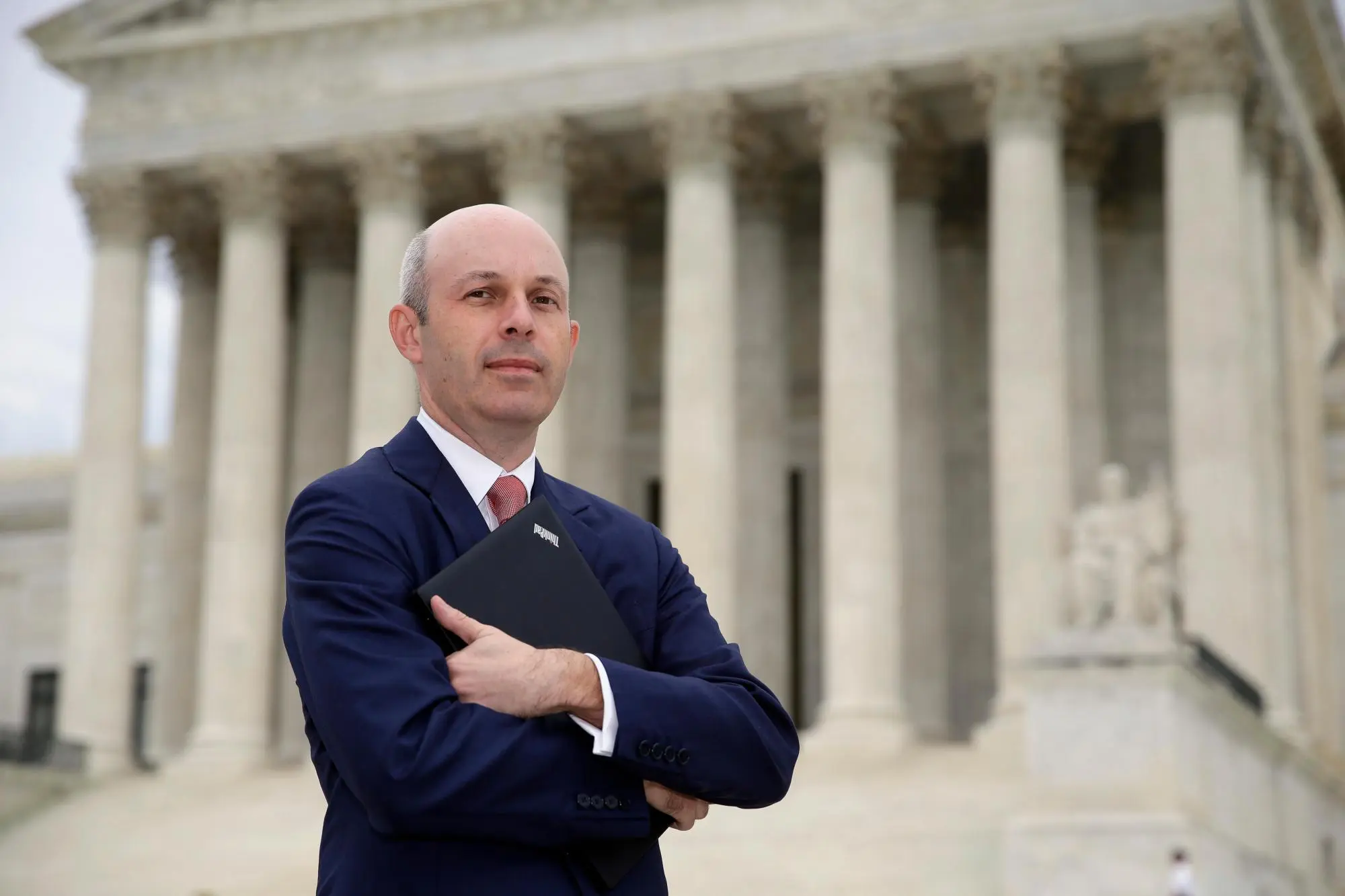
When an everyday person is convicted of tax evasion, it is usually framed as a private failure with public consequences. When the person is a Supreme Court litigator, it becomes something else too: a stress test for the legal system’s basic promise that the rules are real, and they apply to everyone, including the people paid to interpret them.
That is why the recent sentencing of Thomas Goldstein has landed with such force in legal circles. Goldstein, a prominent appellate lawyer who argued more than 40 cases before the Supreme Court and co-founded the widely read SCOTUSblog, was sentenced to six years in federal prison after a jury convicted him on multiple financial crimes tied to unpaid federal taxes and related conduct. The case drew attention not only because of the defendant’s résumé, but because it exposed a parallel, secretive life as a high-stakes poker player.
Join the Discussion
What the sentence says
Goldstein, 56 and from Chevy Chase, Maryland, was sentenced by U.S. District Judge Lydia Kay Griggsby. After his prison term, he is to serve five years of supervised release. The court also ordered him to pay more than $3.1 million in restitution, as announced by a spokesperson for the U.S. Attorney’s Office in Maryland.
The underlying convictions came after a six-week trial in Greenbelt, Maryland that concluded in February. A jury found Goldstein guilty on 12 of 16 counts, including eight felonies. The convictions included:
- One count of tax evasion
- Four counts of aiding and assisting in the preparation of false tax returns
- Four counts of willfully failing to pay taxes
- Three counts of mortgage fraud
Goldstein had asked Judge Griggsby to spare him from a prison sentence. The judge declined.
One detail that made the trial unusually public was the witness list. Actor Tobey Maguire, identified in court as an avid poker player, testified about enlisting Goldstein’s help in trying to recover a gambling debt from a billionaire.
The fuller picture
Goldstein’s professional arc helps explain why this case rattled so many people. He argued over 40 cases before the Supreme Court before retiring in 2023 at age 52. He also served on Al Gore’s legal team in the Supreme Court litigation over the disputed 2000 election.
Many friends and colleagues did not know the extent of Goldstein’s gambling until his January 2025 indictment, which sent shock waves through the legal community in Washington, D.C.
Why it matters
At first glance, tax crimes can feel far from constitutional law. They are not. The Constitution does not just set up rights. It sets up institutions. And institutions run on trust.
Courts cannot function the way we imagine them functioning if judges must treat every filing as potentially fraudulent, every factual statement as a bluff, and every representation about money as a shell game. The system already has tools for skepticism, cross-examination, discovery, sanctions. But even with those guardrails, courts rely heavily on the honesty of attorneys, especially in complex matters where a judge cannot personally verify every factual assertion.
When a lawyer with elite standing breaks the law, the harm is not limited to the dollars involved. It spreads outward, encouraging cynicism and giving oxygen to the belief that the legal system is a club, not a covenant.
Attorney ethics basics
Lawyers are not simply “allowed” to practice law because they passed a test. They are licensed by the state on the condition that they meet ongoing ethical duties. Those duties vary by jurisdiction, but the themes are consistent across the country.
1) Honesty is not optional
Professional rules generally treat dishonesty and fraud as disqualifying traits, even when the conduct happens outside a courtroom. That is because a lawyer’s job routinely involves handling other people’s money, drafting binding documents, and making representations that courts and clients must be able to rely on.
2) Financial misconduct is especially corrosive
Financial crimes are not “paperwork problems” in an ethics context. They strike at the heart of fiduciary responsibility. Many lawyers handle client funds, settlement proceeds, escrow accounts, or law firm trust accounts. A demonstrated willingness to evade taxes or falsify documents raises obvious questions about how safely a lawyer can be trusted with other people’s financial lives.
3) Reputation is part of the license
That may sound old-fashioned, but it is practical. The justice system is built around credibility. Lawyers build credibility slowly over years, then can lose it quickly, both individually and as a profession.
Gambling and secrecy
The facts aired at trial portrayed a private world of high-dollar poker and financial maneuvering that many colleagues reportedly did not know existed until the January 2025 indictment. Even without diagnosing anyone from a distance, it is worth naming a pattern courts and regulators see repeatedly: when risky behavior is kept secret, the secrecy itself becomes a driver of escalating misconduct.
In a professional culture that prizes composure and control, hidden compulsions can create a dangerous blend of denial and overconfidence. That does not excuse crimes. But it helps explain why “brilliant” and “successful” are not the same as “immune.”

Why courts respond firmly
Some readers will ask a fair question: if a lawyer commits a crime unrelated to a client matter, why should professional discipline follow?
The answer is that the legal profession is not only about subject-matter expertise. It is about trustworthiness. Courts routinely grant lawyers special access and special powers, including:
- Access to confidential information through discovery
- Authority to bind clients through filings and settlements
- Influence over juries and judges through argument
- Control over sensitive funds in certain contexts
If a lawyer shows a willingness to falsify tax filings, evade debts to the federal government, or commit mortgage fraud, the legal system has to treat that as relevant to whether the lawyer can be trusted with these privileges.
This is not about moral perfection. It is about risk, reliability, and the integrity of proceedings where liberty and property are on the line for other people.
What happens next
A prison sentence is the criminal-law consequence. Attorney discipline is separate. State bar authorities typically review felony convictions and can impose outcomes that range from suspension to disbarment. Even where the rules allow a later petition for reinstatement, the road back is long, public, and demanding.
For the public, the key point is this: court systems treat lawyer misconduct as a governance issue. It is not handled quietly simply because the person was once influential.
What to expect from your lawyer
I spend a lot of time helping people translate “legal professionalism” into something you can actually use. If you are hiring a lawyer, stories like this can make the whole profession feel unsteady. Here are practical expectations you are entitled to hold:
- Transparency about fees and a clear written agreement
- Accurate billing and straightforward explanations of what work was done
- Separate handling of client funds when money is being held in trust
- No pressure to lie, omit facts, or “clean up” documents improperly
If something feels evasive, it is reasonable to ask follow-up questions, request documentation, or consult another attorney. That is not disloyal. It is civic common sense.
The deeper lesson
We sometimes talk about the rule of law as if it is a machine that runs on its own. It is not. It is maintained by the daily choices of judges, jurors, clerks, investigators, and yes, lawyers.
When an elite advocate is sentenced for tax evasion and related fraud, it is a reminder that the justice system’s credibility does not come from lofty language alone. It comes from enforcement, accountability, and a professional culture that treats honesty as the baseline requirement, not a public-relations strategy.
If the courts are to deserve the trust they demand, the legal profession has to be willing to say, calmly and clearly: the license to practice law is a privilege, and it is conditional.
Quick FAQ
Was this a civil tax dispute or a criminal case?
This was a criminal case resulting in convictions that included tax evasion and other felonies, followed by a prison sentence and restitution order.
Why does a lawyer’s personal conduct matter to the courts?
Because lawyers are officers of the court. Courts depend on lawyers’ truthful representations, especially in complex matters where the judge cannot independently verify every factual assertion.
Does prison automatically end a legal career?
Not automatically in every state, but felony convictions commonly trigger bar discipline proceedings that can lead to suspension or disbarment.