
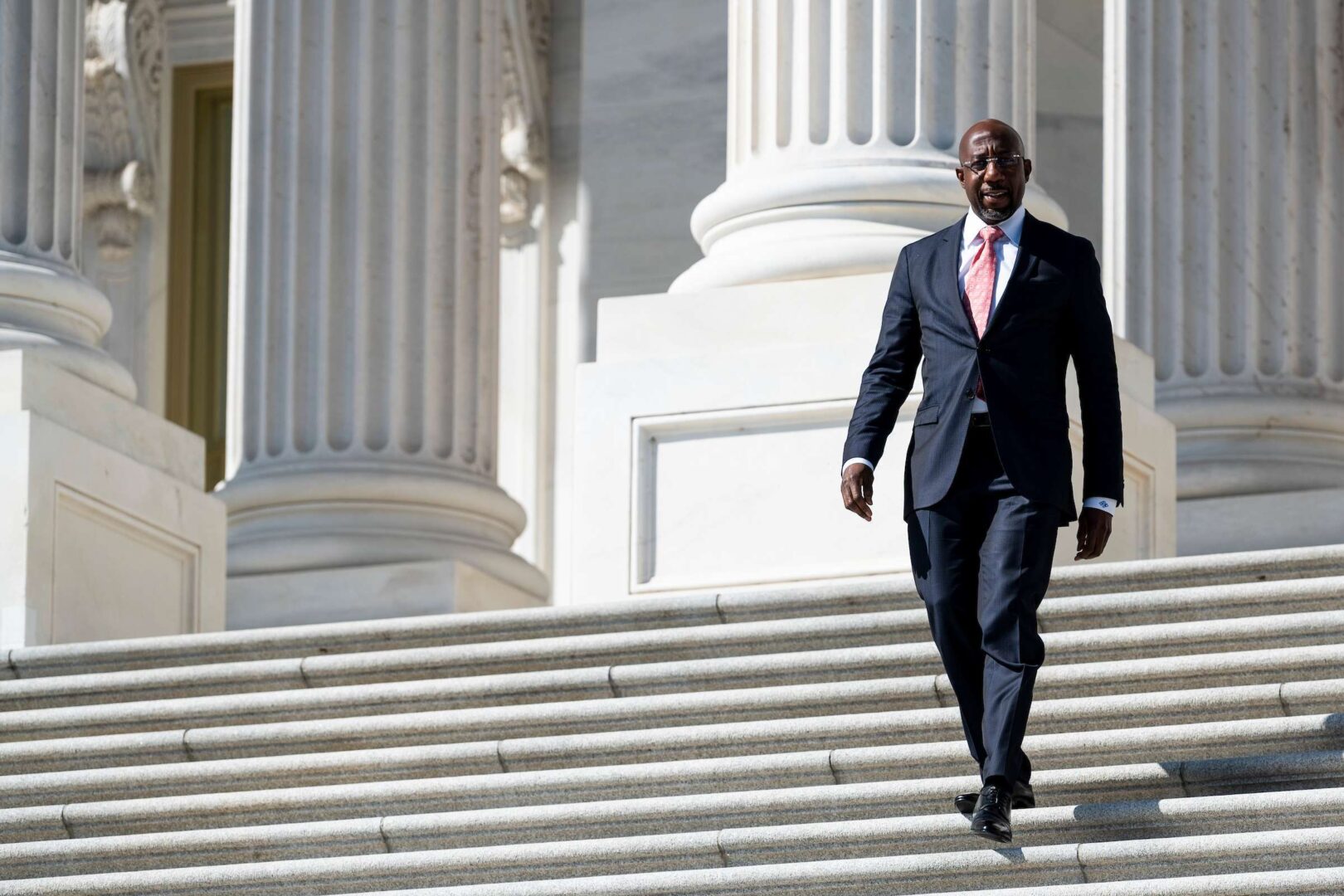
Sen. Raphael Warnock has sketched a three-step playbook for what Democrats should do if they claw back congressional power: investigate Southern redistricting, add new states, and push a constitutional amendment that guarantees the right to vote. It is an ambitious sequence, and it is also a useful civics test. Not because the ideas are novel, but because each one runs into a different constitutional bottleneck.
The Constitution is full of levers. It is also full of locks. If you want to understand whether Warnock’s plan is a serious governing program or a rallying argument, you have to look at the choke points where big promises go to either become law or stall out.
Join the Discussion
Step 1: Investigate redistricting
Warnock’s first move is procedural, not legislative. He has argued that the moment Democrats control even one chamber of Congress, we must launch investigations into the redistricting process
in states across the South. He wants state officials involved in map-drawing compelled to testify, with Congress examining whether federal law was violated.
What Congress can do
- Oversight power is implied, not spelled out. The Constitution never says, “Congress may investigate.” But investigations have long been treated as part of Congress’s ability to legislate and oversee federal programs.
- Committees can subpoena, but subpoenas have boundaries. As a general legal matter, subpoenas are expected to serve a valid legislative purpose, and fights over scope can end up in court.
- One chamber is enough to start. Warnock’s “even one chamber” line is basically correct. The House can investigate without the Senate, and vice versa.
The practical choke points
Investigations are where political will meets process: committee control, subpoena enforcement, and courtroom time. If a witness refuses to comply, Congress can pursue contempt remedies, but those paths can be slow. Delay is not a constitutional clause, but it is a real form of friction in separation-of-powers fights.
Why redistricting is the pressure point
Warnock has tied his argument to what he sees as a judicial narrowing of the Voting Rights Act’s bite in modern redistricting disputes. He has emphasized that intentional racial discrimination remains illegal and that Congress should investigate whether the mapmaking process amounted to an effort to “silence black voices.” In his words: We must drag the state politicians who rushed to silence black voices in front of Congress. And we must determine if they broke any laws in their rush to rig the maps.
He also pointed to the Supreme Court’s April ruling in Louisiana v. Callais, which struck down Louisiana’s second majority-black congressional district and weakened the application of the Voting Rights Act to redistricting cases.
That last clause in Warnock’s demand is the key. Congress cannot re-litigate a state map just by being angry about it. But Congress can build a record, spotlight intent, and then use that record to justify new legislation under its enforcement powers.
Step 2: DC and Puerto Rico statehood
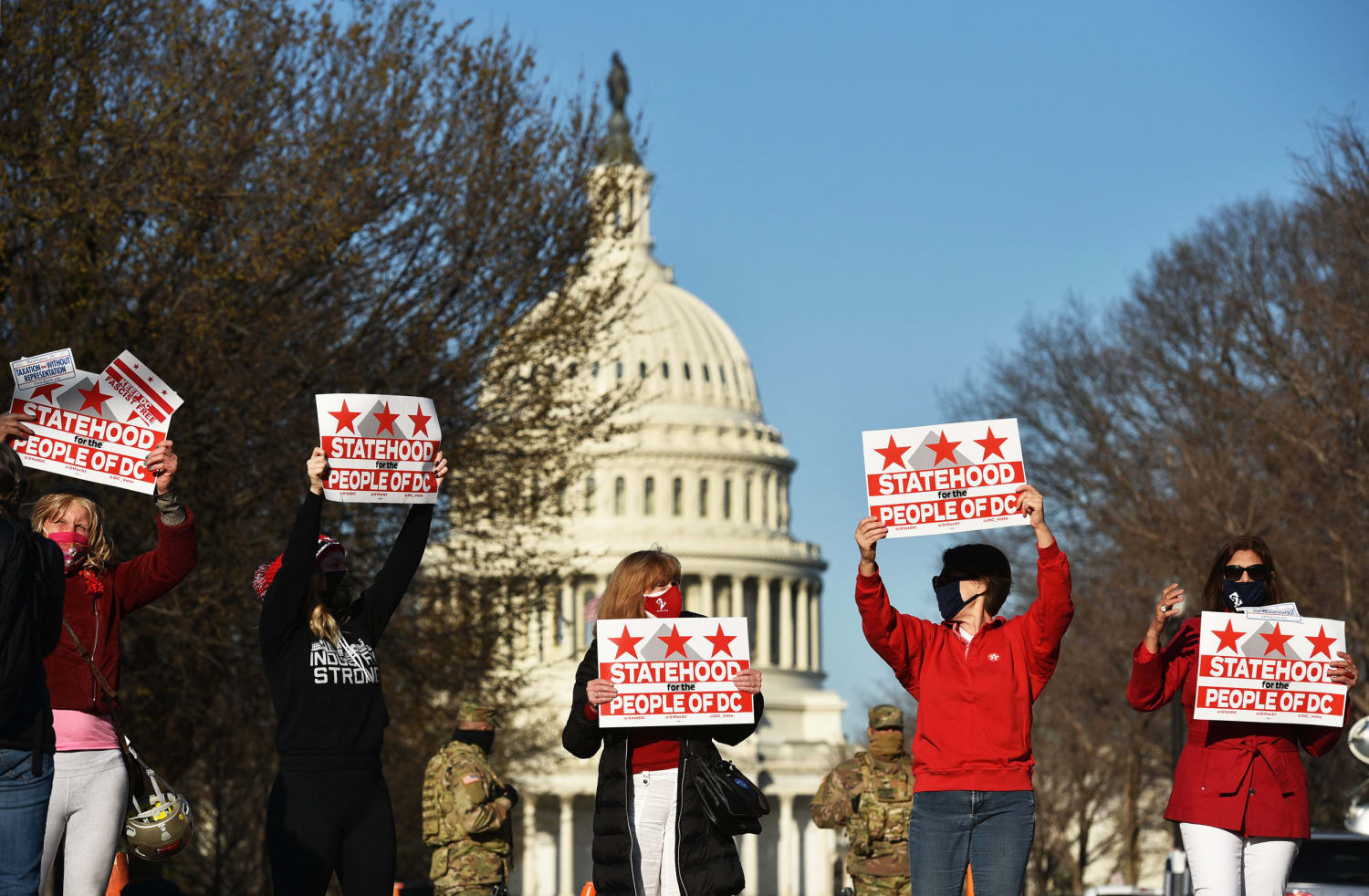
Warnock’s second step is structural: add states. He has called for statehood for Washington, DC, and Puerto Rico, arguing it would add four seats to the U.S. Senate.
The admissions power is real, but DC is unusual
The Constitution explicitly gives Congress authority to admit new states. That makes statehood, in theory, something Congress can do by statute. But DC is not a normal territory. The Constitution also created a federal district as the seat of government, and it capped that district’s size. Any DC-statehood proposal has to solve a design problem: how do you preserve a federal seat of government while also giving residents state-level representation?
Most serious proposals do this by shrinking the federal district to a core area containing the principal federal buildings, while the residential areas become a new state. That may or may not satisfy the constitutional requirement depending on how courts read the district clause and any lingering issues raised by the Twenty-Third Amendment, which gives DC presidential electors.
Puerto Rico is simpler constitutionally, harder politically

Puerto Rico is not mentioned as a special constitutional category the way the federal district is. Congress can admit it like any other state, assuming it meets whatever statutory conditions Congress imposes. The choke point here is not constitutional structure so much as political reality in the Senate.
A procedural lock that often matters
Even when the Constitution allows a majority to pass ordinary legislation, modern Senate rules often demand 60 votes to end debate. That is not in the Constitution, but it can function like a gatekeeper. In practice, step 2 can depend on whether a majority can overcome, change, or work around those rules.
Step 3: A right-to-vote amendment

Warnock’s third step is the most sweeping and also the most constitutionally direct: he wants to put the right to vote into the Constitution’s text. He has proposed a constitutional amendment that explicitly guarantees voting rights.
The Constitution protects voting in pieces
What we currently have is a patchwork: amendments that bar specific forms of discrimination in voting, plus litigation doctrines that treat some restrictions as constitutionally suspect. That is powerful, but it is not the same as a straightforward guarantee.
Warnock’s instinct here tracks a recurring theme in American constitutional life: rights that are spelled out tend to be harder to erode, because changing them requires running the Article V gauntlet.
Article V is the bottleneck by design
A voting-right amendment would have to clear the world’s most unforgiving legislative obstacle course: two-thirds of both chambers of Congress and ratification by three-fourths of the states. That is not a partisan “process problem.” It is the Constitution’s deliberate design to make structural change rare and consensus-driven.
So step 3 is a long game by definition. You can introduce it immediately. You can organize around it immediately. But you cannot bypass the math.
How the steps fit together
Warnock’s steps look like three separate agenda items, but they share a single constitutional logic.
- Investigations are about developing factual predicates and political legitimacy.
- Statehood is about representation and Senate arithmetic.
- An amendment is about locking voting rights into constitutional text so courts cannot narrow them by interpretation alone.
The Supreme Court is the unspoken fourth actor in this story. Warnock has accused the Court of weakening the Voting Rights Act’s protections in the redistricting context, which is why he talks about intentional discrimination and shadowy intent. In his words: Those who rushed to do Donald Trump’s bidding operated in the shadows. We must analyze their statements and actions.
Whether one agrees with the charge or not, the constitutional point is clear: in a system where courts can narrow statutes, Congress often responds by trying to write clearer statutes, build stronger records, or change the Constitution itself.
What has to happen for it to work
If you strip away the rally cadence, you get a checklist of choke points:
- Control of at least one chamber to open investigations and issue subpoenas.
- Committee majorities willing to spend political capital and time on redistricting oversight.
- Subpoena enforcement capacity that can survive refusal, litigation, and delay.
- Senate math for statehood, including whether Senate rules allow a simple majority to get to final passage.
- Article V supermajorities for a right-to-vote amendment, plus a national coalition broad enough to persuade state legislatures across ideological lines.
Warnock’s own urgency is explicit: When the moment comes, and we have the levers of power again, we must be ready to act immediately.
The Constitution’s lesson is that “immediately” often means starting the process, then surviving the friction.
The question beneath the checklist
There is a reason Warnock’s third step is an amendment, not just “pass a voting bill.” Statutes can be interpreted narrowly. They can be repealed. They can be starved through enforcement choices. An amendment is different. It changes what future majorities are allowed to do.
The question for voters is not just whether you want expanded voting protections or new states. It is whether you want those goals embedded as constitutional commitments, or left as ordinary legislation that will ping-pong with political control.
Warnock is asking Democrats to treat voting rules as a constitutional battlefield, not a policy skirmish. The Constitution, as always, will answer the same way it does to every movement: show me the votes.