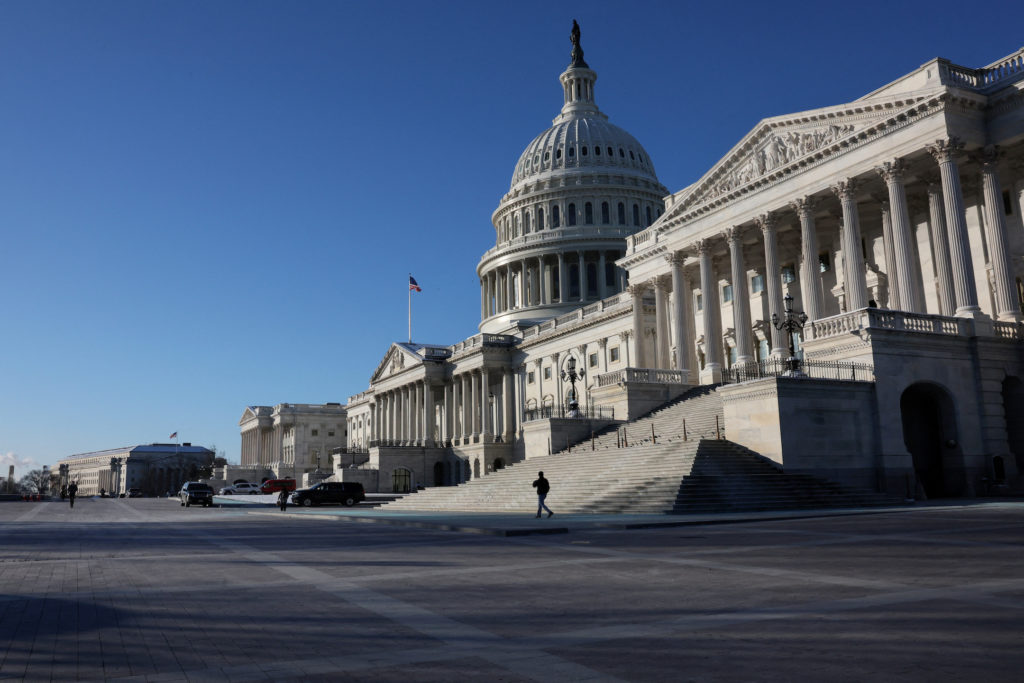
Americans love to say the Constitution is hard to change. That is true in practice, but the document itself gives us two amendment mechanisms. One is familiar: Congress proposes amendments, then the states ratify. The other sits in a kind of constitutional suspense: if enough states apply, Congress is directed to call a convention for proposing amendments.
That second path is usually described with a shorthand that makes it sound like a reboot button: a “Convention of States.” Could it happen? Yes. Would it look like the 1787 Philadelphia Convention? Not necessarily. Would anyone be able to tell you in advance exactly how it would run, what it could propose, and how it would be constrained? That is where things get uncertain fast.

Join the Discussion
What Article V Says
Article V is short, but it does a lot of work. It lays out how amendments can be proposed and how they can be ratified.
Two ways to propose
- Congress proposes an amendment with a two-thirds vote in both the House and the Senate.
- A convention proposes amendments after “the Legislatures of two thirds of the several States” apply. At that point, Congress “shall call a Convention for proposing Amendments.” In other words, states trigger the duty, and Congress issues the call.
Two ways to ratify
No matter how an amendment is proposed, it does not become part of the Constitution unless it is ratified by the states, in one of two ways that Congress chooses:
- Ratification by state legislatures in three-fourths of the states.
- Ratification by state conventions in three-fourths of the states.
That last distinction matters. The much-debated “Convention of States” is a proposal convention. It is not the same thing as state ratifying conventions, which are a separate tool used only when Congress selects that ratification method. The Twenty-First Amendment ending Prohibition is the only amendment ratified by state conventions.
Also worth clearing up: an Article V convention is not an “interstate convention” of governors or state officials, and it is not a party convention. It is a specific constitutional mechanism for proposing amendments.
The Main Route
Every ratified amendment in the Constitution’s history has been proposed by Congress. That is not because the states lack power. It is because Congress is a standing institution with set procedures, recognized leadership, and a built-in way to write text and move it through committees and votes.
Under this route, the process is structured and politically legible:
- Members introduce amendment language.
- Congress debates and votes.
- Once proposed, the states ratify under rules Congress specifies.
If you have ever followed an amendment campaign in the news, this is the route you were watching, even if the headlines made it sound like “the states” were doing the amending.
One practical detail that matters for timeliness: Congress often sets a ratification deadline in the proposing resolution (commonly seven years), although Article V itself does not require a deadline.
The Convention Route
The convention route is the Constitution’s way of letting the states apply sustained pressure when Congress has little incentive to propose the reforms the public wants.
Here is the mechanism in plain terms:
- Step 1: State legislatures pass applications calling for an Article V convention (usually by joint resolution).
- Step 2: Applications are transmitted to Congress. If applications reach the two-thirds threshold, Article V says Congress “shall call” a convention.
- Step 3: The convention proposes amendments.
- Step 4: Any proposed amendment still must be ratified by three-fourths of the states.
With 50 states today, two-thirds means 34 states. Ratification would require 38 states.
One nuance to keep straight: the constitutional text uses mandatory language (“shall call”), but the implementation details are not spelled out. If a real threshold dispute arose, the hard question might become less “Is Congress obligated?” and more “Who decides which applications count, and what does a valid call look like?”
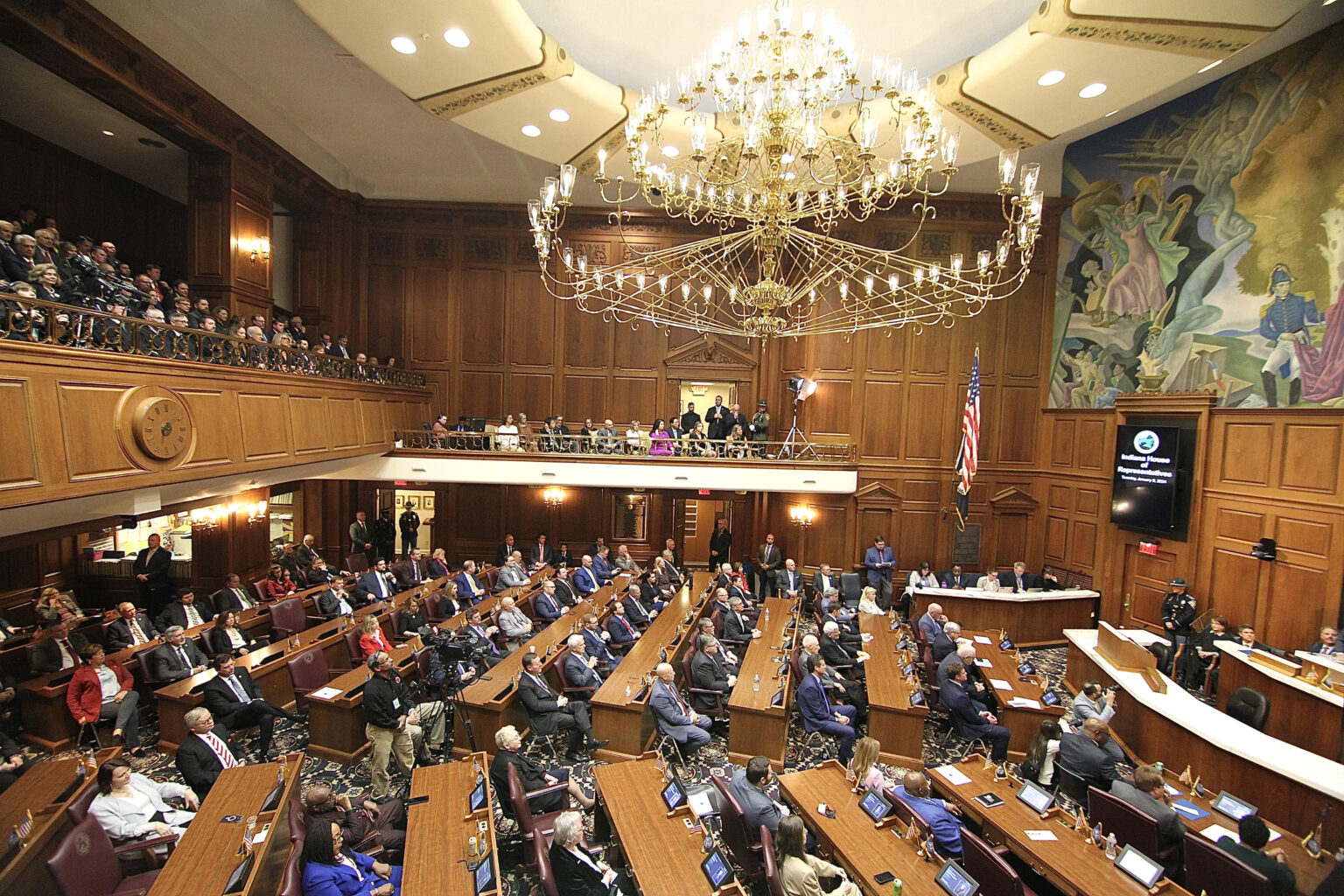
Has It Happened?
No. Not under the Constitution we have now.
The United States has held many political conventions, and the states have held ratifying conventions for the original Constitution and for the Twenty-First Amendment. But an Article V convention for proposing amendments has never been called.
That means we do not have direct historical practice to answer questions like who sets the rules, how delegates are selected, and how the agenda would be enforced. We are left with text, history, analogy, and educated debate.
How Many States Have Applied?
You will see competing claims about how close we are to 34 states. The reason is simple: counting is not just arithmetic. It is interpretation, and Congress has never established a binding, universally accepted way to tabulate applications across time and topics.
Over U.S. history, state legislatures have submitted many Article V applications on a wide range of topics, including a balanced budget amendment, term limits, direct election of senators (before the Seventeenth Amendment), and limits on federal power. (If you want a hard number, you will usually see tallies drawn from sources like Congressional Research Service reports, the National Archives, and scholarly compendia. They do not always match, which is part of the story.)
Why the number is disputed
- Topic matching: Do applications have to call for the same subject to be counted together?
- Rescissions: Can a state withdraw an application, and if so, does Congress have to honor it?
- Time limits: Do decades-old applications still count, or do they go stale?
- Wording differences: If two states seek the same outcome but use different terms, are they “the same” application?
In modern debates, the balanced budget amendment effort has been the most frequently cited example of a near-miss. Depending on how advocates and critics treat rescissions, subject matching, and older applications, you will often see claims ranging from the high 20s into the low 30s, with no official congressional “final answer.”
The uncomfortable truth is that there is no neutral scoreboard sitting on the wall. If a convention were truly close, Congress would likely face intense pressure to decide which applications count, and that decision would almost certainly be contested.
Open Legal Questions
Article V gives us the destination and the minimum vote counts. It does not provide a detailed map for getting there. That is why the convention route draws both interest and caution, depending on what you expect it to produce.
Who sets the rules?
The text says Congress “shall call” a convention once two-thirds of the states apply. But it does not spell out whether Congress also:
- sets the time and place,
- sets delegate allocation,
- sets voting rules,
- sets procedural limits.
Some scholars argue that Congress must have authority to set basic logistics or the process would be unworkable. Others argue the convention is an instrument of the states and Congress should play a ministerial role only.
Can it be limited to topics?
This is the “runaway convention” question, and it is the one that drives most public concern.
Many state applications are written as calls for a convention limited to a particular subject. Supporters say this is essential. It keeps the convention tied to the states’ request, and it makes the process more politically accountable.
Critics respond that Article V does not explicitly authorize a limited convention, and that once assembled, a convention might claim authority to propose any amendments it wants.
There is no definitive Supreme Court decision resolving this. If a convention ever came close to reality, the question would probably be litigated, but courts might also treat it as a political question and decline to intervene.
How are delegates chosen?
Article V is silent. Possibilities include:
- delegates appointed by state legislatures,
- delegates elected in statewide elections,
- some hybrid model set by Congress or by each state.
Delegate selection is not a technical detail. It determines who the convention actually represents.
How would it vote?
Would each state get one vote, echoing the Articles of Confederation and the 1787 Convention’s state-based structure? Or would votes be weighted by population, reflecting modern democratic expectations? Article V does not say.
Can courts referee any of this?
Some parts of the Article V process have historically been treated as political questions. For example, in Coleman v. Miller (1939), the Supreme Court indicated that certain questions about ratification timeliness were for Congress, not the courts, to decide.
Coleman did not address convention-call mechanics. But it signals a real possibility: if a major dispute arises, the “deciding” institution may be the one with the power to recognize the process as valid.
Practical Constraints
If your mental image is a convention that proposes sweeping amendments overnight, there are at least three real-world constraints built into the system.
Constraint 1: Ratification is still steep
Even if a convention proposed something dramatic, it would still need approval from 38 states. That is an extraordinarily high bar.
Constraint 2: Politics still applies
Delegates would arrive with mandates, constituencies, and careers. State legislatures that choose them, or voters who elect them, would exert pressure long before any vote on the floor.
Constraint 3: Congress controls the ratification mode
Congress decides whether ratification happens through state legislatures or state conventions. That choice can shape the odds of success, and it is a reminder that even in the convention route, Congress is not absent from the process.
When Pressure Worked Before
Even without an Article V proposing convention, the threat of one has sometimes mattered. The classic example is the movement for direct election of senators. As state applications accumulated in the early 1900s, Congress ultimately proposed what became the Seventeenth Amendment, and the states ratified it. The convention was never called, but the outside pressure helped change Congress’s incentives.
Proposal vs Ratification
A lot of confusion comes from the word “convention” doing double duty in Article V.
Convention to propose
- Triggered by 34 state applications.
- Called by Congress.
- Produces proposed amendment text.
- Has never happened under Article V.
State conventions to ratify
- Triggered only after an amendment is proposed (by Congress or by a convention).
- Used when Congress chooses that method.
- Used only once in American history: the Twenty-First Amendment.
So if you hear someone claim “a convention can rewrite the Constitution,” ask the next question: are they talking about a proposing convention, a ratifying convention, or the 1787 Convention, which was not operating under Article V at all?
Why It Is Back
Interest rises when Congress looks frozen and state politics looks energetic. Modern movements have pushed for an Article V convention to propose amendments on issues like:
- a federal balanced budget requirement,
- term limits for members of Congress,
- limits on federal regulatory power,
- structural reforms aimed at Washington as a whole.
Supporters see the convention route as constitutional leverage, a way to bypass a self-interested Congress. Opponents see it as a high-uncertainty process with undefined rules that could destabilize constitutional expectations. Both sides are reacting to the same thing: Article V is the Constitution’s admission that change sometimes has to come from outside the institution most threatened by it.
Bottom Line
Yes, states could trigger a convention under Article V by reaching the two-thirds threshold that directs Congress to call one. The harder questions begin after that point, because the Constitution does not tell us the operating rules, and Congress has never had to resolve the counting and procedure disputes in a truly final way.
If the convention route ever becomes real, it will not just be a political battle over proposed amendments. It will be a constitutional battle over process itself: who counts the applications, who sets the rules, what limits apply, and who has the authority to declare the result legitimate.
That is the paradox of Article V. It offers a lawful mechanism for extraordinary change, then leaves the ordinary governance questions unanswered.