
You can be punished for speech after you publish it. That is the normal First Amendment fight.
Prior restraint is different. It is the government trying to stop speech before it reaches anyone. A judge’s order that a newspaper cannot print. A licensing office that says you cannot hand out leaflets without permission. A law that requires official approval before you can speak at all.
In American constitutional law, that difference matters. Prior restraints come with what the Supreme Court has repeatedly called a heavy presumption against their constitutionality (think Bantam Books v. Sullivan; Nebraska Press Assn. v. Stuart). Not because the First Amendment makes all speech consequence-free, but because blocking publication in advance puts the government in the position of deciding what the public is allowed to hear.
Join the Discussion
What counts as prior restraint
Prior restraint usually means a government action that prevents speech from occurring or being distributed. The classic forms are:
- Judicial injunctions that prohibit publication or distribution.
- Licensing schemes that require advance permission to speak, publish, parade, leaflet, or operate a press.
- Administrative orders stopping distribution, including informal “advice” or pressure that functions like censorship (see Bantam Books).
The key feature is timing. The government is not responding to speech already out in the world. It is preventing the speech from entering the world.
A practical trap: the collateral bar rule
There is also a procedural reality that makes injunctions uniquely dangerous. Under the collateral bar rule, a person subject to a court order usually cannot just ignore it on the theory that it is unconstitutional. If you violate the injunction, you can be held in contempt first and argue about constitutionality later. The safer path is typically to comply while you seek emergency review and appeal.
Prior restraint vs. punishment after publication
The First Amendment does not guarantee you will never face consequences. Defamation law, true threats, certain forms of fraud, and other narrow categories can still produce liability.
But the Constitution draws an important practical line between:
- Ex post punishment: the government proves, after the fact, that speech fell into an unprotected category or violated a valid law.
- Ex ante blocking: the government prevents the speech from being published in the first place.
That line is not perfectly clean. Some permit and licensing systems can be constitutional when they use objective criteria and real safeguards. Still, courts are deeply wary of “silence first, litigate later.” Even if the government ultimately loses, the public has already been denied the information at the moment it mattered most.
The Pentagon Papers
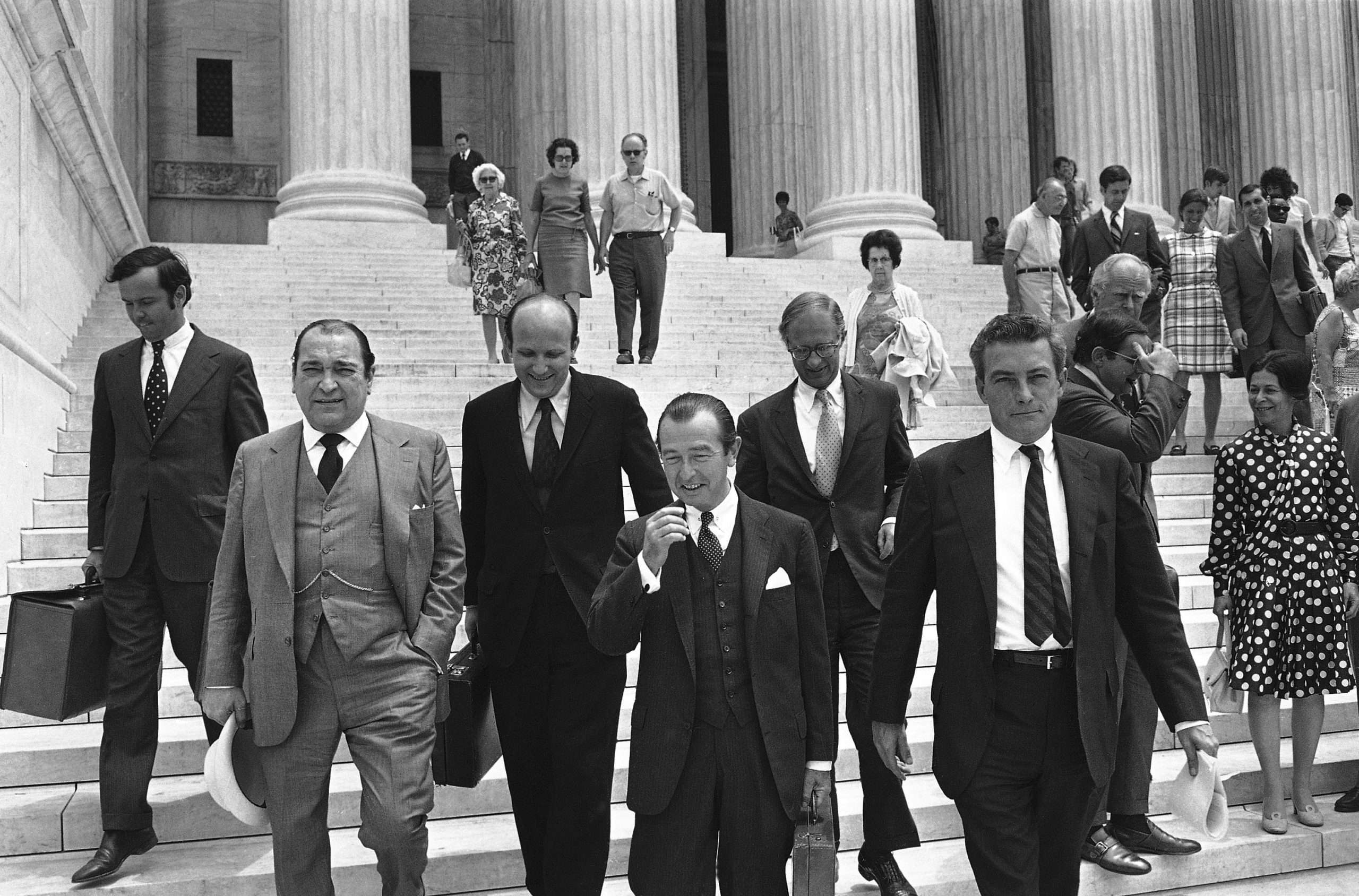
If you want the cultural shorthand for prior restraint, it is New York Times Co. v. United States (1971), the Pentagon Papers case. The Nixon administration tried to stop The New York Times and The Washington Post from publishing classified documents about U.S. involvement in Vietnam.
The Supreme Court rejected the government’s attempt to enjoin publication. The per curiam opinion was short, but the message was not: the government faces an extraordinarily heavy burden when it asks courts to stop publication in advance.
What the Pentagon Papers case did not do is just as important:
- It did not declare that the press has a blanket right to publish classified information with zero risk.
- It did not produce one tidy rule. Multiple concurring opinions stressed different rationales and limits.
- It did not eliminate the government’s ability to prosecute leakers, and it left open hard questions about when, if ever, a publisher could face criminal exposure. Most modern national security prosecutions focus on leakers or unlawful possessors rather than mainstream publishers, and the outer boundary remains contested.
Still, as a practical matter, Pentagon Papers stands for a high constitutional barrier: courts are extremely reluctant to become pre-publication censors, even when the government claims national security harm.
Licensing and shutdowns
The Supreme Court’s suspicion of prior restraint did not begin in 1971. It is rooted in older fights over licensing and censorship.
Licensing systems
Licensing regimes are constitutionally risky because they reverse the First Amendment’s default. Instead of “you may speak unless the government proves a lawful reason to punish you later,” the rule becomes “you may speak only if the government approves first.”
One of the landmark decisions is Near v. Minnesota (1931). Minnesota used a “public nuisance” law to shut down a newspaper it considered scandalous and defamatory. The Court struck the scheme down as a prior restraint, establishing the modern presumption against such censorship.
Near is often taught as a press case, but its deeper lesson is structural: government power to suppress a publication in advance is the kind of power the First Amendment was designed to make difficult to use.
Procedural safeguards
When the government insists on advance review, courts look hard at process. A recurring requirement is meaningful procedural safeguards, like prompt decisions and prompt judicial review (see Freedman v. Maryland).
When it can be constitutional
“Presumptively unconstitutional” does not mean “never.” The Court has recognized that in rare, tightly constrained situations, an advance restraint might survive.
Historically, discussions of possible exceptions include things like:
- Obscenity in contexts where a court has made specific findings and the process includes strong procedural safeguards.
- National security in truly exceptional circumstances, though Pentagon Papers shows how hard it is for the government to meet that burden.
- Orders tied to imminent unlawful conduct, such as narrow injunctions aimed at stopping specific harassment or unlawful action, supported by strict findings. This is not a general license to enjoin “incitement” or controversial advocacy as such. The usual tool there is punishment after the fact under doctrines like Brandenburg, not broad pre-publication bans.
The through line is the same: if the government wants to stop speech in advance, it typically must prove something more than “this might be harmful” or “this could be unlawful.” It must satisfy a demanding standard, and courts insist on narrow tailoring and careful process.
Gag orders and injunctions
Not all restraints look like a classic censorship board. Some look like civil litigation.
Injunctions aimed at publication
Courts sometimes issue orders that restrict what parties can say during a case. That overlaps with gag orders generally, but the prior restraint problem becomes sharper when the order is directed at a publisher or prevents publication itself.
For example, a judge might be asked to order a media outlet not to publish leaked discovery, not to publish a source’s name, or not to publish information claimed to be trade secrets. When the order blocks publication rather than punishing an unlawful disclosure after the fact, the prior restraint presumption comes roaring in.
Parties vs. the press
A key distinction is who the order binds. Many protective orders bind litigants, lawyers, and witnesses, not the press. And when journalists lawfully obtain truthful information about matters of public concern, the First Amendment generally gives them strong protection to publish it (see Smith v. Daily Mail; Florida Star; Bartnicki). A court order that directly restrains a nonparty publisher is usually in the constitutional danger zone.
“It’s private” is not automatically “it’s enjoinable”
One reason these cases are hard is that the law protects privacy and property interests, but the First Amendment protects publication and newsgathering in broad strokes. If courts could routinely stop publication whenever someone asserted confidentiality, powerful people could launder censorship through civil claims.
That is why many prior restraint disputes turn on narrow questions: Is the information already public? Was it obtained lawfully by the publisher? Is the order limited in time and scope? Are there procedural safeguards and clear findings?
Permits and public streets
Prior restraint is not just about newspapers. It also appears in the everyday mechanics of public speech.
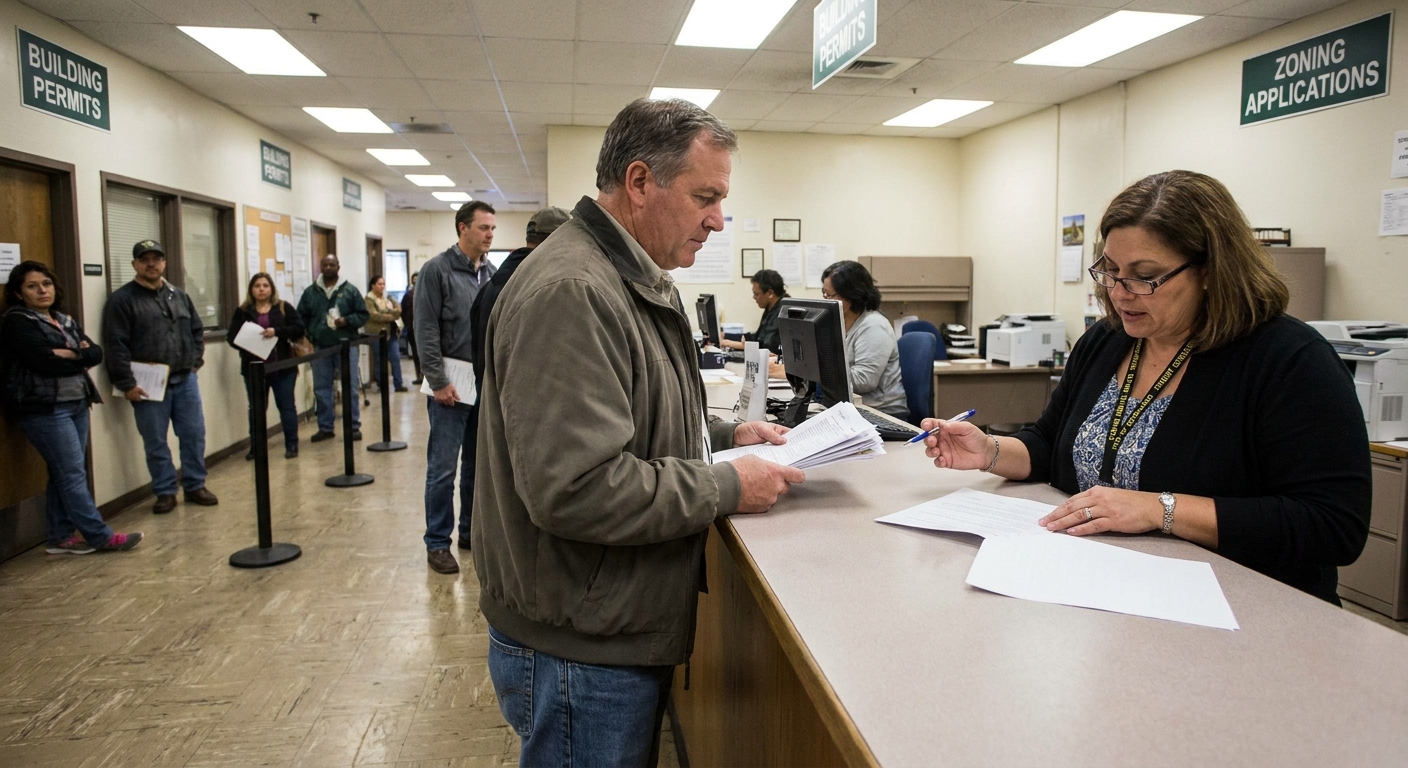
Permit systems for parades, protests, amplified sound, and large gatherings can be constitutional, but only if they are built to avoid the central prior restraint evil: unchecked discretion (see Cox v. New Hampshire; Shuttlesworth v. Birmingham; Forsyth County v. Nationalist Movement).
In practice, courts scrutinize whether a permitting scheme has:
- Clear, objective criteria that limit officials’ ability to approve friendly speakers and deny unpopular ones.
- Time limits so the government cannot stall an application until the moment passes.
- Prompt judicial review if a permit is denied.
- Narrow tailoring to manage legitimate concerns like traffic and safety without controlling the message.
A permit for using a road is one thing. A permit that functions as a political approval stamp is another.
Why courts fear it
Prior restraint doctrine is partly about history and partly about practical reality.
- History: The First Amendment was written in the shadow of English licensing systems and censorship traditions that treated publication as a privilege.
- Error costs: If the government wrongly punishes speech after publication, the speech still reached the public. If the government wrongly restrains speech before publication, the public never gets the information at all.
- Chilling effects: When speakers need permission, many will self-censor rather than risk denial, delay, or legal expense.
- Government incentives: Officials have natural incentives to stop embarrassing or destabilizing information now, and worry about constitutional limits later.
In other words, prior restraint is not just a speech rule. It is an institutional distrust rule.
How it shows up today
You are most likely to see prior restraint arguments in modern disputes like:
- Temporary restraining orders sought in defamation cases to stop a publication from continuing to post allegations.
- Efforts to block reporting based on claimed confidentiality, trade secrets, or “stolen” documents.
- Trial publicity restraints where courts consider gag orders or publication limits in the name of a fair trial (the classic warning case is Nebraska Press Assn. v. Stuart).
- Campus and municipal permitting fights when events are delayed or denied based on controversial viewpoints.
- Protective orders that attempt to bar publication, especially when an order reaches beyond parties and tries to bind the press directly.
- Digital intermediaries: government pressure or mandates aimed at forcing platforms, app stores, or infrastructure providers to pre-emptively filter, demote, or block categories of speech before users can see them. The modern packaging is new, but the core question is old: who decides what can be said before it is said?
Many of these disputes are not about whether speech can be punished. They are about whether a court or agency can silence first.
The question to ask
When someone argues that speech must be stopped in advance, the most important constitutional question is not “Is this speech harmful?”
It is this: Has the government met the extraordinary burden required to justify censorship before publication?
In a system built on self-government, the default is that the public gets the information, and then we fight about what it means. Prior restraint flips that default. That is why the doctrine is so hard to satisfy, and why the Pentagon Papers still echoes every time a court is asked to silence a publisher before the ink is dry.