
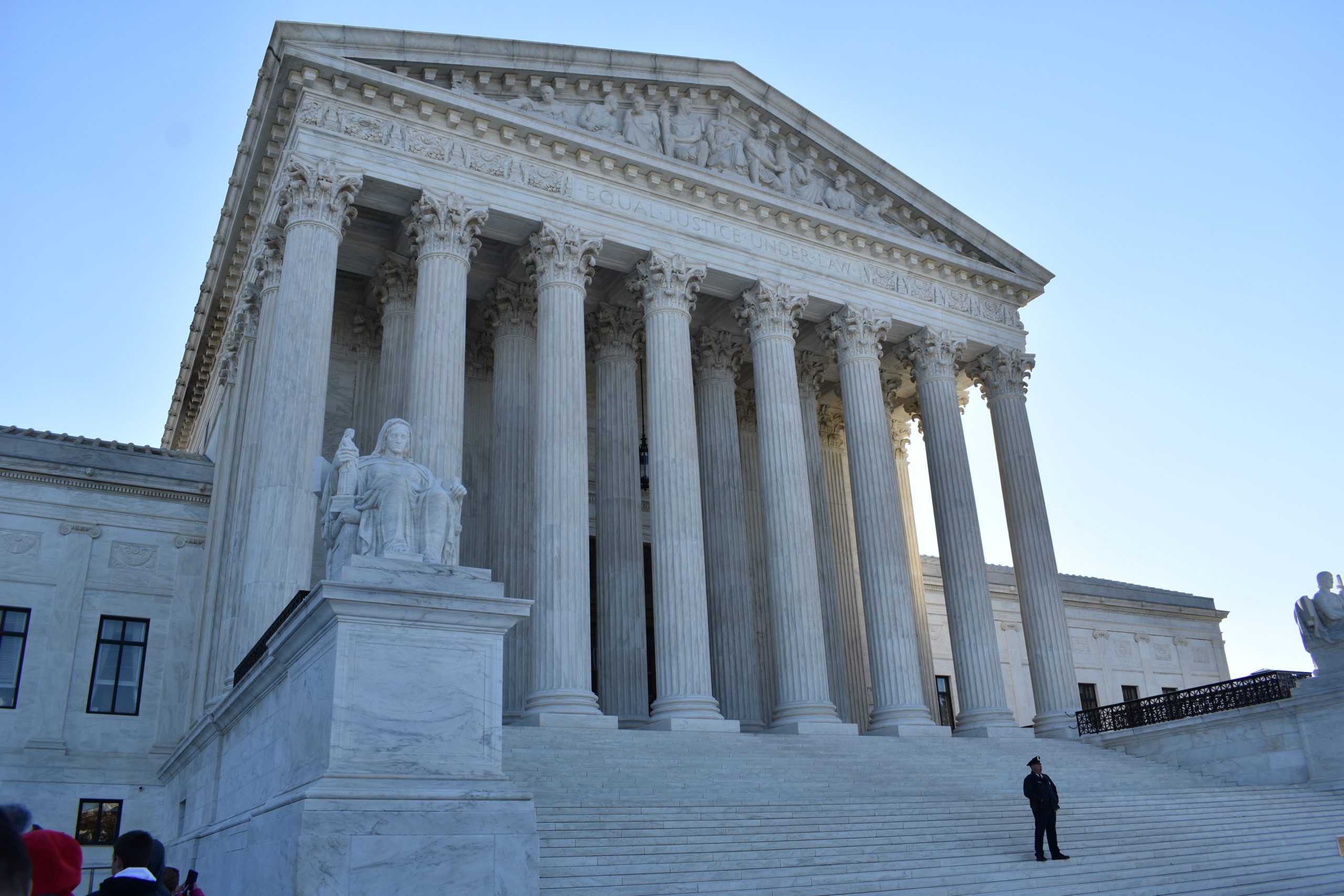
Birthright citizenship is one of those constitutional ideas that sounds simple until someone tries to change it in real time.
A recurring flashpoint is when a president issues (or proposes) an executive order aimed at narrowing who counts as a citizen at birth, and a federal court quickly blocks it as likely unconstitutional. The political arguments can be loud. The constitutional question is quieter and more important: Can a president, by executive order, redefine citizenship that the Fourteenth Amendment appears to guarantee?
To answer that, we have to separate three things that are often mashed together: what the Constitution’s text says, what the Supreme Court has said that text means, and what a president is allowed to do with an executive order.
Join the Discussion
What birthright citizenship means
Birthright citizenship is the general rule that if you are born in the United States, you are a U.S. citizen at birth, even if your parents are not citizens.
The constitutional source is the first sentence of Section 1 of the Fourteenth Amendment, adopted in 1868:
“All persons born or naturalized in the United States, and subject to the jurisdiction thereof, are citizens of the United States and of the State wherein they reside.”
That sentence does two big jobs at once:
- It constitutionalizes citizenship, meaning citizenship is not just whatever Congress or the President says it is.
- It creates a rule for citizenship at birth, with one key condition: the person must be “subject to the jurisdiction” of the United States.
One quick clarification: this article is about birthright citizenship under the Fourteenth Amendment for people born on U.S. soil. Separate laws govern citizenship at birth for many children born abroad to U.S. parents, and those are statutory rules Congress can adjust within constitutional limits.
Most modern fights about birthright citizenship are really fights about what that one phrase means.
What “subject to the jurisdiction” does
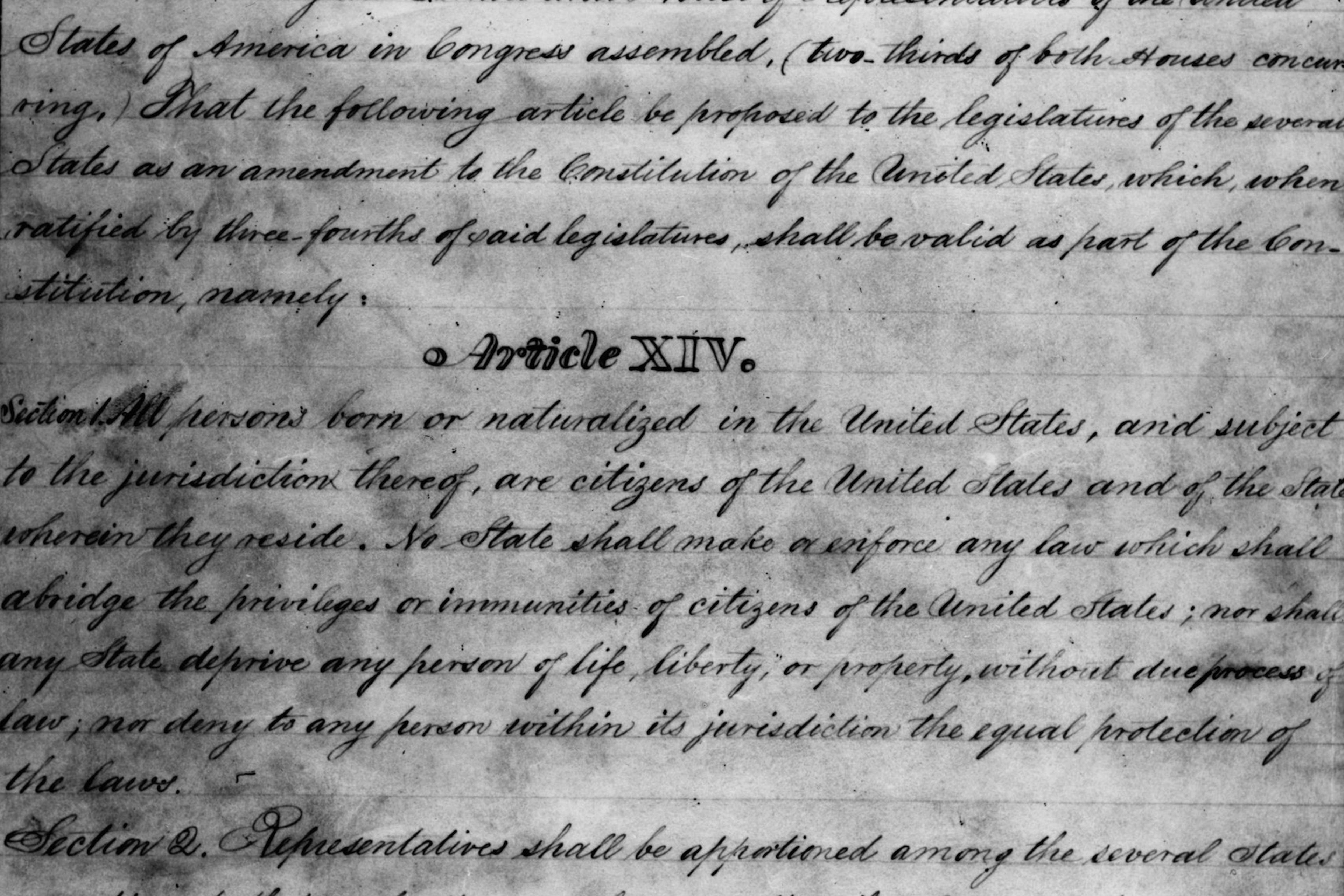
“Subject to the jurisdiction” is not a poetic flourish. It is a filter.
In broad terms, it means you must be under U.S. legal authority in a meaningful way. The hard part is deciding which categories of people are not.
Widely recognized exceptions
Most accounts of the Citizenship Clause, including the Supreme Court’s historical discussion, treat a few exceptions as narrow and long recognized:
- Children of foreign diplomats posted in the United States, because diplomats have recognized immunities and are not fully subject to U.S. law in the ordinary way.
- Children of enemy forces in hostile occupation, a concept drawn from older international law understandings.
A key historical omission: Native Americans
There is also an important historical chapter that shows how much work this clause has done in practice. In Elk v. Wilkins (1884), the Supreme Court held that a Native American man born in the United States, who left his tribe and sought to vote, was not automatically a citizen under the Fourteenth Amendment as the Court understood “subject to the jurisdiction” at the time. That exclusion was later addressed by Congress through the Indian Citizenship Act of 1924, which extended U.S. citizenship to all Native Americans born in the United States.
The modern dispute: unlawful or temporary presence
Today’s pressure point is whether “subject to the jurisdiction” excludes children born in the United States to parents who are unlawfully present and, in some versions of the argument, parents here on temporary visas.
Critics of birthright citizenship argue that someone in the country unlawfully, or only temporarily, is not “subject to the jurisdiction” in the sense the Amendment intended. Supporters respond that unlawful presence does not remove a person from U.S. legal authority. If anything, it means the opposite. The government can arrest, prosecute, detain, and deport them, all exercises of jurisdiction.
So the real legal dispute is not whether the Constitution says something about citizenship. It does. The dispute is whether the Constitution’s condition quietly lets the political branches carve out large new categories of U.S.-born persons who would not be recognized as citizens under the new rule.
What the Supreme Court has said
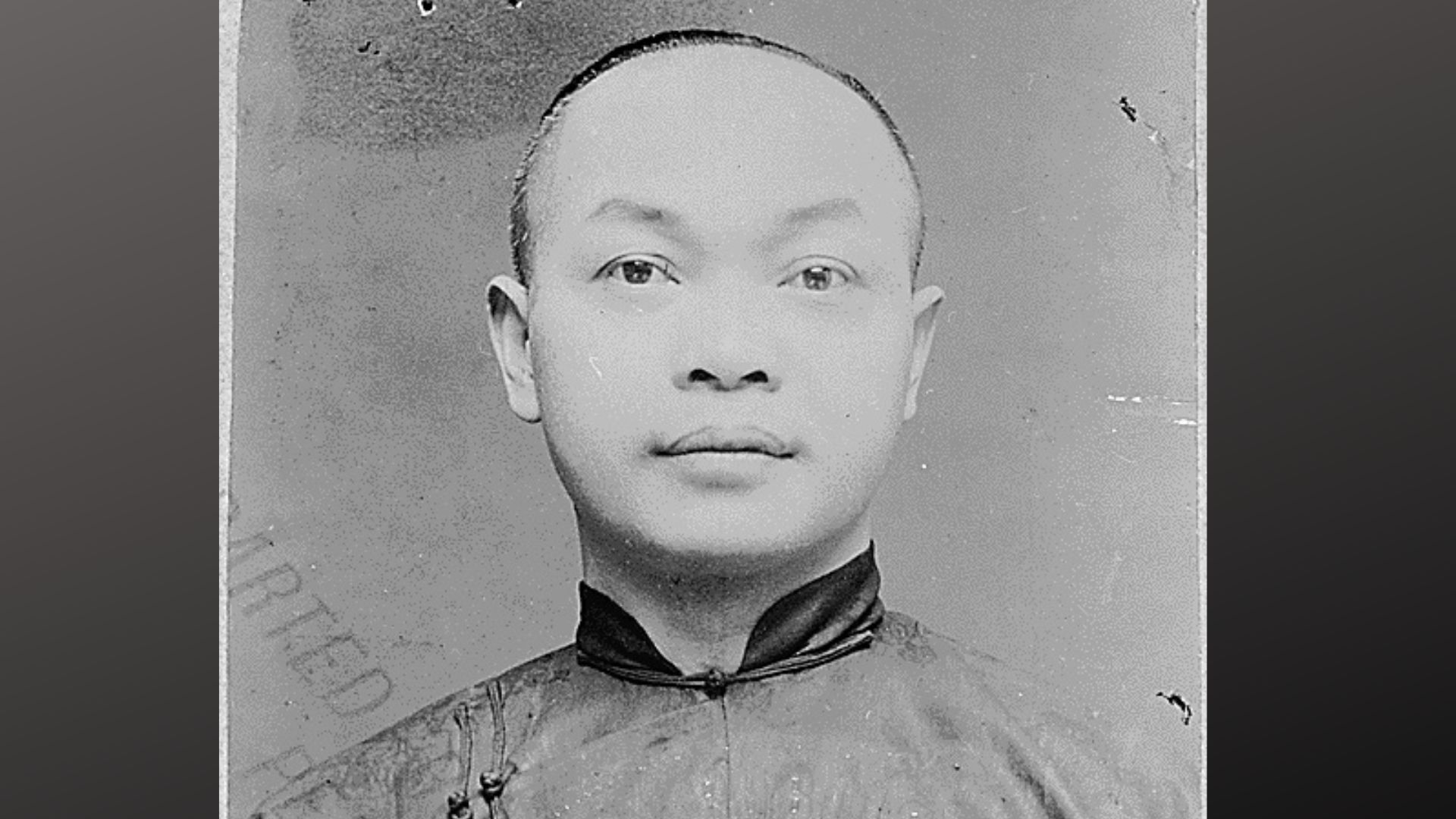
The landmark case in this area is United States v. Wong Kim Ark (1898). The Supreme Court held that a man born in San Francisco to Chinese parents was a U.S. citizen under the Fourteenth Amendment.
A key detail: Wong’s parents were not U.S. citizens and they were not diplomats, but they were lawfully present and domiciled in the United States. That matters because critics of modern birthright citizenship sometimes argue the case should not control situations involving unlawful presence or certain temporary statuses.
Still, the Court grounded its reasoning in the common-law rule of jus soli, citizenship by place of birth, and treated the Fourteenth Amendment as adopting that rule broadly, subject to narrow historical exceptions like diplomats.
Wong Kim Ark does not answer every modern scenario with a single sentence, but it is a major obstacle to the idea that a president can simply announce a new national definition of “born here but not a citizen.” If the Constitution sets the baseline and the Supreme Court has interpreted it, the executive branch does not get to swap in its own reading by memo.
What an executive order can and cannot do
An executive order is not a constitutional amendment, and it is not a statute. It is an instruction from the president to the executive branch about how to carry out the law.
That means an executive order is strongest when it fits into one of two boxes:
- Carrying out a power the Constitution directly gives the president (like commanding the military).
- Directing agencies on how to administer a law Congress has passed (within the limits of that law).
Birthright citizenship is different because the core rule is in the Constitution itself. If the Fourteenth Amendment grants citizenship to a class of people, an executive order cannot narrow that class. The president cannot make a new constitutional interpretation that binds courts, and cannot instruct agencies to implement a policy that conflicts with constitutional rights and call it enforcement.
In practice, an executive order in this area is usually trying to change how federal agencies recognize citizenship at birth, for example through passports, Social Security records, or immigration documentation. (States issue birth certificates, but federal citizenship recognition often shows up when people apply for federal documents.) That practical reality is also why these orders tend to end up in court quickly.
Why a judge can block an order
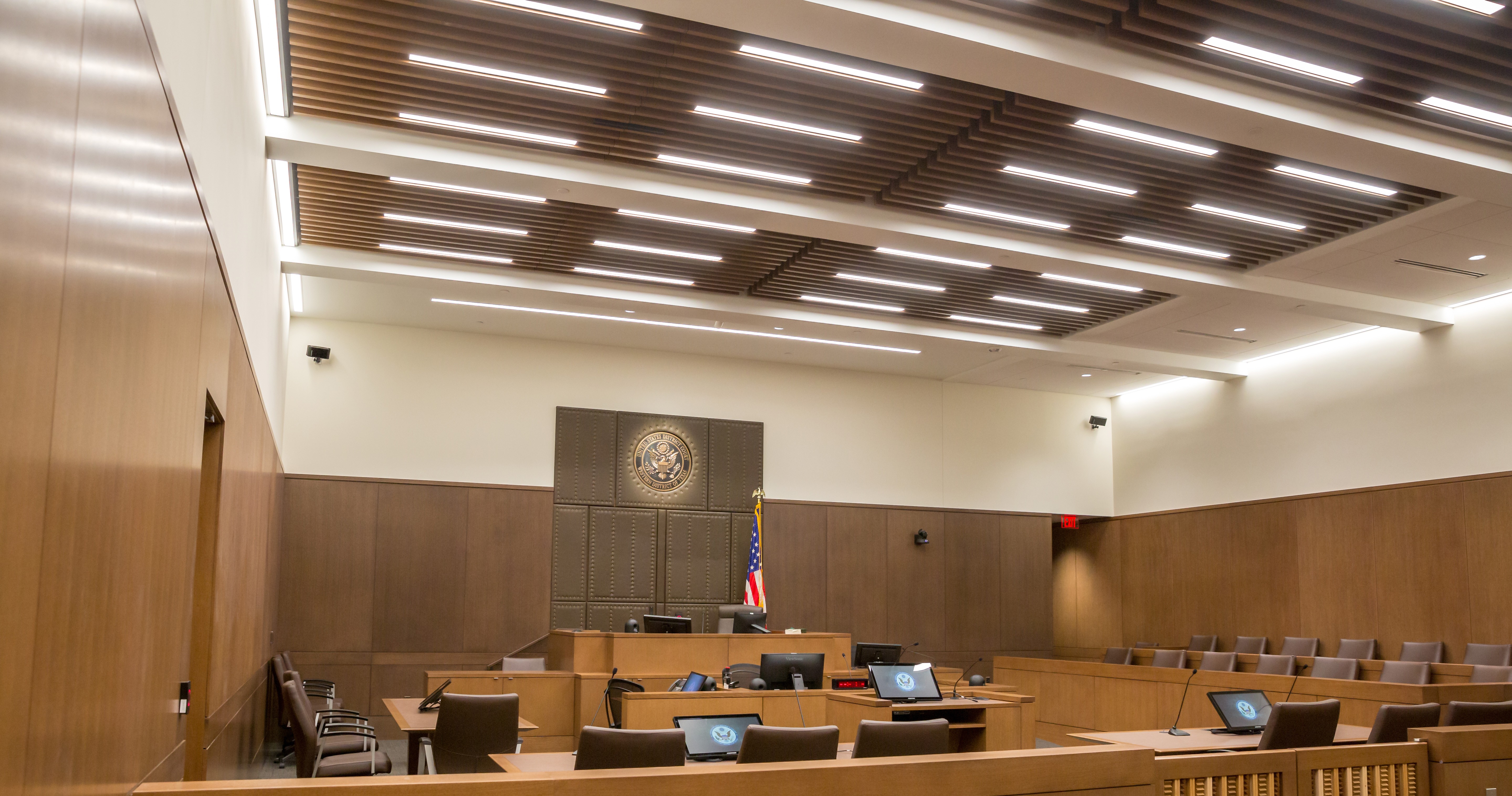
When a federal judge blocks an executive order, it is usually through an injunction, often at an early stage of the case.
The logic is procedural and constitutional. In most federal courts, a judge evaluating a request for a preliminary injunction asks whether the challengers have shown:
- a likelihood of success on the merits (they are probably right about the law),
- irreparable harm without immediate relief,
- the balance of equities favors an injunction, and
- the public interest supports it.
Citizenship status is not a minor administrative detail. It affects passports, Social Security numbers, voting eligibility, deportation risk, and legal identity itself. That is exactly the kind of high-stakes status change that can satisfy “irreparable harm” while courts sort out the underlying constitutional question.
More broadly, judicial review requires courts to evaluate whether government actions violate the Constitution. When an executive action appears to contradict constitutional text or controlling precedent, courts can stop it while litigation continues.
Who can change the rule
If the prevailing interpretation of the Fourteenth Amendment is that most people born on U.S. soil are citizens, then ending birthright citizenship across broad categories would require something stronger than an executive order.
Option 1: A constitutional amendment
The cleanest way, legally, is also the hardest politically: amend the Constitution. That requires two-thirds of both the House and Senate and ratification by three-fourths of the states.
Option 2: A statute that invites review
Congress could try to pass a law defining “subject to the jurisdiction” more narrowly. That might clarify implementation details, but if the statute conflicts with the Supreme Court’s reading of the Fourteenth Amendment, courts can strike it down.
Option 3: New Supreme Court doctrine
The Supreme Court could revisit birthright citizenship doctrine in a case that squarely raises the modern question. That is one possible path to major change without an amendment, but it would come from new judicial interpretation, not from an executive order.
What happens next
When an executive order on citizenship is blocked, the case usually moves through familiar steps:
- Appeal to the federal circuit court.
- Emergency requests to narrow, stay, or pause the injunction while litigation continues.
- Potential Supreme Court review, especially if different courts reach different results or if the issue is nationally significant.
Meanwhile, agencies are generally required to follow the injunction, meaning the executive branch cannot implement the new rule in the places and against the people covered by the court’s order while the injunction remains in effect.
FAQ
Is birthright citizenship in the Constitution?
Yes. The Fourteenth Amendment explicitly defines citizenship for people born in the United States who are “subject to the jurisdiction” of the United States.
Can a president end birthright citizenship by executive order?
Not by simply declaring a new rule. An executive order cannot override the Fourteenth Amendment or Supreme Court precedent interpreting it. Such an order can be challenged in court and blocked.
Does the Fourteenth Amendment have exceptions?
Yes. The most widely recognized modern exception is children born to foreign diplomats. Historically, the Supreme Court also treated Native Americans on reservations as outside automatic birthright citizenship under the clause, until Congress extended citizenship broadly in 1924. Other narrow historical exceptions are discussed in the case law, including hostile occupation.
Why do courts get a say at all?
Because under judicial review, federal courts interpret the Constitution and can invalidate executive actions that conflict with it. Injunctions are one tool courts use to prevent serious, irreversible harm while constitutional questions are litigated.