
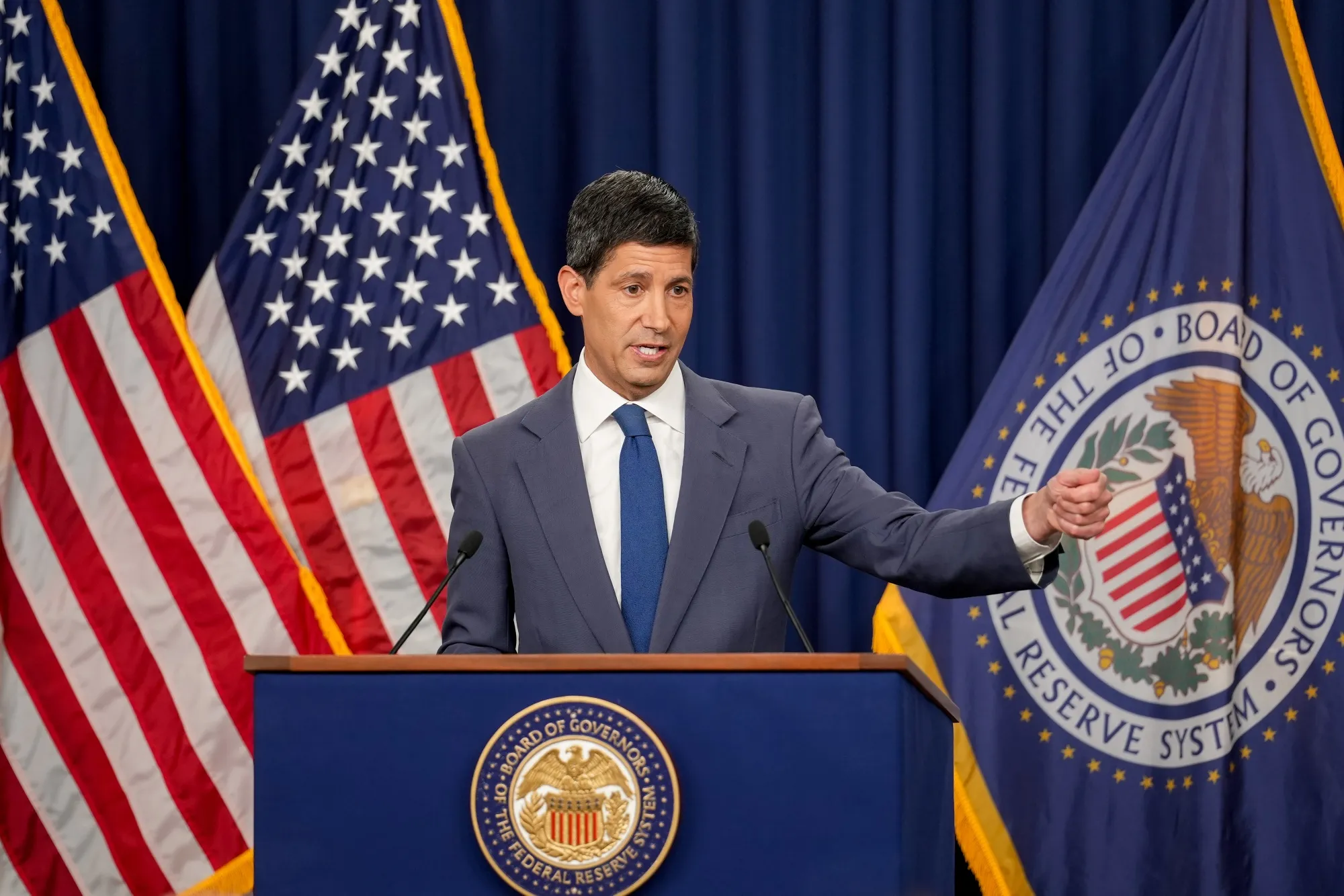
The Federal Reserve just did something it has not done in three years: it raised interest rates. Not by a dramatic half-point. Not by an emergency jolt. Just a quarter point, unanimously, moving its benchmark range to 3.75% to 4% from 3.5% to 3.75%.
On paper, a quarter point can sound like a rounding error. In real life, it is often the kind of change that can push “manageable” toward “tight,” depending on who is borrowing, how, and when.
Who is really steering the ship when a small group of unelected officials can make borrowing more expensive for nearly everybody, in a single Wednesday afternoon?
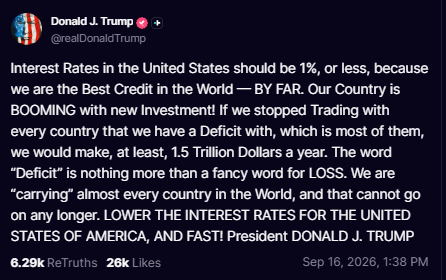
President Trump wasted little time pushing back. Shortly after the Fed’s decision, Trump posted on Truth Social that U.S. interest rates “should be 1%, or less,” arguing that the country has the “Best Credit in the World” and is “BOOMING with new Investment.” He demanded that the Fed “LOWER THE INTEREST RATES FOR THE UNITED STATES OF AMERICA, AND FAST!” The statement puts Trump publicly at odds with the central bank’s decision to make borrowing more expensive at a time when many Americans are already struggling with affordability.
Join the Discussion
What the Fed did
The Federal Open Market Committee voted to lift the federal funds rate target to 3.75% to 4%. This is the first increase since July 2023, and the vote was unanimous.
In a press conference afterward, Chair Kevin Warsh framed the decision in blunt terms: “Inflation is the problem. Stable prices have been the problem for, now, more than five and a half years.” He said the committee acted to ensure “a timely return to our price stability.”
Warsh argued the economy looks strong enough to handle it, noting the country is essentially at full employment and saying, “I don't believe that we need to do harm to the labor markets to achieve our objective.”
Why now
The Fed is hiking because officials see inflation as stubborn and potentially spreading.
One pressure point is energy. Renewed tensions in the Middle East have pushed oil prices higher, raising the risk that higher fuel and shipping costs bleed into broader prices. Another pressure point is the inflation data itself. The most recent Consumer Price Index reading showed core prices rose 0.3% in August month over month, faster than the prior two months and a hair above the 0.2% pace many officials have suggested they want to see before concluding inflation is cooling on its own.
This is the tightrope: if inflation expectations get embedded, the Fed often feels it has to act harder later. A quarter-point hike is a way of trying to nudge now rather than slam later.
How it hits borrowers
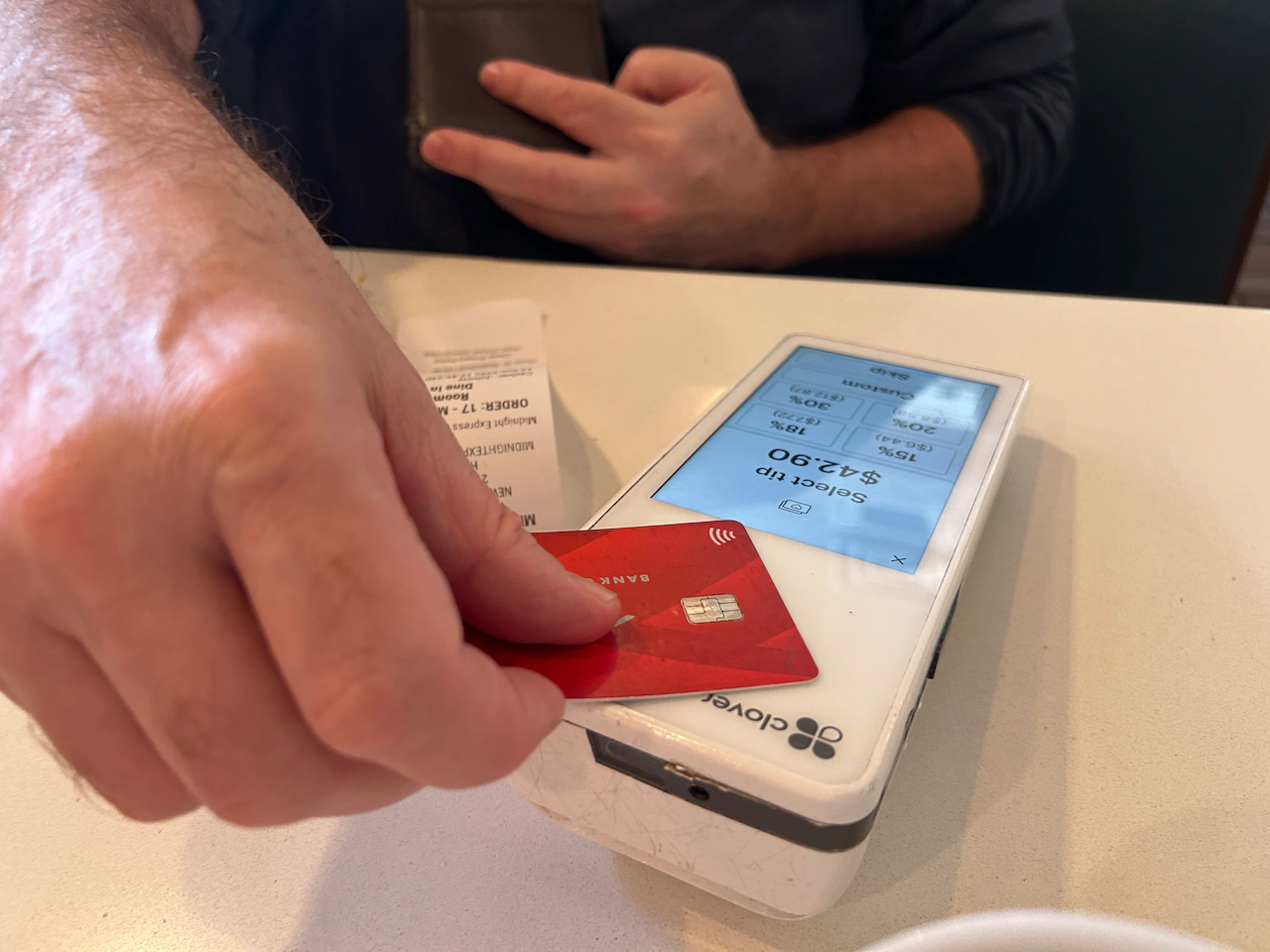
The federal funds rate is not your mortgage rate, and it is not your credit card APR. But it is a foundation under a lot of consumer finance. When the Fed raises its benchmark, borrowing often becomes more expensive across the economy, especially for loans with variable rates or newly issued fixed-rate loans.
Credit cards
Most credit cards have variable APRs tied indirectly to Fed policy. A quarter point can filter into the interest you pay if you carry a balance. From where I sit, the civics angle is not abstract. When rates rise, the squeeze can show up early for people who already have the least room to maneuver.
Car loans
Auto loans are often fixed, meaning existing borrowers are usually locked in. But for anyone shopping now, higher benchmark rates often translate into higher financing offers. That can mean a bigger monthly payment, a longer loan term, or settling for an older vehicle.
Mortgages
Thirty-year mortgage rates are heavily influenced by long-term bond yields and market expectations, not just today’s Fed move. Still, a hike can reinforce the idea that rates may not be coming down soon. For would-be homebuyers, that can keep affordability strained. For homeowners with adjustable-rate mortgages or home equity lines of credit, payments can rise more directly.
Savings
Higher rates can improve returns on savings accounts, money market funds, and certificates of deposit, although what you actually earn depends on your bank and the product. Savers may feel the benefit slowly. Borrowers can feel the hit quickly.
What comes next
Today’s move matters. The path implied by the Fed’s projections matters more.
In its updated Summary of Economic Projections, officials signaled they anticipate one more rate hike in 2026.
For 2026, among 18 officials, 12 projected two hikes, four projected three hikes, and two projected one hike.
The median projection points to rates holding steady in 2027 after two hikes this year, followed by one cut in 2028.
One telling detail: Warsh declined to participate in the so-called dot plot for the second time.
On inflation, the forecast remains uncomfortable. Officials now see headline inflation at 3.7% (up from 3.6%) and core inflation at 3.4% (up from 3.3%). They do not expect inflation to return to their 2% goal until after 2028.
The civics question
In class, I used to tell students that the Constitution is not only about what government can do. It is about who gets to do it, and under what constraints.
The Federal Reserve sits in a peculiar American space. It is created by law and accountable to Congress in important ways, but it is deliberately insulated from day-to-day electoral politics. That insulation is a feature, not a bug, if your goal is to keep politicians from juicing the economy for the next election. It can feel like a problem, not a feature, if your goal is democratic control over decisions that can raise interest payments and narrow next month’s choices.
So here is the hard question worth asking, especially in a year when inflation still will not behave:
- When the Fed raises rates, who bears the pain first? Often borrowers, and often households already stretched thin.
- When the Fed keeps rates high, who feels steadier? Savers, and anyone whose plans depend on a more stable inflation outlook. Some firms can also absorb or pass along costs more easily than others, which can change who feels the pressure most.
- When the Fed gets it wrong, who votes them out? No one. That is the point, and that is the tension.
Independence can be prudent. It can also be a shield that keeps human consequences at arm’s length.
What to watch
If you are trying to plan a budget through all of this, you do not need a PhD. You need a short list of signals:
- Monthly inflation prints, especially core inflation, because that is the sticky stuff the Fed watches.
- Energy prices, since oil shocks can travel quickly into grocery bills and shipping costs.
- Your variable-rate debt, especially credit cards and home equity lines, where changes can show up fast.
- Fed communications, because markets often move on what officials say they are likely to do next.
A quarter-point hike is not a headline for economists only. It is a policy lever that reaches into kitchens and break rooms. And once you see that, you start to understand why central banking has always been political, even when it insists it is not.