
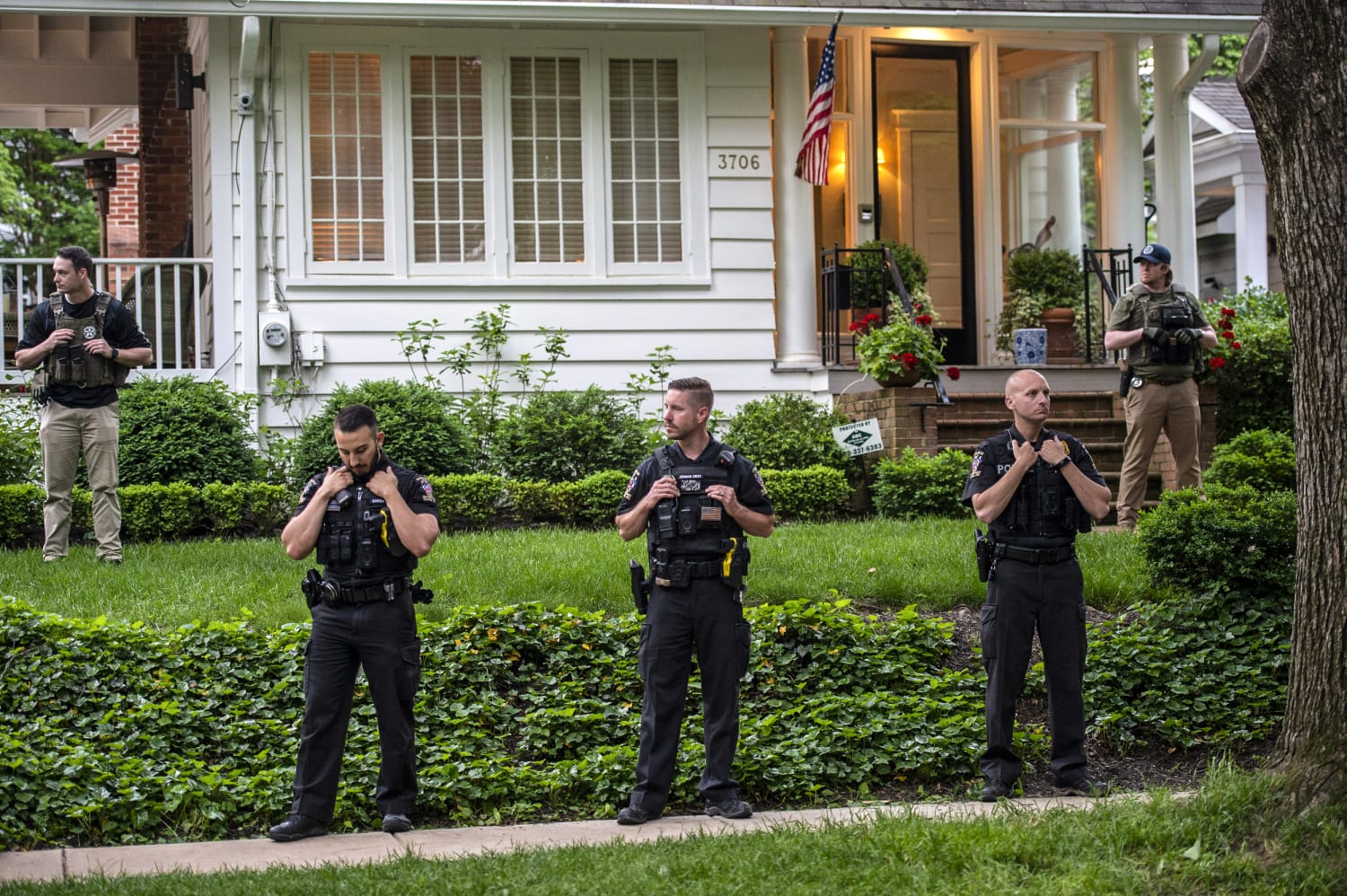
On Wednesday night, police in Fairfax County, Virginia, were dispatched to the residence of Justice Amy Coney Barrett after a caller reported an emergency. It was a swatting call, a false report designed to trigger a law enforcement response where none is needed.
A Fairfax County Police Department public information officer said officers responded at approximately 9:02 p.m. The call came through the department’s non-emergency line. Officers coordinated with Supreme Court Police personnel assigned to the home and quickly determined the report was fictitious. The department said no additional police resources were used.
The Supreme Court did not publicly comment on the incident.
Join the Discussion
What swatting aims to do
Swatting is not a prank. It is a tactic: weaponizing emergency response by fabricating violent crimes like gunfire, hostages, bombs, or an active shooter, hoping the target is met by armed officers moving fast on bad information.
In this case, a partial audio recording circulating online described a call for “sounds of gunshots” at the home of a “high-priority resident” with 24-hour security coverage. The specifics matter less than the mechanism: a lie that tries to turn the state’s protective power into an instrument of harm.
Barrett was on the bench
Justice Barrett appeared at the Supreme Court on Thursday morning. She read aloud summaries of two opinions she authored and did not mention the incident from the bench.
That normalcy is both reassuring and unsettling. Reassuring because the Court carried on. Unsettling because “carrying on” is increasingly what the judiciary is asked to do while its members are targeted at home.
The pattern
The Barrett swatting response fits into a wider, post-2022 reality: Supreme Court justices have become personal targets in a way that would have been almost unthinkable a generation ago.
After the leaked draft opinion in Dobbs in 2022, protests took place outside the homes of justices associated with the Court’s conservative majority, including Barrett and Justice Brett Kavanaugh. Not every protest is a threat, and the First Amendment protects a wide range of political expression. Still, as analysis, home-targeted demonstrations risk blurring an important line, because the line exists for a reason.
That same summer, a California man, Nicholas John Roske, was charged with attempted murder after making violent threats against Justice Kavanaugh while carrying a gun, knife, and pepper spray near the justice’s home. He was later sentenced to eight years in prison.
Why it matters
It is easy to talk about “security” as if this is only a matter of gates, patrols, and protective details. But when the target is a Supreme Court justice, the stakes are constitutional.
1) Independence needs more than life tenure
Federal judges have life tenure and salary protection to insulate them from political punishment. But the Framers did not anticipate a modern world where intimidation could be crowdsourced, anonymous, and delivered directly to a judge’s doorstep at night.
A justice who must weigh personal safety or family exposure when deciding cases is not “independent” in the way Article III is meant to secure. Even if a justice refuses to be influenced, the attempt itself damages the Court’s institutional legitimacy. A judiciary that appears governable by threat is a judiciary that cannot credibly check the other branches.
2) The Court cannot work if justices are targets
In a constitutional system, the Supreme Court is not supposed to be universally loved. It is supposed to be obeyed, criticized, studied, and contested through lawful channels. The legitimacy bargain is fragile: we accept decisions we dislike because we trust the process more than the outcome.
Threats corrode that bargain. They shift the public story from reasoning to retribution, from constitutional argument to personal punishment. That is a cultural downgrade, and it rarely stays confined to one faction or one moment in history.
3) The First Amendment is not a license to terrorize
Speech is protected. Protest is protected. Political anger is protected. But swatting is none of those things. It is a false report intended to provoke armed state action under the pretense of imminent danger.
Sen. Mike Lee captured the moral clarity of it in a post online: “Swatting is an attempt to get an innocent person killed,” adding that “The proper response will be putting the offender in prison for many, many years.” Whether you agree with his politics is irrelevant. The underlying claim is hard to dispute.
What comes next
If we want a Supreme Court that can decide cases without fear, the response cannot be limited to outrage after each incident.
- Treat swatting as violence by proxy. When a caller attempts to manufacture a lethal confrontation, the legal system should not treat it like mischievous mischief. The specific charges will vary case by case, but the risk being engineered is consistent.
- Stop normalizing home-targeting. You can protest decisions at the Court, in public squares, and through elections and legislation. Turning private residences into stages invites escalation.
- Reset civic habits. The Court is not a battlefield where intimidation is “engagement.” It is a constitutional referee. If we train ourselves to see justices as enemies to be frightened, we will eventually get a judiciary that acts like one.
The big picture
The most revealing part of the Barrett incident is not that police determined the report was fictitious. It is that someone thought a fictitious emergency response was a plausible way to “do politics” in 2024.
That is the alarm bell. A constitutional republic cannot keep its balance if the branch designed to say what the law is must also live as though law is optional at their front door.