
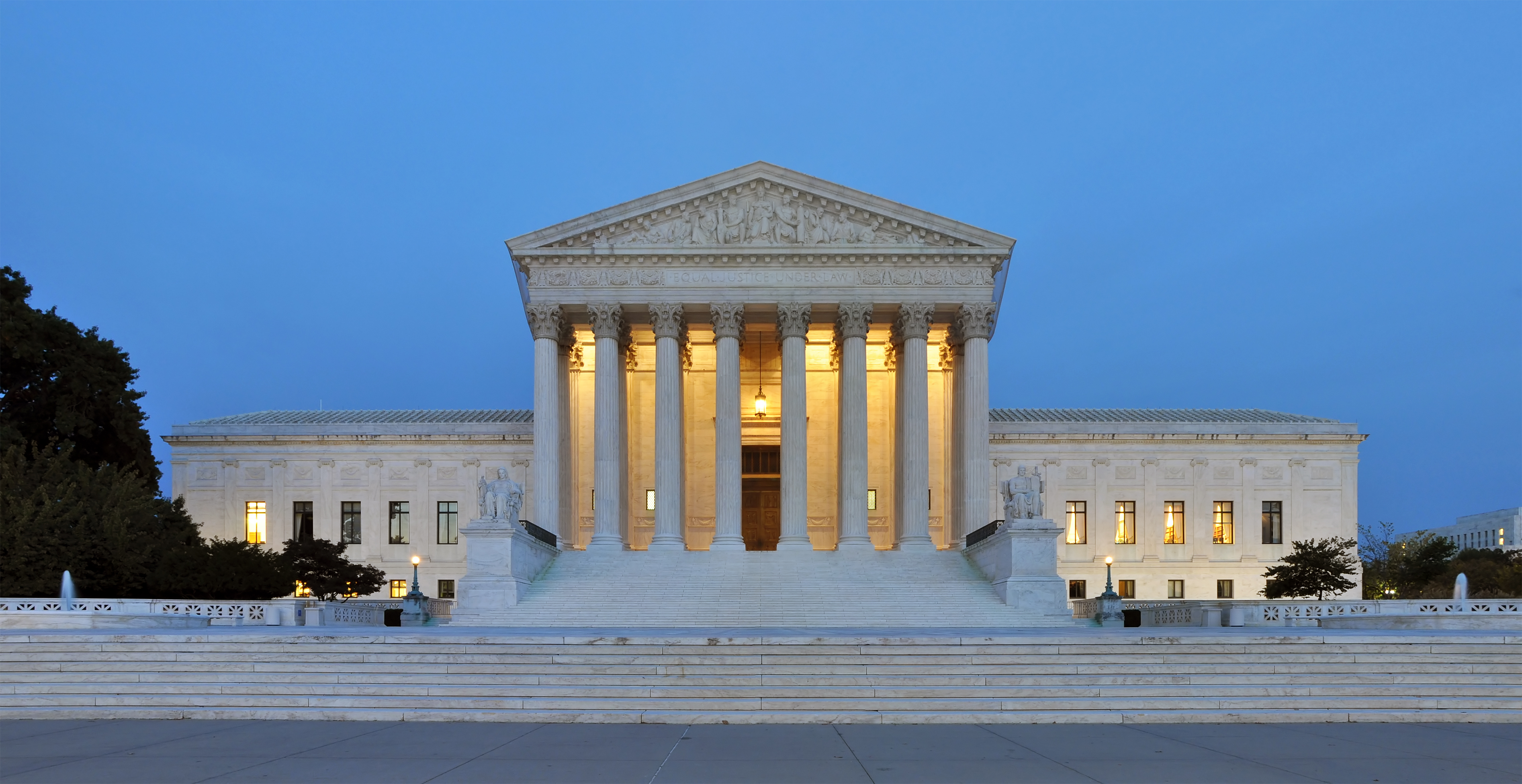
There is a certain civic magic in the idea that a Supreme Court justice can do the job, go home, and simply be a citizen again. Not a celebrity. Not a campaign surrogate. Not a target. Just a public servant who writes opinions that bind the nation.
That picture is increasingly outdated. When threats follow justices to their neighborhoods, when families are forced to think about protective gear and emergency protocols, we are not dealing with a mere “security issue.” We are dealing with a constitutional stress test: can an independent judiciary survive an age of personalized political rage?
Join the Discussion
What the justices told Congress
Justices Amy Coney Barrett and Elena Kagan appeared before a House appropriations subcommittee seeking expanded security funding. Their point was not subtle: the Court’s risk environment has changed, and it has changed fast.
In questioning, lawmakers explicitly tied the shift to the period after the Dobbs leak and the 2022 incident at Justice Brett Kavanaugh’s home. Barrett’s answer was simple: the statistics are real, and living with them is not abstract.
Barrett described how threats spill into family life, telling lawmakers: “I didn’t expect that performing this service was going to put me in the position of explaining to my children what a bulletproof vest was, and why I had to wear one.”
She also described a “swatting” episode, where law enforcement responded to a false report at her home. Barrett credited the presence of Supreme Court Police with preventing the situation from escalating into officers attempting entry based on a fabricated emergency.
And she pointed to another tactic that is meant to intimidate rather than argue: anonymous deliveries designed to frighten judges by invoking the killing of U.S. District Judge Esther Salas’s son, who was killed when a disgruntled lawyer came to Salas’s home intending to kill her. Salas’s husband, standing behind him, was seriously injured.
Kagan framed the situation as an institutional shift. Security used to focus heavily on the building. Over time it expanded to personal details, residential protection, physical upgrades, and cybersecurity as threats moved from the courthouse steps to online spaces and private addresses.
The numbers Congress cannot ignore
This is not a vibe shift. It is measurable.
- Threats against the Supreme Court were up 25% last year, with the Court anticipating a 38% increase this year.
- The Capitol Police chief testified that threats against Congress are up 50% this year.
- The Court is pressing for a $230 million security budget.
- For fiscal year 2027, the Court requested an additional $14 million, a 7% increase for salaries and expenses.
- Over the last five fiscal years, the Court’s funding needs grew an average of 15% per year, with much of the growth driven by security.
Those figures matter for one reason beyond dollars: they document a rising incentive structure for intimidation. If threatening a justice becomes a standard political tactic, the Court’s independence becomes theoretical.
Security is a constitutional need
Article III does not promise judges a comfortable life. It promises something more important: a judiciary that can decide cases without being coerced.
That is why life tenure exists. That is why compensation cannot be diminished while a justice remains in office. The Constitution anticipates a world where courts will sometimes anger powerful people, including majorities.
But the Founders could not have fully pictured a world where a justice’s home address can be broadcast at scale, where harassment can be automated, and where a false emergency call can summon armed officers to a doorstep in minutes. The method is modern; the danger is ancient: pressure the judge, and you deform the law.
What Congress should fund
Security funding becomes politicized when it looks like a reward, a punishment, or a behavioral nudge. The way out is to fund capability rather than control, and to build systems that apply neutrally across ideologies and across the federal judiciary.
1) Residential security that is consistent
The most obvious vulnerability is no longer the courtroom. It is the driveway.
Congress should fund a standardized residential security program administered through professional law enforcement channels, with clear criteria tied to threat assessments, not controversy cycles. This includes hardened perimeters where appropriate, secure communications, and rapid response coordination with local police for hoaxes and emergency calls.
2) Threat assessment and investigations
Threats now travel through digital ecosystems, not just angry letters. Funding should prioritize analysts, investigators, and digital forensics capabilities dedicated to identifying credible threats early and tying anonymous harassment to real actors where possible.
3) Recruitment and retention
Kagan noted that the Supreme Court Police is modeled in key respects after the Capitol Police, including matching pay tables and similar organizational structures. That is an implicit warning: these are specialized jobs in a competitive labor market. If Congress wants reliable protection, it must pay for it and staff it.
4) Physical security upgrades
Even if threats have migrated outward, the building remains a symbolic and operational focal point. Funding for access controls, perimeter improvements, and modern screening technology is the boring part of security. It is also the part that works best.
5) Cybersecurity
The judiciary’s legitimacy depends on public confidence that case systems, internal communications, and operational technology are resilient against intrusion. Cybersecurity spending is not optional. It is the digital equivalent of locking the courthouse doors.
What Congress should not do
It is easy to say “fund security.” It is harder to fund it in a way that does not create new constitutional problems.
- Do not condition protection on outcomes. No funding threats, no performance metrics tied to case decisions, no insinuation that justices must behave a certain way to remain safe.
- Do not build partisan oversight pipelines. Oversight is legitimate, but it should focus on budgets, staffing, and capability, not on interrogating judges about cases or using hearing time to score points.
- Do not treat “security” as a proxy for speech control. People have a First Amendment right to protest. They do not have a right to menace, stalk, or terrorize. Congress should draw that line carefully and enforce it cleanly.
- Do not make the justices themselves the public face of the ask. The more the Court must personally lobby for safety, the more it is pulled into the political theater that security is supposed to neutralize.
Protect the office, not ideology
The cleanest framing is also the most American: you protect the institution because it is the institution. You protect the justice because the justice is performing a constitutional role, not because you like how they vote.
That is why security should be designed like other structural safeguards in our system. It should be durable, standardized, and boring. The less it resembles a culture-war artifact, the more it actually protects judicial independence.
The Court does not need a protective bubble that cuts it off from the people. It needs a baseline of safety that prevents violence and intimidation from becoming a shadow docket of its own, shaping decisions off the page.
The civic bottom line
When a justice has to explain a bulletproof vest to a child, the story is not ultimately about that vest. It is about whether we still believe disagreements are resolved with arguments, votes, and lawful process rather than fear.
Congress has the power of the purse, and with it, a responsibility: fund real protection that is professional and apolitical, so the Court can do its work “without fear or favor,” as the Chief Justice has often put it.
In a constitutional republic, the judiciary is not supposed to be popular. It is supposed to be independent. Security is part of how we keep it that way.