
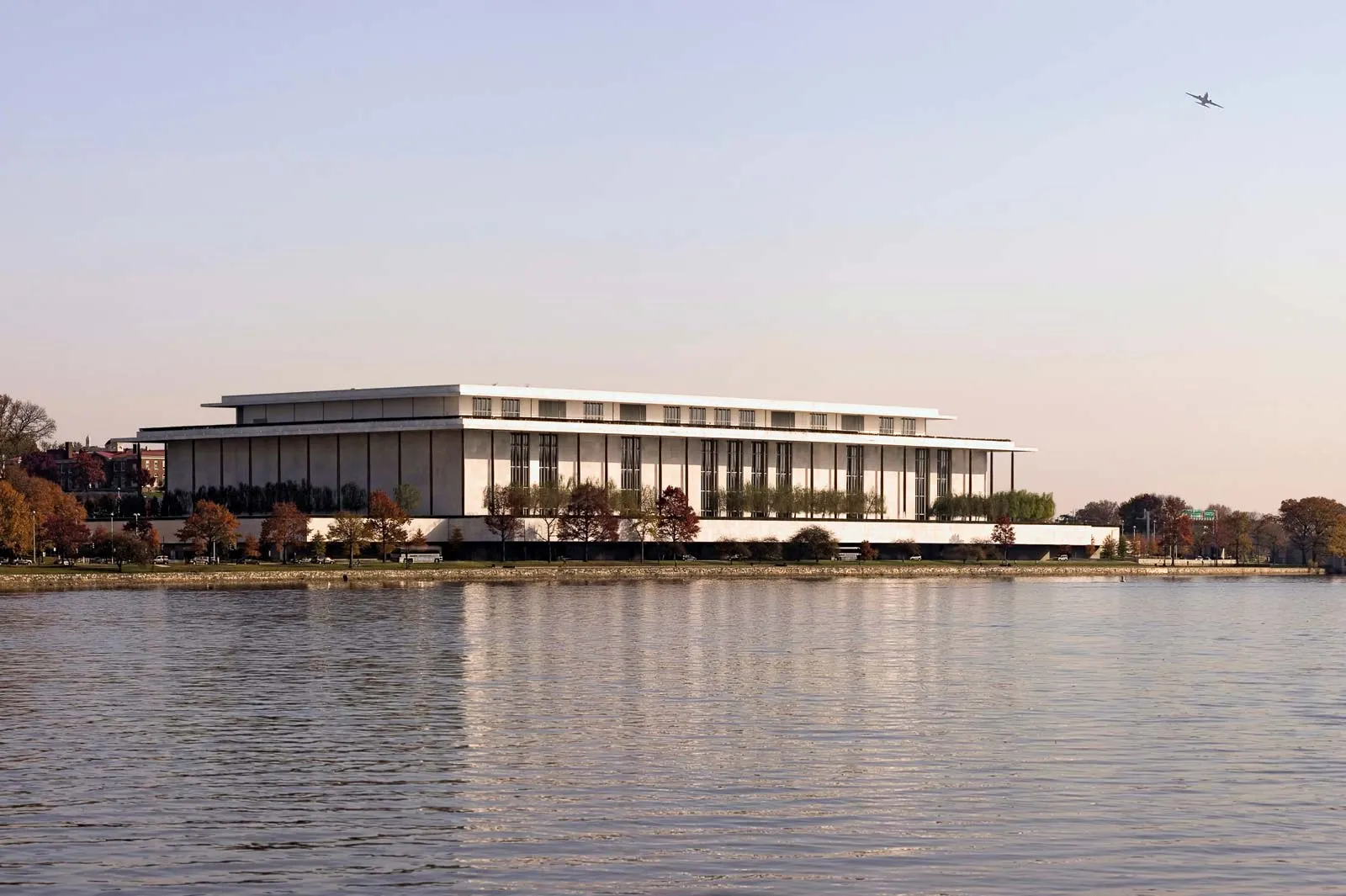
The Kennedy Center sits in Washington, DC, hosts presidents, premieres, and school groups, and carries a name that feels as permanent as marble. But its real story is not just cultural. It is civic. The Center is a performing-arts venue with an unusually federal footprint, and that hybrid design becomes most visible when politics and public funding collide.
A recent example came in 2020, when Congress included a direct line-item appropriation for the Kennedy Center in pandemic relief legislation commonly referred to as the CARES Act. The Center received $25 million. The decision sparked a public argument about what taxpayers were buying, what obligations came with federal support, and how much control elected officials can claim over an institution that is artistic in mission but statutory in structure.
Join the Discussion
What it is, legally
The Kennedy Center is not just a theater complex. It is also a legal creature created and shaped by federal law. Congress established a national cultural center and later designated it as a memorial to President John F. Kennedy. Over time, Congress has updated its governing statutes, funding mechanisms, and board structure.
It helps to be precise about what that does and does not mean. The Kennedy Center is not a typical executive-branch agency that takes daily direction from a cabinet secretary. It operates as a congressionally established institution with a statutory governance model and regular federal appropriations alongside private revenue and donations.
That federal link matters because it changes the usual rules. A private arts venue can rename a hall, cancel a season, or overhaul its programming as a matter of private corporate authority. A congressionally structured entity has to act within the powers granted by statute, and it can be pulled into government-adjacent requirements that do not apply to a purely private venue, such as funding conditions, audit and reporting expectations, and procurement and ethics constraints tied to federal involvement.
Who runs it
In practice, three forces shape what the Kennedy Center can do.
- Congress, which defines the Center’s structure by statute, authorizes appropriations, and can attach conditions to certain federal funds. Those conditions generally must be clear and related to the funded program, and they cannot require unconstitutional conduct.
- The Board of Trustees, which governs the institution under the framework Congress created. Board authority is real, but it is not unlimited. It is bounded by the enabling law, bylaws, donor agreements the Center has signed, and any applicable ethics, contracting, and oversight rules that come with federal funding.
- The Executive Branch, which influences the Center through appointments and through the normal tools of federal administration, but cannot rewrite a statutory governance model by preference alone.
To make this less abstract, here is a Kennedy Center-specific anchor: its Board of Trustees is established by federal statute. Trustees include presidential appointees and ex officio federal officials, which bakes public accountability into the governing structure even while the Center still operates like a major arts institution with private donors, earned revenue, and institutional discretion.
This is the key civics takeaway: the Kennedy Center is public in some ways and institutional in others. That mix is why disputes become complicated quickly. You are not only arguing about taste or tribute. You are arguing about legal authority.
Funding flashpoints
The 2020 relief appropriation made the Center’s governance feel suddenly legible to people who otherwise never read a charter. The question was not whether artists should be supported during shutdowns. It was whether a federally linked institution that receives a direct congressional appropriation is accountable in the way the public assumes.
Some of the debate was concrete and immediate: pandemic closures, furloughs and layoffs, questions about reserves and fundraising, and the basic problem of keeping a national venue alive when performances and tourism evaporated. Those practical arguments quickly turned into a structural one, because appropriations invite oversight. Members of Congress and the public asked what the money would do, what it would not do, and what conditions or reporting should follow.
Two things can be true at once. First, Congress can decide to fund a national institution because it views the arts as a public good and a civic symbol. Second, once Congress funds it, members will ask what the money does, who keeps their jobs, and whether the institution is fulfilling a public purpose. The legal answer depends less on outrage and more on the specific statutory authorities, appropriation language, and oversight mechanisms Congress chose.
And that brings us to the often misunderstood part. A federal appropriation is not the same thing as day-to-day federal management. Congress can investigate, legislate, and condition future funding. But unless it writes new legal requirements, it does not automatically gain the power to direct a season lineup, set ticket prices, or order management decisions in real time.
The Honors and the presidency
Another recurring controversy is less about money and more about symbolism: the relationship between the Kennedy Center Honors and the president. The Honors have long been associated with the White House, and presidents often attend. When a president chooses not to participate, or when political tensions surround invitations and appearances, the public reads it as a referendum on the institution itself.
That controversy is a useful civics lens because it shows the difference between influence and control. A president can elevate the Center by attending, or diminish the pageantry by staying away. But the prestige of presidential attention is not the same as legal authority to command programming choices. The Constitution does not assign the president a general power to run cultural institutions. The president’s leverage is largely political, and the legal levers are the ones Congress wrote into the Center’s structure.
One more case: oversight and hearings
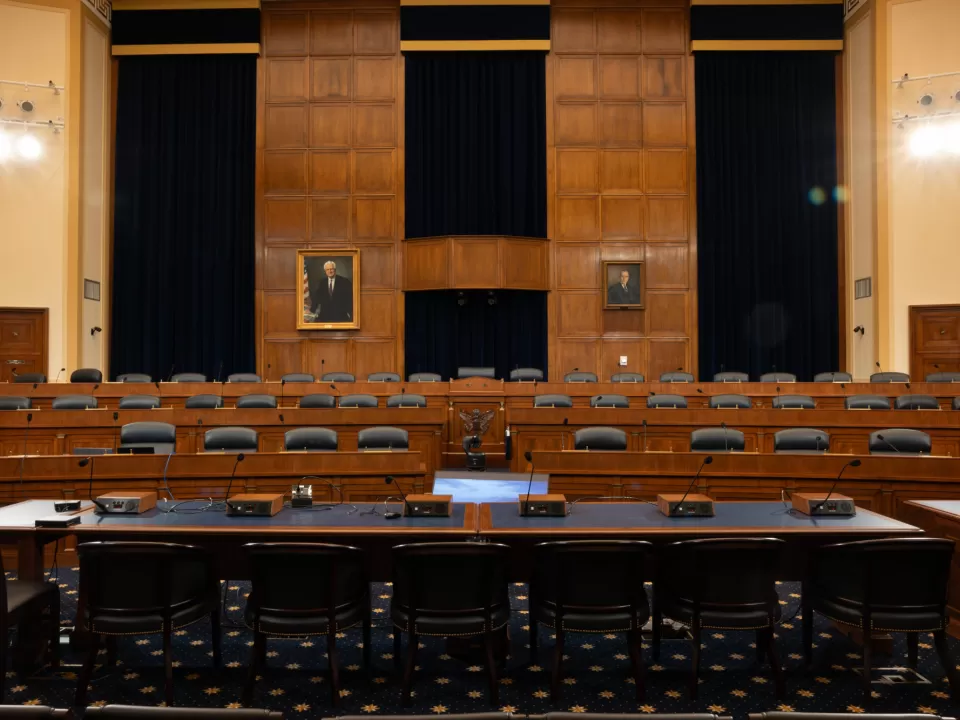
There is also a quieter pattern that matters: congressional oversight. When an institution is built by statute and supported by appropriations, it can become a target of hearings, letters, audits, and reporting demands, even when no lawsuit is filed and no new law passes. That oversight can focus on governance practices, finances, contracting, or leadership decisions.
This is not unique to the Kennedy Center, but the Center’s profile makes it feel personal. For a local nonprofit, oversight might be an audit and a board dispute. For a national memorial and venue, oversight can become a public argument about what the institution symbolizes and who gets to speak for it.
Where the Constitution fits
The Constitution does not contain a national arts center clause. The Kennedy Center exists because Congress chose to create it. That pushes the real constitutional action into structural powers.
Congress’s power to create and fund institutions
Congress can create federal entities and support them financially through its spending power and its power to legislate for the seat of government in Washington, DC. When Congress builds a governance system into a statute, that system is not just a suggestion. It is the source of authority.
Separation of powers and appointments
If statutes give the executive branch appointment roles or other defined influence, that influence is real. But the executive branch cannot exceed what Congress has authorized. The most common legal conflicts in these spaces are not about what is appropriate but about what is ultra vires, meaning beyond legal power.
Government speech and private speech
A national cultural center communicates by what it celebrates, presents, and endorses. When the government itself is speaking, it has wide discretion to adopt messages and symbols. But when a government-linked institution invites private speakers and artists, it can also enter the First Amendment world of forums, access, and viewpoint neutrality.
One caution is important here: whether forum doctrine applies, and how strongly, can depend on the specific space, program, or event and on how the Center is acting in that context. Some decisions look like the institution’s own curated expression. Others can look more like the administration of access to a venue or program where rules about neutrality may matter more.
What rules apply
Readers often ask whether the Kennedy Center is subject to the same legal regime as a federal agency. The honest answer is: some rules can apply because of how the Center is funded and structured, but it is not a one-to-one match with ordinary executive agencies.
For example, federal appropriations typically bring requirements such as audits, reporting, and limits on how particular funds can be spent. Procurement and conflicts-of-interest practices can also be shaped by federal expectations and by the Center’s own policies, especially where federal money is involved. But you should not assume that every government-wide transparency or personnel statute applies automatically in the same way it would to a cabinet department. The controlling question is always the same: what does the Center’s statute require, and what do the relevant appropriations and funding terms condition?
What courts can and cannot do
When controversies turn into legal fights, it is tempting to assume a judge can simply order the institution to behave better. Courts do not operate that way. They resolve legal violations and then craft remedies that fit the violation. They can enforce clear statutory duties, enforce contracts and settlements, and stop unlawful conduct. They generally cannot micromanage artistic programming choices unless the governing law makes specific operational duties judicially enforceable.
This is also why many disputes stay in the political arena rather than the courthouse. A heated public argument about what the Kennedy Center should be is often a debate about priorities and identity. A court needs a justiciable claim, a legal standard, and a remedy it can supervise.
The bottom line
- The Kennedy Center is federally linked by design, which means its governance is shaped by statute, not just tradition.
- It is not a typical federal agency, even though it has statutory governance and receives significant appropriations.
- Funding controversies are governance controversies. When Congress appropriates money directly, oversight and conditions become part of the story, even if Congress is not managing the institution day-to-day.
- Presidential involvement is mostly influence, not command. Attendance and attention shape public perception, but legal authority comes from the statute.
- Courts can enforce law, not taste. Judges can police legal duties and unlawful action, but they are not artistic directors.
If you are watching the next flare-up, keep one question in mind. Not who should get the spotlight, but who has the lawful power to decide, and what the governing statute and funding terms actually authorize.
Related search questions
- Who controls the Kennedy Center? A statutorily defined governance structure led by a board, with Congress controlling the legal framework and significant funding, plus executive influence through defined appointment roles.
- Why did the Kennedy Center CARES Act funding spark controversy? Because it involved a direct appropriation to a high-profile national institution during closures, raising questions about accountability, employment decisions, reserves, and what federal support should require.
- What power does a court have here? Courts can enforce clear legal duties and stop unlawful conduct, but they generally cannot dictate artistic programming absent a concrete legal requirement.