
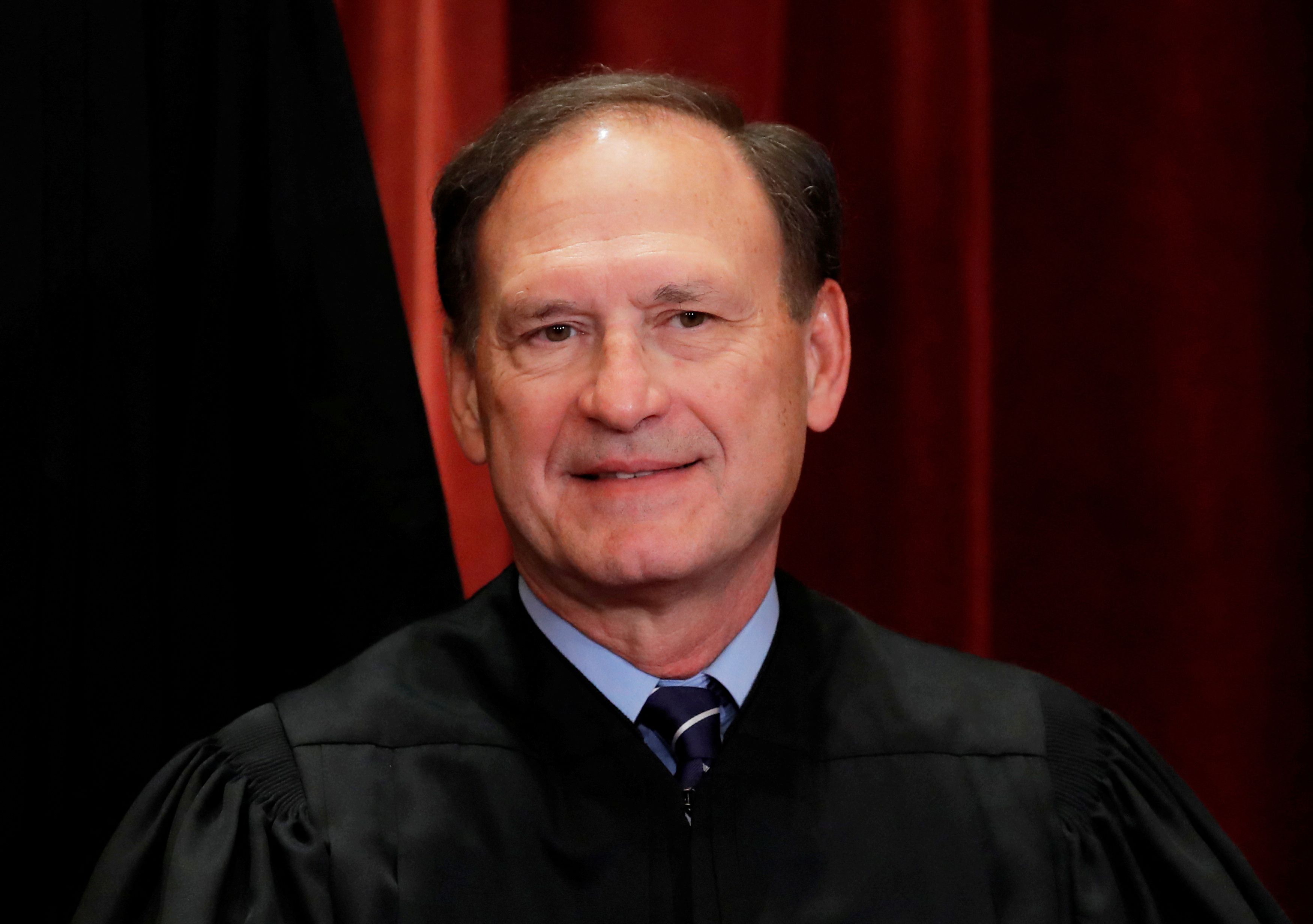
I used to tell my civics students that the Supreme Court is the least democratic branch because we do not vote justices out. What I did not always tell them, at least not until they were ready for the hard truth, is that we also do not “vote in” most of the biggest shifts in American law. Those shifts often arrive through a quieter mechanism: a retirement letter.
When a justice times an exit well, the Court’s direction can be locked in for a generation. When a justice mistimes it, a whole jurisprudential project can unravel. This is not gossip. This is constitutional gravity. Life tenure creates independence, yes. It also creates leverage. And leverage is a form of power.
Join the Discussion
The rule nobody says
Justices insist their retirement decisions are personal, even apolitical. Sometimes that is sincere. But the modern pattern is hard to miss. The last seven Supreme Court retirements have all happened under presidents aligned with the retiring justice’s general ideology.
That is why retirement is not merely “self-care” for a 70-something jurist. It is often the final vote a justice casts, not on a case, but on the Court’s future.
Why this is urgent
Justice Samuel Alito has not retired, despite widespread speculation and an erroneous June report that had to be walked back. But suddenly, with Democrats increasingly likely to take control of the Senate, it looks like the 76-year-old justice may have let his easiest off-ramp pass.
Democrats are virtually certain to win a House majority in the upcoming midterms, and the Senate is now firmly in play. Trump is not on the midterm ballot, but he remains the driving electoral force across the country, and he has sunk to 32 percent in a recent poll. Republicans have invested resources in previously safe red states, including Texas, Alaska, and North Carolina. Prediction markets that long had Democrats at around 40 percent likely to win the Senate now put the odds over 60 percent.
That is the context for the retirement question. A justice can say he does not follow politics. The calendar still does.
10 retirements that shaped the Court
This is not a list of the “best” or “worst” justices. It is a civics list: moments when the timing of a departure clearly affected who got to fill the seat next, and therefore what the Court could look like for years afterward.
1) Ruth Bader Ginsburg (2020)
Ginsburg’s death in September 2020 opened the door for Trump to nominate Amy Coney Barrett. The Senate confirmed Barrett just eight days before the 2020 election.
2) Antonin Scalia (2016)
Scalia died in February 2016 with 11 months remaining in Barack Obama’s term. Mitch McConnell, then the Republican majority leader, announced within hours that the Senate would not consider a replacement. The blockade lasted 293 days, and after Trump won, he nominated Neil Gorsuch.
3) Stephen Breyer (2022)
Breyer retired in 2022, allowing Joe Biden to appoint Ketanji Brown Jackson.
4) Anthony Kennedy (2018)
Kennedy stepped down in 2018, allowing Trump to nominate Brett Kavanaugh.
5) John Paul Stevens (2010)
Stevens, nominated by Gerald Ford but a reliable liberal vote by the end, retired during Obama’s presidency, opening a seat for Elena Kagan.
6) David Souter (2009)
Souter retired during Obama’s presidency, leaving a vacancy that was filled by Sonia Sotomayor.
7) Sandra Day O’Connor (2005)
O’Connor retired in 2005, clearing the way for George W. Bush to appoint Alito.
8) Harry Blackmun (1994)
Blackmun left the bench during Bill Clinton’s tenure, enabling Clinton to appoint a successor.
9) Byron White (1993)
White also left during Clinton’s presidency, giving Clinton another appointment opportunity.
10) Thurgood Marshall (1991)
Marshall is the key exception that proves the rule. He retired in 1991 during George H.W. Bush’s presidency, resulting in the appointment of Clarence Thomas. Marshall lived until January 24, 1993. Had he stayed on the bench until then, his successor would have been chosen by Bill Clinton, who was then four days into his presidency.
What Alito is saying
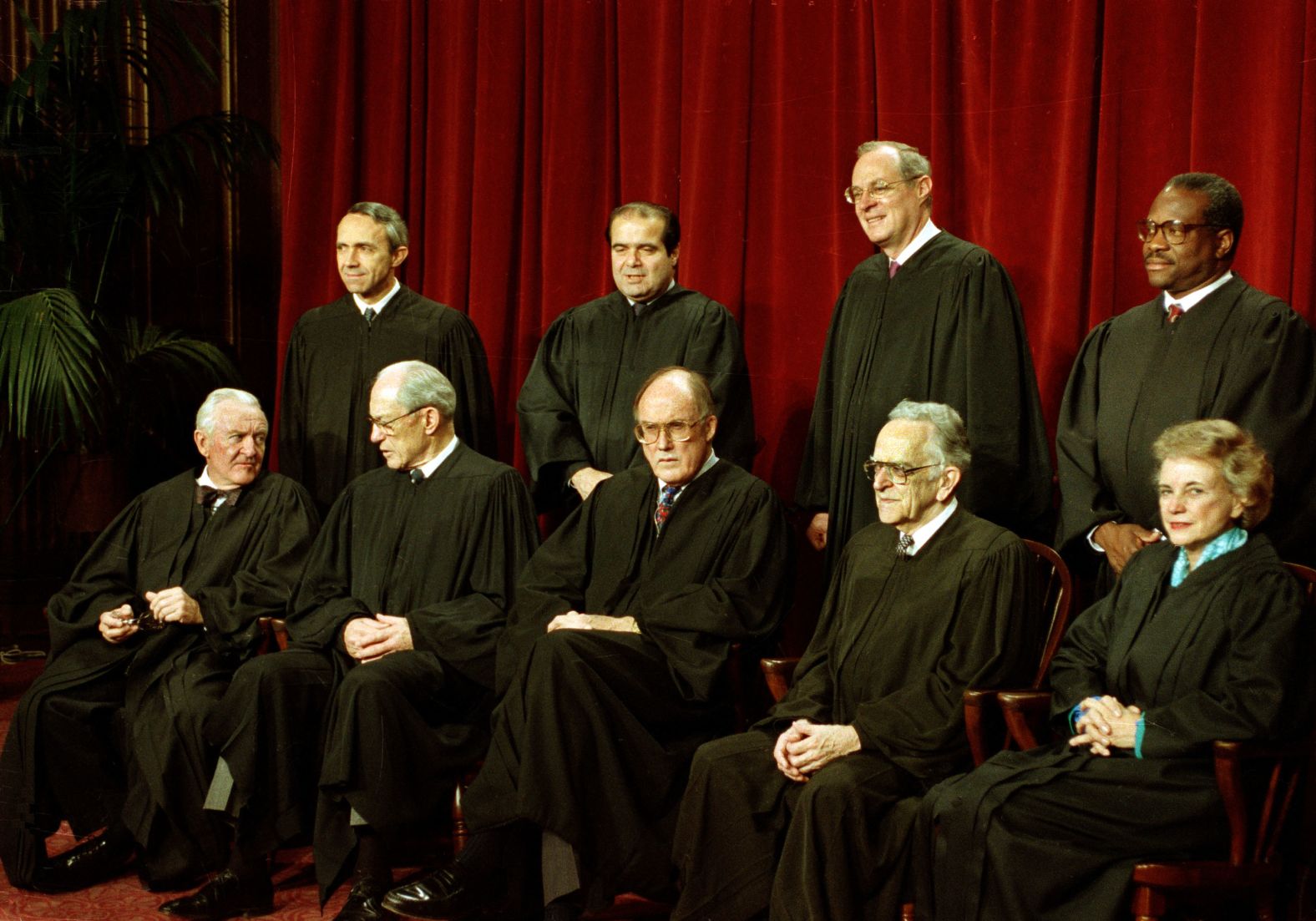
Alito has confirmed he does not intend to retire imminently, but he has also acknowledged the basic reality of aging on a job that never really stops. In an interview, he explained: “it’s something I think that somebody at my age has to think about every term.”
He has also insisted politics will not control his decision, saying, “It’s too hard to predict what the political situation will be and what any president might do with respect to a replacement.”
Clarence Thomas, who is 78, is currently the oldest justice. He has suggested publicly that he will never retire, and he stands to make history as the longest-serving justice in U.S. history in May 2028.
Why Senate control matters
If Democrats flip the Senate, they gain the power to reject Trump’s judicial nominations, including any replacement for Alito. And all indications are that they would do it, even if it required a blockade of a year or two.
Democrats have been unusually blunt about the strategy. Rep. Ruben Gallego said, “We’ve got to do exactly what McConnell did to us.” Sen. Chuck Schumer said, “One of the reasons that we want to do everything we can to take back the Senate is not let Trump put such horrible justices, MAGA justices, on the Supreme Court.” Sen. Richard Blumenthal added: “I think it is slim to none that we would support a nominee from this administration.”
What Alito may be weighing
We do not know exactly why Alito has declined to retire. But the timing problem is simple.
Alito technically could still retire immediately after midterms if Democrats take the Senate. There is nothing to formally prevent him from announcing his retirement in mid-November, which would allow six weeks or so for Trump to choose and the lame-duck Republican Senate to confirm a replacement. But a rushed, post-midterm retirement would disrupt the Supreme Court’s work just as the new term hits its stride, leaving the conservative majority with one less reliable vote.
Barring a shock insta-retirement, Alito will be left with two options. He can wait out the 2028 elections, but then he would have to bank on Republicans to both hold the White House and retake the Senate. Or he can retire in 2027 or 2028 and hope his replacement somehow sneaks through a Democratic-controlled Senate. But it is almost impossible to imagine any Democratic Senator, other than John Fetterman, voting “yes” on any Trump nominee, even if conventionally qualified and relatively uncontroversial.
There is also legacy. Over his career, Alito has authored landmark conservative majority opinions, including the 2022 Dobbs decision, a 2021 case that undermined the Voting Rights Act of 1965, and 2014’s Hobby Lobby decision. The Court’s upcoming slate includes cases that could reshape Second Amendment jurisprudence, immigration policy, and LGBTQ+ rights. If you are thinking like a justice, staying on the bench is not only about succession. It can also be about finishing the work.
The civics lesson
We teach that life tenure protects justices from political retaliation. True. But it also gives them control over succession, which is its own political instrument.
- Independence from voters keeps justices from campaigning.
- Independence over timing lets justices decide when a president and Senate get to shape the Court next.
That second independence is why “retirement season” has become a strategy, not a season. A justice does not need to change a single vote in a single case to change the law. Sometimes the most consequential decision is simply when to leave.
What to watch
Three questions will tell you more than any pundit panel ever will.
- Who controls the Senate? Because confirmations are where retirement becomes reality.
- How close is the next presidential election? Because modern vacancy fights are designed to influence the electorate as much as the Court.
- How old are the justices in the dominant bloc? Because the Court’s future is often decided by simple timing, not lofty theory.
We like to imagine the Supreme Court as marble and principle. But the Court is also bodies and calendars. And in our system, calendars are power.