

The phrase public charge sounds like something you might hear in a political argument. In immigration law, it is something much more specific: a century-old admissibility concept that lets the federal government deny admission or lawful permanent residence (a green card) to certain noncitizens who are likely to become primarily dependent on the government for support.
It keeps returning to the headlines because administrations keep changing how the standard is applied, and states keep going to court over those changes. The most high-profile modern fight was the 2019 Trump-era rule that treated use of certain non-cash benefits as relevant evidence, followed by multi-state lawsuits and injunction battles. That rule stopped operating after a series of court rulings and the Biden administration ended the federal government’s defense of the rule in litigation; DHS later removed it through a separate rulemaking process. In 2022, the Biden administration issued a new rule that largely returned to a narrower approach and generally treats most Medicaid and SNAP use as not counting for public-charge purposes, and that rule has drawn lawsuits from a different coalition of states.
This is not just a policy fight about immigration. It is also a constitutional and structural fight about who gets to set immigration standards, how agencies write rules, and what courts can do when states challenge federal executive action.
Join the Discussion
What “public charge” means
“Public charge” is not a modern invention. It comes from federal immigration statutes that allow the government to refuse admission or deny a green card if an applicant is considered likely to become a public charge. That determination is usually forward-looking. The question is not merely “Have you ever received help?” but “Are you likely to rely on government support as a primary means of subsistence?”
For green cards inside the United States, this issue most commonly arises through adjustment of status under the Immigration and Nationality Act (INA). For people applying from abroad, it shows up in visa processing and consular decisions.
One early clarification
Public charge does not apply equally to all immigrants. Many categories are exempt or screened under different standards, including several humanitarian and victim-protection pathways. (You will see examples below.)
The key point
The INA gives the executive branch room to interpret and apply the public-charge standard, but the statute does not write out a single mechanical formula. It does, however, anchor the inquiry by requiring consideration of specified factors such as age, health, family status, assets and financial status, and education and skills. The space between those anchors and the real-world decision is where rulemaking happens, and where litigation tends to follow.
Do Medicaid or SNAP affect approval?
Sometimes. But the details matter, and they tend to get simplified into misleading slogans.
In most versions of public-charge policy, the government considers a totality of circumstances rather than a single factor. That can include income, assets, age, health, household size, education or skills, and whether the applicant has a legally enforceable affidavit of support from a sponsor.
Where benefits come in is the definition of what kind of government support is treated as relevant evidence for the public-charge prediction.
What the current framework focuses on
The modern, narrower approach centers on whether someone is likely to become primarily dependent on the government for subsistence. In practical terms, that has generally meant counting (1) cash assistance for income maintenance and (2) long-term institutionalization at government expense.
Examples of “cash assistance for income maintenance” can include programs such as Supplemental Security Income (SSI) and Temporary Assistance for Needy Families (TANF), along with certain state or local “general assistance” cash programs. Medicaid is often discussed in this area because while most ordinary Medicaid coverage is generally not treated as a public-charge negative factor under the narrower approach, government-paid long-term institutional care is traditionally the type of benefit that can matter.
Why the benefit list is the fight
Different administrations have tried different definitions. The narrower approach focuses on cash assistance and long-term institutional care. The 2019 rule expanded the list to include certain non-cash programs and made benefit use more central in the analysis. The 2022 rule moved back toward the narrower definition and generally does not treat most Medicaid or SNAP use as a negative factor for public charge purposes, while keeping the focus on primary dependence and long-term institutionalization.
That shifting definition is why the lawsuits matter even to people who are not following immigration politics closely. The legal question is whether the agency has the authority, under the statute Congress wrote, to define which benefits count and how heavily they can be weighed when deciding admissibility or adjustment of status.
Two practical clarifications
- Public charge is not the same thing as “any benefit ever.” Even expansive rules distinguish between programs and create exceptions.
- Public charge is not the same thing as benefit eligibility. Many people can lawfully qualify for and use benefits under program rules. Public charge is a separate immigration screening concept that may (depending on the rule and category) treat certain benefit patterns as evidence of likely future dependence.
If you are looking for certainty, here is the honest answer: the effect of Medicaid or SNAP is not a yes-or-no question. It depends on which rule is in force, which benefits count under that rule, whether a person falls into an exempt category, and what the applicant’s overall profile looks like.
Why states sue DHS

States sue the federal government all the time, but they cannot do it just because they disagree with a policy. They have to show standing, which usually means a concrete injury that a court can remedy.
In public-charge cases, states have argued that changes to immigration rules will predictably shift costs onto state budgets or disrupt state-administered programs. Depending on which direction the rule moves, the theory can run in different ways. For example, states have argued that:
- If immigrants avoid benefits due to fear of immigration consequences, they may delay care until emergency conditions, affecting state and local health systems.
- If immigrants lose eligibility or decline enrollment, states can face administrative and public-health ripple effects.
- If federal rules alter who can obtain lawful status, states may face downstream impacts in labor markets, tax bases, and service systems.
Courts do not automatically accept those theories. Whether they are strong enough depends on the specifics of the rule, the evidence in the record, and how directly the alleged harm is tied to the federal action.
Who controls immigration rules?
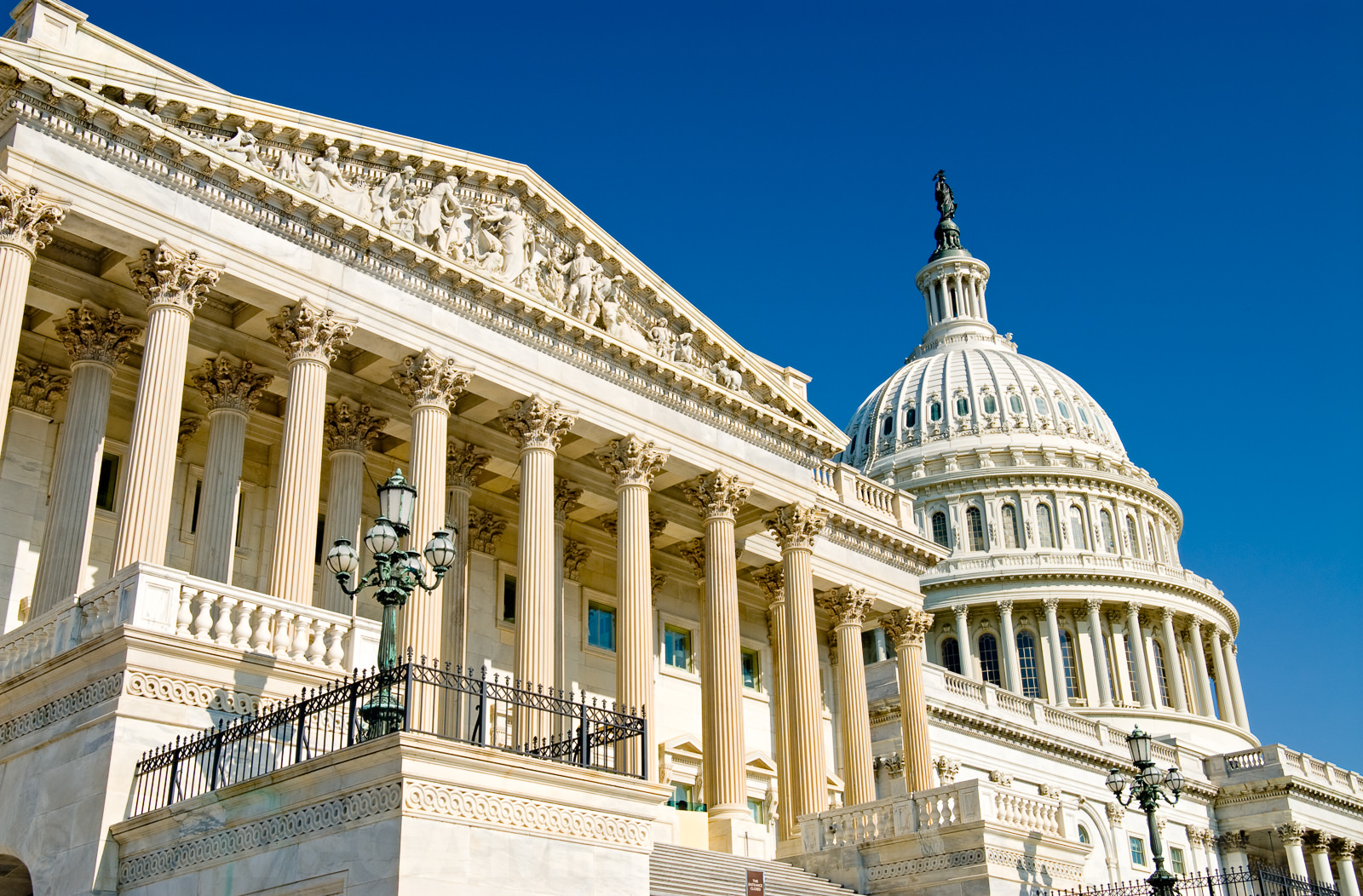
The Constitution does not contain the words “public charge.” What it does contain is the structure that decides who makes immigration law and how.
Congress has enumerated powers over immigration-related subjects, including the power to “establish a uniform Rule of Naturalization.” Over time, the Supreme Court has also recognized broad federal authority over immigration as part of national sovereignty and foreign relations.
But DHS is not Congress. DHS is an executive agency. So its power to shape the public-charge standard must come from delegation, meaning Congress must have given DHS authority to fill in details and administer the statute.
Why this is bigger than benefits
At bottom, these cases test a recurring modern question: when Congress writes a broad standard, how much room does an agency have to turn that standard into a binding rule that changes real-world outcomes?
How a DHS rule gets challenged
A public-charge change of this kind typically arrives through administrative rulemaking. That process is governed largely by the Administrative Procedure Act (APA), which requires agencies to publish proposed rules, accept public comment, and provide a reasoned explanation for the final rule.
In court, challengers usually argue some mix of the following:
- Contrary to law: The rule conflicts with the statute Congress enacted. In other words, DHS cannot redefine “public charge” beyond what the INA allows.
- Arbitrary and capricious: The agency failed to justify its choices, ignored evidence, or changed course without adequately explaining why.
- Procedural defects: The agency did not follow required notice-and-comment steps.
This is where the separation-of-powers issue becomes concrete. Courts are not asked to write immigration policy. They are asked to decide whether the executive branch followed the law that controls executive rulemaking.
Due process and benefit use
Due process questions in public-charge disputes often sound intuitive: if the government offered a benefit legally, is it fair to later treat using it as evidence of “undesirability” for immigration purposes?
Constitutionally, however, “unfair” is not the same as “unlawful.” Due process analysis usually turns on two separate issues:
- Procedural due process: If the government denies a green card on public-charge grounds, what notice and opportunity to respond does the applicant get? What evidence can they submit? How transparent is the decision?
- Substantive constraints: Is the standard so vague or untethered from the statute that it becomes an arbitrary exercise of power?
Visa decisions made at consulates raise an additional reality check: the doctrine of consular nonreviewability limits judicial review of many consular decisions, even when the underlying policy is controversial. Immigration law is also shaped by doctrines that give the political branches significant leeway, especially at the border and in visa decisions. Still, once the government sets a rule for cases that are reviewable, it cannot apply it in ways that violate statutory and regulatory procedures, and those claims often land in federal court through the APA.
What happens next in court
These cases often move quickly because plaintiffs seek emergency relief. A typical sequence looks like this:
- Complaint filed in federal district court.
- Motion for a temporary restraining order (TRO) or a preliminary injunction to pause the rule while litigation proceeds.
- Government response arguing the rule is lawful and that plaintiffs lack standing or are unlikely to win on the merits.
- Appeal to a federal circuit court if an injunction is granted or denied.
- Potential Supreme Court involvement if the dispute is significant or if lower courts split.
The immediate practical question is whether a court pauses the rule before it fully takes effect. The longer-term question is whether the rule survives APA review and statutory interpretation challenges.
Quick FAQ
Is “public charge” new?
No. The concept is old. What changes is how an administration defines and weighs evidence, especially which benefits are treated as relevant.
Can Medicaid automatically disqualify someone?
Usually no single factor is automatic. Public charge determinations are typically made under a totality-of-circumstances framework and, under the narrower approach, focus on primary dependence, cash assistance for income maintenance, and long-term institutionalization at government expense. The practical impact of Medicaid or SNAP depends on the governing rule and the applicant’s full profile.
Who is exempt from public charge?
Many categories are exempt or screened under different standards. Common examples include refugees and asylees, certain trafficking and crime victims, and some applicants under violence-against-women protections. The details depend on the specific statute and pathway.
Can states sue DHS over an immigration rule?
Yes, if they can show standing and meet the requirements for injunctive relief. Courts then evaluate the challenge under the APA and the immigration statute involved.
Is this constitutional law or administrative law?
Often both. The day-to-day legal tools are mostly administrative law (the APA) and statutory interpretation, but those sit inside a constitutional structure about federal power, delegation, and the separation of powers.
The takeaway
“Public charge” is a legal lever that Congress put into immigration law long ago. DHS can pull that lever only within the boundaries Congress set and only through rulemaking that satisfies the APA. The modern litigation cycle has been fueled by sharp policy swings: an expansion in 2019, the rule’s collapse after adverse court rulings and the government’s decision to stop defending it, and a narrower 2022 rule that has faced its own court challenges.
If you want a single sentence summary: this dispute is not only about whether immigrants may use Medicaid or SNAP. It is about how much policy-making power an executive agency can exercise when Congress writes immigration standards in broad terms.