
In American politics, we talk about “the election” like it is a single moment. It is not. It is a process, and in many places it has two big gates.
The first gate is often a primary election or caucus. In the classic partisan model, this is where Democrats, Republicans, and other parties decide who gets to carry their label into the fall.
The second gate is the general election. That is where the state counts ballots under state law and decides who wins office.
Two quick caveats that matter because they change what your ballot is doing:
- Some elections are nonpartisan, especially many municipal and local races and some judicial races. In those contests, there may be no party nomination step at all.
- Some states use “top-two” or “top-four” primaries (sometimes called “jungle” primaries) where the primary ballot includes all candidates regardless of party, and the top finishers advance to the next round.
This distinction is more than terminology. Primaries are mostly about party choice. General elections are about public choice. And confusing the two is one of the easiest ways to misunderstand what your vote is doing.
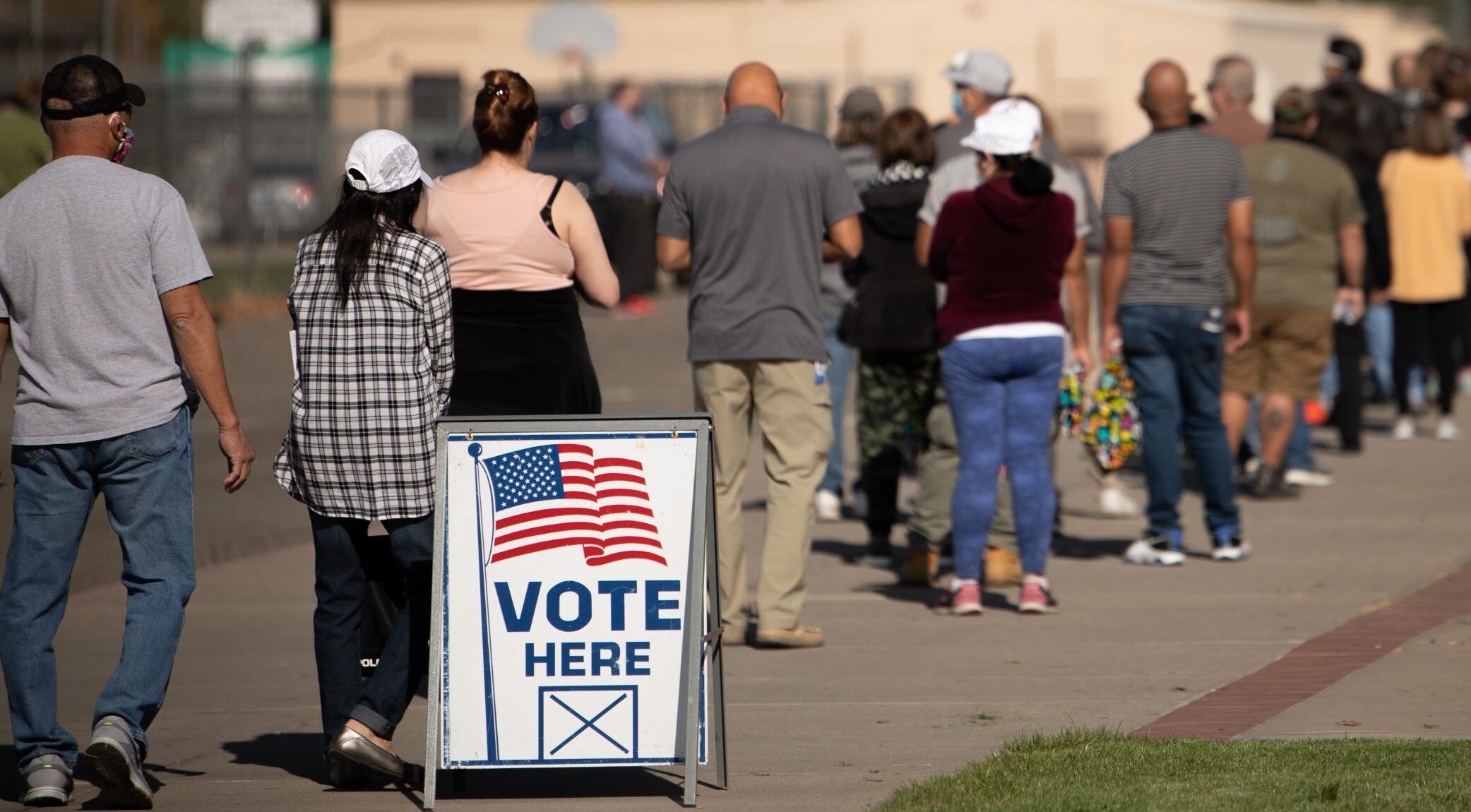
Join the Discussion
What a primary is
A primary election is the contest that usually selects a party’s nominee for a particular office. If you have ever heard someone described as “the Democratic nominee” or “the Republican nominee,” that status is usually earned in a primary (or a caucus), and then formalized under party procedures.
A primary is not one thing nationwide. Each state runs its own system, and parties layer their own rules on top. That is why you will see big differences in timing, ballot design, and who can participate.
One concrete example: in a closed primary, only registered Democrats might vote to pick the Democratic nominee for governor. In November, everyone eligible votes among the nominees (and any other qualified candidates).
Who votes in primaries
- It depends on the state and the party. States set voter eligibility rules and parties choose how open or closed their contests will be within those rules.
- Closed primary: typically only registered party members vote in that party’s primary.
- Open primary: typically any registered voter may choose which party’s primary to vote in (often one party per election).
- Semi-closed or semi-open systems: variations that may allow independents to participate, or require a party declaration at the polling place.
Important separation: state law governs election administration, and in most places the state actually runs the primary machinery (ballots, polling places, counting). But party rules can determine how parties treat the results for purposes of nomination. Those are not the same kind of rule, and they do not always point in the same direction.
What offices are chosen in primaries
Primaries can select nominees for:
- President (through state presidential primaries that allocate delegates under party rules)
- U.S. Senate and U.S. House
- Governor and other statewide offices
- State legislature
- County and local offices
- Some judicial offices (in states that elect judges on a partisan ballot)
What is not chosen in a typical partisan primary is the officeholder in the legal sense. A primary produces a nominee, not a senator, not a sheriff, not a president.
What a caucus is
A caucus is a party-run process that functions like a nomination contest but often looks less like a standard election day. It can involve in-person meetings, public alignment with candidates, multiple rounds of counting, and participation rules set by the party.
Caucuses tend to be:
- More time-intensive, which can reduce participation
- More explicitly party-controlled, since they are meetings rather than state-run ballot elections
- More variable from one state party to the next
Some states have moved away from caucuses toward primaries for accessibility and administrative simplicity. But the central point is the same: caucuses, like primaries, are about choosing a party’s nominee, especially in presidential cycles where the end goal is allocating delegates for a party convention.
Nonpartisan and top-two systems
The “party primary then November general” story is common, but it is not universal.
Top-two and top-four primaries
In some states, the primary ballot includes all candidates for an office, regardless of party. Instead of each party picking one nominee, the system advances the top finishers to the next round. California and Washington use top-two for many offices. Alaska uses a top-four system for certain offices, with a later ranked-choice general election.
In these models, the primary is less about parties choosing a nominee and more about the electorate narrowing the field.
Nonpartisan local elections
Many cities and local jurisdictions run nonpartisan elections. Candidates may not appear on the ballot with party labels at all. Sometimes there is a first round that looks like a primary, but it is really a nonpartisan qualifying election.
And in some nonpartisan systems, a candidate can win outright in that first round if they clear a threshold, often 50 percent. If nobody clears it, the top finishers go to a runoff.
The general election
The general election is the contest that legally fills the office. For federal offices, it is held on the first Tuesday after the first Monday in November. Many state and local elections occur at other times of year, including spring municipal elections and other off-cycle calendars.
If primaries are the parties narrowing the menu, the general election is the public ordering from that menu.
Who votes in the general election
General elections are open to all eligible voters under state law. Party registration usually does not matter. Independents, Democrats, Republicans, and everyone else show up and choose among the nominees and any other qualified candidates.
There are narrow exceptions in some places, especially in certain special districts or local systems with distinct elector rules. The key is that general election eligibility is set by law, not by party membership.
What appears on the general election ballot
- Party nominees who won primaries or were otherwise nominated under party procedures
- Independent candidates who qualified through signature petitions or other state requirements
- Third-party candidates who met ballot access rules
- Ballot measures in many states, including initiatives, referenda, and constitutional amendments
Unlike primaries, a general election is not a party event. It is a state-run election that produces an official result recognized by law.
Presidential note: in November, voters are choosing a state’s slate of electors. Those electors later cast the formal votes that elect the president.
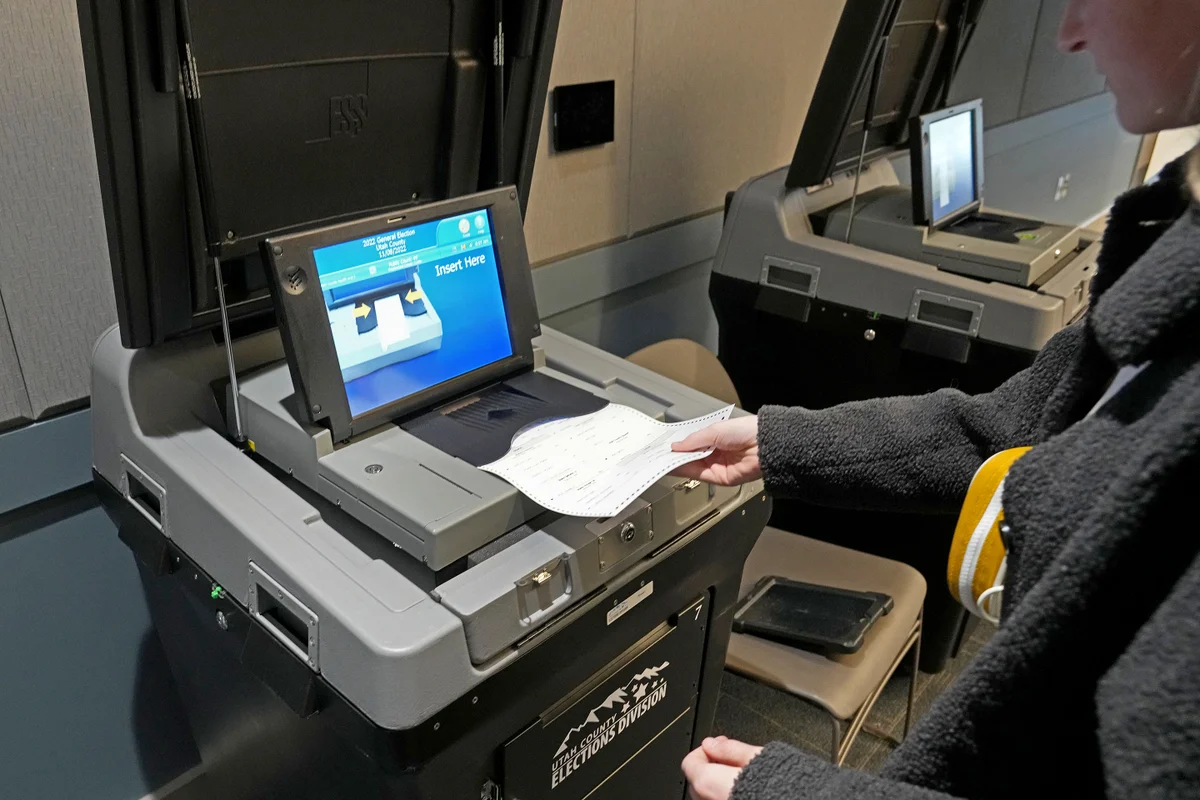
Ballot rules
A typical partisan primary ballot asks a narrower question: Which candidate should represent this party?
A general election ballot asks the broader question: Which candidate should hold the office?
In top-two or top-four systems, the primary ballot is different. It effectively asks: Which candidates should advance?
Primary ballot rules you might notice
- Party-specific ballots (you may receive only one party’s ballot in a closed system)
- Different turnout patterns (primary electorates can look older, more partisan, and less representative)
- Runoffs in some states if no candidate reaches a threshold
- Different deadlines for party registration changes, depending on state law
General election ballot rules you might notice
- All qualified candidates for the office appear together
- Write-in rules vary by state
- Fusion or cross-endorsement is permitted in some places and banned in others
- Different voting methods such as ranked-choice voting in some jurisdictions, depending on state law
- Possible runoff after November in some places if no candidate reaches a required majority
One of the quiet truths of election law is that “the ballot” is not a single institution. It is a format that states redesign for different purposes.
Why primary winners still face November
This is the point that trips up new voters: if a candidate “won the election” in March, why is there another one later?
Because in the standard partisan model, a primary is not the public selecting an officeholder. It is a filter that helps parties present a nominee to the full electorate. In a two-party system, that filter is powerful. But it is still only one step, and not the only path in every state or for every office.
The nomination is not the office
When you win a primary, you win:
- a spot on the general election ballot as that party’s nominee
- party resources and legitimacy, often
- media attention and donor confidence, sometimes
What you do not automatically win is the job.
General elections are built for legitimacy
Even if one party dominates a district, the general election is still the legally recognized mechanism for filling the office. That matters for legitimacy, continuity, and the basic principle that government power flows from an election open to the whole electorate, not just a party subset.
Where the Constitution fits
It is tempting to treat primaries and general elections as equally “constitutional.” They are not.
The Constitution and federal elections
The Constitution does not lay out a detailed primary system. Instead, it creates offices and allocates power over election administration largely to the states, with Congress holding specific authorities that vary by office and context.
Key constitutional touchpoints include:
- Article I, Section 4: states prescribe the “Times, Places and Manner” of congressional elections, but Congress may alter those rules.
- Article II and the Twelfth Amendment: the president is chosen through the Electoral College system. States appoint electors, and Congress sets the time of choosing electors and the day electors vote.
- Voting rights amendments (15th, 19th, 24th, 26th): limit how states may restrict voting based on race, sex, poll taxes, and age for voters 18 and older.
- Fourteenth Amendment: equal protection and due process shape election law through court decisions, especially around discriminatory rules and ballot access.
Primaries sit between state law and party rules
Modern primaries exist because states created them and parties adopted them as the typical path to nomination. Parties have First Amendment associational interests, and states have interests in orderly elections. The result is a hybrid world where:
- the state often runs the election machinery, prints ballots, staffs polling places, and counts votes
- the party can set eligibility expectations and nomination rules, especially in presidential contests where delegates and conventions are central
That is why it matters to keep the categories straight. Some disputes are fundamentally about party governance. Others are about state action and constitutional constraints.
Turnout and strategy
Primaries often have lower turnout than general elections. That one fact changes everything.
When fewer people vote, the electorate is usually:
- more partisan
- more engaged
- more responsive to single issues
So candidates behave differently. They may speak to activists rather than swing voters. They may stake out sharper positions to win a smaller, more ideologically consistent crowd. Then, if they win, they pivot toward the broader electorate in the general election.
This is not hypocrisy so much as math. Different elections produce different incentives.
Quick comparison
- Purpose: Primaries usually choose party nominees or advance candidates; general elections choose officeholders.
- Who votes: Primaries depend on state and party rules; general elections are for all eligible voters under law, with a few specialized local exceptions.
- Ballot: Primaries can be party-specific or all-candidate (top-two/top-four); general elections include the final set of qualified candidates and often ballot measures.
- Governing rules: Primaries are a mix of state law and party rules; general elections are primarily state law, bounded by federal law and constitutional limits.
- Result: Primary winners advance or become nominees; general election winners take office.
The civic point
If you only vote in November, you are voting on the final choice. If you also vote in primaries, you are voting on what choices are even available later.
In safe districts, primaries can function like the real contest because the general election is often lopsided. But that is a political reality, not a legal one. The general election is still where the office is awarded. In top-two or top-four systems, the early round can feel even more like the main event because it determines who advances, and sometimes which two choices the public gets at the end.
The healthiest way to think about it is simple: parties nominate, the public elects, with a handful of important variations in how states structure the narrowing step. When we remember that, the calendar stops feeling like a maze and starts looking like what it is: a multi-step system that tries, imperfectly, to balance private association with public power.