Most Americans learn the basics of elections in one sentence: we vote, someone wins, democracy happens.
But nominations are where modern elections are often decided. In a district that reliably leans red or blue, the tightest, most consequential contest is frequently the primary, not the November general election. That is why the rules for who can participate in a party’s primary can shape a state’s politics in ways that sometimes matter more than the ad wars ever will.
Open primaries and closed primaries are not just two technical options on a bureaucratic form. They are two competing theories about what a political party is and who gets to help choose its standard-bearer.
Join the Discussion
Primaries, caucuses, and nominations
A primary is an election that helps determine which candidates a party will nominate for the general election. In most states, it is administered by state or local election officials under state law, even when parties set key rules or play a major role in candidate access and ballot design. A caucus is a party-run (or party-led) process, usually meeting-based, that serves the same function. Both feed into the same endpoint: a party nominee.
If you already know the broad mechanics, the key takeaway for this article is simple: open vs. closed is about voter eligibility in a party primary, not about how delegates are allocated or how conventions work.
One caveat up front: some states use different rules for presidential primaries than for state and local primaries, and parties often have more leverage in presidential contests even when the state runs the election. So always check your state’s specific rules for the office you care about.
Closed primaries
A closed primary limits participation to voters who are registered with that party. If you are registered as a Democrat, you vote in the Democratic primary. If you are registered as a Republican, you vote in the Republican primary. If you are registered with another party or have no party affiliation, you generally cannot vote in either party’s primary.
Why parties like them
- Party identity stays coherent. The argument is that a party is a private political association, and it should not have its nominee chosen by people who reject that party label.
- Reduces strategic “raiding.” In theory, voters from the other party could cross over to help nominate a weaker opponent.
- Rewards party participation. If you want a voice, join the party.
What critics object to
- Taxpayer-run election, taxpayer-excluded voters. In many places, the state pays for the primary. Critics argue it is odd to fund an election that intentionally shuts out independents.
- Moderates and independents lose influence. Closed systems can amplify the most committed party voters, who may be more ideological than the district as a whole.
- Registration becomes a gatekeeping tool. If deadlines are early or switching parties is restricted near an election, the “choice” to participate may be less open than it sounds.
Open primaries
An open primary generally allows voters to participate in a party’s primary even if they are not registered with that party.
But “open” is not a single model. It is a family of models, and states use different versions. Also, the labels vary across states and election offices, and terms like “semi-open,” “semi-closed,” and “partially closed” are not used consistently. The best way to read the categories below is as practical descriptions of what you, the voter, are allowed to do.
Common types
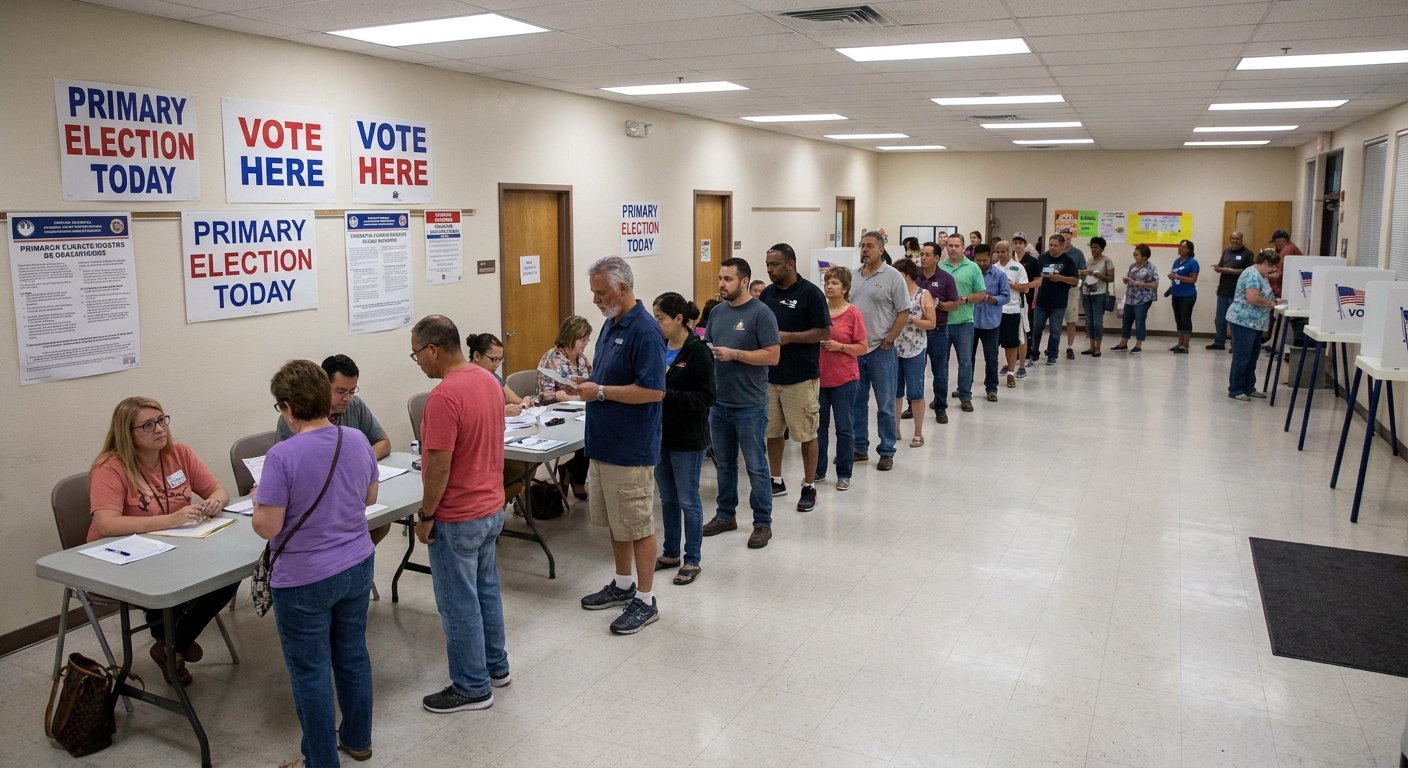
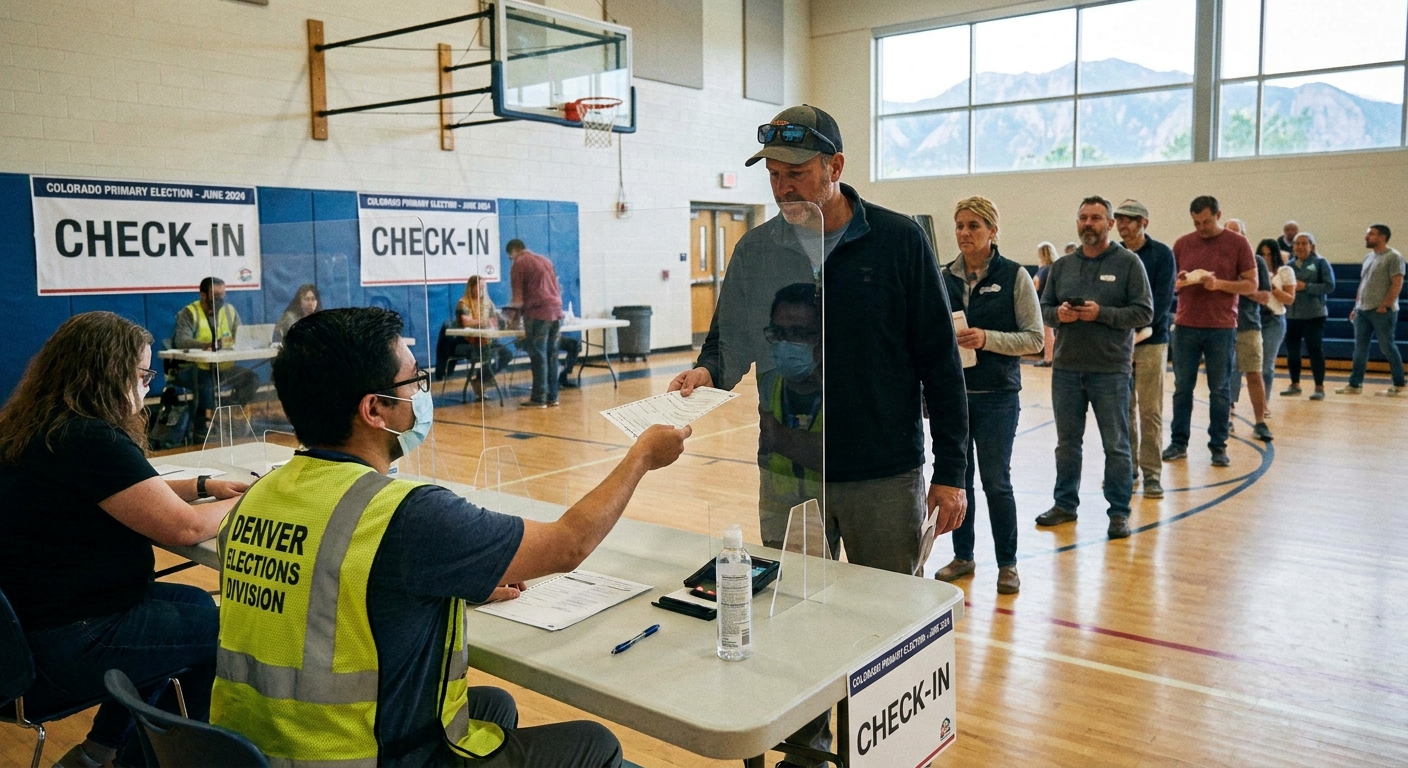
- Open primary (classic). You choose which party’s ballot to vote on at check-in or on the ballot itself on election day, often without changing your registration.
- Semi-open primary. Unaffiliated voters can choose a party ballot, but the state may record that choice or require a public declaration at the polls. In some places, registered party members must vote their party’s ballot.
- Semi-closed or partially closed primary. A party may opt to let unaffiliated voters participate in its primary while excluding voters registered with another party. In practice, the party is “opening” its primary to independents, not to everyone.
- Top-two or top-four primary (nonpartisan blanket primary). All candidates appear on one ballot and all voters can vote. The top finishers advance, regardless of party. This is not just “open.” It changes the structure of the general election.
The key question is always the same: is the primary primarily a party event, or primarily a public election? Open systems lean toward the public-election view.
Who sets the rules
Because primaries are usually creatures of state law, state legislatures typically determine whether the default system is open, closed, or some hybrid. Voters sometimes weigh in through ballot initiatives.
But there is a constitutional tension running underneath. Political parties argue they have a First Amendment right to decide who participates in choosing their nominee. States argue they have a compelling interest in regulating elections for fairness, order, and integrity.
Where courts come in
The Supreme Court has treated political parties as associations with constitutional protections, while still allowing significant state regulation of election administration. The result is not a simple “states can do whatever they want” rule.
- States cannot always force a party to close its primary. For example, in Tashjian v. Republican Party of Connecticut (1986), the Court sided with a party that wanted to allow independents to vote in its primary.
- States cannot always force a party to open its nomination. In California Democratic Party v. Jones (2000), the Court struck down California’s blanket primary (at the time) as violating parties’ associational rights.
- Hybrid systems can survive, depending on the burden and justification. Cases like Clingman v. Beaver (2005) reflect how fact-specific this area can be.
If that sounds fuzzy, it is because it is. The doctrine depends on the exact structure of the primary, the burden imposed, and the state’s justification.
Party registration matters
Party registration is not just a label. It is a key that unlocks or blocks participation, depending on the state’s rules.
In closed-primary states
If your state uses closed primaries, your registration status determines whether you can vote in the election that may matter most in your district. A few administrative details shape the experience:
- Registration deadlines. Some states require party affiliation to be set weeks before election day. If you miss the window, your options shrink.
- Party-switching rules. A state may allow switching but restrict it close to an election to prevent last-minute manipulation.
- Same-day registration or election-day changes. Some states allow same-day registration or allow unaffiliated voters to affiliate at the polls, which can make a “closed” system feel less closed in practice.
In open-primary states
Even in an open system, registration can still matter for:
- Which ballot you receive by default.
- Whether you can participate across party lines in the same contest. You cannot cast ballots in more than one party’s primary for the same contest on the same primary date. If there is a later party runoff, states often require you to stick with the same party you chose in the first round.
- Whether your choice is recorded. In some semi-open systems, choosing a party ballot can be treated as a form of affiliation for limited purposes.
Bottom line: “open” does not always mean “no party boundaries.” It often means “boundaries you cross for a day.”
Runoffs
Open vs. closed rules answer who votes in a primary. Runoff rules answer what happens if the primary does not produce a clear winner, often defined as a majority. (Some states trigger runoffs based on other thresholds, such as falling below 50 percent, below 40 percent, or below a margin requirement.)
How runoffs interact
- Closed primary with a runoff. The runoff is typically closed to the same eligible party electorate. This can intensify the influence of the most consistent party voters, since turnout often drops in runoff elections.
- Open primary with a runoff. The same broader electorate may be able to participate again, depending on the state’s model. But states often add guardrails, such as requiring voters to stick with the same party in the runoff that they selected in the first round.
- Top-two systems can replace a separate runoff. The primary sends two candidates to the general election, which effectively becomes the head-to-head “final round.”
- Top-four systems can pair with ranked-choice voting. Four candidates advance to a ranked-choice general election. The “runoff” effect happens through tabulation rounds, not through a separate later election.
There is also a political reality: a runoff can change the ideological temperature of the electorate. A candidate who survives a low-turnout runoff can emerge with a strong base and a weak coalition, which may be an advantage in some districts and a liability in others.
What a primary is for
Most debates about open and closed primaries are really debates about what a nomination should accomplish.
The case for closed primaries
Closed-primary supporters start with a simple idea: a party nominee is the party’s voice. If nonmembers can choose that voice, the party’s message can be distorted. This is the freedom-of-association argument, and it resonates with the way the Constitution protects private groups from forced membership rules.
The case for open primaries
Open-primary supporters emphasize outcomes, not purity. When the primary is funded, administered, and policed by the state, it can look and feel like a public election. In a two-party system, excluding independents can look less like association and more like exclusion by paperwork, at least to critics.
Supporters also argue that open systems can produce nominees who are more competitive in November because the primary electorate is closer to the general electorate.
The case against both
Some reformers argue that open vs. closed is the wrong battlefield. Their view is that party primaries, even open ones, still force voters into a binary structure that does not reflect how many Americans actually think. That is where top-two, top-four, and ranked-choice proposals enter the conversation.
Reform debates
Primary reform is one of those issues that never quite goes away because it sits at the intersection of legitimacy and power. Whoever controls the nomination process often controls the office.
Open primaries to increase participation
States with large numbers of unaffiliated voters face a recurring question: should independents be locked out of the most meaningful election in the district? Opening primaries is often framed as a straightforward participation fix.
Closed primaries to protect party accountability
Some states swing the other way, especially after contentious cycles. The pitch is that parties should be able to hold their own voters responsible for the nominees they choose, without outsiders influencing the decision.
Nonpartisan primaries
Top-two and top-four systems are sold as a way to reduce partisan extremes and give more voters a meaningful choice. Critics respond that they can produce odd outcomes, like two candidates from the same party advancing in a heavily one-party area, leaving general-election voters without a cross-party contest.
Ranked-choice voting
Ranked-choice voting is not inherently an “open primary” concept, but it often enters the same reform packages. A top-four primary with ranked-choice in the general election aims to broaden the field without guaranteeing a spoiler effect.
Each reform claim comes with a counterclaim, and the arguments are rarely only about civic theory. They are also about who benefits under current coalitions.
Real-world examples
If abstractions are starting to blur together, anchor them with a few well-known models:
- Closed primary example: New York uses a closed primary for most offices, meaning you generally must be registered with a party by the deadline to vote in that party’s primary.
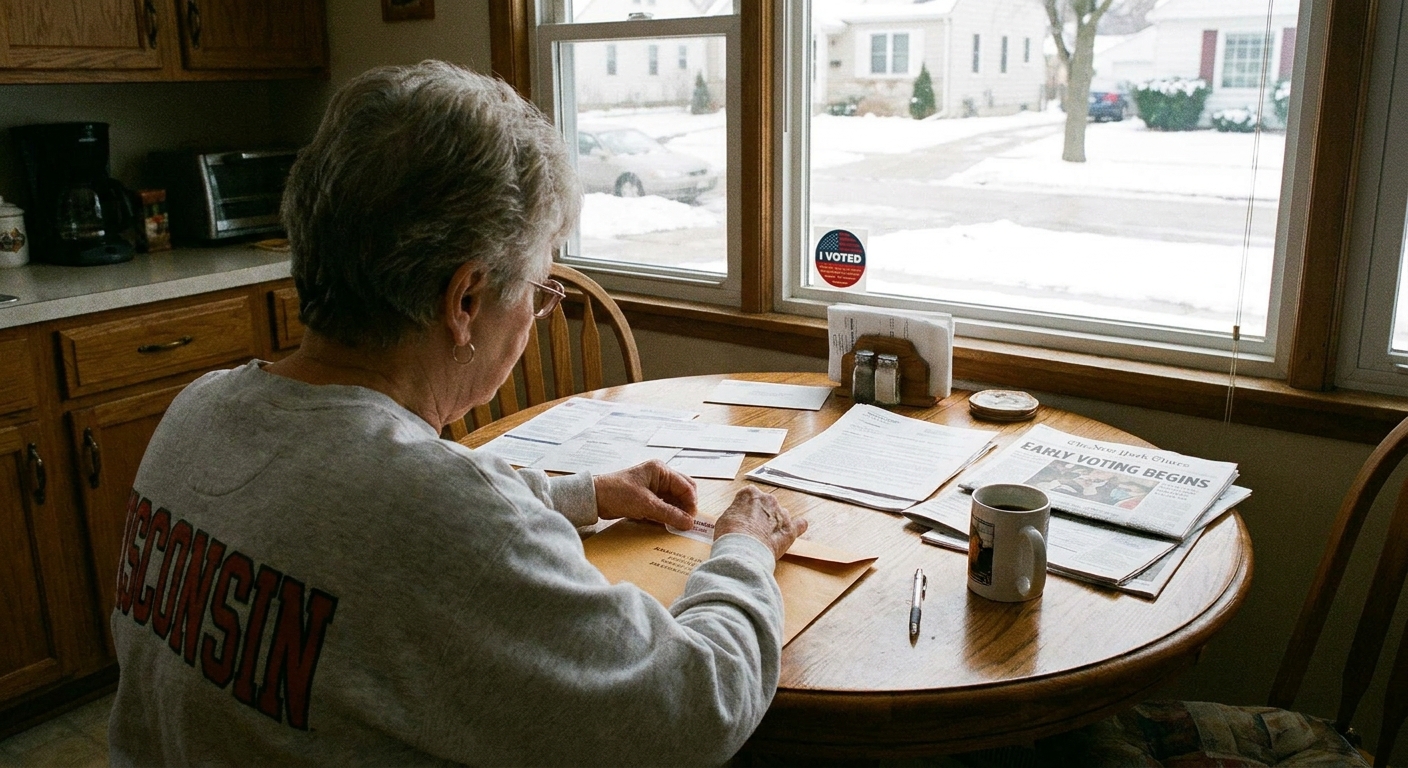
- Open primary example: Wisconsin is commonly described as an open primary state, where voters do not register by party and can choose which party’s ballot to vote on at the polls (with limits on mixing across parties within the same election).
- Top-two example: California uses a top-two primary for state and congressional elections, sending the top two finishers to the general election regardless of party.
- Top-four plus ranked-choice example: Alaska uses a top-four primary and a ranked-choice general election for most statewide and federal offices, with winners determined through tabulation rounds in the general election.
As always, details can vary by office and cycle, so treat these as starting points, not a substitute for your state’s election guide.
What this means for voters
If you are trying to understand your own state’s rules, three questions cut through the noise:
- Do I have to register with a party to vote in a primary? If yes, it is closed or semi-closed in practice.
- If I am unaffiliated, can I choose a party ballot on election day? If yes, it is some form of open, semi-open, or party-permission model.
- If there is a runoff, am I locked into the same party choice? This is where many states add restrictions that are not obvious from the word “open.”
And one more civic reality check: primary rules are not just procedural. They are incentives. They shape which candidates run, which messages work, and which voters campaigns spend time persuading.
The constitutional question
The U.S. Constitution does not lay out a neat blueprint for primaries. The Founders did not design modern party primaries at all. Political parties emerged, then states built election machinery around them, and courts spent generations trying to reconcile that machinery with constitutional principles like association, equal protection, and democratic legitimacy.
Open versus closed primaries sit right in that unresolved space: the party as a private association, and the primary as a public gatekeeper.
So the next time you hear someone argue that opening or closing a primary is “obviously” democratic, ask the more interesting question instead: democratic for whom, and for what purpose?