
Americans talk about “democracy” like it is one thing. In practice, we run two systems at once.
At the federal level, the Constitution is relentlessly representative. You do not vote on federal statutes. You elect lawmakers who vote on federal statutes. Even the President is filtered through the Electoral College. That is not an accident. It is a design choice.
In many states, though, voters can bypass the legislature and write law directly. That family of tools is called direct democracy, and it usually shows up on the ballot as an initiative or a referendum.
This page explains the moving parts, how states differ, and why these processes sit in a constant constitutional tug of war: popular sovereignty on one side, republican government on the other.

Join the Discussion
Three terms people mix up
Much of the confusion disappears once you sort out who starts the process.
Initiative
An initiative begins with the people. Citizens draft a proposal, gather enough signatures to qualify, and then put it before voters.
- Initiated statute: creates or changes a regular state law.
- Initiated constitutional amendment: changes the state constitution itself. This is often harder to undo later.
Referendum
A referendum is a vote on something the government already did or is proposing to do. Referendums come in two common forms:
- Popular referendum (also called a veto referendum): voters collect signatures to put a recently passed law on the ballot, usually to approve or reject it.
- Legislative referral (also called a legislative referendum): the legislature sends a question to voters, often because the state constitution requires voter approval for certain actions.
Not covered here: recall elections, which remove an official. Recall is a different mechanism, with different rules and constitutional issues, and it has its own page.
Where these tools exist
Direct democracy is a state law and state constitution phenomenon. The U.S. Constitution does not create a national initiative or referendum, and Congress cannot be forced onto the ballot by petition.
Most initiative and referendum systems grew out of the Progressive Era in the early 1900s, when reformers argued that party machines and special interests had captured legislatures. The initiative was pitched as an emergency exit.
Today, the map is uneven:
- 24 states allow some form of statewide citizen initiative (statutory and/or constitutional). Some states also allow local initiatives even if they do not allow statewide ones.
- Legislative referrals (ballot questions sent by legislatures) exist in nearly all states, most visibly through constitutional amendment ballots, and often through bonds and major financing questions.
- Popular or veto referendums exist in far fewer states than legislative referrals, and the rules vary widely.
If you are trying to answer, “Can my state do this?”, the decisive source is your state constitution and the election code that implements it. Also note the scope: statewide rules can differ from city and county rules.
Key differences by state
Even when two states both have “initiatives,” they may not be talking about the same machine. Common points of variation include:
- Direct vs indirect initiatives: in some states, a qualified proposal goes straight to the ballot; in others, the legislature gets the first chance to adopt it, amend it, or offer an alternative.
- Statutory vs constitutional: some states allow only one type, or set very different thresholds for each.
- Signature formulas: thresholds may be tied to votes for governor, president, another statewide office, total ballots cast, or (less commonly) registered voters, sometimes with hybrid rules.
- Geographic distribution: some states require signatures from multiple regions or districts. One stated purpose is ensuring broad statewide buy-in, though critics argue it can dilute population centers.
- Cure periods: some states allow sponsors time to fix signature shortfalls; others do not.
- Post-passage rules: how easily legislatures can amend an initiated statute, how agencies implement it, and how quickly litigation can delay it.
How an initiative qualifies
Nearly every state that allows initiatives builds the same basic funnel: draft, review, signatures, validation, then the ballot. The details vary, but the logic is consistent.
Step 1: Drafting and review
In some states, initiative sponsors submit text to an election official for review, formatting, and sometimes a legal compliance check. Many states require a ballot title and summary written by a designated office so voters see a standardized description in the voting booth.
States also differ on whether they allow:
- Pre-election challenges in court (for example, misleading summaries or procedural defects)
- Single-subject rules that prevent a measure from bundling unrelated policies into one yes or no vote
Step 2: Signature thresholds
Initiatives are gated by signatures. States set thresholds in different ways, often using a formula tied to results in a past statewide election (for example, votes cast for governor or president).
Conceptually, a state might require a number of signatures equal to:
- A percentage of votes cast in a prior election for a specified statewide race
- A percentage of registered voters
- A fixed number, though this is less common
Some states also require geographic distribution, meaning signatures must come from multiple counties or legislative districts. One commonly stated goal is to ensure that a statewide measure has statewide backing, not just support concentrated in one area.
Step 3: Verification and challenges
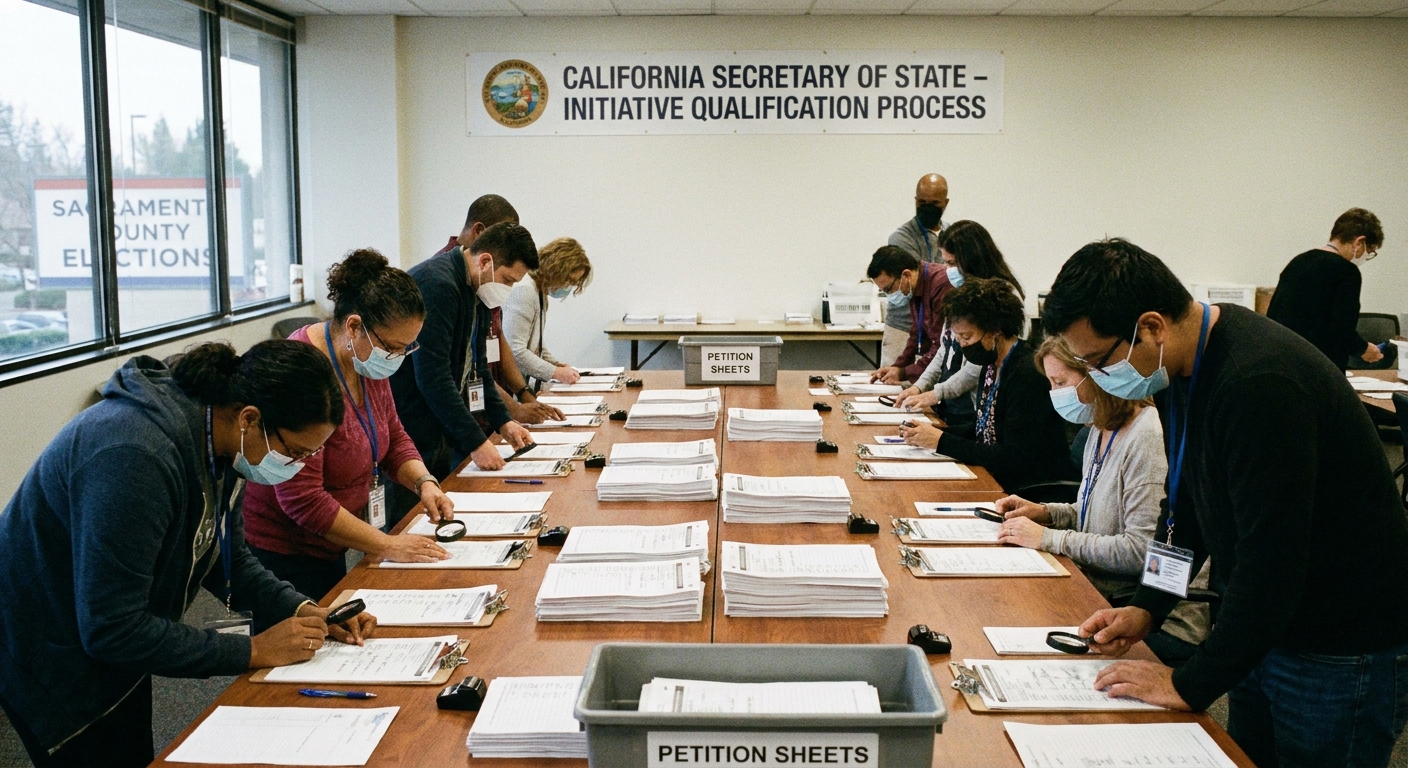
Election offices verify signatures through sampling or full checks depending on state law. Invalid signatures can come from mismatched addresses, non-registered signers, duplicates, or incomplete petition forms.
Opponents may file court challenges arguing that petitions were misleading, circulators violated rules, or the measure does not meet constitutional requirements.
Step 4: Ballot placement and voter guide
Qualified measures appear on the ballot and are typically accompanied by an official voter pamphlet, fiscal analysis, or arguments submitted by supporters and opponents. The quality of these materials varies widely by state, and it matters because voters are often making complex policy decisions with limited time and context.
How a referendum reaches the ballot
Popular referendum
A popular referendum is essentially a time-limited veto power. After the legislature passes a law, citizens can gather signatures within a set window. If they qualify, the law is placed on the ballot and either:
- Is suspended until the election, in some states
- Goes into effect but may be repealed if voters reject it, in other states
States often exempt certain categories from referendum, such as appropriations or emergency measures, to prevent government from being unable to operate.
Legislative referral
Legislative referrals happen for two reasons:
- Mandatory referrals: the state constitution requires a public vote, often for constitutional amendments or major borrowing.
- Optional referrals: lawmakers choose to send a policy to voters, sometimes to share responsibility for controversial decisions, sometimes to bypass internal gridlock.
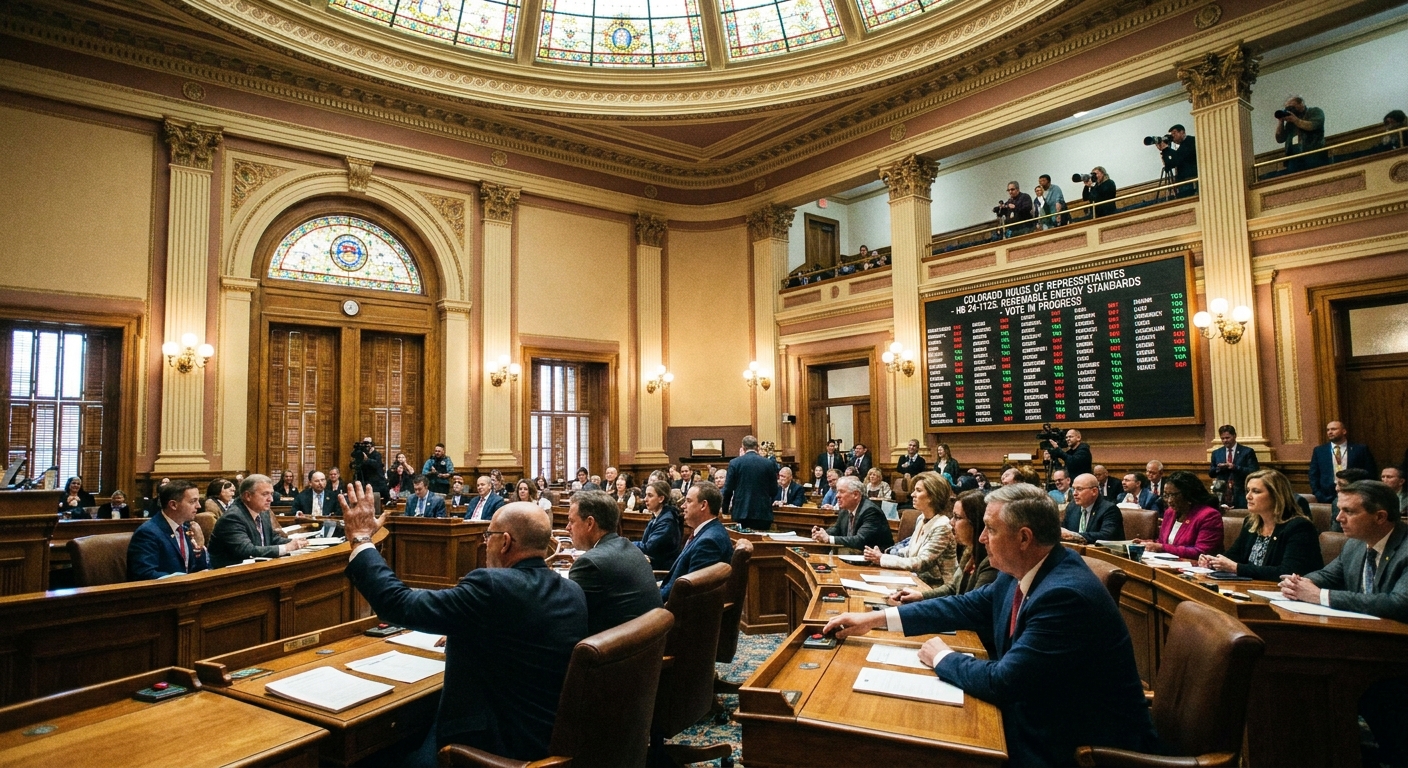
The legislature’s rules define vote thresholds inside the capitol. For example, a state may require a supermajority vote to place a constitutional amendment on the ballot.
Vote thresholds
Once a measure is on the ballot, the next question is: what counts as approval?
Most states: majority of votes cast
Most initiatives and referendums pass with a simple majority of votes cast on that measure.
Some states: extra hurdles
States sometimes add rules designed to make constitutional change harder than ordinary legislation. Examples include:
- Supermajority requirements for certain topics (often taxes or constitutional amendments)
- Turnout or approval thresholds, such as requiring a measure to win a certain share of all ballots cast in the election, not just those who voted on the question
- Double majority rules in limited contexts, requiring both statewide approval and an additional condition such as geographic distribution
These are policy choices embedded in state constitutions. They shape outcomes in subtle ways. A high hurdle does not just block bad ideas. It also blocks ideas that are popular but not intensely organized.
What these measures can and cannot do
Direct democracy is powerful, but it is not unlimited. Two constraints matter most: state rules and the federal Constitution.
State limits
States often restrict initiatives from touching certain subjects. Common examples include:
- Appropriations and the state budget
- Emergency laws
- Administrative details reserved to agencies
- Subjects that violate a state single-subject rule
Another practical limit is that initiatives frequently have to be written in the language of statutes. That turns voters into lawmakers and citizen groups into legislative drafting shops. It is not always a comfortable fit.
Federal constitutional limits
A voter-approved law is still a law. That means it must comply with the U.S. Constitution. Federal courts can strike down initiatives and referendums that violate protections like:
- Equal Protection and Due Process under the Fourteenth Amendment
- First Amendment rights involving speech, religion, and association
- Federal supremacy, where a state measure conflicts with federal law
In other words, “the people voted for it” is powerful politically, but it is not a legal force field.
The constitutional tension
Here is the tension that never quite goes away: the United States is constitutionally committed to republican government, but many states have built direct democracy into their own constitutions.
The Guarantee Clause
Article IV, Section 4 of the U.S. Constitution promises every state a “Republican Form of Government.” That is called the Guarantee Clause.
It invites an obvious question: if voters can make laws directly, is the state still “republican”?
Historically, the Supreme Court has generally treated Guarantee Clause disputes as political questions for Congress rather than issues courts should resolve. Classic examples include Luther v. Borden and Pacific States Telephone & Telegraph Co. v. Oregon. The practical result is that state direct democracy systems have largely been left standing without federal judges squarely deciding whether they violate the Guarantee Clause.
Filtering versus sovereignty
The Founding era distrust of pure democracy was not subtle. The Constitution is full of friction: bicameralism, separation of powers, staggered terms, and federalism. Those features force coalition-building and slow policy change.
Initiatives remove some of that friction by design. Supporters call that accountability and a check on stalled or insulated legislatures. Critics call it a majoritarian shortcut that can flatten complexity into slogans. Both are describing the same structural trade.
- Legislatures can deliberate, amend, and compromise, but they can also stall, evade, or get captured.
- Initiatives can move quickly and reflect public will, but they can also simplify complex policy into a single up or down question, with no committee markup and no chance to revise once it is on the ballot.
Rights and judicial review
Direct democracy creates a recurring worry: if a majority can legislate directly, what protects the minority?
The answer, in American constitutional law, is supposed to be the same answer regardless of who passed the law: constitutional rights and judicial review. When those safeguards are clear, initiatives function as another way to make policy. When those safeguards are contested, initiatives can become a fast lane into constitutional litigation.
Why it feels different in practice
Even when the legal mechanics look simple, direct democracy changes the political ecosystem.
Ballot language is the battlefield
Because voters often rely on titles and summaries, fights over wording become proxy fights over the outcome. Small phrasing choices can change how undecided voters interpret a measure.
Money concentrates
Campaign spending matters in all elections, but initiatives and referendums can concentrate money around a single policy question. Advertising tends to reward emotional clarity over legislative detail.
Constitutions become policy containers
In states that allow constitutional initiatives, voters can lock ordinary policy into the state constitution. That can insulate a policy from lawmakers, but it can also harden the constitution into a patchwork of issues that are not really constitutional in character.
Implementation is its own fight
Passing a measure is not the end. Agencies still have to interpret and enforce it. Lawsuits can delay rollout. Courts may sever invalid parts while leaving the rest standing. And measures that imply spending can run into a basic problem: many states limit initiatives from directly appropriating funds.

Common misconceptions
“Initiatives are always binding.”
Usually they are, but the details matter. An initiated statute may be amended later by the legislature in some states, sometimes immediately, sometimes after waiting periods, sometimes only by supermajority. Constitutional initiatives are typically harder to change.
“If it passes, it is automatically constitutional.”
No. Courts can and do invalidate voter-approved measures under both the state and federal constitutions.
“A referendum is just another word for an initiative.”
They are opposites in one key sense: initiatives propose new law from outside the legislature; referendums ask voters to approve or reject laws that the government has already enacted or referred.
“Direct democracy means the state is not a republic.”
The U.S. system tolerates a mix. States remain republican in their basic structure because they still have representative institutions that do the bulk of governing. Direct democracy is better understood as a state-level modification, not a replacement of the republican framework.
Quick glossary
- Direct initiative: a citizen initiative that goes straight to the ballot after qualifying.
- Indirect initiative: a citizen initiative that goes first to the legislature (and sometimes later to the ballot).
- Initiated statute: voter-proposed law that changes the state code.
- Initiated constitutional amendment: voter-proposed change to the state constitution.
- Popular referendum: voter petition to approve or repeal a law passed by the legislature.
- Legislative referral: measure placed on the ballot by lawmakers, often a constitutional amendment.
- Signature threshold: number of valid signatures required to qualify a measure for the ballot.
- Single-subject rule: a rule requiring a ballot measure to address one main topic.
The takeaway
Ballot initiatives and referendums are the places where “We the People” becomes literal. But they are also where the American design shows its seams.
Direct democracy can be a corrective when legislatures are paralyzed or captured. It can also become a shortcut around deliberation, a way to constitutionalize ordinary policy, or a mechanism for majorities to test the limits of minority rights.
If you want to understand a ballot measure in your state, do not start with the campaign ad. Start with the process: who wrote it, how it qualified, what threshold it must clear, what kind of initiative or referendum it is, and what constitution will judge it afterward.