
Whenever an outsider candidate wins a primary, a familiar question suddenly becomes urgent: how did they get on the ballot in the first place, and can the party change the rules to stop it from happening again?
This week’s wave of commentary about insurgent primary wins and establishment pushback has people searching for a process answer, not a hot take. So here is the legal reality, in plain English: in most states with state-run primaries, the primary ballot is a state instrument, not a party document in the way many people assume. The state prints it, the state runs the election machinery, and the state can attach conditions to participation. But parties are not helpless either. They have constitutional rights of their own, and in some situations they can set meaningful gatekeeping rules through state law, party-run nominating methods, or both.
Ballot access in primaries lives at the intersection of two things that regularly collide in American law: state control over elections and private party associational rights.
Join the Discussion
The basic structure
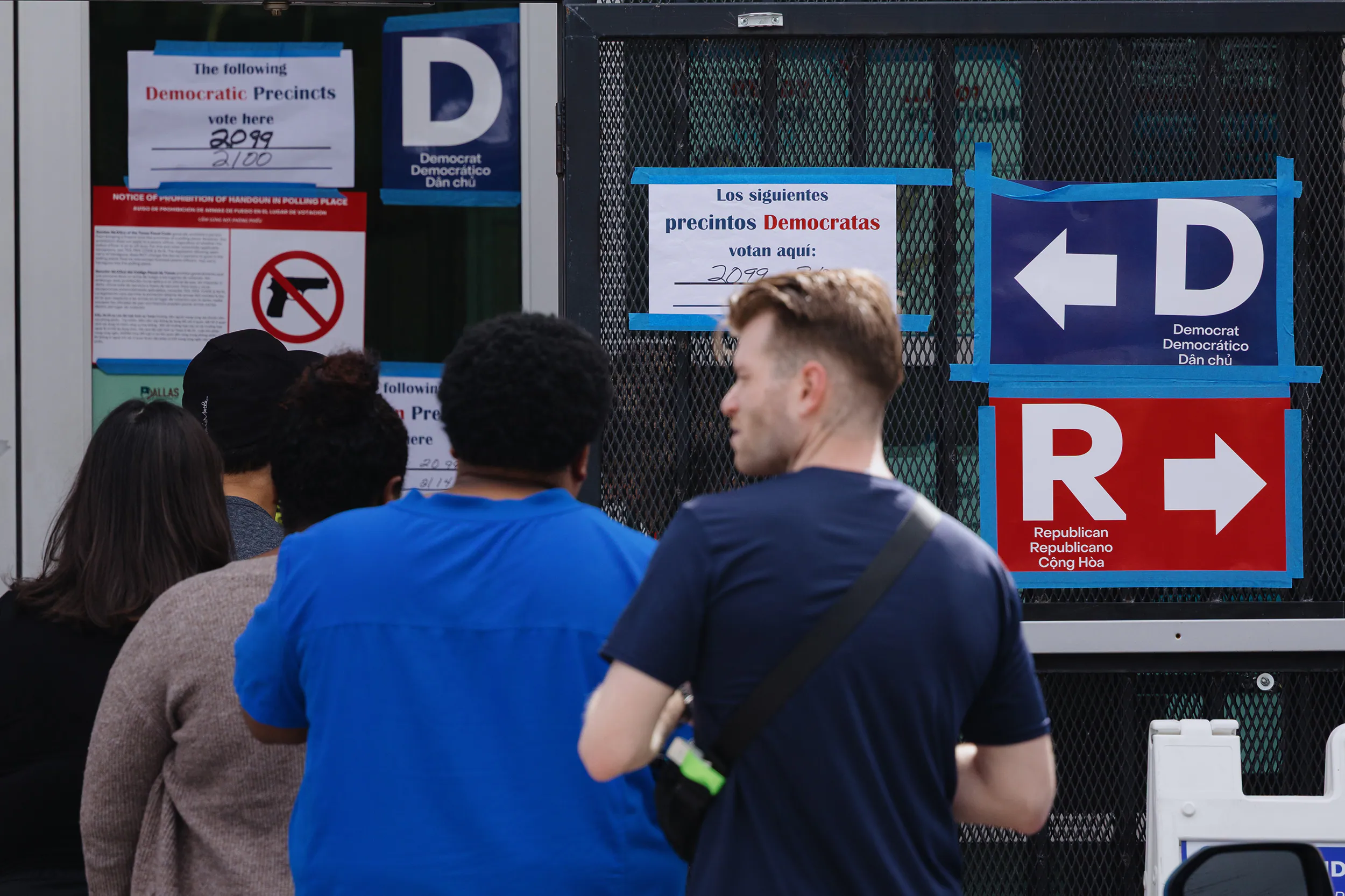
Start with the simplest point that gets lost in political arguments: a primary election is an election. In most states, it is administered under state law, typically by county election boards using state-designed ballots, deadlines, and verification systems.
That matters because the Constitution gives states the default power to regulate elections. Article I, Section 4 (the Elections Clause) allows state legislatures to prescribe the “Times, Places and Manner” of congressional elections, subject to congressional override. For state and local offices, states have broad authority as well, but they still operate under major constraints from the U.S. Constitution (including the First Amendment and Equal Protection), federal statutes like the Voting Rights Act, and often state constitutional rules.
Primaries are a hybrid. Political parties are private associations, but when a state chooses to nominate by primary, it brings the party’s internal choice into a public, state-managed process. That is why the rules often look like a blend of party bylaws and state election codes. For example, a party might prefer one definition of who counts as a member, but the state may enforce its own party-registration deadlines for who can vote in the primary or sign a party petition.
How candidates get on the ballot
Details vary by state, sometimes dramatically. But most primary ballot access systems revolve around the same checklist. If you are searching “primary ballot requirements by state,” this is the menu of requirements you are usually seeing in different combinations.
1) Filing paperwork and fees
Nearly every state requires some version of: a declaration of candidacy, a filing fee or fee waiver, and forms that trigger campaign finance reporting.
2) Petition signatures
Many states require candidates to submit a set number of valid signatures from eligible voters, sometimes within a narrow collection window. Common variables include:
- Raw number required: a fixed number, or a percentage of party voters in a district.
- Who may sign: rules vary widely. In some states, signers must be registered members of that party. In others, they must simply be eligible to vote in that party’s primary (which can include unaffiliated voters). Some systems bar voters registered with a different party from signing.
- Geographic distribution: some states require signatures from multiple counties or subdivisions.
- Verification rules: matching voter rolls, address rules, witness or circulator requirements, notarization, and deadlines.
3) Candidate qualification rules
Some qualifications are constitutional (age and citizenship for federal offices). Most others are statutory (residency requirements for state offices, party registration timing rules, and “sore loser” laws that bar certain post-primary maneuvers and vary widely by state).
One important nuance: for federal offices, states cannot add new eligibility qualifications beyond those in the Constitution (age, citizenship, and residency). Separate constitutional provisions can still affect eligibility in rare contexts, including ongoing litigation over the Fourteenth Amendment’s Section 3 in some cases. But states generally cannot invent new “extra” requirements for Congress by calling them ballot access rules.
Where party rules stop
The cleanest way to understand the boundary is this, with one caveat: it depends on whether the state has chosen to give party rules legal force.
- If the rule determines access to a state-printed ballot, it is usually state law, or it must be incorporated into state law to be enforceable.
- If the rule determines what the party recognizes internally, it can be party law, but it may not control the official ballot unless the state gives it that force.
That is why party officials can be loud about “policing” primaries while still being boxed in. They may want to keep certain candidates out. But unless state law gives them a lever, the party’s preference does not automatically become a legal barrier.
Reality check: election law is intensely state-specific. For exact thresholds and deadlines, the only reliable answer is your state election code and your secretary of state or local election board guidance.
Can parties block a candidate?
Sometimes yes, often no, and it depends on how the state structured the nomination.
Scenario A: State law controls access
In many states, ballot access is primarily administrative: meet the signature threshold, file by the deadline, comply with campaign rules, and you are on. Party leaders can endorse, recruit challengers, and campaign against an insurgent. But they usually cannot simply veto a compliant candidate because they dislike the ideology.
Scenario B: State law delegates gatekeeping
Some states give party committees authority over certain ballot questions, like filling vacancies, setting participation rules the state enforces, or determining who may use a party label in specific circumstances. In those systems, party processes can matter a lot because the state has chosen to treat certain party determinations as legally operative.
Scenario C: Convention or caucus nominations
If nominations happen through internal party processes rather than state-run primaries, parties typically have greater control over who advances as the party’s nominee. But once the state converts the party’s choice into the printed general-election ballot, the state can still attach procedural requirements.
Scenario D: Presidential primaries
Presidential nomination rules can be different. States still administer many presidential primaries, but parties often impose additional rules for delegate allocation and candidate recognition, and state law sometimes incorporates those party rules. The result is the same theme with a different mix: state-run machinery plus meaningful party control in certain places.
The constitutional tension
The First Amendment protects freedom of association. The Supreme Court has repeatedly recognized that political parties, as associations, have an interest in defining their membership and in choosing their nominees without heavy-handed state interference.
That principle is why states cannot always force a party to open or close its primary against the party’s will. For example, the Court has sided with parties seeking to include voters they want (as in Tashjian v. Republican Party of Connecticut) and has also invalidated systems that forced parties to let nonmembers pick their nominees (as in California Democratic Party v. Jones). Other cases, like Clingman v. Beaver, show that states sometimes can impose modest participation limits depending on the burden and the justification.
But that associational right is not unlimited. Once a state runs an election on public ballots, it can regulate to protect ballot integrity and orderly administration. Courts often evaluate these disputes using a balancing approach associated with Anderson v. Celebrezze and Burdick v. Takushi (often called the Anderson-Burdick test), weighing the severity of the burden against the state’s interests and the fit between means and ends.
How challenges work
One underappreciated part of ballot access is what happens after signatures and paperwork are filed. In many states, opposing campaigns, party actors, or even ordinary voters can file objections to a candidate’s petitions or eligibility.
The fight often turns on technicalities: whether signers were eligible, whether addresses match voter rolls, whether a circulator properly completed required attestations, and whether deadlines were met. Those disputes may start with election administrators and can move quickly into administrative hearings or court challenges, especially close to printing deadlines. Practically speaking, that means ballot access is not only about collecting signatures. It is also about building a submission that survives scrutiny.
What parties control in practice
Even where party leaders cannot legally “ban” a candidate from the primary ballot, parties still have meaningful tools. Most of them are political, not legal.
- Endorsements and coordinated support: money, staff, turnout operations, and access to donor networks.
- Party bylaws and internal discipline: committee assignments, party resources, convention roles, and other internal benefits.
- Rules for party leadership roles: who can serve as an officer, who can represent the party, and what standards apply.
- Candidate support standards: parties can set criteria for receiving official party backing without changing ballot access.
Those levers can be powerful. They just do not always answer the narrow search query people are typing into their phones: can parties block candidates from the ballot? In many states, the answer is still: not by preference alone.
What states can and cannot do
States have broad authority to design ballot access systems, but there are constitutional ceilings.
States can:
- Set filing deadlines, format rules, and verification procedures.
- Require reasonable signature thresholds to manage crowded ballots.
- Regulate primaries as part of administering elections, subject to constitutional limits.
States cannot:
- Impose severe burdens on political participation without strong justification under the Anderson-Burdick framework.
- Discriminate in ways that violate equal protection or federal voting rights protections.
- Add extra qualifications for federal offices beyond what the Constitution sets.
That last point is crucial. When the office is federal, states can regulate ballot access procedures, but they cannot turn those procedures into backdoor disqualifications.
Open vs closed primaries
A major source of confusion is that Americans talk about “the primary” as if it is one system. It is not. States generally use one of these models, although labels are not perfectly consistent from state to state:
- Closed primary: only registered party members vote in that party’s primary.
- Open primary: any registered voter can choose a party’s primary to vote in (sometimes with limits on switching).
- Semi-closed or semi-open: often means unaffiliated voters can participate in some way, but states differ on whether voters choose a party ballot on Election Day, whether that choice changes registration, and how party members are restricted.
These structures influence whether “outsiders” can win primaries, but they are primarily state policy choices constrained by constitutional boundaries and, in some cases, party associational rights. They are not simply party preferences that can be flipped overnight.
Why signatures become a flashpoint
When a surprising candidate breaks through, people look for a mechanical explanation: “Did they exploit ballot access?” Most of the time, what that phrase really means is: they complied with the rules better than the establishment expected.
Signature requirements can be technical and unforgiving. Campaigns that understand the deadlines, validity rules, and local geography often outperform better-funded opponents who treat ballot access as paperwork rather than as a ground game.
And because petition rules are state law, the “fix” party actors often propose is also state law: raise signature thresholds, tighten who may sign, shorten collection windows, add distribution requirements, or change party-registration timing rules. Those changes are not automatically unconstitutional, but they invite litigation if they start to look like punitive barriers rather than administrative filters.
A quick reality check
If you are asking one of today’s most common queries, here is the practical answer, with the usual state-by-state caveat:
- “How does ballot access work in primaries?” Through state election codes that require filings, deadlines, and often petition signatures, plus any party rules the state has incorporated.
- “Can parties block candidates from the ballot?” Not just because they want to, unless state law gives them that authority, the nomination is handled internally (like a convention), or it is a presidential process with additional party rules.
- “Do ideological outsider candidates have different ballot access rules?” Usually no. The rules are typically the same for any candidate seeking a party’s nomination. The difference is organization, timing, and whether the campaign can meet technical requirements and survive challenges.
- “Who controls primary ballot access?” Mostly the state in state-run primaries, sometimes the party through delegated authority or party-run nominations, and always both are constrained by the Constitution.
The deeper lesson is uncomfortable for both sides of an internal party fight: primaries are not just party meetings. They are a state-regulated gateway to public power. That is why the law, not just the party, has a say in who gets through the door.
What to watch next
When you see parties talk about “reforming” primary ballot access after upset wins, look for proposals in three buckets:
- State legislative changes to petition and filing requirements and voter or candidate affiliation timing rules.
- Changes to primary type (open vs closed) and party-registration timelines for voters.
- Internal party reforms that change endorsements and support, without changing ballot access at all.
Each bucket triggers different legal questions. And that is the constitutional hook hiding under today’s news: the fight is not only about ideology. It is also about which institutions get to write the rules of participation, and how far they can go before courts treat it as a burden on democratic competition rather than election administration.