
Most immigration crackdowns are loud on purpose. Raids. Press conferences. Big numbers. But some of the most unsettling moves are the ones that happen quietly, on paperwork most people will never see.
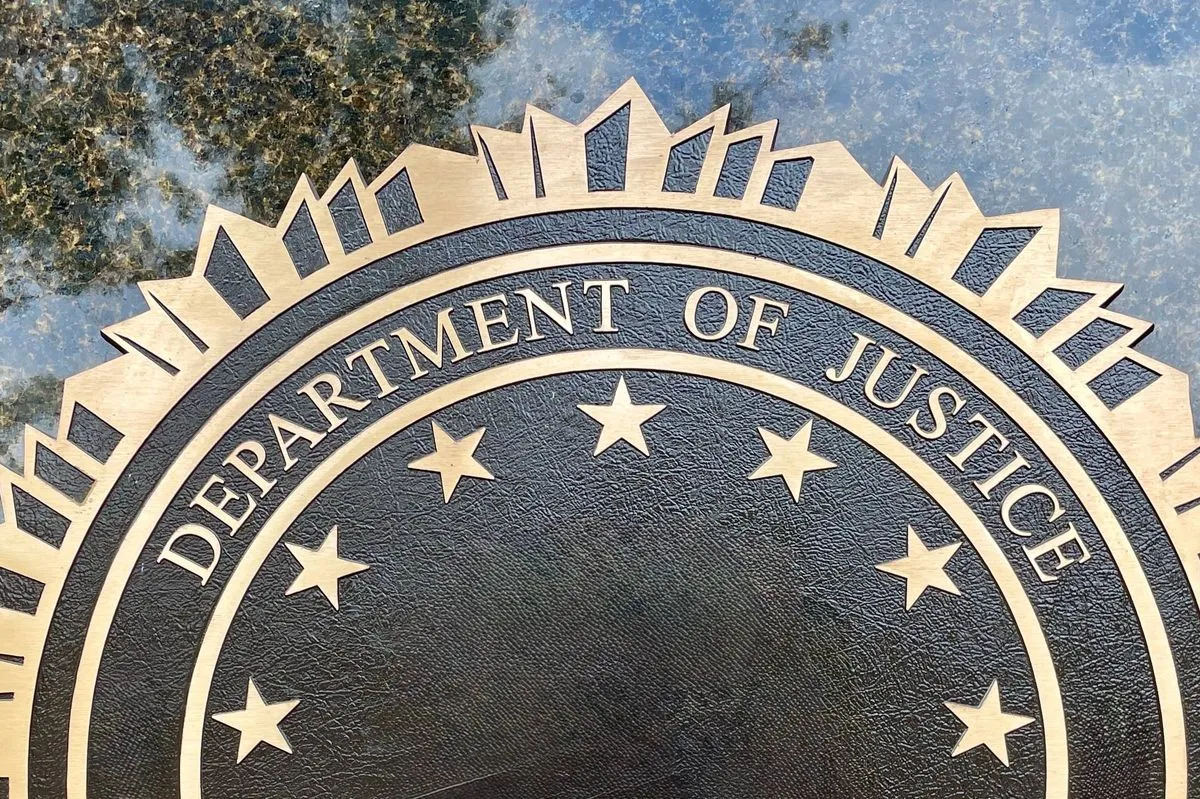
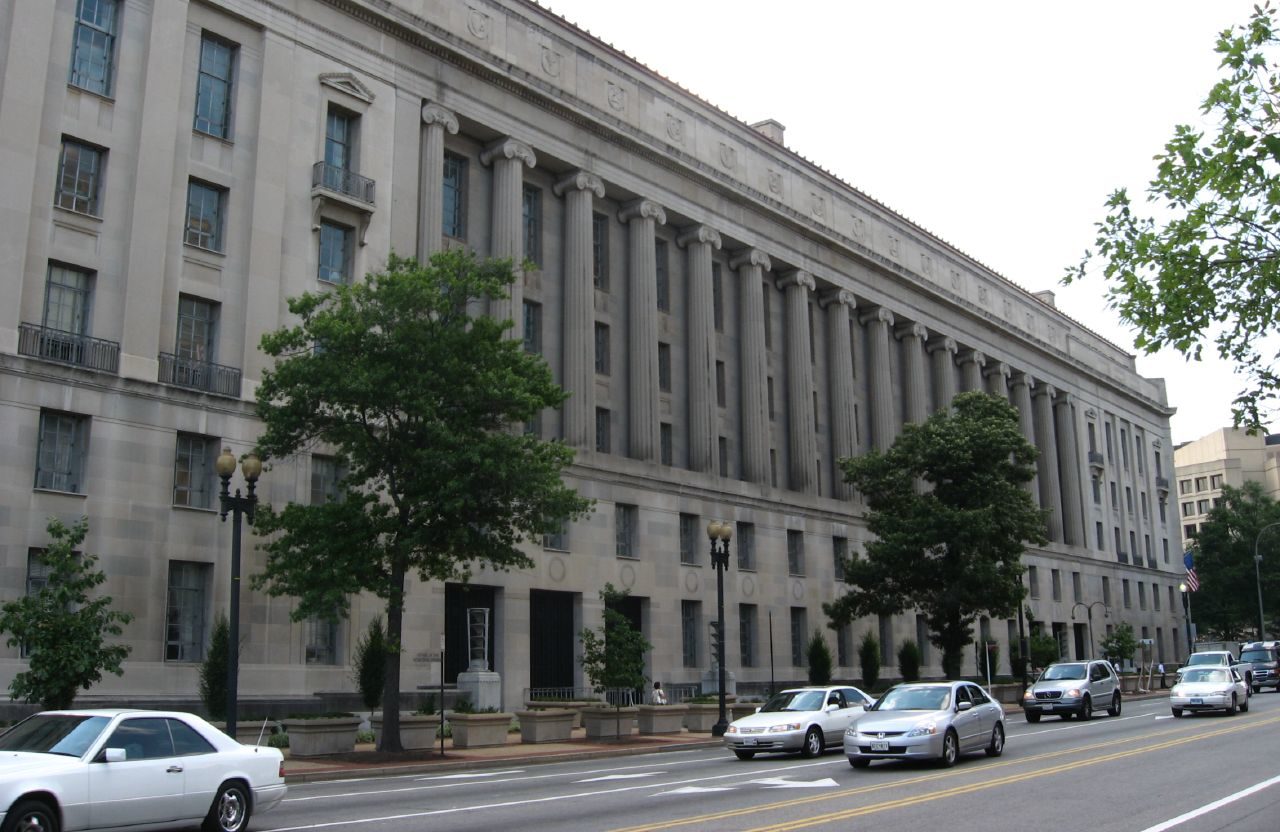
This month, the Trump administration took a step that should make anyone who cares about constitutional guardrails sit up straight: the Justice Department filed to use a special deportation tribunal that, until now, no presidential administration had ever used. The mechanism is real. It is on the books. And it was built to function with secrecy at the center.
Join the Discussion
The court that just came to life
On July 15, the Justice Department submitted an application to the Alien Terrorist Removal Court, a tribunal created by Congress in 1996 as part of the Antiterrorism and Effective Death Penalty Act.
The original idea was to give the government a way to pursue removal cases tied to national security while keeping sensitive material secret. In practice, that secrecy changes the balance of the process. Classified evidence can be shown to a lawyer, but the person facing deportation may receive only an unclassified summary. That is a very different posture from an ordinary court proceeding where the accused can typically see and challenge the evidence directly.
For decades, that system sat unused. Then, suddenly, it did not.
A website appeared, details did not
Up until last week, the Alien Terrorist Removal Court did not even have a website. One was put up quickly, with little detail about what the court is or how it operates.
And because the process is designed to be so secretive, it is not clear right now who the administration is targeting with its first-ever attempt to use the tribunal.
Why secrecy is not a detail
When the government can rely on information it does not fully share, the ability to defend yourself becomes more theoretical than real. Even in everyday life, it is hard to respond to an accusation you cannot see. In court, it is worse. You cannot effectively test credibility. You cannot meaningfully dispute facts. You may not even know what specific conduct is being alleged.
Immigration proceedings already give the government wide latitude. This tribunal goes further by design. And that is what makes it feel creepy in a distinctly constitutional way. It is not only about deportation. It is about whether the basic idea of a fair hearing is being treated as optional when the target is a noncitizen.
What DOJ must prove
To proceed through the Alien Terrorist Removal Court, the Justice Department must satisfy three elements, each certified by the attorney general or deputy attorney general: the noncitizen must be an “alien terrorist,” must be physically present in the United States, and must pose a risk to U.S. national security.
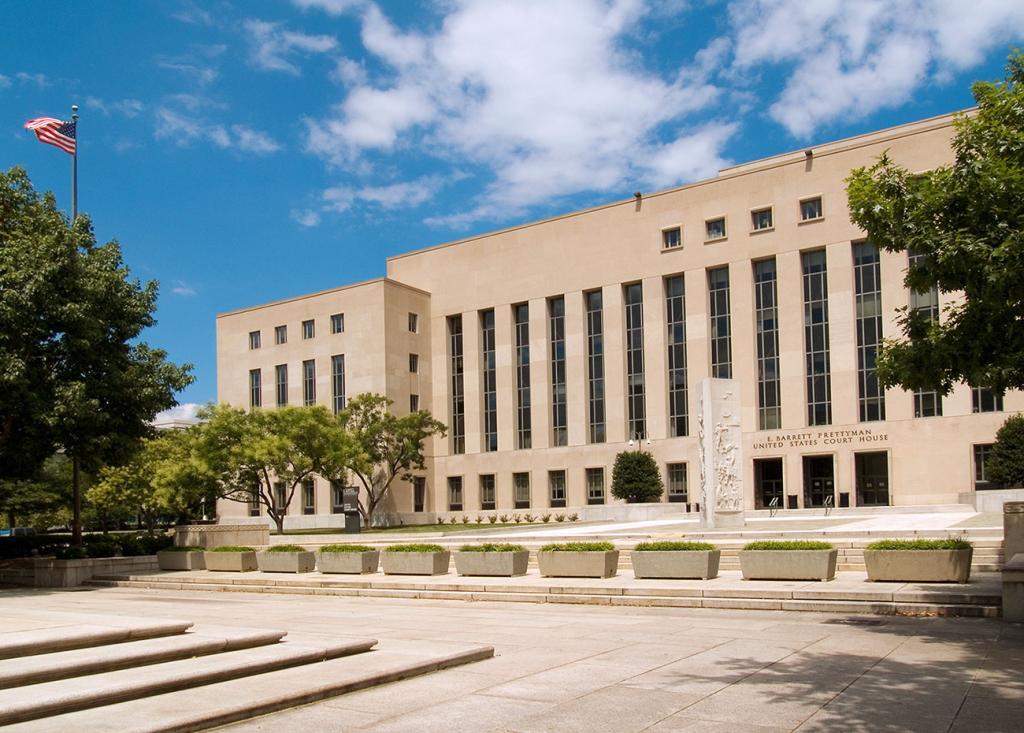
In the first application, the judge assigned to the case was not persuaded the government had justified using this path and ordered the Justice Department to provide more “factual or legal analysis” supporting its position. If the request is denied, the government can appeal to the U.S. Court of Appeals for the D.C. Circuit.
The rights question people miss
One of the most persistent civic myths is that constitutional rights are mainly for citizens. The text is not written that way, especially in the Bill of Rights. Many protections attach to “the people,” and the Fifth Amendment’s due process guarantee is not limited to citizens.
Immigration law has long been an area where courts sometimes allow procedures that would look unacceptable elsewhere. But even within that reality, there are lines. A process that leans heavily on classified evidence, while limiting what the person can see, pushes on the core logic of due process: notice and a meaningful chance to respond.
Eric Lee, an immigration attorney and president of the Consular Accountability Project, put the principle plainly: “The Fifth Amendment protection to due process, the First Amendment protection to free speech, they apply whether you’re a citizen or not.” He also noted, “None of the first 10 amendments reference the rights of citizens. They refer to the rights of the people.”
Where speech comes in
Here is where the under-the-radar part starts to matter. In ordinary federal court, aggressive legal theories can be challenged in public filings, and judges can shut them down in public orders. That public record can become a real constraint.
That dynamic has already produced embarrassing, high-visibility setbacks for the administration, including when a judge issued a scathing order dismissing the Justice Department’s indictment of Kilmar Abrego Garcia for vindictive prosecution, a case that came to define Trump’s mass deportation agenda. A secret-evidence removal process reduces that sunlight.
Lee warned about scenarios where the government could try to frame constitutionally protected expression as evidence of a national security threat, especially in politically charged contexts like protests. Even if those theories do not ultimately hold up, the risk is a chilling effect. When people believe that attending a demonstration or criticizing the government could be reinterpreted behind closed doors as something else, fewer people speak.
That is not a healthy civic environment, regardless of your views on immigration policy.
Why the judges matter
There is another detail that deserves attention. The Alien Terrorist Removal Court is staffed by five Article III district judges, and those same judges also serve on the Foreign Intelligence Surveillance Court.
Known as FISC, that surveillance court has been criticized for years because it approves the overwhelming majority of government warrant applications. One frequently cited figure is that it has historically approved over 90 percent of requests. That is not proof of wrongdoing by itself, but it is a reminder of what happens when a court’s workflow is built around one-sided, classified submissions.
All five of the ATRC judges were selected by Chief Justice John Roberts, with four appointed by former President George W. Bush and one appointed by President Donald Trump. As Lee put it, “None of these presidents are famous for his love for civil liberties.”
In other words, we are not talking about a process designed for adversarial testing in public view. We are talking about a process designed for secrecy, and now being applied to deportation.
Deportation machinery is speeding up
This special tribunal filing did not happen in isolation. It is arriving alongside a broader acceleration in immigration enforcement tactics that are fast, administratively heavy, and punishing when people miss a step.
One example is the sudden use of “mega master” hearings after thousands of immigration court dates were rescheduled on very short notice. In New York City alone, roughly 4,440 people were ordered removed in June because they missed their hearings. That was more than double the number in May.
Add to that a string of fatal encounters involving ICE. In the past two weeks, at least three people have been killed in encounters with ICE, including a person who was about to return home after visiting the United States on a tourist visa. ICE briefly paused most traffic stops after two men were killed in separate stops in Texas and Maine, but President Trump publicly intervened, calling traffic stops one of ICE’s “most important and effective crime-fighting tools.” It is not clear what ICE officers are being directed to do at this point.
Why this feels creepy
People often use “creepy” to mean intrusive technology or invasive surveillance. Here, it is creepier in a more old-fashioned way: a government process that becomes harder to see, harder to challenge, and easier to use against unpopular targets.
Lee described the use of the tribunal as a fundamental boundary-crossing, saying: “This is another Rubicon that the Trump administration is crossing in its assault on basic democratic rights. and it is part of an ongoing strategy initiated before, but especially during the events of Jan. 6, to essentially abolish the Constitution.” He also emphasized how unusual this is historically: “New constitutional ground is being tread upon by the invocation of this, and that is recognized by the fact that no president has tried to invoke this for 30 years because they know that is a Rubicon that has not been crossed in this country ever.”
And on the deeper legal tradition point, Lee warned: “If you take a 1,000-year view of that, it is completely outside the Anglo-American legal tradition in a way that should be the first point that anybody makes about this.”
You do not have to agree with every part of that assessment to understand the core civic concern. When government power increases while public oversight decreases, constitutional rights become more fragile, especially for people with the least political power.
What to watch next
- Whether the court allows the case to proceed, and what standard it requires the government to meet.
- Whether this becomes a repeat tactic or remains a one-off experiment.
- How broadly “national security” is interpreted in the removal context, especially where speech and association are involved.
- Whether Congress demands transparency about how the process is being used and against whom.
Immigration policy is one of the most emotionally charged areas of American politics. That is exactly why the procedures matter. The Constitution is not only tested by the policies we announce loudly, but also by the shortcuts we normalize quietly.