
Every four years, Americans talk about “winning the primary” as if a state’s popular vote directly crowns a nominee. It does not. Not exactly. What it actually does is award delegates, and those delegates later cast the votes that formally nominate a candidate at the party’s national convention.
That sounds like a technicality until it stops being one. Delegates are why two candidates can split the same electorate and still produce a decisive outcome. Delegates are why thresholds matter. Delegates are why “superdelegates” became a political word that people use like a synonym for “rigged,” even when the real story is more procedural than sinister.
Let’s walk through how pledged delegates, unbound delegates, and superdelegates actually work, with one crucial divider in place from the start.
- The Constitution: Says essentially nothing about party nominations. Political parties are private associations, even when they run the public’s most important elections.
- Party rules and state law: Do the real work here. Delegates are a party-created mechanism administered through party rules and, in primaries, state election law.
Join the Discussion
Delegates in one sentence
A delegate is a person chosen under party rules to attend the national convention and vote on who the party will nominate for president.
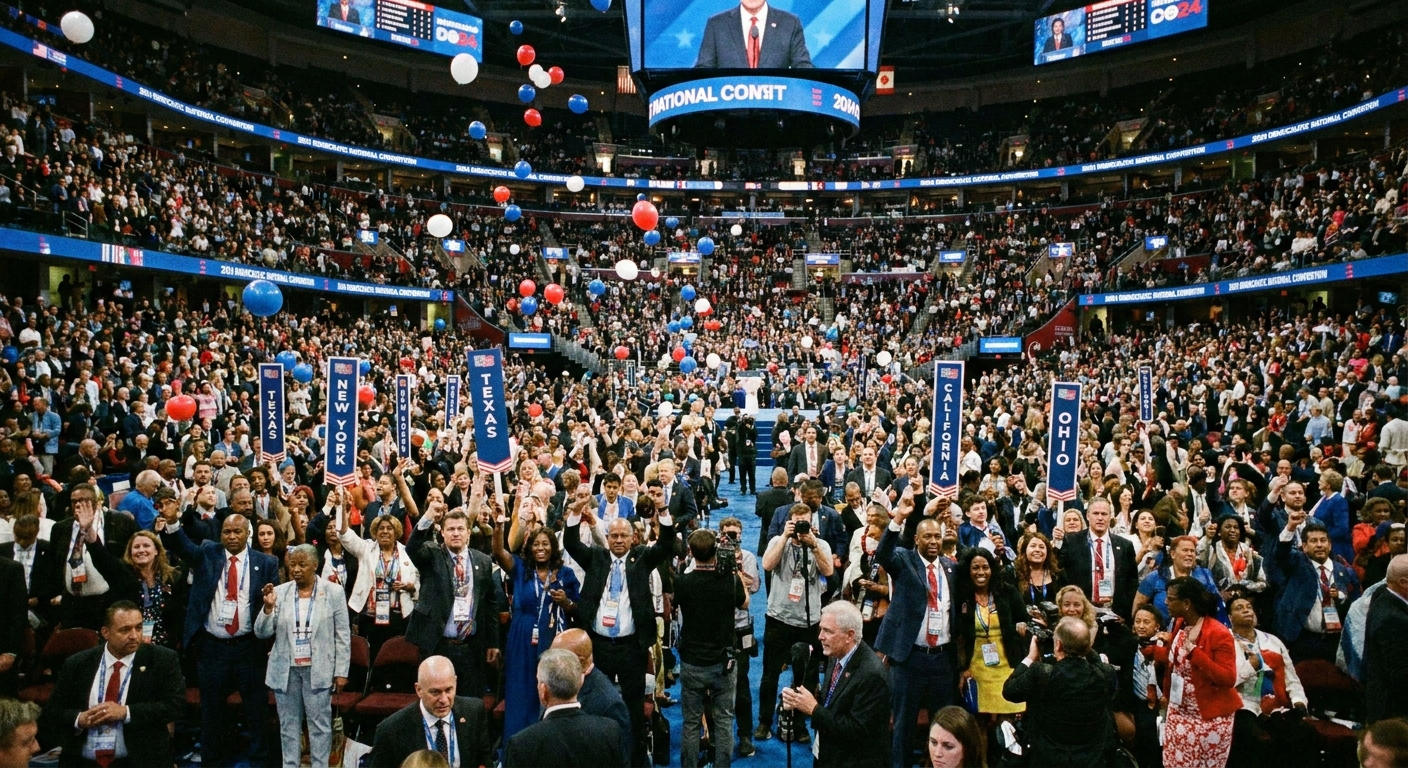
Most delegates are called pledged delegates, meaning they are assigned based on primary or caucus results and are expected, and in many cases bound by party or state rules, to vote a certain way on the first ballot.
Constitution vs party rules
What the Constitution does and does not say
The U.S. Constitution lays out how presidents are elected through the Electoral College, not how parties choose nominees. Political parties are not mentioned anywhere in the document.
That omission is not an accident of history so much as a reminder: the Founders designed elections for offices, not the nomination systems that would later grow up around them.
So who sets nomination rules?
- National parties set delegate categories, allocation formulas, and convention voting rules.
- State parties implement those rules locally and layer on additional procedures.
- States run the elections infrastructure for primaries and regulate ballot access, dates, and administration.
Courts occasionally step in, but usually on narrow questions: associational rights of parties, ballot access disputes, or whether state election laws conflict with constitutional protections. The core math of delegates is mostly not a constitutional question at all. It is a rulebook question.
Pledged delegates
Pledged delegates are awarded to candidates based on primary or caucus results, then sent to the national convention to vote accordingly. They are the backbone of the modern nomination process.
Proportional rules and why it confuses
In many contexts, Americans expect winner-take-all outcomes. But the Democratic Party, and many Republican contests depending on state rules, allocate delegates proportionally or semi-proportionally.
That means a candidate can “win” a state’s popular vote and still split delegates with rivals. The press calls it a victory. The delegate math calls it a split.
The two big moving parts
- Pool size: Each state has a set number of delegates. Bigger states generally have more. Parties use formulas that can include population, past performance, and bonus delegates for timing or compliance with party rules.
- Viability thresholds: In proportional systems, parties often require a candidate to reach a minimum percentage to qualify for any delegates in a given pool. If you miss the threshold, you can win thousands of votes and get zero delegates from that category.
Thresholds
Thresholds are where the process stops being intuitive.
In the Democratic Party, a common benchmark is a 15% viability threshold. It typically applies in more than one place, including statewide pools and congressional district pools, which is why a candidate can be viable statewide but still miss out in a particular district, or vice versa.
Conceptually, the threshold does two things at once:
- It prevents delegates from splintering among too many candidates.
- It rewards candidates who consolidate support early, even if they are not majority favorites.
If only two candidates clear the threshold in a given pool, those two split the available delegates. The votes for everyone below the line do not convert into delegates for that pool. They become, in effect, non-delegate votes.
This is one reason momentum matters. A candidate stuck at 12% is not just losing. They are often losing in a way that produces no delegates at all, which then produces less media attention, which produces less fundraising, which produces less viability. Thresholds can create a feedback loop.
A quick example
Here is a simplified example to make the logic concrete.
- Delegate pool: 10 delegates statewide
- Viability threshold: 15%
- Vote: A = 52%, B = 30%, C = 18%
All three candidates clear 15%, so all three qualify. A rough proportional split of 10 delegates would be:
- A: 5.2
- B: 3.0
- C: 1.8
Because delegates are whole people, the party rulebook specifies a rounding method. In many common rounding approaches, this lands at A = 5, B = 3, C = 2. Change the vote by a fraction in the right place, and the last delegate can flip. That is why campaigns obsess over tiny margins in specific pools, especially congressional districts.
Primary vs caucus
Primaries and caucuses both end by awarding delegates. The difference is how they measure support along the way. The details vary by state, party, and year, and many states have moved away from traditional caucuses in recent cycles.
Primaries
A primary functions like a standard election. You show up, you vote, votes are counted, delegates are awarded under the party’s formula. The math may be complicated, but the input is straightforward.
Caucuses
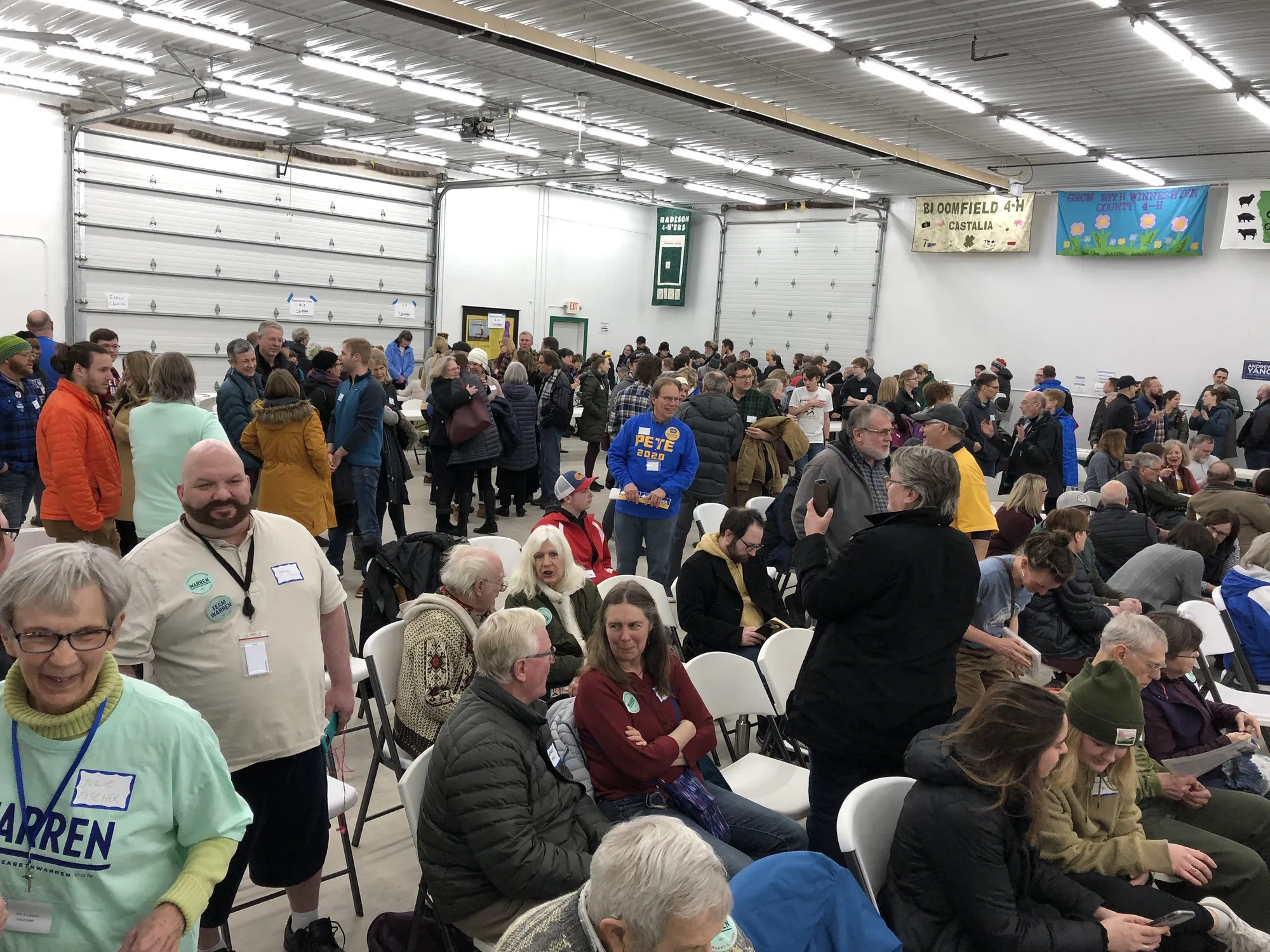
A caucus is more like an in-person sorting process. Participants group by candidate, viability is assessed locally, and supporters of non-viable candidates may be allowed to realign to a viable group.
Conceptually, caucus math tends to:
- Put enormous weight on organization and turnout at a specific time and place.
- Convert preferences through a viability filter at the precinct or local level, not just statewide totals.
- Reward second-choice appeal, because realignment can shift support after the initial count.
That does not make caucuses inherently “less democratic,” but it does make them a different instrument. A caucus measures willingness and ability to participate under constraints. A primary measures preference under lower friction.
Bound vs unbound
When people say a delegate is “bound,” they are really asking a narrow question: Do party or state rules require the delegate to vote for a particular candidate at the convention, and for how long?
Bound (pledged) delegates
Most pledged delegates are bound at least on the first ballot, though the exact enforcement mechanism varies. It can be party rules, state law, credentialing, or some combination.
If no candidate wins a majority, conventions can become multi-ballot events where binding can loosen, delegates can switch, and negotiations accelerate.
Unbound delegates
Unbound delegates can vote for any candidate. They exist in both parties in some form, but the category that draws the most attention is on the Democratic side: superdelegates.
Democratic superdelegates
Superdelegates are officially called unpledged party leader and elected official delegates, often shortened to unpledged PLEOs. They are delegates by virtue of their role in the party and public office, not because they were won in a primary or caucus.
In practice, this group includes many Democratic governors, members of Congress, DNC members, and certain distinguished party leaders, as defined by party rules.
Why they exist
The basic rationale has always been institutional: parties want some delegates who represent party leadership, elected officials, and long-term stakeholders, not only primary electorates that can surge quickly and change composition from cycle to cycle.
The key modern constraint
Under current Democratic rules (post-2018 reforms), superdelegates generally do not vote on the first ballot for president. The point is to keep the first ballot in the hands of pledged delegates. If a candidate has already secured a majority of pledged delegates, superdelegates can be seated without changing the outcome.
In practice, that means:
- If a candidate wins a majority of pledged delegates, the nomination is decided without superdelegates determining it.
- If no candidate has a majority, superdelegates can participate on later ballots, when the convention is mediating a deadlock.
Superdelegates still matter in a close race, but their most dramatic power now tends to appear in the specific scenario the modern system worries about most: a contested convention.
It is also fair to say this is where legitimacy questions live. Even when rules are transparent and properly followed, a system that looks filtered will invite scrutiny. Parties defend these rules as governance. Critics see them as insulation. Both reactions are predictable.

Republican differences
The Republican Party does not use an identical superdelegate system. That is where much public confusion begins. People hear “delegate drama” and assume both parties are running the same machine with different branding.
Winner-take-all and hybrids
Republican primaries often allow more winner-take-all or winner-take-most allocation than Democratic contests, though the details vary by state and cycle. One reason the early calendar can still look hybrid is that national party rules have, in many cycles, discouraged or restricted true winner-take-all contests before a certain point in the schedule.
Many states use hybrid rules such as:
- Winner-take-all statewide if a candidate exceeds a certain percentage.
- Proportional allocation if no one reaches that trigger.
- District-based awards that can amplify regional strength.
The result is that Republican races can “end” faster in delegate terms, even if the popular vote margins are not enormous.
Unbound rules vary
Republican delegations can include delegates with discretion under certain state or territory rules, or in specific delegate categories. But in many GOP contests, delegates are bound at least on the first ballot. The term “superdelegate” does not map cleanly onto Republican practice. If you want the real answer in a given year, you have to look at that year’s state and national party rules, not last cycle’s headlines.
How votes become delegates
You do not need to memorize formulas to understand the core mechanics. Delegate allocation is usually a three-step logic problem.
- Define the pool. For example: statewide at-large delegates, congressional district delegates, and party leader delegates can be allocated separately.
- Apply viability. Remove candidates below the threshold for that pool.
- Divide and round. Convert vote shares into whole delegates using a rounding method specified by party rules.
Two candidates can be separated by a fraction of a percent, and that can still flip a delegate depending on how rounding falls in a district pool. This is why campaigns care obsessively about marginal gains in particular places. Not because they are romantic about one more vote, but because one more vote can be one more delegate.
Contested conventions
A contested convention happens when no candidate arrives with a majority of the delegates needed to win under party rules.
In that world, the process becomes less like a season finale and more like a bargaining session with television cameras. Delegates may become unbound after the first ballot, coalitions form, candidates drop out, endorsements trade hands, and party leaders suddenly become important again.
It is not inherently illegitimate. It is a system designed to produce a nominee even when the primary electorate does not produce a majority winner.
Why people think it is “overridden”
The suspicion comes from a reasonable instinct: if voters are voting, why does anyone else get a vote that looks different?
But most of what fuels that narrative is a mismatch between expectations and what the system is built to do.
- Voters are not directly selecting the nominee. They are selecting delegates who select the nominee.
- The delegate system is intentionally filtered. Thresholds, district allocations, and separate pools are not accidents. They are stabilizers, for better and for worse.
- Superdelegates are a party governance choice. They are not in the Constitution. They are not required. They are not forbidden.
If you want to critique superdelegates, the right target is party legitimacy and internal democracy, not constitutional text. The Constitution is mostly silent here.
The constitutional bottom line
Presidential nominations feel like public law because they lead directly to public power. But the nomination stage is largely party architecture built on top of state election administration.
The Constitution governs the general election structure and protects certain political rights. It does not require primaries. It does not require caucuses. It does not require proportional allocation. It does not create superdelegates. Those are all decisions political parties have made, revised, and re-revised over time, often in response to their last painful defeat.
That is the real lesson of pledged delegates and superdelegates: the nomination process is not a natural fact. It is a design. And designs can be changed.