
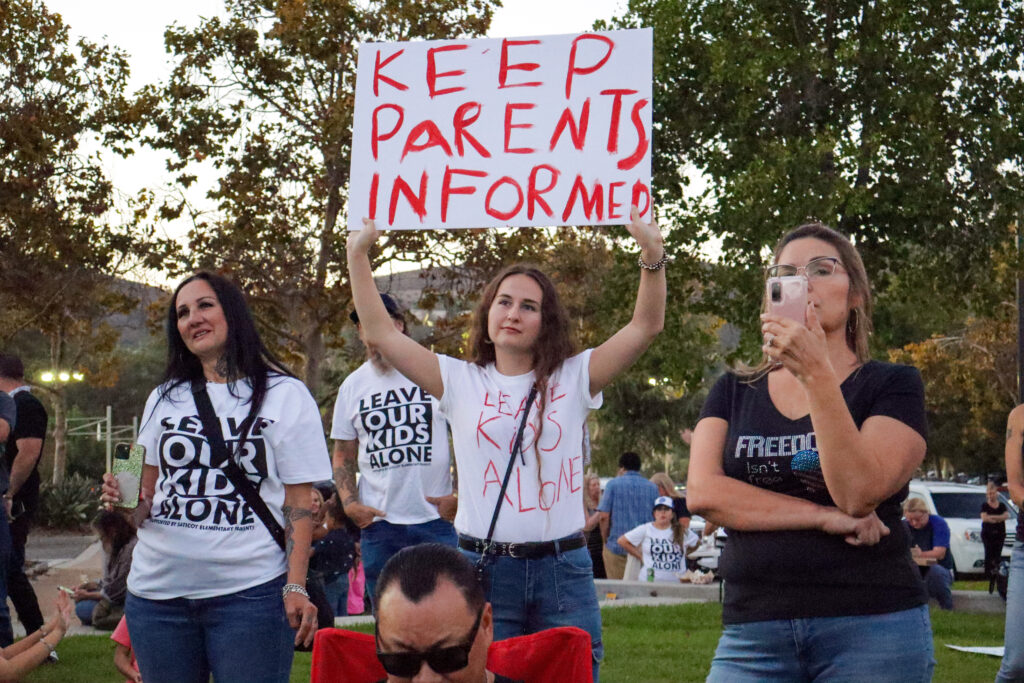
California tried to settle a culture-war question with a statute: when a student adopts a new gender identity at school, what exactly can educators tell mom and dad?
On June 19, a panel of the U.S. Court of Appeals for the Ninth Circuit issued an injunction blocking enforcement of key parts of California’s AB 1955, the law tied to policies that restrict school employees from informing parents about a child’s “gender transition” at school. The same court had declined to intervene twice before. This time, it hit the brakes.
Put plainly, the panel signaled that a state cannot solve its political problem by locking parents out of the room.
Join the Discussion
What the court did
An injunction is not the final word on the merits. It is the court saying: we see enough constitutional smoke here that we are going to prevent the state from enforcing the disputed provisions while the lawsuit proceeds.
The case was brought by the city of Huntington Beach and a group of parents challenging AB 1955 and the school secrecy regime it supports. The panel concluded the challengers have standing to seek relief and that parents are likely to succeed on at least part of their constitutional claim.
The judges on the panel were Daniel Collins, Kenneth Lee, and Lucy Koh.
The constitutional nerve
Teachers and administrators are not just public employees. In a constitutional sense, they are state actors. And when the state acts in a way that cuts parents out of major decisions about a child’s welfare, it immediately runs into the long-standing doctrine that parents have a protected liberty interest in directing their children’s upbringing.
The panel leaned on the Supreme Court’s emergency docket ruling in Mirabelli v. Bonta, which blocked a similar scheme. The quoted principle is blunt and old-fashioned in the best way:
“Under long-established precedent, parents, not the State, have primary authority with respect to ‘the upbringing and education of children,’” the Mirabelli order stated. “The right protected by these precedents includes the right not to be shut out of participation in decisions regarding their children’s mental health.”
That last line matters because it reframes the dispute. This is not only about pronouns or privacy norms. It is about whether the government can intentionally keep parents uninformed about a significant, ongoing change in how a child is being treated by public officials during the school day.
Standing
Governments often try to win these cases before they begin, not by defending the policy, but by arguing nobody has the right plaintiff to sue.
Here, the Ninth Circuit panel rejected that escape hatch. It held that “an objecting parent who is the target of AB 1955’s effort to prohibit constitutionally required mandatory policies has standing to seek injunctive relief to remove that unlawful impediment to compliance with the Constitution.”
It also emphasized that parents do not have to prove in advance that their specific child will experience gender dysphoria or that information will definitely be withheld. In other words, the law’s structure and purpose can itself create the kind of concrete injury federal courts recognize.
That is a crucial shift. If courts demanded a parent wait until the secrecy policy had already been used on their own child, the constitutional right would be treated like a fire alarm you are only allowed to pull after the building is gone.
Substantive due process
The phrase “substantive due process” tends to make normal citizens tune out. They should not, because it is the legal language courts use when the state interferes with certain fundamental liberties even if the state follows proper procedures.
The panel’s key point was direct: “Parents will likely succeed on the merits of their substantive due process challenge to AB 1955 to the extent that AB 1955’s regulation of ‘information related to a pupil’s . . . gender identity[] or gender expression.’”
So what is the liberty interest here? It is the parent’s right to participate in serious decisions about a child’s life and well-being. That includes decisions that touch mental health, medical care, counseling, and a child’s social identity. If a school effectively adopts a parallel track where the state knows and the parent does not, the Constitution starts asking uncomfortable questions.
Politics shows up
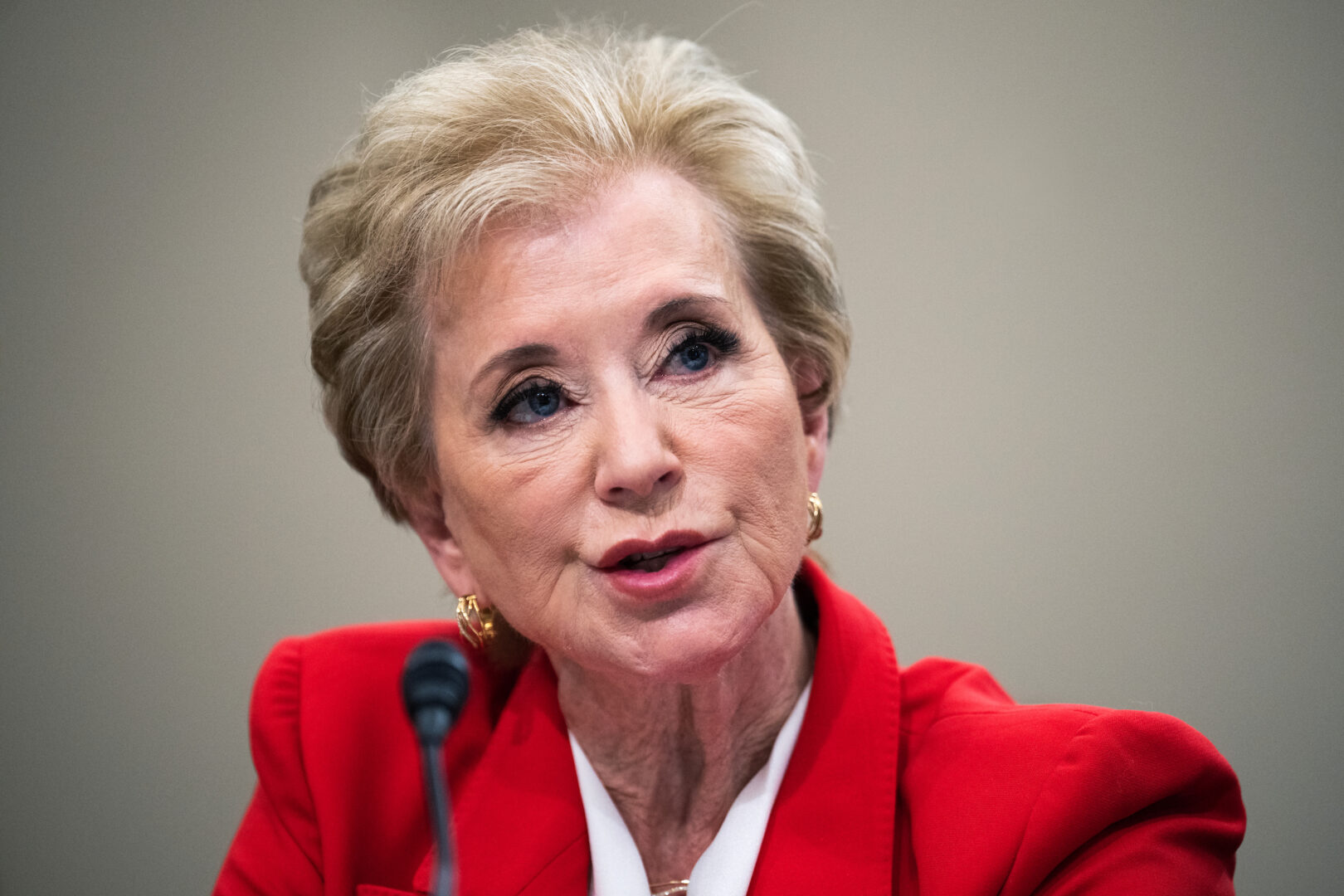
Education Secretary Linda McMahon responded to the ruling with a line designed for the civics textbook margin: “Children don’t belong to the State - they belong to parents.”
Even if you dislike the phrasing, the constitutional instinct behind it is recognizable. In American law, children are not the property of parents or government. But the default presumption is that fit parents, not bureaucracies, have the primary role in directing a child’s upbringing.
That presumption is not absolute. The state can act when there is abuse, neglect, or a legitimate and properly bounded public interest. The question AB 1955 raises is whether the state can build a policy of non-disclosure into the machinery of public education and still square that with the Constitution’s baseline rule about who gets primary authority.
Privacy and authority
This dispute is often presented as a clean contest between “student privacy” and “parental control.” Real life is rarely that tidy.
Students do have privacy interests. Schools do handle sensitive information. And adolescents sometimes hide things from parents. None of that automatically becomes a constitutional mandate for government secrecy.
But as a practical matter, when a school formalizes a system that instructs employees to withhold information from parents about a significant change in a child’s identity at school, the state is no longer merely respecting a teenager’s discretion. It is making an affirmative choice to exclude parents. That is the constitutional fault line the Ninth Circuit panel treated as serious enough to justify an injunction.
What happens next
The injunction keeps the disputed parts of AB 1955 from being enforced while the litigation continues. The broader issue is moving through federal courts quickly, and the Supreme Court has already shown a willingness to intervene on an emergency basis when lower courts permit school secrecy policies to remain in effect.
The Supreme Court’s March emergency docket ruling in Mirabelli v. Bonta decided 6-3 in favor of blocking a similar scheme. That case, in turn, was based on a 2025 ruling in Mahmoud v. Taylor that affirmed parental rights to opt their children out of LGBT promotions and ideologies mandated by schools.
If this keeps escalating, the country may soon face a high-court ruling that draws a clearer line: what public schools may withhold from parents, and what they cannot.
The fight is not really about whether a state can be “pro” or “anti” LGBT. It is about something more basic, and frankly more dangerous: whether the state can redefine parenting as an obstacle to be managed.