
“Due process of law” sounds like courtroom vocabulary: judges, evidence, paperwork, and the ritual of fairness. That is part of it.
But “due process” also does something else. Courts have used it to identify certain freedoms government cannot take away even if it follows perfect procedures.
Same words, two very different jobs.
Quick scope note: The Fourteenth Amendment’s Due Process Clause limits states. The Fifth Amendment contains an almost identical Due Process Clause that limits the federal government. Courts generally use the same procedural and substantive frameworks in both settings.
Another quick note: The Fourteenth Amendment usually requires state action. It does not regulate purely private conduct unless the private actor is treated as the government for constitutional purposes.
Join the Discussion
The Due Process Clause, in plain English
The Fourteenth Amendment says: no state shall “deprive any person of life, liberty, or property, without due process of law.”
That sentence raises two questions courts have been answering for more than a century:
- Procedure question: If the government is going to take something from you, what steps must it follow first?
- Substance question: Are there some things the government is not allowed to take from you at all, no matter how careful the process?
The first is procedural due process. The second is substantive due process.
Procedural due process
Procedural due process is the basic idea most people associate with “due process”: the government has to use fair procedures before it deprives you of life, liberty, or property.
The key point is that procedural due process is mostly about how the government acts, not whether the government has a good reason to act.
Life, liberty, or property
In procedural due process cases, the threshold fight is often about whether you have a protected interest in the first place.
- Property can include more than physical objects. It can include certain government benefits or jobs, but usually only when the law gives you a legitimate entitlement to them.
- Liberty can include physical freedom, but it can also include interests like reputation plus a legal harm (in some contexts), or freedom from certain restraints imposed by the state.
Landmark examples
- Goldberg v. Kelly (1970): The Court held that certain welfare benefits (including AFDC) could not be terminated without a meaningful pre-termination hearing. When the state is cutting off benefits people rely on, a paper-only process can be too thin, and oral presentation and cross-examination can matter depending on the dispute.
- Mathews v. Eldridge (1976): A Fifth Amendment due process case involving federal Social Security disability benefits. The Court upheld procedures for terminating SSDI without a pre-termination evidentiary hearing and gave courts a structured balancing test for what process is due.
- Goss v. Lopez (1975): Students facing short suspensions from public school (up to 10 days) were entitled to notice and an opportunity to be heard, even if informally. “Due process” is not always a full courtroom trial, but it is also not nothing.
How courts analyze it
Courts typically ask three questions:
- Is the government depriving someone of life, liberty, or property? Often this is the threshold inquiry, because without a protected interest there is usually no procedural due process claim.
- If yes, what process is due? This is where Mathews v. Eldridge matters.
- Did the government provide that process?
The Mathews balancing test
Under Mathews v. Eldridge, courts balance:
- The private interest affected (what the person stands to lose)
- The risk of erroneous deprivation under current procedures and the value of additional safeguards
- The government’s interest, including costs and administrative burdens
This is why procedural due process looks different depending on the setting. A school suspension, a professional license revocation, and a criminal prosecution do not require identical procedures.
Substantive due process
Substantive due process is the more controversial sibling. It is the idea that “liberty” in the Due Process Clause is not just a promise of fair procedures. It also protects certain fundamental rights from government interference.
Even if the state gives you notice, a hearing, an appeal, and a perfectly stamped form, it still may not be able to cross certain lines.
Two big categories
- Personal autonomy and family life: marriage, contraception, parental rights, intimate relationships, and related questions about bodily integrity and decision-making.
- Economic regulation (historical): in the early 1900s, the Court used substantive due process to strike down some labor and economic laws, a period often associated with Lochner. In modern doctrine, most economic regulations survive under deferential review.
Landmark examples
- Lochner v. New York (1905): The Court struck down a maximum-hours law for bakers, treating freedom of contract as a protected liberty. This era is often criticized as the Court substituting its economic preferences for democratic choices.
- West Coast Hotel v. Parrish (1937): The Court upheld a minimum wage law and signaled a retreat from aggressive economic substantive due process.
- Griswold v. Connecticut (1965): The Court invalidated a ban on contraception for married couples, reasoning from constitutional “zones of privacy” associated with multiple Bill of Rights guarantees. Later doctrine and some opinions link contraception and privacy more directly to Fourteenth Amendment liberty.
- Washington v. Glucksberg (1997): The Court rejected a federal constitutional right to assisted suicide and emphasized a cautious approach: rights should be “deeply rooted in this Nation’s history and tradition” and “implicit in the concept of ordered liberty.”
- Obergefell v. Hodges (2015): The Court held that same-sex couples have a fundamental right to marry, relying on due process and equal protection together. In this area, claims are often paired because liberty and equality can reinforce each other.
- Dobbs v. Jackson Women’s Health Organization (2022): The Court overruled Roe v. Wade and Planned Parenthood v. Casey, holding that the Constitution does not protect a right to abortion under substantive due process and returning abortion regulation largely to political branches, subject to other possible constraints (including federal statutes, state constitutions, and related litigation over federal law).
How courts analyze it
Substantive due process analysis often turns on two steps:
- Is the asserted right “fundamental”? If the Court says yes, the government must satisfy the highest level of scrutiny. If no, the government usually wins under a more forgiving test.
- What level of scrutiny applies, and does the law survive it?
Levels of scrutiny
- Strict scrutiny (hard for government to win): used when a law burdens a fundamental right. The government must show a compelling interest and narrow tailoring.
- Rational basis review (easy for government to win): used when the right is not considered fundamental. The law only needs a rational relation to a legitimate government interest.
Courts sometimes use other formulations in certain due process contexts, but this strict-scrutiny versus rational-basis framework is the core student-friendly map.
This is why substantive due process battles feel existential. If a right is labeled fundamental, it gets constitutional armor. If it is not, it often becomes a policy fight instead of a constitutional one.
Procedural vs. substantive
These doctrines share a name and both live under the Due Process banner, but they operate like different tools.
Comparison table
| Question | Procedural Due Process | Substantive Due Process |
|---|---|---|
| Core focus | Was the process fair before the deprivation? | Is the government allowed to do this at all? |
| What it protects | Fair procedures for life, liberty, or property | Certain fundamental liberties from interference |
| Typical setting | Benefits cutoffs, school discipline, license revocations, hearings | Family and autonomy rights, bodily integrity, intimate decisions, historically some economic rights |
| Key test | Mathews v. Eldridge balancing | Is the right fundamental? If yes, strict scrutiny; if no, rational basis |
| Common remedy | Redo with proper notice, hearing, impartial decision-maker, appeal | Law struck down or narrowed; enforcement blocked |
| Plain-language version | “You can’t do that to me without a fair chance to contest it.” | “You can’t do that to me, period.” |
When a case triggers both
Sometimes a dispute has both a procedural and a substantive dimension, even if only one becomes the main headline.
- Procedural claim example: “The city revoked my business license without notice or a chance to respond.”
- Substantive claim example: “The city cannot revoke licenses under an arbitrary rule that has no rational basis, or in a way that burdens a fundamental right.”
A useful way to keep them straight is to imagine two doors:
- Door one asks: Did the government use fair procedures?
- Door two asks: Even with fair procedures, did the government cross a constitutional boundary?
Why substantive due process is contested
Procedural due process has a built-in logic that most people accept. If government power is going to hit you personally, you should get notice and a meaningful chance to be heard.
Substantive due process is harder because it requires judges to identify unenumerated rights and decide how strongly to protect them. That raises questions that are legal and philosophical at the same time:
- Text: If the Constitution does not list a right, where exactly does it come from?
- History: How much should tradition control what counts as “liberty”?
- Democracy: When is it appropriate for courts to override elected lawmakers?
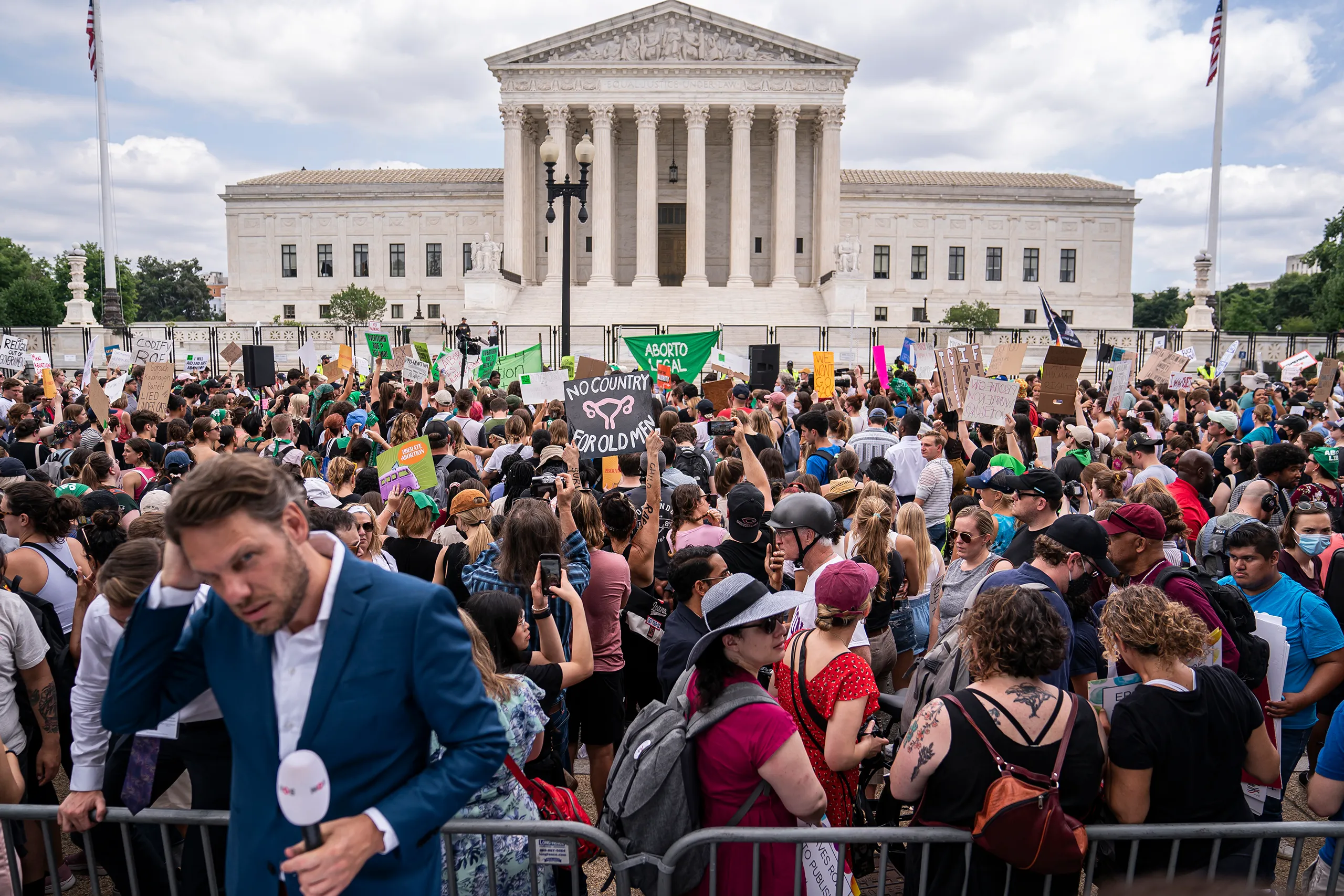
Dobbs intensified those questions by narrowing the modern substantive due process approach for abortion and emphasizing history and tradition as a limiting principle. That shift matters beyond abortion because it signals how the Court might evaluate future claims about unenumerated rights.
A student checklist
Classifying the issue
- If the complaint is about missing steps like no notice, no hearing, or no neutral decision-maker, think procedural due process.
- If the complaint is about the kind of interference itself or whether the government can do it at all, think substantive due process.
Predicting the test
- Procedural: Identify the interest, then apply Mathews.
- Substantive: Ask whether the asserted right is fundamental. If yes, expect strict scrutiny. If no, expect rational basis review (with some topic-specific variations in certain areas).
What due process really does
Due process is one of the Constitution’s most powerful phrases because it polices two different dangers.
- Procedural due process guards against sloppy, one-sided, or arbitrary decision-making by forcing government to use fair methods.
- Substantive due process guards against government using even perfect methods to invade what the Court treats as fundamental liberty.
And that is the takeaway worth remembering: due process is not only a promise that the government will play fair. It is also, sometimes, a rule about what the government is not allowed to play with at all.